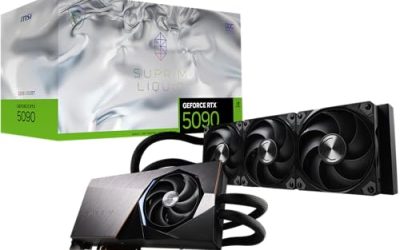
An editing GPU is bought on VRAM and codec hardware, not gaming frame rates. The real decision is how much frame buffer your timeline actually needs: resolution, multicam angles and effects stacks all live in that memory, and running out of it means stutters and failed renders. The second half of the decision is your editor. Premiere Pro leans on NVIDIA’s CUDA and NVENC path, while DaVinci Resolve leans on OpenCL and runs happily on AMD, so the right brand follows the software you already own.
These five cards serve four kinds of editor: 4K Premiere Pro editors who want smooth playback and fast hardware exports, Resolve colourists stacking nodes and Fusion effects, multicam and 8K shooters who keep hitting VRAM ceilings, and beginner editors who need 16 GB on an entry budget. Every pick was chosen from the names and specifications on its Amazon product page, with memory size, architecture and media hardware as the deciding facts.
Our Top Picks
 ASUS TUF Gaming GeForce RTX™ 5080 16GB GDDR7RTX5080|OC13.7 x 5.7 x 2.8 inches5 poundsCheck on Amazon
 ASUS Prime Radeon RX 9070 XT 16GB GDDR6RX9070XT|OC|16GB12.3 x 5.1 x 2 inches3.3 poundsCheck on Amazon

Top 3 picks at a glance

Quick Picks
As an Amazon Associate we earn from qualifying purchases
| Product | Best for | Key spec from title |
|---|---|---|
| ASUS TUF Gaming GeForce RTX 5090 32GB GDDR7 OC Edition | 8K timelines, heavy Fusion and After Effects comps | 32GB GDDR7 OC Edition flagship |
| ASUS TUF Gaming GeForce RTX 5080 16GB GDDR7 OC Edition | Balanced 4K/6K professional timelines | 16GB GDDR7 OC Edition |
| Sapphire Nitro+ AMD Radeon RX 7900 XTX Vapor-X | Resolve grading with a big VRAM pool | 24GB GDDR6 with Vapor-X cooling |
| ASUS Prime Radeon RX 9070 XT OC | Current-generation AMD editing at 16 GB | Current-generation AMD card with 16GB of memory |
| GIGABYTE GeForce RTX 5060 Ti 16GB | Entry-budget 1080p/4K and proxy workflows | 16GB GDDR7 in the entry tier |
How to Choose
VRAM by Workflow
Match memory to the timeline, not to the game settings you play at. Sixteen gigabytes covers 4K timelines with colour correction and a sensible effects stack, and it is the sensible floor for a new editing build today. Step up to 24 GB or more when you cut 8K RAW, stack multicam angles, or build heavy node trees and Fusion comps, because those workloads hold several full-resolution frames in memory at once. Buying below your workflow’s needs does not slow renders slightly; it caps what the timeline can do at all.
Hardware Codec Support
Modern editors lean on fixed-function media hardware for both playback and export. An NVENC-class engine gives you hardware decode of camera files on the timeline and hardware encode on export, which is why NVIDIA cards feel quick in Premiere Pro. Current-generation cards add AV1 encode, useful if you deliver to platforms that accept it. Check 4:2:2 decode support specifically if you shoot camera-native formats, because some popular camera codecs in that layout still fall back to the CPU on cards without the right decode block, and timeline scrubbing suffers first.
NLE and Driver Support
Your editor’s acceleration path should pick your brand. Premiere Pro is built around CUDA and NVENC, and NVIDIA’s Studio drivers are tuned and validated for creative applications, so Premiere-first editors get the smoothest ride on GeForce cards. DaVinci Resolve leans on OpenCL, which AMD cards handle well, and Resolve’s grading and Fusion pages are famously hungry for GPU memory rather than brand-specific features. Mixed-workflow editors who live in both programs usually favour NVIDIA for breadth, while Resolve-only colourists can spend the same money on more AMD VRAM instead.
Power, Size and Cooling
Flagship editing cards carry flagship power demands. The top picks here use a 16-pin 12VHPWR connector and expect a power supply in the high-wattage class, so confirm your PSU’s rating and connector before ordering rather than after the card arrives. Physical size matters too: triple-fan flagship coolers with vapor chambers are long and thick, and smaller cases can block the side panel or the front drive cages. Measure the available GPU length and slot clearance in your case, and leave airflow room, because long renders hold the card at full load for hours.
The 5 Best Options
ASUS TUF Gaming GeForce RTX 5090 32GB GDDR7 OC Edition
This is the card for editors whose timelines have outgrown everything else: 8K projects, multicam shoots, and heavy Fusion or After Effects compositions that hold many full-resolution frames in memory at once. The 32 GB frame buffer is the headline, and it removes the VRAM ceiling that forces proxy workflows on smaller cards. Premiere Pro editors also get the full CUDA and NVENC path with Studio driver support, so the same card that grades the timeline also accelerates the export at the end of the job.
Specs
- 32 GB GDDR7 memory
- Blackwell architecture
- DLSS 4 support
- Triple Axial-tech fans
- Vapor chamber cooling
Best for: 8K timelines, multicam productions and effects-heavy Fusion or After Effects work that needs the largest frame buffer available.
Watch out for: power and size are the real cost — this card needs a very high-wattage PSU and a 16-pin 12VHPWR connector, so confirm PSU wattage, connector and case clearance before ordering.
ASIN: B0DS2X13PH
ASUS TUF Gaming GeForce RTX 5080 16GB GDDR7 OC Edition
For most working editors this is the balanced professional pick: 16 GB of fast GDDR7 is comfortable across 4K and 6K timelines, multicam edits and GPU-accelerated effects in Premiere Pro, DaVinci Resolve and After Effects. The Blackwell media hardware keeps timeline playback smooth on camera-native files and shortens exports, and the triple-fan vapor chamber cooler is built for the sustained loads that long renders impose. It gives up half the 5090’s memory, but for single-camera 4K work that trade rarely shows up in practice.
Specs
- 16 GB GDDR7 memory
- Blackwell architecture
- DLSS 4 support
- PCIe 5.0 interface
- Triple Axial-tech fans
- Vapor chamber cooling
Best for: 4K and 6K editors in Premiere Pro or Resolve who want flagship media hardware without the flagship’s memory tier.
Watch out for: it is still a high-power card, with a PSU requirement in the 850W-1000W class and a 16-pin connector; 16 GB is comfortable for 4K/6K, but 8K RAW multicam belongs to the 5090 pick.
ASIN: B0DQSMMCSH
Sapphire Nitro+ AMD Radeon RX 7900 XTX Vapor-X
The 7900 XTX is the VRAM-per-money play in this roundup: 24 GB of memory at a tier where NVIDIA gives you 16. That pool suits DaVinci Resolve especially well, because Resolve’s colour page and Fusion effects scale with GPU memory, and its OpenCL acceleration runs strongly on AMD hardware. Sapphire’s Vapor-X cooler and Dual BIOS add thermal headroom and a fallback BIOS for long render sessions. If your pipeline is Resolve-first, this is the card that buys you timeline headroom instead of gaming features you will not use.
Specs
- 24 GB GDDR6 memory
- RDNA 3 architecture
- Vapor-X cooling
- Dual BIOS
Best for: DaVinci Resolve colourists and Fusion users whose node stacks and effects work rewards a 24 GB frame buffer.
Watch out for: the manufacturer warranty runs only 2 years, and Premiere Pro leans on NVIDIA CUDA and NVENC, so this card’s editing strength is Resolve-first — Premiere-only editors should weigh the NVIDIA picks.
ASIN: B0BR6JWP1Q
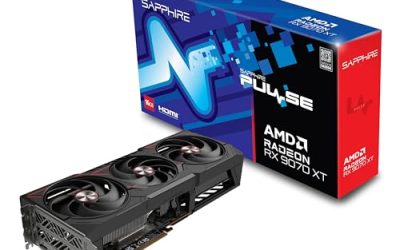
ASUS Prime Radeon RX 9070 XT OC
The 9070 XT is the current-generation AMD route to 16 GB, built on the RDNA 4 generation with a 256-bit memory bus. Roundups consistently position it as the best AMD option for DaVinci Resolve, where OpenCL acceleration is well supported, and it handles 4K timelines in Resolve and Premiere Pro without the memory anxiety of an 8 GB card. For editors who prefer AMD’s driver model or who grade primarily in Resolve, it is the modern pick; it simply asks you to be honest about how heavy your 4K effects stacks really get.
Specs
- 16 GB GDDR6 memory on a 256-bit bus
- RDNA 4 generation
- Positioned across roundups as the best AMD option for DaVinci Resolve, with well-supported OpenCL acceleration
Best for: 4K Resolve and Premiere editors who want a current-generation AMD card with a full 16 GB of memory.
Watch out for: it can struggle with maxed-out 4K timelines in some heavy scenes — effects-stacked 4K and anything 8K belongs to the 24 GB and 32 GB picks.
ASIN: B0DRRMZDH6
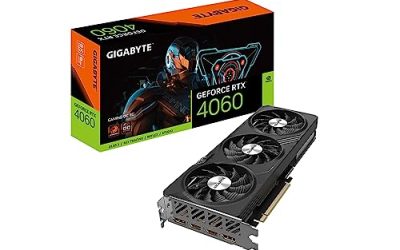
GIGABYTE GeForce RTX 5060 Ti 16GB

The 5060 Ti 16GB is the budget entry point that still respects the one rule of editing builds: do not buy an 8 GB card. Its 16 GB of GDDR7 covers 1080p and 4K editing and proxy workflows comfortably, and the current-generation NVENC media engine gives you proper hardware encode and decode, which matters more to timeline feel than raw gaming speed at this tier. Beginners building a first editing PC, and working editors building a second machine, get a card that will not become the bottleneck the moment a project moves from 1080p to 4K.
Specs
- 16 GB GDDR7 memory
- Blackwell architecture
- PCIe 5.0 interface
- DLSS 4 support
- 128-bit memory bus
- Current-generation NVENC media engine for hardware encode and decode
Best for: beginner editors and second-machine builds that need 16 GB for 1080p/4K work and proxy workflows on an entry budget.
Watch out for: the 128-bit bus and entry-tier compute cap heavy multicam and 8K work — this is the 16 GB floor, not a flagship substitute; confirm the listing is the 16GB version, because an 8GB sibling exists in the same model line.
ASIN: B0F5BBGCSZ
Which One Fits Your Situation
Cutting 4K in Premiere Pro Full Time
You want smooth timeline playback on camera-native files and fast NVENC exports, and that points to the RTX 5080. Its 16 GB covers 4K timelines with effects, the CUDA path is Premiere Pro’s home turf, and Studio drivers keep the setup stable. The 5060 Ti 16GB is the fallback if the budget is tight, accepting slower exports rather than less memory.
Grading in DaVinci Resolve With Deep Node Trees
Resolve spends GPU memory on nodes, noise reduction and Fusion effects, so VRAM is your first specification. The RX 7900 XTX’s 24 GB is the value pick for this work, and the RTX 5090 is the ceiling-free option if your comps keep growing. The 9070 XT serves lighter Resolve timelines well, but maxed-out 4K stacks will test its 16 GB.
Shooting Multicam or 8K RAW
Multiple angles and 8K frames multiply memory use faster than any other editing habit, and hitting the VRAM limit mid-render is the failure you are buying your way out of. The RTX 5090’s 32 GB is the pick here, full stop. The 7900 XTX’s 24 GB is the step-down if the flagship’s power and size demands do not fit your case or PSU.
Learning to Edit on a First Build
Start with the RTX 5060 Ti 16GB. It gives you the full 16 GB that modern editors expect, real NVENC hardware for exports, and enough headroom to grow from 1080p into 4K and proxy workflows. Spend the savings on storage and RAM, which a first editing machine usually needs sooner than a faster GPU.
Common Mistakes
- Buying an 8 GB card for 4K editing because it games well, then discovering the timeline, not the game, is what runs out of memory.
- Choosing a card before checking which acceleration path your editor uses, so a Premiere Pro editor ends up on hardware whose strengths are OpenCL.
- Ignoring the power supply: flagship cards need a 16-pin 12VHPWR connector and a high-wattage PSU that many older builds do not have.
- Ordering a triple-fan flagship without measuring case clearance, then finding the cooler blocks the side panel or drive cages.
- Picking the wrong memory variant of the same model line, such as the 8GB sibling of a 16GB card, because the listing title looked identical.
Frequently Asked Questions
How much VRAM do I actually need for video editing?
For 1080p and straightforward 4K timelines, 16 GB is the sensible target and covers colour correction plus a moderate effects stack. Move to 24 GB or more for 8K footage, multicam projects, or heavy Fusion and After Effects compositions, because those workloads hold many full-resolution frames in memory simultaneously and stutter or fail renders when the buffer runs out.
Is NVIDIA or AMD better for video editing?
It depends on your editor. Premiere Pro is built around CUDA and NVENC, and NVIDIA’s Studio drivers are validated for creative work, so Premiere editors are usually best served by GeForce cards. DaVinci Resolve leans on OpenCL and scales with VRAM, which makes AMD’s larger memory pools attractive. Editors who split time between both programs generally get broader coverage from NVIDIA.
Does the graphics card speed up exports?
Yes, when the export uses hardware encoding. An NVENC-class engine encodes H.264, HEVC and on current cards AV1 far faster than the CPU alone, and the GPU also accelerates effects, scaling and colour work during the render. Exports built entirely from CPU-only effects gain less, but for typical timeline exports the GPU is doing a large share of the work.
Can I edit 4K video on the RTX 5060 Ti 16GB?
Yes. Its 16 GB of memory is the important part: 4K timelines, colour correction and proxy workflows run comfortably, and the current NVENC engine handles hardware exports. What it will not do is heavy multicam or 8K work, where the 128-bit bus and entry-tier compute become the limit. For single-camera 4K projects, it is a sensible budget foundation.
Related guides
More from Amazon
Programs that pair well with the guide above. Offers and eligibility are set by Amazon and may change.
Free shipping on eligible items, Prime Video and more. Eligible new members can start with a free trial.
Start a Prime free trialAd-free music streaming. Eligible new subscribers can start with a free trial.
Try Music Unlimited freeA Prime membership for ages 18-24 with a trial period. Eligibility is set by Amazon.
See Prime for Young AdultsAudiobooks and podcasts to listen to on the go. Eligible new members can start with a free trial.
Try Audible freeAs an Amazon Associate we earn from qualifying purchases.