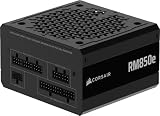
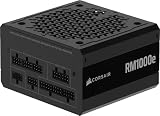
Our Top Picks


The Short Answer
Yes, a 1000W power supply is worth it for future proofing, but only under one specific condition: you must plan to buy a flagship, top-tier graphics card (such as an Nvidia xx90 series or its AMD equivalent) or heavily overclock a multi-core workstation processor within the next few years. If you stick to mid-range components, a 1000W unit is unnecessary. However, for enthusiasts wanting complete peace of mind, investing in a high-capacity unit now prevents costly rebuilds later.
What You Actually Get
When you purchase a modern 1000W power supply, you are not just buying raw wattage; you are investing in advanced electrical architecture designed to handle modern power delivery demands. The latest high-wattage units are built around the ATX 3.1 and PCIe 5.1 standards. These specifications are crucial because they dictate how a power supply unit (PSU) handles “transient spikes”—sudden, millisecond-long surges where a graphics card can draw up to double its rated power. Older PSUs often shut down unexpectedly when these spikes occur, but modern ATX 3.1 units are engineered to absorb these excursions without breaking a sweat.
As an Amazon Associate we earn from qualifying purchases at no extra cost to you.


Furthermore, running a 1000W power supply keeps your system in the “sweet spot” of the efficiency curve. Most 80 Plus Gold units achieve their maximum electrical efficiency when running at 40% to 60% load. If your system draws roughly 450W to 550W under heavy gaming workloads, a 1000W unit will run cooler, waste less electricity as heat, and operate much quieter than a 750W unit pushed to its limits.
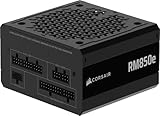
Physically, these units are robustly built. For example, the CORSAIR RM1000e ATX 3.1 PCIe 5.1 Ready 1000W Power SupplyOn the premium end, the ASUS TUF Gaming 1000W GoldThis unit is slightly deeper at 150mm x 150mm x 86mm and weighs approximately 4.1 pounds, reflecting its heavy-duty heatsinks and rugged chassis.
Pros
- Maximum Hardware Compatibility: You can install any consumer-grade graphics card or processor on the market today, and those coming in the future, without worrying about system instability or power limits.
- Native PCIe 5.1 and 12V-2×6 Cable Support: Modern 1000W units come with the updated 12V-2×6 power connector, eliminating the need for messy, unsafe multi-cable adapter dongles for high-end GPUs.
- Silent or Near-Silent Operation: Because the system load rarely pushes a 1000W unit past its 50% threshold, the cooling fan will either spin at incredibly low decibels or remain entirely off during light workloads and casual gaming.
- Exceptional Warranties: Premium units like the ASUS TUF Gaming 1000W Gold offer a 10-year warranty, meaning the power supply will easily outlast your current motherboard, CPU, and graphics card.
- Better Thermal Performance: Higher-quality internal capacitors and larger heatsinks mean less heat is generated inside your PC case, protecting surrounding components.
Cons
- Poor Efficiency at Low Idle Loads: If your PC spends hours idling on the desktop or streaming video (drawing under 100W), a 1000W unit operates at a lower efficiency percentage compared to a smaller PSU.
- Stiffer Cable Management: High-wattage cables, particularly the heavy-duty 12V-2×6 cables, can be stiff and difficult to bend in tight, compact PC cases.
Who Should Buy It
You should buy a 1000W power supply if you are an enthusiast builder who targets the absolute best performance possible. If you are eyeing top-tier hardware releases looking toward 2026, or if you plan to run dual-GPU setups for 3D rendering, machine learning, or professional video editing, 1000W is the baseline standard. It is also ideal for users who do not want to rebuild their entire cable routing system when upgrading their graphics card three to five years down the road.
Who Should Skip It
You should skip the 1000W threshold if you are a mainstream gamer building a system around mid-range graphics cards (such as the Nvidia RTX 4070 or AMD Radeon RX 7800 XT) and standard 65W to 125W processors.
Cheaper Alternatives
If you decide that 1000W is simply too much power for your current or near-future needs, there are highly reliable mid-range options available that still offer excellent build quality without the premium price tag.
| Option | Cost | Trade-off |
|---|---|---|
| 850W Gold ATX 3.0 Power Supply | Check on Amazon | Provides plenty of power for high-end cards like the RTX 4080, but leaves very little headroom for heavy CPU and GPU overclocking. |
| 750W Gold Fully Modular PSU | Check on Amazon | Highly efficient for mid-range builds; however, you will likely need to upgrade the PSU if you purchase a flagship GPU in the future. |
| 850W Semi-Modular PSU | Check on Amazon | Lower price point, but features stiffer, non-replaceable cables and often comes with a shorter warranty (typically 5 years instead of 10). |
FAQ
Does a 1000W power supply always draw 1000W from my wall outlet?
No. A power supply only draws the amount of power your computer components actually require at any given second. If your system is idling and only requires 80W of power, a 1000W power supply will only draw roughly 80W (plus a tiny percentage lost to heat conversion) from your wall outlet.
What is the difference between ATX 3.0 and ATX 3.1 for future proofing?
ATX 3.1 is an incremental update that improves safety. It replaces the original 12VHPWR connector with the updated 12V-2×6 connector. This new connector features shorter sense pins, ensuring that the graphics card will not draw high amounts of power unless the cable is fully and securely seated in the socket, preventing melting issues.
Is it bad to run a power supply at a very low percentage of its capacity?
It is not physically harmful to the power supply, but it is slightly inefficient. Power supplies lose efficiency at the extreme low end of their capacity curve (typically under 10% to 15% load). If your computer spends most of its time drawing only 50W, a 1000W unit will waste slightly more power as heat than a 550W unit would under the exact same load.
How do I know if a 1000W power supply will physically fit in my PC case?
You must check your PC case specification sheet for the “maximum PSU length” limit. Standard ATX power supplies share the same width (150mm) and height (86mm), but depth varies. Compact 1000W units like the Corsair RM1000e are 140mm deep, which fits in almost any standard mid-tower, while rugged options like the ASUS TUF Gaming 1000W Gold are 150mm deep and require slightly more room for cable tucking.