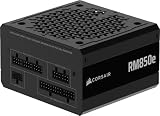
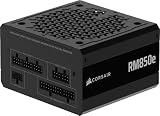
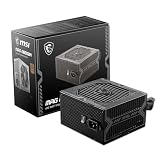
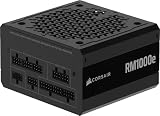
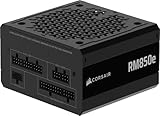
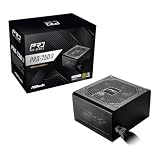
Our Top Picks


The Short Answer
For most single-GPU gaming PCs, a 1000W power supply is not worth it, but it is worth it if you are running a top-end card like an RTX 4080 Super, RTX 4090, or RX 7900 XTX paired with a high-end CPU. That one condition matters because those GPUs can pull 320W to 450W alone, and with transient spikes, a full system can briefly demand 600W to 750W. If your build fits that high-power profile, or you plan to upgrade to it within the next year or two, 1000W gives you quiet, efficient headroom.
What You Actually Get
A modern 1000W PSU in 2026 is not just about raw wattage. Units at this level are almost always 80+ Gold certified, fully modular, and built to the ATX 3.1 and PCIe 5.1 standard. That means they include a native 12V-2×6 connector (the updated, more reliable replacement for the 12VHPWR connector) that can deliver up to 600W over a single cable to your graphics card, without needing a bulky adapter.
As an Amazon Associate we earn from qualifying purchases at no extra cost to you.


Physically, most 1000W models are still standard ATX size. Expect dimensions around 150mm wide x 86mm tall x 160mm to 180mm deep, and a weight of 3.1 to 4.2 pounds (1.4 to 1.9 kg) without cables. The extra depth compared to a 750W unit is usually 10mm to 20mm to accommodate larger heatsinks and capacitors. Almost all current options use 105C rated Japanese capacitors, DC-to-DC conversion, and a 135mm or 140mm fluid-dynamic bearing fan that will not spin at all under 40% to 50% load.
Efficiency is another practical benefit. An 80+ Gold unit is typically 87% to 91% efficient at 50% load (around 500W) on a 115V circuit. That means less waste heat inside your case and lower fan noise. Most 1000W Gold units now carry a 7 to 10-year warranty, and include protections for over-current, over-voltage, short-circuit, and over-temperature. , Corsair, or Seasonic with quieter fans and tighter voltage regulation.
In real-world use, a 1000W PSU for a single-GPU system spends its life at 40% to 65% load, which is exactly where fans stay quiet, efficiency peaks, and capacitor stress is lowest. It also leaves 250W to 400W of headroom for transient spikes, which are brief 1 to 10 millisecond power surges that high-end GPUs can generate and that can shut down an undersized PSU.
Pros
- Headroom for flagship GPUs and transient spikes: Cards over 300W can spike 30% to 50% above their rated power for milliseconds. A 1000W unit absorbs those peaks without tripping protections, preventing random black-screen restarts.
- Quieter operation: Because a single-GPU gaming load of 400W to 600W is only 40% to 60% of capacity, the fan often stays in zero-RPM mode or at very low RPM (600 to 900 RPM). That is noticeably quieter than a 750W unit running at 70% to 85% load.
- Better efficiency and thermals at gaming loads: PSUs are most efficient at 40% to 60% load. Running in the sweet spot means less heat dumped into your case and slightly lower power draw at the wall, typically 2% to 4% better than running a smaller unit near its limit.
- Native ATX 3.1 support: The included 12V-2×6 cable handles up to 600W safely with improved sensing pins and a more secure latch design compared to older adapter solutions that used three 8-pin PCIe connectors.
- Longer lifespan and warranty: Running well below maximum rating reduces stress on capacitors and MOSFETs. Most 1000W Gold units from major brands include 10-year warranties, versus 5 to 7 years for many 650W to 750W budget units.
Cons
- Slightly larger and heavier: At 160mm to 180mm deep, a 1000W unit can be a tight fit in compact mid-tower or small-form-factor cases that are designed for 140mm to 160mm PSUs. Always check your case’s max PSU length, especially if you have a front-mounted radiator.
- Lower efficiency at idle and light loads: At 60W to 100W desktop idle, a 1000W PSU is only 6% to 10% loaded, where efficiency drops to around 80% to 85%. You will not damage anything, but you lose a small amount of the efficiency advantage you gain at high loads.
- Temptation to overspend elsewhere: Builders who buy a 1000W PSU often pair it with unnecessary upsells. If your total system draw is under 550W, that money is usually better spent on a better GPU, CPU, or a 2TB NVMe drive.
Who Should Buy It
You should buy a 1000W power supply for a single-GPU build if any of these apply:
First, you own or plan to buy a GPU that draws 300W or more. That includes the RTX 4080, RTX 4080 Super, RTX 4090, RX 7900 XTX, and the newer high-end cards in that power class. Paired with a 125W to 170W CPU like a Core i7-14700K, Core i9-14900K, or Ryzen 9 7900X/7950X, your gaming draw will be 550W to 700W, which is ideal for a 1000W unit.
Second, you overclock your CPU or GPU or run sustained all-core workloads like video rendering, 3D modeling, or AI inference while gaming. Overclocking can add 50W to 150W to total draw, and a 1000W PSU keeps you away from the limit.
Third, you want a quiet PC and keep your system for 5 to 8 years. The extra headroom keeps the fan off or nearly silent during most gaming sessions and extends component life. If you build once and upgrade the GPU in two to three years without wanting to rewire your PC, 1000W is the sensible one-and-done choice.
Finally, you run a power-hungry system beyond just the GPU: multiple NVMe drives, 6 to 10 case fans, a custom liquid cooling loop with a pump, and lots of USB peripherals. Those add 30W to 80W that is easy to overlook when sizing a PSU.
Who Should Skip It
Skip 1000W and save your money if your GPU draws under 250W. That covers the RTX 4060, RTX 4060 Ti, RTX 4070, RX 7600, RX 7700 XT, and RX 7800 XT. Even with a capable CPU and several drives, your peak gaming draw will be 350W to 500W. A good 650W to 750W PSU already gives you 150W to 300W of headroom for spikes, which is plenty.
Also skip it if you are building in a compact case where every millimeter counts. Many micro-ATX and mini-ITX cases specify a 160mm maximum PSU depth. A 180mm deep 1000W unit may block cable routing or interfere with a bottom-mounted hard drive cage.
If budget is tight, skip it. A larger PSU does not increase frame rates.
Cheaper Alternatives
| Option | Cost | Trade-off |
|---|---|---|
| 750W 80+ Gold ATX 3.1, Fully Modular | Varies | |
| 850W 80+ Gold ATX 3.1, Fully Modular | Varies | The sweet spot for most single-GPU builds; handles an RTX 4080 Super comfortably, includes native 12V-2×6, only 150W less than 1000W. |
| 850W 80+ Bronze, Semi-Modular | Varies | Cheapest modern option; works functionally but runs louder, less efficient (82-86% typical), shorter 5-year warranty, and often uses older PCIe adapters. |
| 1000W 80+ Gold (Budget) vs Premium | Varies | Both are 1000W, but budget units may have louder fans and shorter cables; premium units like be quiet! |
FAQ
Will a 1000W PSU waste electricity or raise my power bill?
No. A PSU only delivers what your components demand. If your PC needs 450W, a 1000W PSU delivers 450W. At idle and light loads it is slightly less efficient than a smaller unit, but the difference is typically 5 to 15 watts at the wall, which amounts to a few dollars per year. At gaming loads, it is often more efficient because it runs in its optimal 40% to 60% range.
Is 1000W overkill for an RTX 4070 or RX 7800 XT build?
Yes, for most people it is overkill. A quality 750W ATX 3.1 Gold PSU is more than enough for those cards, even with a high-end CPU and several drives. You would only need 1000W with those mid-range cards if you plan a major GPU upgrade to a 320W+ card within the next build cycle and want to avoid buying a new PSU later.
Do I need ATX 3.1 and the 12V-2×6 connector for a single GPU?
You do not strictly need it for older cards that use two or three 8-pin PCIe connectors, but it is strongly recommended for any new 1000W purchase. ATX 3.1 units handle GPU power spikes up to 200% of rated load for short durations, and the 12V-2×6 connector is more secure and safer than using a 12VHPWR adapter. If you buy now, get ATX 3.1 so you are ready for current and next-generation cards.
What size PSU do I need for an RTX 4090 on a single-GPU system?
For an RTX 4090 with a modern high-end CPU, 1000W is the recommended minimum from most GPU and PSU makers. The card alone can draw 350W to 450W, and the total system can peak at 650W to 850W with spikes. An 850W unit can work in some configurations, but it leaves little margin and may trigger shutdowns during transient spikes. A 1000W Gold ATX 3.1 unit gives you comfortable, quiet headroom.