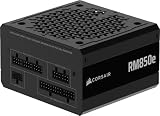
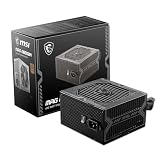
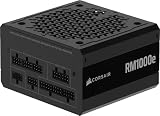
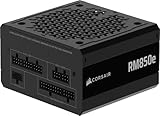
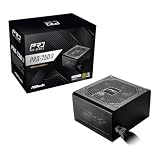
Our Top Picks


The Short Answer
For the vast majority of home office users, creative professionals, and gamers, no, a Platinum-rated power supply is not worth the price premium over a Gold-rated unit. Under typical household usage patterns, the 2% to 3% efficiency gain offered by a Platinum unit will take anywhere from 8 to 15 years to offset the upfront price premium.
What You Actually Get
When planning a home office or a high-end gaming setup, it is easy to get swept up in marketing terms. But in the world of computer hardware, “Gold” and “Platinum” are not just shiny decorative labels. They represent strict, standardized brackets of electrical efficiency certified by the 80 Plus program.
As an Amazon Associate we earn from qualifying purchases at no extra cost to you.


An 80 Plus certification ensures that a power supply unit (PSU) converts alternating current (AC) from your wall outlet into direct current (DC) for your computer components with minimal energy wasted as heat. Here is how the efficiency breakdown looks under a standard 115-volt internal load:
- 80 Plus Gold: 87% efficient at 20% load, 90% efficient at 50% load, and 87% efficient at 100% load.
- 80 Plus Platinum: 90% efficient at 20% load, 92% efficient at 50% load, and 89% efficient at 100% load.
At the sweet spot of 50% system load, a Platinum power supply is exactly 2% more efficient than a Gold power supply. To put this in perspective, let us look at a real-world mathematical example. If your high-end workstation requires 500 watts of continuous DC power to run a heavy rendering task:
- A Gold PSU operating at 90% efficiency will pull approximately 555.5 watts from your wall outlet.
- A Platinum PSU operating at 92% efficiency will pull approximately 543.5 watts from your wall outlet.
The physical difference is a mere 12 watts of power. If you run this computer under full load for 4 hours every single day for an entire year, the Platinum unit will save you about 17.5 kilowatt-hours of electricity.
Beyond raw electrical efficiency, stepping up to a Platinum rating usually guarantees premium physical construction. Platinum units typically weigh between 4.5 and 5.5 pounds, utilizing heavy-duty Japanese capacitors rated for 105 degrees Celsius, advanced voltage regulator modules, and highly optimized circuit layouts. These premium internals generate less waste heat, which allows the built-in 135mm or 140mm cooling fans to run at lower revolutions per minute (RPM), resulting in a significantly quieter computing environment.
Pros
- Reduced Thermal Output: Because less power is wasted as heat, your power supply runs cooler, preventing hot air from dumping into your computer chassis and lowering the ambient temperature of your room.
- Whisper-Quiet Operation: Most Platinum PSUs feature highly sophisticated “eco” or “hybrid” fan profiles. The fan often remains completely stationary and silent until the system exceeds 30% to 40% load.
- Longer Warranties: While Gold units often come with robust 5-year to 10-year warranties, Platinum power supplies almost universally feature 10-year to 12-year warranties, reflecting the manufacturer’s confidence in the premium component selection.
- Superior Power Regulation: Platinum units generally offer tighter voltage regulation and lower ripple noise, delivering exceptionally clean power to sensitive components like your motherboard, CPU, and graphics card.
Cons
- Stiff Competition from High-Tier Gold Units: Many modern, high-tier Gold-certified power supplies actually hit 91% efficiency in real-world testing, narrowing the performance gap to a virtually imperceptible 1%.
- Bulkier Profiles: Due to the heavy-duty heatsinks and complex internal component layouts required to hit Platinum efficiency, these units can be slightly longer (often 160mm to 180mm in depth), making cable management tighter in compact mid-tower cases.
Who Should Buy It
You should opt for a Platinum-rated power supply if you are building an ultra-high-end workstation or a specialized home server that remains powered on and under load 24 hours a day. It is highly recommended for professionals running multi-GPU setups for 3D rendering, machine learning, or local AI data processing. As we look toward the hardware landscape of 2026, where next-generation graphics cards and processors are expected to push power demands even higher, enthusiasts building top-tier rigs (utilizing 1,000-watt to 1,600-watt units) will benefit from the superior thermal management and reduced system noise that Platinum units provide.
Who Should Skip It
You should skip the Platinum rating if you are a casual gamer, a remote office worker, or a budget-conscious builder. If your computer is primarily used for web browsing, streaming, and gaming for a few hours a night, a high-quality 80 Plus Gold power supply is the absolute sweet spot. The extra money saved by purchasing a Gold unit can be much better spent on a faster SSD, more system memory, or a higher-tier graphics card, all of which will yield a tangible, immediate boost to your daily user experience.
Cheaper Alternatives
If you decide that a Platinum unit is not worth the extra cost, there are several highly reliable paths you can take to power your home computer safely without overspending.
| Option | Price Range | Key Trade-off |
|---|---|---|
| High-Tier 80 Plus Gold PSU | Check on Amazon | Loses 2% efficiency compared to Platinum, but offers identical safety features and the same 10-year warranty. |
| 80 Plus Bronze PSU | Check on Amazon | Lower overall efficiency (82% to 85%), shorter warranties (usually 3 to 5 years), and louder fan operation under heavy loads. |
| A-Tier Rated Gold PSU (with Hybrid Fan) | Check on Amazon | Provides the same silent operation as Platinum units at low loads, but lacks the official Platinum certification badge. |
FAQ
Is platinum rated power supply worth it over gold for a standard gaming PC?
No, for a standard gaming PC drawing between 300 watts and 500 watts during active gameplay, the efficiency difference is negligible. A Gold-rated power supply will perform identically in games while saving you a significant amount of money upfront.
Does a Platinum power supply run cooler than a Gold power supply?
Yes. Because a Platinum power supply wastes less electricity as heat, it generates less thermal waste. This means the internal components stay cooler, the fan does not have to spin as fast, and less heat is radiated into your computer case.
Can a Platinum power supply protect my computer components better than a Gold one?
Not necessarily. Component protection depends on the quality of the unit’s safety protections (such as Over-Current, Over-Voltage, and Short-Circuit Protection) rather than its efficiency rating. A high-quality Gold power supply from a reputable brand offers the exact same level of electrical protection as a Platinum unit.
Why are Platinum power supplies so much more expensive?
To achieve the strict efficiency standards required for a Platinum certification, manufacturers must use more expensive, higher-grade internal components. This includes advanced silicon carbide diodes, highly efficient planar transformers, and premium Japanese capacitors, all of which drive up the manufacturing and retail costs.