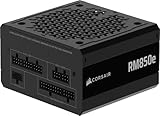
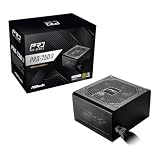
Our Top Picks


The Short Answer
Whether an 80 Plus Titanium power supply unit (PSU) is worth buying comes down to one primary condition: your system must run heavy, high-wattage workloads for six or more hours per day, or sit in a small space where acoustic fan noise and ambient heat generation are dealbreakers.
If you are building a workstation for 3D rendering, local AI model training, or continuous video production, or if you demand zero fan noise in a compact home office, paying the premium for Titanium efficiency makes practical sense. However, for standard office tasks, casual gaming, or mid-range builds running three hours a day, the high upfront price tag yields diminishing returns. In those scenarios, an 80 Plus Gold or Platinum unit delivers far better financial value.
As an Amazon Associate we earn from qualifying purchases at no extra cost to you.


What You Actually Get
To evaluate if an 80 Plus Titanium power supply is worth buying, you need to understand what the badge actually guarantees. The 80 Plus certification system measures electrical efficiency—how effectively a power supply converts Alternating Current (AC) from your home’s wall outlet into Direct Current (DC) for your computer components. Whatever percentage is lost in conversion is radiated directly into your room as waste heat.
Titanium sits at the absolute peak of the 80 Plus hierarchy, outperforming Bronze, Silver, Gold, and Platinum tiers. It requires a power supply to achieve specific efficiency targets on 115V internal power circuits:
- 10% Load: 90% efficiency (Titanium is the only rating that mandates testing at a 10% idle/light load).
- 20% Load: 92% efficiency.
- 50% Load: 94% efficiency (peak efficiency).
- 100% Load: 90% efficiency.
By comparison, an 80 Plus Gold power supply peaks at 90% efficiency under a 50% load and drops to 87% at full load, while lacking any efficiency standard at a light 10% load. In practical home workspace terms, an 80 Plus Titanium PSU running a 1,000-watt load wastes only about 60 watts as heat, whereas a Gold unit under the same load wastes roughly 100 to 130 watts.
Achieving this level of conversion efficiency requires premium internal components: Japanese 105°C-rated electrolytic capacitors, advanced full-bridge LLC resonant converters, synchronous rectifiers, and high-grade copper heat sinks. Because less heat is generated internally, manufacturers can program passive, zero-RPM fan profiles where the fan remains completely motionless until the system exceeds 40% to 50% of its total rated capacity.
Physically, Titanium power supplies adhere to standard ATX dimensions in width (150 mm / 5.9 inches) and height (86 mm / 3.4 inches). However, their depth varies according to total wattage capacity. Compact 1,000-watt units, such as the FSP Hydro Ti Pro 1000W, maintain a sleek 150 mm (5.9 inches) depth and weigh roughly 4.2 lbs (1.9 kg). High-capacity powerhouses built for multi-GPU or extreme workstation configurations, such as the FSP MEGA TI 1650W, feature a deeper chassis measuring 180 mm to 200 mm (7.1 to 7.8 inches) and can weigh over 6.8 lbs (3.1 kg).
Pros
- Maximum Energy Efficiency: Delivers up to 94% peak efficiency, reducing electricity loss and lowering power draw from your wall outlet across all operating levels.
- Unique Low-Load Standard: Guaranteed 90% efficiency at a light 10% load ensures energy isn’t wasted while your computer is idling, web browsing, or streaming media.
- Cooler and Quiter Workspaces: Waste heat generation is reduced by up to 40% compared to standard Gold units, allowing cooling fans to run at whisper-quiet RPMs or remain totally off.
- Exceptional Component Quality: Built with top-tier internal topology and high-grade Japanese capacitors, ensuring pristine voltage regulation (often within ±1%) and low electrical ripple.
- Extended Lifespan and Warranties: Titanium units almost universally ship with 10-year to 12-year manufacturer warranties, protecting your investment long-term.
Cons
- Long Financial Payback Period: Depending on local electricity rates, saving money on your monthly energy bill can take anywhere from 6 to 12 years to offset the initial purchase cost.
- Physical Clearance Demands: Extreme capacity models (1300W–1650W) feature elongated chassis depths (180mm+) that can crowd cable management basements in smaller PC cases.
- Overkill for Average Users: Mid-range gaming systems drawing under 400 watts rarely run hot or loud enough to notice the physical benefits of a Titanium unit.
Who Should Buy It
An 80 Plus Titanium power supply is ideal for professional content creators, 3D animators, software engineers hosting local virtual machines, and AI researchers running long computational tasks. If your computer spends hours at 600W to 1200W sustained loads, the electrical efficiency directly reduces the ambient room temperature in your home office. As power hardware requirements shift as we look ahead in 2026, high-wattage components make thermal efficiency inside smaller rooms even more noticeable.
It is also tailored for audio producers, podcasters, and noise-sensitive individuals who require an ultra-quiet home working environment. Because Titanium PSUs generate very little waste heat, their internal fans rarely turn on during everyday office tasks, rendering the power supply virtually silent.
Who Should Skip It
Mainstream PC gamers playing games for a few hours an evening should skip Titanium power supplies.
Budget-focused builders should also skip this category.
Cheaper Alternatives
| Option | Cost Range | Trade-off |
|---|---|---|
| 80 Plus Gold (850W – 1000W) | Check on Amazon | 4% to 6% lower efficiency at peak load; higher thermal output; no strict 10% light-load efficiency requirement. |
| 80 Plus Platinum (850W – 1200W) | Check on Amazon | Within 2% efficiency of Titanium under heavy load, but lacks mandatory 10% idle-load regulation and typically carries slightly shorter fanless operational thresholds. |
| Cybenetics Gold / Platinum | Check on Amazon | Evaluates overall noise (LAMBDA ratings) alongside efficiency (ETA ratings) with modern testing methodology, though high-tier models still command moderate premiums. |
FAQ
How much money will an 80 Plus Titanium PSU save on my electric bill?
What is the difference between 80 Plus Titanium and Cybenetics Titanium?
80 Plus measures efficiency at four fixed static load points using basic power factor criteria. Cybenetics (ETA Titanium standard) evaluates efficiency across hundreds of different load combinations, measures standby power draw, and includes strict acoustic noise testing (LAMBDA certification), offering a more comprehensive modern snapshot of real-world PSU behavior.
Is an 80 Plus Titanium PSU required for ATX 3.0 and PCIe 5.0 graphics cards?
No. 80 Plus Titanium refers purely to electrical efficiency, not power delivery standards. You can find ATX 3.0 and PCIe 5.0 compatibility with native 12V-2×6 or 12VHPWR high-power cables across 80 Plus Gold, Platinum, and Titanium power supplies alike.
Does a 1000W or 1650W Titanium PSU pull that full wattage from the wall constantly?
No. A power supply only draws the exact amount of electrical power required by your computer’s components at any given moment, plus a tiny percentage lost to heat. A 1650W Titanium PSU powering a computer that is idling will only draw around 30 to 50 watts from your wall outlet.