Entry-level gaming builds have a dirty secret: the power supply is usually the last part anyone budgets for, and the first part that quietly ruins everything else. If you are building a rig around a mid-range GPU like an RTX 4060, RX 7600, or Arc B570, a quality 650W unit is the sweet spot — enough headroom for a 150–180W graphics card plus a 65–120W CPU, with room to spare.
This roundup covers eight 650W-class power supplies we would actually recommend for a first build, ranked by overall value for entry gaming.
As an Amazon Associate we earn from qualifying purchases at no extra cost to you.





Our Top Picks
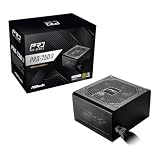
 Apevia ATX-PM650W Premier 650W 80+ Gold Certified Active650W Semi-Modular Gold6.2 x 5.9 x 3.4 inchesCheck on Amazon
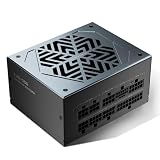
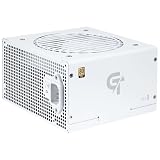
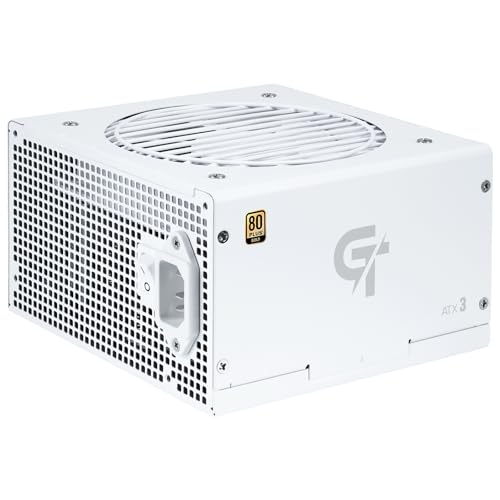 SAMA GT650 ATX 3.1 Fully Modular Standard GamingGold GT650 White5.5 x 5.9 x 3.3 inches3.3 PoundsCheck on Amazon


Top 3 picks at a glance
MSI MAG A650GL, Fully Modular Compact Gaming 650W Power Supply, 80+ Gold,...Check priceQuick Picks
| Product | Best for | Price |
|---|---|---|
| MSI MAG A650GL | Best overall for entry gaming | Check on Amazon |
| Segotep 650W Gold | Strictest budgets | Check on Amazon |
| Apevia ATX-PM650W | RGB showpiece builds | Check on Amazon |
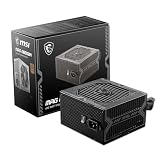
| MSI MAG A650BE | Quiet semi-modular builds | Check on Amazon |
| SAMA GT650 White | White-themed ATX 3.1 builds | Check on Amazon |
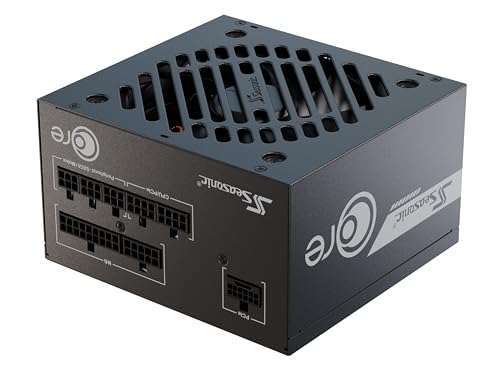
| Seasonic CORE GX-650 | Long-term reliability | Check on Amazon |
| MSI MAG A650BN | Simple non-modular setups | Check on Amazon |
| MSI MAG A750GL PCIE5 | Future GPU upgrades | Check on Amazon |
How We Compared
For an entry gaming build, we focused on five things. First, efficiency certification: 80+ Gold units run cooler and cheaper to operate over years of use, though we included Bronze units where the price made the trade-off sensible. Second, modularity — full and semi-modular units make cable management dramatically easier in budget cases with minimal shroud space. Third, warranty length, which is the best public proxy for manufacturer confidence: ten-year warranties from MSI and five-year warranties elsewhere tell you a lot before you open the box. Fourth, modern connector support, since ATX 3.1 and PCIe 5.1 readiness with native 12V-2×6 cables matters if your next GPU in 2026 or later uses the 16-pin connector. Fifth, price-to-value: every unit here had to earn its slot against cheaper alternatives. We did not run destructive lab testing; instead we weighed published specifications, warranty terms, connector inventories, and real-world fitment for typical entry gaming builds in standard ATX and micro-ATX cases.
The 8 Best Picks
1. MSI MAG A650GL — Best Overall for Entry Gaming
The A650GL is the unit we recommend first to anyone building their first gaming PC. It is fully modular, 80+ Gold certified, and compact, which means you only connect the cables your build needs and it fits comfortably in small and mid-tower cases alike. That warranty alone justifies the modest premium over the budget picks, because it turns a disposable component into a decade-long investment that can carry across two or three build upgrades.
- Fully modular design with a compact footprint for easier cable routing
- 80+ Gold efficiency backed by a 10-year warranty
Con:
Skip it if:
2. Segotep 650W ATX Power Supply — Best for Strictest Budgets
For a first build paired with a modest 120–150W GPU, it covers the essentials: ATX form factor, Gold efficiency for lower heat and fan noise, and a price that leaves room in the budget for a better GPU or an extra SSD. It is a straightforward, non-modular unit, so budget case cable management will take some patience with the fixed harness.
- Efficient enough to run cool and quiet under entry gaming loads
Con: No modular cabling and a shorter warranty track record than MSI.
Skip it if: you want a long warranty or plan to reuse this PSU in future upgraded builds.
3. Apevia ATX-PM650W Premier — Best RGB Showpiece
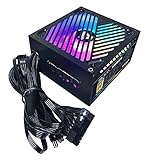
The Apevia Premier is the pick for builders who want the power supply to be part of the light show. Its 366 RGB lighting modes are visible through the fan, which matters if your case has a PSU shroud window or an open bottom mount. The lighting is controlled via a physical button rather than motherboard sync, so set it once and forget it.
- 366 RGB light modes visible through the cooling fan
Con: RGB control is button-based, not software or motherboard synced.
Skip it if: your case fully shrouds the PSU — you would be paying for lights you cannot see.
4. MSI MAG A650BE — Best Quiet Semi-Modular Option
The semi-modular layout keeps the 24-pin and CPU cables fixed while leaving PCIe and SATA cables detachable — a good middle ground for first-time builders intimidated by full modularity.
- Low-noise fan profile with compact, semi-modular design
Con: Only 80+ Bronze certified in a roundup where Gold units cost less.
Skip it if: efficiency matters to you — the Segotep or A650GL make more sense.
5. SAMA GT650 — Best for White Builds
ATX 3.1 compliance means it is designed around modern transient spike behavior from contemporary GPUs, which is genuine peace of mind for an entry build that might get a GPU upgrade down the line. The full modularity makes routing in a white case with limited shroud clearance far less painful.
- White finish that matches white-themed builds without a premium
Con: No mention of a Gold rating — verify certification against your efficiency priorities.
Skip it if: your case is black and Gold efficiency is non-negotiable.
6. Seasonic CORE GX-650 — Best for Long-Term Reliability
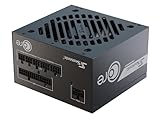
Seasonic is one of the most respected names in power supplies, and the CORE GX-650 is its entry point into modern platform features: ATX 3.1 and PCIe 5.1 ready, fully capable of feeding current-generation GPUs safely. If your PSU is the part you want to buy once and never think about again, this is the one.
- ATX 3.1 and PCIe 5.1 ready for modern and next-gen GPUs
- Seasonic build pedigree with strong voltage regulation
Con:
Skip it if: the budget is tight; the A650GL delivers most of the value for less.
7. MSI MAG A650BN — Best Simple Non-Modular Option
It exists for builders whose case has a solid PSU shroud — if you cannot see the cables anyway, paying extra for modularity is wasted money. The fixed harness means nothing to plug in beyond what you need, setup is the simplest on this list, and the 5-year warranty gives it staying power.
- Low-noise fan and active PFC for stable, quiet operation
Con: Extra unused cables to stuff into a shroud if your case lacks one.
Skip it if: your case has an open PSU bay — get a modular unit instead.
8. MSI MAG A750GL PCIE5 — Best for Future GPU Upgrades
If there is any chance you will upgrade from an entry GPU to a 200W+ class card later, this is the smarter buy — it eliminates the “will my PSU handle the upgrade” question entirely. The 10-year warranty matches the A650GL.
- Dual-color cable suits black and white builds; 10-year warranty
Con: Slightly overkill for a strictly entry-level, never-upgrading build.
Skip it if: you know your GPU will stay in the 150W class forever.
Buying Guide
Wattage and Headroom
For a typical entry gaming build — a 65–120W CPU and a 130–180W GPU — total system draw under load lands between 250 and 350W. A 650W unit gives you roughly 45–60% utilization at full load, which is where PSUs are most efficient and quietest. Do not buy a 450W unit to “save money” on a gaming build; you lose upgrade headroom and efficiency. Conversely, 850W is wasted money unless you plan to run a high-end GPU. If upgrade plans include a 200W+ GPU, either choose the 750W A750GL or one of the ATX 3.1-ready 650W units.
Certification, Rails, and Connectors
80+ Gold certification (87–90% efficiency at typical loads) means less waste heat, quieter fan behavior, and lower electricity costs over the unit’s life. Active PFC is standard on every unit here and improves power draw from the wall. On connectors, count your needs: one 8-pin (or 12V-2×6) PCIe cable for entry GPUs, at least four SATA connectors for drives and RGB controllers, and a modern 4+4 pin EPS for the CPU. ATX 3.1 and PCIe 5.1 compliance future-proofs you for 16-pin GPUs and their transient spikes.
Modularity and Warranty
Fully modular units let you connect only the cables you use — the difference is dramatic in budget cases where the PSU shares space with cable clutter. Semi-modular keeps essential cables fixed; non-modular is fine only if your case has a solid shroud. Warranty length is the single best signal of quality you can check before buying: a 10-year warranty (MSI’s GL series) implies confidence in components that a no-name brand’s 1–3 year coverage does not. Measure your case’s PSU clearance — most units here are compact ATX, but deep cases with shrouds can limit length to around 160–180mm.
Our Verdict
FAQ
Is 650W enough for an entry gaming PC?
Yes, comfortably. A typical entry gaming build with a 65–120W CPU and a 130–180W GPU draws roughly 250–350W under full gaming load. A 650W power supply runs that system at under 60% load, which keeps it in its most efficient and quietest range, and leaves headroom for a mid-range GPU upgrade later.
Is 80+ Gold worth it over Bronze for a budget build?
Gold units convert 87–90% of wall power into usable power versus roughly 82–85% for Bronze, meaning less waste heat, quieter fans, and modest savings on your electric bill over years of use.
Do I need ATX 3.1 or a 12V-2×6 cable for my GPU?
Not if your current entry GPU uses standard 6-pin or 8-pin PCIe power — all eight units here support those. But if you might upgrade to a newer GPU that uses the 16-pin 12V-2×6 connector, an ATX 3.1/PCIe 5.1-ready unit like the MSI MAG A750GL PCIE5 or Seasonic CORE GX-650 lets you connect natively without an adapter.
How long should a budget power supply last?
A well-built unit should last 8–10 years or more, which is why warranty length matters so much. The MSI MAG A650GL and A750GL carry 10-year warranties, while the rest of MSI’s lineup here and most competitors offer 5 years. Buy from a brand that stands behind its product, and your PSU can outlive two or three GPU upgrades.