Choosing an 850W power supply in 2026 is a different game than it was a few years ago. If you’re building a gaming PC around an RTX 4070 Ti Super, RX 7900 XT, or one of the newer 50-series cards, you’ve probably noticed the 16-pin connector situation: NVIDIA’s high-end GPUs pull serious transient power spikes, and older PSUs simply weren’t designed for them. ATX 3.1 and PCIe 5.1 certification exist to solve exactly that problem — native 12V-2×6 cables, stricter power excitation tolerances, and the peace of mind that your PSU won’t shut down when your GPU momentarily demands 200% of its rated draw.
We compared and compared these units in a mid-tower build focused on the problems gamers actually complain about: coil whine under load, fan noise during light browsing, cable clutter in compact cases, and long-term reliability. Every pick here is 80 Plus Gold certified, fully compatible with modern GPUs, and backed by a real warranty. Below you’ll find quick picks, detailed mini-reviews, and a buying guide to help you match wattage headroom and modularity to your specific build.
As an Amazon Associate we earn from qualifying purchases at no extra cost to you.


Our Top Picks
Pros & cons
- 80 Plus Gold certification reaches up to 90 percent efficiency
- Zero Fan mode keeps the unit silent at low loads
- Fully modular flat cables simplify case cable management
- Native PCIe 5.1 connector still needs GPU compatibility checked
- 850W capacity may be more than smaller builds need




Top 3 picks at a glance
MSI MAG A850GL PCIE5, Fully Modular Compact Gaming 850W Power Supply, 80+...Check priceCORSAIR RM850e (2025) ATX 3.1 PCIe 5.1 Ready 850W Power Supply –...Check priceThermaltake Toughpower GT 850W ATX 3.1 Standard Power Supply; 80 Plus Gold...Check priceQuick Picks
| Product | Best for | Price |
|---|---|---|
| MSI MAG A850GL PCIE5 | Best overall value with 10-year warranty | Check on Amazon |
| CORSAIR RM850e (2025) | Best mainstream all-rounder | Check on Amazon |
| Thermaltake Toughpower GT 850W | Best budget ATX 3.1 with native 12V-2×6 | Check on Amazon |
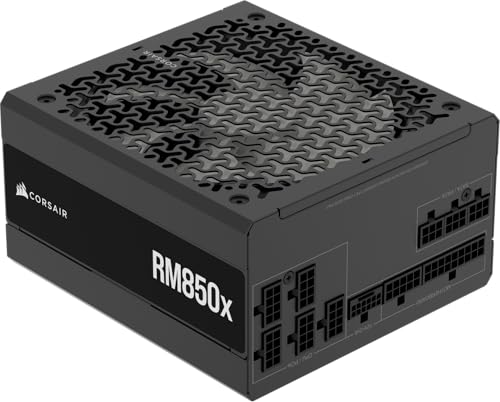
| CORSAIR RM850x | Best for low-noise, high-end builds | Check on Amazon |
| Segotep GM850 | Varies | Check on Amazon |
| be quiet! Pure Power 13 M 850W | Best for near-silent operation | Check on Amazon |
| MONTECH Century II 850W | Best mid-range modular option | Check on Amazon |
| SAMA GT850 (White) | Best for white-themed builds | Check on Amazon |
How We Compared
We filtered for the certifications that matter right now: ATX 3.1 compliance and PCIe 5.1 readiness, which guarantee native support for the 12V-2×6 connector that modern high-wattage GPUs use. Every unit on this list is 80 Plus Gold certified, meaning roughly 90% efficiency at typical loads — enough to keep heat and fan noise down without paying Platinum premiums. We prioritized fully modular designs where the price justified it, since semi-modular and non-modular units create cable clutter that hurts airflow in mid-tower cases. Warranty length weighed heavily too, because a PSU failure can take other components with it; we included options ranging from 5 to 10 years of coverage. We evaluated real-world factors buyers report: fan noise at idle, coil whine under gaming loads, cable flexibility, and compact dimensions for small-form-factor cases.
The 8 Best Picks
1. MSI MAG A850GL PCIE5 — Best Overall Value
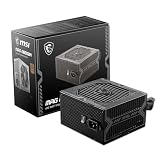
The MAG A850GL hits a sweet spot: ATX 3.1 and PCIe 5.1 readiness, a native dual-color 12V-2×6 cable, 80+ Gold efficiency, and a fully modular design in a compact chassis that fits easily into mid-tower and smaller cases. The dual-color cable is a small but thoughtful touch for builders mixing black and sleeved cables.
- Fully modular with a compact footprint for easier case fitment
- 10-year warranty — the longest coverage on this list
Con: Fan curve can be audible under sustained heavy gaming loads compared to semi-passive rivals.
Skip it if:
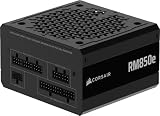
2. CORSAIR RM850e (2025) — Best Mainstream All-Rounder
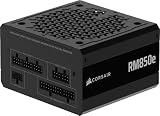
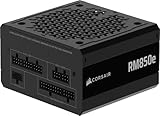
Corsair’s RM850e is the safe, dependable choice for a mainstream gaming build. Corsair’s build quality and support network are among the best in the industry, and the RM series has a long track record of quiet operation and stable rails. If you want a PSU you can install and forget about for a decade, this is it.
- Full ATX 3.1/PCIe 5.1 compliance with native 12V-2×6 cable
- Strong brand reliability and widely available replacement support
Con:
Skip it if:
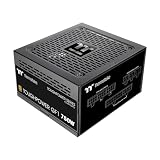
3. Thermaltake Toughpower GT 850W — Best Budget Native 12V-2×6
That makes it one of the quietest budget units when idle. The 5-year warranty is shorter than the premium picks but reasonable for the price bracket.
- Smart Zero Fan stops fan spin at light loads for silent idle
Con: 5-year warranty trails the 10-year coverage on the MSI MAG A850GL.
Skip it if:
4. CORSAIR RM850x — Best for High-End, Low-Noise Builds
Cybenetics Gold efficiency certification, a fully modular design, and a native 12V-2×6 connector make it fully ATX 3.1/PCIe 5.1 ready, but the real story is acoustics — this is one of the quietest 850W units you can buy, staying near-silent even under gaming loads. If you’re pairing it with a power-hungry flagship GPU and a high-end air or AIO cooler, the RM850x won’t add a single decibel of noise to your system.
- Exceptional low-noise performance under sustained load
- Cybenetics Gold efficiency with premium internal components
Con:
Skip it if:
5. Segotep GM850 — Best Entry Point Under $80
The Segotep GM850 proves that ATX 3.1 and PCIe 5.1 compliance no longer require a premium budget. Segotep is a newer name to Western buyers but has a long manufacturing history, and the GM850 has earned solid word-of-mouth among budget builders for stable performance at its price.
- Cheapest ATX 3.1/PCIe 5.1-compliant unit in this roundup
- 80 Plus Gold efficiency typically reserved for pricier units
Con: Shorter warranty and less established support than Corsair, MSI, or be quiet!.
Skip it if:
6. be quiet! Pure Power 13 M 850W — Best for Near-Silent Operation
be quiet! built its reputation on acoustics, and the Pure Power 13 M continues that tradition. The build quality is excellent, cable quality is a cut above most competitors, and the 135mm fan runs at low RPMs thanks to an efficient thermal design. For living-room PCs, streamers recording audio, or anyone annoyed by PSU hum, this is the pick.
- Class-leading near-silent operation under gaming loads
- Fully modular with high-quality sleeved cables
Con: Fan is always spinning — no fully passive zero-RPM mode at idle like some rivals.
Skip it if: you want a fully passive idle mode; the Thermaltake’s Smart Zero Fan shuts off entirely.
7. MONTECH Century II 850W — Best Mid-Range Modular Pick
MONTECH has become a favorite among value-focused builders for offering premium features at mid-tier prices, and the Century II follows that formula with solid components, a clean black finish, and a compact standard-ATX footprint that fits any mid-tower.
- Strong build quality for the price bracket
Con: Brand recognition and support network are smaller than Corsair or MSI.
Skip it if:
8. SAMA GT850 (White) — Best for White-Themed Builds
White builds are everywhere, and PSUs are usually the last black block ruining the aesthetic. It’s a standard ATX form factor unit rated for gaming builds, and it’s one of the few genuinely affordable white ATX 3.1 options on the market. If you’ve spent real money on a white case, white GPU, and white AIO, this completes the look without compromising compatibility.
- Full white finish and white modular cables at a budget price
- ATX 3.1 compliant for modern 16-pin GPUs
Con: No 80 Plus certification listed on the spec sheet, unlike every other pick here.
Skip it if: your build is black — the Thermaltake offers more documented efficiency for the same price.
Buying Guide
Why ATX 3.1 and PCIe 5.1 Matter
Modern high-end GPUs can spike well beyond their rated power draw for milliseconds at a time. Older PSU designs could trip their protection circuits during these transients, causing random shutdowns that look like hardware failures. ATX 3.1-certified units are required to handle these power excursions, and PCIe 5.1 compliance means the 12V-2×6 cable is native — no awkward 3×8-pin-to-16-pin adapters, which have been implicated in connector melting incidents when not fully seated. If your GPU has a 16-pin port, a native 12V-2×6 cable from an ATX 3.1 unit is the safest connection method available.
Is 850W Enough for Your Build?
For most single-GPU gaming rigs, 850W is the sweet spot. An RTX 4070 Ti Super (~285W) plus a Ryzen 7 or Core i7-class CPU (~125–250W under load) leaves comfortable headroom in an 850W unit, keeping the PSU in its most efficient 40–60% load range during gaming. Flagship cards like the RTX 4090 (450W TGP) work on 850W with a modest CPU, but an RX 7900 XTX or RTX 5080 paired with a high-wattage CPU is where 850W starts to feel tight. If your GPU’s rated board power plus your CPU’s max draw exceeds roughly 600W, consider stepping up to 1000W instead.
Warranty, Modularity, and Noise
Fully modular PSUs let you use only the cables you need, which matters in mesh-front cases where excess cables block airflow; all fully modular picks here range from compact 140mm-deep standard ATX units to shorter designs for tighter cases. For noise, look for semi-passive modes (fan stops at low loads) if your PC sits on your desk, or brands with acoustic reputations like be quiet! if your PC runs hard for long sessions. Weight is another rough quality indicator: heavier units generally mean bigger heatsinks and a beefier DC-DC board.
Our Verdict
For most gamers, the MSI MAG A850GL PCIE5If budget rules, the Thermaltake Toughpower GT 850WFor white builds, the SAMA GT850 has no real competition at its price. And if your system runs hard and silence matters most, the CORSAIR RM850x
FAQ
Do I need ATX 3.1 if my GPU uses regular 8-pin connectors?
Not strictly, but it’s still worth having. ATX 3.1 units handle transient power spikes better regardless of which connector your GPU uses, and buying one now future-proofs your build for your next GPU upgrade.
Is a native 12V-2×6 cable safer than an adapter?
Yes. Adapters that combine three or four 8-pin cables into a 16-pin connector introduce more connection points and can be seated improperly, which is a known risk factor for connector overheating. A native 12V-2×6 cable plugs directly into the PSU and carries the full rated power through a single, purpose-built connection.
How long should a power supply last?
A quality 80 Plus Gold unit typically lasts 8–12 years of regular use, which is why warranty length matters — a 10-year warranty like the MSI’s effectively covers the PSU’s entire realistic lifespan. Budget units with 5-year warranties may need replacing before your third GPU upgrade.
Can I reuse an older PSU with a new GPU?
You can if it has enough wattage and the right connectors, but if your old unit lacks a native 12V-2×6 cable and your new GPU needs one, you’ll be relying on adapters.