Our Top Picks


Top 3 picks at a glance

Best Home Bowling Machines for Indoor Recreation
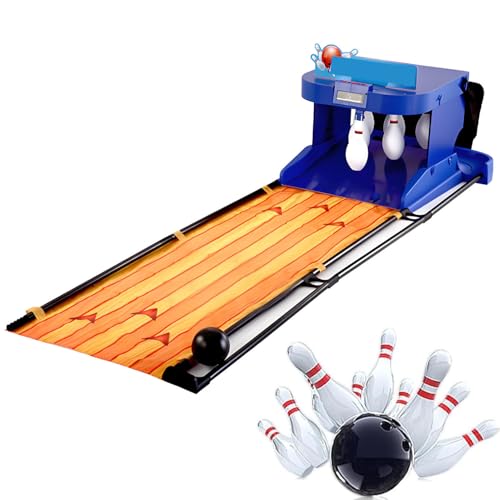
The best home bowling machines for indoor recreation are compact automatic pinsetter systems with a 12–20 ft lane, a powered ball return, low-noise pin handling, and at least 4 ft of clear space behind the bowler and beside the lane for safe movement.
There is no single ideal home bowling machine: the right choice depends mainly on whether you want realistic ten-pin play, casual family bowling, or a compact game-room experience. Full-length commercial-style equipment can require a dedicated room, while short-lane systems sacrifice some ball travel and pin-setting realism to fit ordinary homes.
As an Amazon Associate we earn from qualifying purchases at no extra cost to you.

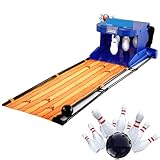
Quick comparison of home bowling machine types
| System type | Typical lane length | Ball return | Pin setup | Typical noise | Recommended room depth | General market range |
|---|---|---|---|---|---|---|
| Compact tabletop or arcade bowler | 4–8 ft | Gravity or small powered return | Manual or fixed miniature pins | Low to moderate | 10–14 ft | Varies |
| Short automatic home lane | 10–16 ft | Powered gutter or under-lane return | Automatic reset, reduced pin deck | Moderate | 18–24 ft | Varies |
| Residential duckpin or mini-bowling lane | 20–32 ft | Powered return with collection pit | Automatic or semi-automatic | Moderate to high | 28–40 ft | Varies |
| Commercial-style ten-pin installation | 60 ft playing lane | Full mechanical return | Full-size pinsetter and pin deck | High without acoustic treatment | 85–95 ft | Varies |
What to compare before buying
1. Lane length and realism
Lane length affects more than appearance. A longer lane gives the ball time to develop hook, makes speed and release matter more, and creates a more convincing bowling rhythm. A 4–8 ft arcade lane is best treated as a target game. It can be fun, but it will not reproduce the timing or ball motion of ten-pin bowling.
A 10–16 ft automatic lane is a useful compromise for a basement or family room. It supports repeatable bowling practice and usually accepts lighter house balls, but the shortened distance limits how much a player can learn about full-lane targeting. Duckpin and mini-bowling systems in the 20–32 ft range feel more like bowling while remaining substantially easier to install than a regulation lane.
For serious ten-pin realism, look for a full approach, regulation-width lane, proper foul-line geometry, and a pin deck that accepts full-size pins. Confirm the complete installed length rather than relying on the advertised lane length; the approach, pinsetter, return cabinet, and rear service access can add 20–35 ft.
2. Ball-return design
A straight gutter return is simple and inexpensive, but it can be noisy and may place the ball directly in a player’s walking path. An under-lane or side-channel return gives a cleaner appearance and is preferable when several people will bowl in succession.
- Gravity returns: quiet and mechanically simple, but they need a noticeable slope and may stall with very light or unusually shaped balls.
- Powered gutter returns: suitable for short lanes and frequent play, although the motor adds electrical noise and another wear component.
- Under-lane returns: the most polished option for a dedicated room, but they require more installation depth and service access.
- Manual ball storage: acceptable for occasional play, but less convenient for families or parties because every throw requires retrieval.
Check the supported ball diameter and weight. A machine designed for small plastic balls may not tolerate standard 10–16 lb bowling balls. Also ask whether the return stops automatically when a ball is jammed; an overload sensor is more valuable in a home than a slightly faster return speed.
3. Pin setup and reset speed
Automatic pin setup is the feature that most changes the experience from a bowling toy into a usable recreation system. Manual pin placement is fine for a low-cost compact game, but it interrupts play and makes scoring less consistent.
Compact machines commonly use miniature pins, fixed pin rows, or a mechanical sweep that resets all pins together. More advanced systems use individual pin cups or strings. String-style mechanisms generally need less space below the pin deck and can reduce the complexity of the machine, but visible strings and slower reset cycles may feel less like a commercial center.
Ask these questions before choosing:
- Does the system reset all pins after every frame, or only after a completed turn?
- Can it detect standing pins and score automatic spares?
- Are replacement pins and pin-deck parts available?
- Can the reset cycle be slowed for children?
- Does a fallen pin ever block the sweep or ball exit?
4. Noise and vibration
Noise is often the deciding factor in a home installation. The ball striking pins, the return motor, the sweep mechanism, and the lane structure can transmit sound through a basement ceiling or shared wall. A machine advertised as “quiet” may still produce a sharp impact when a ball hits the pin deck.
For a room next to bedrooms or a living area, prioritize a low-impact short-lane system, rubberized pin cups, a padded ball-stop area, and variable motor controls. Place the machine on a dense rubber isolation mat, leave a small air gap from the wall, and use acoustic panels on the rear wall rather than covering ventilation openings. Do not permanently enclose the return motor in soft material; overheating can shorten its life.
A practical target is a system listed below 65 dBA during normal operation for an adjacent-room installation. Systems in the 70–80 dBA range are better suited to a basement, garage, or dedicated games room.
Room-clearance calculation
Measure the usable room, not the nominal footprint. Suppose a short automatic lane is 14 ft long and its manufacturer requires 3 ft of approach space, 2 ft behind the rear mechanism for service, and 2 ft of side clearance on each side. The minimum depth is:
14 ft lane + 3 ft approach + 2 ft service clearance = 19 ft.
If the lane cabinet is 4 ft wide, the practical room width is:
4 ft cabinet + 2 ft left clearance + 2 ft right clearance = 8 ft minimum.
For comfortable play, use at least 22 ft of depth and 10 ft of width. The additional space allows a bowler to step aside while another player retrieves a ball and makes it easier to access electrical connections and moving parts.
Decision matrix: which system fits your room?
| Your situation | Best choice | Why | Acceptable compromise |
|---|---|---|---|
| Apartment or room under 16 ft deep | Compact arcade bowler | Lowest impact, simplest setup, and limited ball travel | Manual pin reset |
| Family basement with 18–24 ft available | 10–16 ft automatic lane | Good balance of realism, reset convenience, and footprint | Miniature pins and lighter balls |
| Dedicated games room with 30–40 ft depth | 20–32 ft mini-bowling or duckpin system | More convincing ball motion and automated play | Higher operating noise |
| Serious full-size bowling practice | Commercial-style ten-pin installation | Full approach, regulation lane, and realistic pin deck | Major construction and acoustic treatment |
| Children and frequent parties | Automatic short lane with guarded return | Fast resets and fewer loose balls underfoot | Reduced lane length |
Electrical, maintenance, and installation checks
Most home systems use ordinary household power, but the total load matters. Add the lane motor, ball-return motor, pinsetter, display, and lighting. For example, a 300-watt pinsetter, 180-watt return motor, 100-watt control system, and 120 watts of lighting equal 700 watts. At 120 volts, that is about 5.8 amps before startup surge. A dedicated 15-amp circuit is usually a sensible installation choice, subject to local electrical requirements.
Keep the service side accessible, especially around belts, sensors, motors, and pin-deck debris. Vacuum dust from the return channel, inspect cables and belts regularly, and avoid using household cleaning chemicals on the lane surface. Ask whether the machine needs a level concrete floor; small alignment errors can cause repeated guttering and unreliable pin detection.
Also confirm delivery dimensions. A machine that fits the finished room may not fit through a stairwell, doorway, or basement turn. Modular lanes and bolt-together cabinets are often worth choosing even when a one-piece system appears cheaper.
Frequently asked questions
Can a home bowling machine use standard bowling balls?
Not necessarily; check the supported ball diameter and weight before buying. Some machines are designed for small plastic balls and may not tolerate standard bowling balls weighing 10–16 lb. A system intended for lighter house balls can still support repeatable bowling practice, but it may not provide the same equipment compatibility as a full-size ten-pin installation.
How much space should I leave behind and beside a home bowling machine?
Leave enough space for approach, service access, and safe movement beside the lane. The article recommends at least 4 ft of clear space behind the bowler and beside the lane, while the example calculation uses 2 ft behind the rear mechanism and 2 ft on each side. Comfortable play may require 22 ft of depth and 10 ft of width.
Are automatic pin resets worth choosing for family use?
Yes, automatic pin resets are usually worth choosing for families because they reduce interruptions and make repeated play more convenient. Manual placement can suit a low-cost compact game, but it interrupts play and makes scoring less consistent. Automatic systems may reset all pins together, use individual pin cups, or use string-style mechanisms with potentially slower cycles.
How can I reduce noise from an indoor bowling machine?
Reduce noise by choosing a low-impact short-lane system with rubberized pin cups, a padded ball-stop area, and variable motor controls. A dense rubber isolation mat can limit vibration, and acoustic panels may help on the rear wall. Keep ventilation openings clear, leave a small air gap from the wall, and do not enclose the return motor in soft material.
What maintenance should a home bowling machine receive?
Maintain the machine by keeping the service side accessible, vacuuming dust from the return channel, and regularly inspecting cables and belts. Avoid household cleaning chemicals on the lane surface. Also confirm that the machine is installed on a suitable level floor, because alignment errors can cause repeated guttering and unreliable pin detection.
Bottom line
Choose a compact arcade machine when space and low noise matter most, a 10–16 ft automatic lane for the best general home compromise, and a 20–32 ft mini-bowling system when you have a dedicated room and want stronger realism. Full-size ten-pin equipment is the most authentic option, but its 60 ft lane, large pinsetter, service requirements, and impact noise make it a construction project rather than a simple game-room purchase.