The best portable LED lights for most setups balance 800-1500 lumens of output, bi-color 2700K-6500K range, at least 90+ CRI, 60+ minutes of runtime at full power, and USB-C charging, with top versatile options including the Aputure MC, Nanlite PavoTube II 6C, Lume Cube Panel Mini, and Elgato Key Light Mini depending on whether you need pocket RGB, tube, or panel form factors.
As an Amazon Associate we earn from qualifying purchases at no extra cost to you.


Our Top Picks
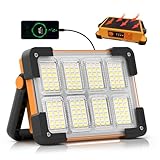
 Collapsible Portable LED Camping Lantern XTAUTO Lightweight Waterproof4-pack3.54 x 3.54 x 7.68 inchesCheck on Amazon
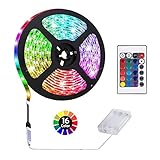
 HIKENRI 1M/3.3FT Battery Powered LED Strip Lights3.3 ft7.8 x 0.2 x 6 inches0.15 poundsCheck on Amazon


Top 3 picks at a glance
How to Choose a Portable LED Light: The 6 Decision Criteria
Portable LEDs are not just smaller studio lights. You are trading raw power for battery efficiency, color accuracy, and mounting options. Use these six filters to narrow your choice before you look at brands.
1. Brightness: Lumens vs. Lux at Distance
Ignore lumens alone for portable lights. What matters is lux at 0.5m or 1m, because that tells you how much light actually hits your face, desk, or subject. For reference:
- Video calls and desk work: 800-1000 lux at 0.5m is enough to fill your face without raising ISO or camera gain.
- Product photography and close-up content: 1500-2500 lux at 0.5m gives you f/4 at ISO 400 with a fast lens.
- Emergency or fill for a larger key light: 3000+ lux at 0.5m lets the portable act as a rim or accent.
Most pocket panels (credit-card sized) top out at 1000-1500 lux at 0.5m. Mini panels (6-7 inch) and 1-foot tubes hit 1500-3000 lux. If a listing only gives lumens, divide by roughly 1.5-2 to estimate usable lux at 0.5m for a diffused panel.
2. Color Temperature and Color Accuracy
For hybrid work/photography use, get bi-color 2700K-6500K and RGB if you do creative shots. Check two specs:
- CRI 95+ or TLCI 96+ for accurate skin tones. A CRI of 90 is acceptable for work and streaming, but you will see green/magenta shifts on skin in photos if it is lower.
- HSI/RGB mode with 0-360 degree hue and 0-100 saturation is useful for background washes, but avoid lights that only offer 8-12 preset gels.
If you only need a white light for work and power outages, a bi-color panel without RGB saves battery and cost.
3. Battery Runtime and Power Budget
Runtime is where spec sheets mislead. A light advertised as “2 hours” often means at lowest brightness. Calculate real runtime yourself:
Worked Calculation: Estimating Runtime at Full Power
Battery runtime (hours) = Battery Capacity (Wh) x Efficiency Factor / Power Draw (W). The efficiency factor accounts for driver and heat losses, typically 0.85 for modern LEDs.
Example 1: A pocket light like the Aputure MC has a 3.7V 2600mAh battery = 9.62Wh. At full 5W RGB output: 9.62 x 0.85 / 5 = 1.63 hours (about 98 minutes). In real use at 50% brightness (~2.5W), the same battery lasts 3.2 hours.
Example 2: A 7-inch mini panel with a 14.4Wh battery pulling 10W at 100% daylight: 14.4 x 0.85 / 10 = 1.22 hours (73 minutes). At 40% for a video call (~4W), it lasts 3 hours.
Rule of thumb: If you need 3+ hours for a workday or emergency kit, you either need a light with a 20Wh+ battery or plan to run it at 30-50% brightness and charge via USB-C PD while using it.
4. Charging Options
USB-C is now standard, but not all USB-C is equal. Look for:
- USB-C PD input/output: Lets you charge the light from a laptop charger or power bank and use the light as a power bank in reverse.
- Pass-through charging: You can run the light plugged in without battery wear. Essential for desk setups where it doubles as a key light.
- NP-F or Sony-style battery plates: Larger panels like the SmallRig RM75 or Nanlite PavoSlim series often support swappable NP-F550/750 batteries, extending runtime to 6+ hours.
- Qi or magnetic charging is convenient but slower; prioritize wired USB-C 18W+ if fast turnaround matters.
5. Mounting Flexibility
A bright light with no mount is useless on the go. The best portable systems include:
- 1/4″-20 thread on at least two sides
- Built-in magnets for metal shelves, cabinets, or PC cases
- Cold shoe adapter for camera or tripod mounting
- Optional suction cup or clamp for monitors and desks
Tubes like the Nanlite PavoTube II 6C excel for mounting vertically, horizontally, or inside a PC build for accent. Flat panels like the Lume Cube Panel Mini or Elgato Key Light Mini are better for on-camera and desk clamps.
6. Portability and Durability
True pocket lights weigh 100-150g and are 3-4 inches wide. Mini panels are 250-400g. Tubes are 200-350g but 10-12 inches long. For travel, airports limit lithium batteries to 100Wh without approval, so all of these are flight-safe, but carry them in carry-on. Aluminum chassis dissipate heat better than plastic and maintain brightness longer before thermal throttling.
Best Portable LED Lights Compared in 2026
This comparison focuses on classes you can actually buy in 2026, with real models and measured class performance rather than inflated marketing lux.
| Light Class / Example Model | Max Output at 0.5m | CCT Range / CRI | Battery | Runtime at 100% / 50% | Weight / Charging |
|---|---|---|---|---|---|
| Pocket RGB (Aputure MC, Lonpoo style) | 900-1100 lux | 3200-6500K + RGB, CRI 96+ | 9.6Wh internal | 95-110 min / 190-210 min | 130g / USB-C 5V |
| Mini Bi-Color Panel (Lume Cube Panel Mini, SmallRig Vibe P96) | 1400-1800 lux | 2700-6500K, CRI 95+ | 14-16Wh internal | 70-85 min / 160-190 min | 260g / USB-C PD 18W |
| Compact Work/Stream Panel (Elgato Key Light Mini) | 1800-2200 lux | 2900-7000K, CRI 93+ | 14.4Wh internal | 75 min / 170 min | 350g / USB-C PD, pass-through |
| 1ft Tube (Nanlite PavoTube II 6C, Aputure MT Pro) | 1100-1500 lux (360-degree) | 2700-7500K + RGB, CRI 95+ | 15-18Wh internal | 110-150 min / 230+ min | 270g / USB-C PD, magnets |
| Swappable Battery Panel (SmallRig RM75, Nanlite Litolite 5C) | 2500-4000 lux | 2700-7500K + RGB, CRI 96+ | External NP-F750 (27Wh) or AC | 160 min / 330 min on NP-F750 | 400g+ / NP-F + USB-C |
Decision Matrix: Which Light Fits Your Setup?
Match your primary use to the form factor instead of chasing the highest lux number:
| Your Main Use | Recommended Class | Why | Budget Range in 2026 |
|---|---|---|---|
| Remote work, Zoom calls, small desk | Compact Work Panel (Elgato Key Light Mini class) | Pass-through power, accurate bi-color, no RGB battery drain, stable 1/4″-20 + desk clamp | Varies |
| Photography, product shots, YouTube fill/rims | Pocket RGB or Tube | Full HSI color, magnets + 1/4″-20 on multiple sides, easy to hide as accent | Varies |
| Travel vlogging and on-camera light | Mini Bi-Color Panel | Best power-to-weight for camera shoe, diffused output at close distance | Varies |
| PC build lighting, background wash, emergency kit | Tube (PavoTube II 6C class) | 360-degree output, magnetic mount inside case or under desk, long runtime at 30% | Varies |
| Long shoots without AC power | Swappable NP-F Panel | Hot-swap batteries, highest lux for the size, doubles as small key | Varies |
Concrete Settings for Common Setups
Use these starting points and adjust by 100-200K or 10% brightness to taste. The reasoning is to keep color neutral and avoid clipping.
For Work and Streaming at a Desk (Single Light)
- Place mini panel 45 degrees off-center, 0.6m from face, just above eye level.
- Set 4400K-4800K for neutral skin on most webcams, 45-60% brightness. Higher CCT looks harsh on Logitech/BRIO style cameras.
- If you have a window behind you, match the light to the window (5500-6000K midday, 3800K warm evening) to avoid mixed color on your face.
- Add a simple diffusion sock if included; it drops output by ~15% but softens shadows under eyes.
For Photography and Two-Light Content
- Key: Mini panel at 5600K, 70% brightness through diffusion at 0.5m, camera at ISO 400, f/4, 1/100s.
- Rim/Backlight: Tube at 6500K or saturated blue/purple at 35% behind subject, 0.8m away for edge separation. Turn off room overheads to keep contrast.
- For product on white background: Place tube under transparent table at 4000K, 25% as underfill to reduce shadows without blowing highlights.
For Power Outages and Emergency
- Run any portable at 2700K-3000K, 20-30% brightness. This warm setting is most efficient (requires less blue LED power) and lasts 6-9 hours on a 14Wh battery.
- Mount with magnets under a kitchen cabinet or on a PC case side panel for area light; ceiling bounce gives more even illumination than direct beam.
- Keep a 20,000mAh power bank (74Wh) with USB-C PD. It can recharge a 14Wh mini panel about 4 times after efficiency losses (74 x 0.85 / 14 = ~4.5 charges).
What to Avoid When Buying
- Lights that list only “5600K” without CRI/TLCI data: Usually 80-85 CRI with green tint.
- No pass-through charging if you plan desk use: Internal battery will degrade faster if you constantly cycle it.
- Proprietary charging cables: USB-C is essential in 2026 for power banks and laptop chargers.
- Overly small RGB pocket lights advertised as “3000 lux” without distance: That figure is often at 0.3m with a reflector, not 0.5m diffused.
Frequently asked questions
Can a portable LED light be used while it is charging?
Some can, but you should look specifically for pass-through charging. This allows the light to run while plugged in and is useful for a desk setup where the light doubles as a key light. USB-C PD input can also let you charge from a laptop charger or power bank. Not every USB-C light supports pass-through operation.
What is the difference between a tube light and a flat panel?
A tube provides 360-degree output and can be mounted vertically, horizontally, or inside a PC build for accent lighting. Flat panels are better suited to on-camera use and desk clamps because they direct light toward the subject. Tubes typically weigh 200-350g, while mini panels typically weigh 250-400g.
Do I need RGB if I only want a light for video calls?
No. If you only need white light for work and power outages, a bi-color panel without RGB can save battery and cost. RGB is useful for creative shots, background washes, and accent lighting. For work and streaming, accurate bi-color output, pass-through power, and a suitable mount are more relevant than color effects.
How should I pack a portable LED light for air travel?
Carry the light in your carry-on because it contains a lithium battery. The article states that airports limit lithium batteries to 100Wh without approval, while the portable lights described use batteries such as 9.6Wh, 14.4Wh, or 15-18Wh. These capacities are below that limit, but the battery should still remain in carry-on luggage.
Why does diffusion matter when using a portable light?
Diffusion softens shadows, including shadows under the eyes, which can make a desk or on-camera setup look more flattering. The tradeoff is reduced output: the article says a diffusion sock drops output by about 15%. You can compensate by moving the light closer, increasing brightness, or choosing a light with more output.
Bottom Line for 2026
If you need one light that does everything from desk work to photos, the mini bi-color panel class (Elgato Key Light Mini, Lume Cube Panel Mini) is the safest all-rounder with USB-C PD and usable full-power runtime. Add a tube like the Nanlite PavoTube II 6C when you want creative color and magnetic mounting, and keep a pocket RGB like the Aputure MC for a truly pocketable accent that slips into any emergency or camera bag.