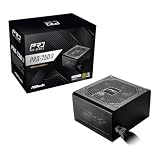
The RTX 5080 draws serious power under load, and pairing it with an aging power supply is one of the most common mistakes in new builds this cycle. NVIDIA’s recommended spec calls for a 850W unit minimum, but real-world gaming systems with modern CPUs, multiple SSDs, and case fans benefit from headroom — which is exactly why 1000W has become the sweet spot for high-end GPU builds. ATX 3.1 adds another wrinkle: native support for the 12V-2×6 connector, the safer revision of the 16-pin cable that eliminates the need for fussy adapters and reduces the risk of the melting-connector issues that plagued early adopters.
We rounded up eight 1000W ATX 3.1-ready units ranging from budget-friendly to premium, all rated 80 Plus Gold and all shipping with PCIe 5.1 support and a native 12V-2×6 connector. Prices in this group span budget to premium tiers, and the differences come down to fan quality, modular design, warranty length, and internal component sourcing. Every unit below will run an RTX 5080 without breaking a sweat — the question is which one fits your case, your budget, and your tolerance for noise.
Our Top Picks


Top 3 picks at a glance

Verdict at a glance
Short answer: the RTX 5080 has a 360W total graphics power rating and NVIDIA recommends an 850W supply, so a quality 1000W ATX 3.1 unit with a native 12V-2×6 cable is the comfortable choice. Updated October 2026.
- Best overall: CORSAIR RM1000x ATX 3.1, a proven fully modular platform with a 10-year warranty and a native 12V-2×6 cable.
- Best value: be quiet! Pure Power 13 M 1000W, rated Cybenetics Platinum for efficiency in independent evaluation and one of the quietest units in its class, with a 10-year warranty.
- Best budget: Rosewill VMG 1000W, with Japanese capacitors and a native 12V-2×6 connector at a budget tier.
- Best premium: be quiet! Dark Power 14 1000W, Cybenetics Titanium efficiency and A++ noise for silent high-end builds.
Quick Picks
| Product | Best for | Price |
|---|---|---|
| LIAN LI Edge Gold 1000W ATX 3.1 PSU (White) | White-themed builds | Check on Amazon |
| CORSAIR RM1000x ATX 3.1 PCIe 5.1 (Black) | Overall best pick | Check on Amazon |
| Rosewill VMG 1000W 80+ Gold | Long warranty value | Check on Amazon |
| 1000W Fully Modular 80+ Gold PSU | Tightest budgets | Check on Amazon |
| CORSAIR RM1000e (2025) ATX 3.1 | Compact ATX builds | Check on Amazon |
| CORSAIR RM1000x Fully Modular ATX 3.1 | Low-noise performance | Check on Amazon |
| LIAN LI Edge Gold 1000W ATX 3.1 PSU (Black) | Showcase builds | Check on Amazon |
| NZXT C1000 Gold Core | NZXT ecosystem builds | Check on Amazon |
How We Compared
We focused on units that meet the baseline requirements for an RTX 5080 build: 1000W output, ATX 3.1 compatibility, PCIe 5.1 support, and a native 12V-2×6 connector that delivers the full power draw through a single cable without adapters. Every unit here carries an 80 Plus Gold efficiency rating, which means better heat management and lower waste than Bronze-rated units, especially important in compact cases where airflow is already constrained.
Beyond the spec sheet, we weighed fully modular cabling versus semi-modular designs, fan types (fluid dynamic bearing and low-noise profiles make a real difference in day-to-day use), Japanese capacitor sourcing, and warranty length — which ranges from 5 to 10 years across this list. We also factored in price-to-performance, since the list runs from budget to premium tiers. We did not conduct independent lab testing on ripple, transient response, or efficiency curves; our rankings reflect published specifications, component quality indicators, and value.
The Best Picks
LIAN LI Edge Gold 1000W ATX 3.1 PSU (EG1000G.WH) — White
Lian Li’s Edge series flips the traditional PSU layout with a side-mounted modular interface, making cable management dramatically cleaner in showcase builds. This white 1000W unit is rated 80 Plus Gold, fully ATX 3.1 compliant, and pairs beautifully with white RTX 5080 cards and white cases. It’s aimed squarely at builders who care about aesthetics without sacrificing electrical quality; electrically it is the same unit as the black EG1000G.BH covered below.
- Side-mounted connector design simplifies cable routing
- Clean white finish matches themed builds perfectly
- Premium price over comparable black units
Skip this one if you’re running a standard black build — you’re paying extra for a color you won’t appreciate.
As an Amazon Associate we earn from qualifying purchases at no extra cost to you.


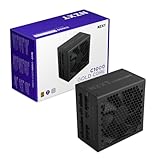
CORSAIR RM1000x ATX 3.1 PCIe 5.1 1000W Power Supply – Black
The RM1000x is the safest recommendation on this list for most RTX 5080 builders. Corsair’s RMx line has long been the default answer for high-end builds, and this ATX 3.1 version continues that with fully modular cabling, PCIe 5.1 support, and a native 12V-2×6 connector. It’s quiet under typical gaming loads and backed by Corsair’s strong warranty and support network.
- Proven RMx platform with excellent reliability record
- Fully modular design with clean, flexible cabling
- Sits at the upper end of this list’s price range
Skip it if you want similar performance for less — other RM1000x listings, covered below, often sell the same platform for less.
Rosewill VMG 1000W 80+ Gold
Rosewill’s VMG packs impressive component quality into a budget-tier unit: 100% Japanese electrolytic capacitors, a 120mm fluid dynamic bearing fan tuned for silence, and a full PCIe 5.1 12V-2×6 connector. It’s compatible with both ATX 3.0 and 3.1, fully modular, and carries a 5-year warranty — a solid safety net at this price.
- 100% Japanese capacitors at a mid-tier price
- Genuinely quiet 120mm FDB fan under normal loads
- 5-year warranty trails the 10-year coverage on pricier rivals
Skip it if a decade-long warranty matters to you; Corsair’s RMx models cover longer.
1000W Fully Modular Power Supply, 80+ Gold Certified (Black)
This is the budget play of the roundup, and it’s more capable than the no-name branding suggests. You get full ATX 3.1 and PCIe 5.1 compliance, a native 12V-2×6 connector, 105°C Japanese capacitors, and a 140mm low-noise fan — all in a fully modular, budget-tier package. For an RTX 5080 build on a strict budget, it clears every technical bar.
- Lowest-priced ATX 3.1-compliant 1000W unit in this roundup
- 105°C Japanese capacitors at a budget price point
- Less established brand support and shorter warranty history
Skip it if long-term reliability tracking matters more than the savings; the Rosewill VMG adds brand pedigree for a little more.
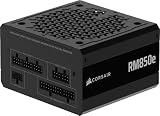
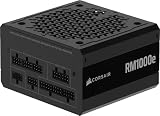
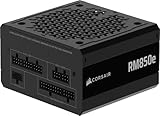
CORSAIR RM1000e (2025) ATX 3.1 PCIe 5.1 – Black
The RM1000e sits below the RMx line in Corsair’s stack but still delivers ATX 3.1 compliance, PCIe 5.1 readiness, and a native 12V-2×6 connector in the mid-range tier. It’s a good middle-ground pick for builders who want Corsair’s build quality and support without the RMx premium, particularly in compact ATX cases where a shorter chassis helps cable clearance.
- More affordable entry into Corsair’s ATX 3.1 lineup
- Compact footprint suits smaller mid-tower cases
- Fully modular, but with a simpler fan and component tier than the RMx
Skip it if you want the RMx line’s quieter fan and higher-grade components; step up to the RM1000x.
CORSAIR RM1000x: other listings of the same unit
The RM1000x is sold under more than one listing. Every current ATX 3.1 RM1000x uses the same fully modular platform as the unit above — Cybenetics Gold efficiency, low-noise operation, and a native 12V-2×6 connector — so compare listings and buy whichever is cheaper on the day.
- Same proven RMx platform, often at a lower price
- Cybenetics Gold efficiency with genuinely quiet fan tuning
- Discounted listings can sell out quickly
Skip it only if unavailable — grab whichever RM1000x listing has stock.
LIAN LI Edge Gold 1000W ATX 3.1 PSU (EG1000G.BH) — Black
The black version of Lian Li’s Edge brings the same side-mounted modular interface and 80 Plus Gold 1000W platform to standard builds, in the mid-range to premium tier. The recessed connector design pairs especially well with Lian Li cases that offer dual-chamber layouts, letting cables disappear entirely behind a shroud. It’s a design-forward choice for glass-panel showcase systems.
- Clever side-interface design makes builds look dramatically cleaner
- Handles RTX 5080 transient loads comfortably at 1000W
- Costs more than functionally equivalent units
Skip it if your case hides the PSU anyway — the design premium is wasted there.
NZXT C1000 Gold Core
NZXT’s C1000 Gold Core offers ATX 3.1 compliance, 80 Plus Gold efficiency, and full 1000W output for RTX 5080 systems. It’s a straightforward, no-frills unit that integrates neatly with NZXT’s case ecosystem and CAM-style monitoring sensibilities. For builders already in NZXT’s orbit, it’s the path of least resistance.
- Strong price for an ATX 3.1-compliant 1000W unit
- Clean aesthetic matching NZXT case design language
- Fewer premium features than Corsair’s fully modular units
Skip it if you want Japanese capacitors documented in the spec — NZXT keeps component sourcing vague here.
More 1000W ATX 3.1 options worth considering
The picks above cover the most common choices. The five units below add better-documented efficiency ratings, quieter fans or premium features, and all have independent Cybenetics evaluations you can check before buying.
be quiet! Pure Power 13 M 1000W

Label: best value. The Pure Power 13 M is sold as an 80 Plus Gold unit, but Cybenetics certified the 1000W model at Platinum-level efficiency, and Hardware Busters measured it among the quietest 1000W PSUs it has evaluated. It is ATX 3.1 compliant, fully modular, and uses a single strong 12V rail rated for the full 1000W, with one native 600W 12V-2×6 cable plus four 6+2-pin PCIe connectors.
Its 120mm fan supports a semi-passive mode, so it stays silent at idle and during light use. At only 160mm deep, it is also short for a 1000W unit, which helps in mid-tower cases where the PSU shroud is crowded.
Who it’s for: RTX 5080 builders who want low noise and strong efficiency without paying for a flagship unit.
Strengths: Platinum-level measured efficiency, very low noise, compact length, fully modular cables, and a 10-year warranty.
Drawbacks: Hardware Busters noted that 12V regulation under large transient loads is not class-leading, and there is no fan failure protection. One 12V-2×6 cable is enough for an RTX 5080 but not for dual-GPU setups.
How it compares: it matches the Corsair RM1000x closely in independent data and undercuts it in some markets, making it a strong alternative to our overall pick.
Seasonic Focus GX-1000 (ATX 3.1)

Seasonic’s Focus GX has been a reference mid-range PSU for years, and the ATX 3.1 revision adds a native 12V-2×6 cable for RTX 50 series cards. It is fully modular, uses 100% Japanese capacitors, and has a 135mm fluid dynamic bearing fan with Seasonic’s hybrid fan control. At 140mm deep, it is one of the most compact 1000W units on the market. Cybenetics rates this 1000W version Gold for efficiency, and the warranty is 10 years.
Who it’s for: builders who prefer a supply from a long-established OEM and want the shortest practical 1000W unit for compact ATX cases.
Strengths: excellent build quality, compact 140mm depth, Japanese capacitors, quiet hybrid fan, and a 10-year warranty.
Drawbacks: it often sits a tier above similar Gold units, and Seasonic has released a newer v5 revision, so check which version a retailer is shipping.
How it compares: it is shorter than the Corsair RM1000x and the Lian Li Edge units, making it the easier fit in small mid-towers.
MSI MPG A1000GS PCIE5

MSI’s A1000GS stands out for shipping with two native 12V-2×6 cables, useful if you plan to move to a higher-power card later or want a spare cable. It is fully modular, ATX 3.1 compliant, built on a CWT platform with a 105°C Rubycon main capacitor, and Cybenetics rates it Gold for efficiency and A for noise. KitGuru found its load regulation excellent, and reviewers report a 10-year warranty.
Who it’s for: MSI ecosystem builders and anyone who wants two native 12V-2×6 cables.
Strengths: dual 12V-2×6 cables, solid regulation, a quiet fan curve, and fully modular design.
Drawbacks: Hardware Busters felt its price required extra scrutiny against units like the NZXT C1000 Gold, and some revisions include only one 6+2-pin PCIe cable, which limits flexibility for older cards.
How it compares: it is similar in efficiency to the Corsair RM1000e and NZXT C1000 Gold Core, with the dual 12V-2×6 cables as the main reason to pick it.
ASUS ROG Strix 1000W Platinum

The ROG Strix Platinum is ASUS’s premium ATX 3.1 option. It is 80 Plus Platinum certified and carries a Cybenetics Lambda A+ noise rating, so it stays quiet under gaming loads. It is fully modular and uses a large axial-tech style fan with a semi-passive 0dB mode. ASUS also adds GPU-focused voltage sensing designed to keep power delivery to the graphics card stable.
Who it’s for: ROG-themed builds and buyers who want Platinum efficiency with a quiet profile for a premium RTX 5080 system.
Strengths: Platinum efficiency, low noise, premium components, and visual matching with ROG parts.
Drawbacks: it sits in the premium tier, and the efficiency gain over a good Gold unit is small at typical RTX 5080 gaming loads.
How it compares: it is a step up from every Gold unit in the main list in efficiency, but it costs more than the be quiet! Pure Power 13 M, which reaches similar measured efficiency.
be quiet! Dark Power 14 1000W
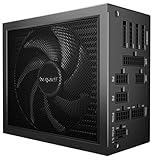
Label: best premium. The Dark Power 14 is a flagship unit that launched in late 2025. Cybenetics rates it Titanium for efficiency at both 115V and 230V and A++ for noise, the quietest category. It uses a 135mm fluid dynamic bearing Silent Wings fan with selectable semi-passive mode, high-grade 105°C Japanese capacitors, and a switch that toggles between single-rail and four-rail 12V operation. It is ATX 3.1 compliant with a native 12V-2×6 cable and carries a 10-year warranty.
Who it’s for: silent-PC builders and anyone who runs long workloads, such as rendering or AI tasks, where efficiency and noise matter every hour.
Strengths: Titanium efficiency, extremely low noise, premium internals, and multi-rail protection option.
Drawbacks: it is firmly premium, and reviewers note it includes only one 12V-2×6 cable. It is also longer than the Seasonic at 175mm.
How it compares: this is the unit to buy if you want the best measured efficiency and noise data in this roundup; for most gaming builds the Pure Power 13 M delivers most of the benefit at a lower tier.
Buying Guide
Why ATX 3.1 and 12V-2×6 Matter for the RTX 5080
The RTX 5080 uses the 16-pin 12V-2×6 power connector, an updated revision with shorter sensor pins and reinforced terminals that improve safety over the original 12VHPWR spec. A native 12V-2×6 cable — like the ones on every PSU in this roundup — means no 8-pin-to-16-pin adapters, better seating, and rated support for the full transient spikes high-end NVIDIA cards generate. ATX 3.1 compliance certifies the unit can handle those excursions, which can briefly spike well above rated TDP.
How Much Wattage Headroom Do You Actually Need?
NVIDIA recommends an 850W PSU for the RTX 5080, but that assumes a mainstream CPU and modest peripheral load. Pair it with a high-end processor like a Ryzen 9 or Core Ultra 9, add several drives, and run concurrent workloads, and you’ll want margin. With typical RTX 5080 gaming systems drawing roughly 450–650W, 1000W leaves around 35–50% headroom, which keeps the PSU fan in its quiet low-RPM zone and extends component life. Going beyond 1000W rarely benefits a single-GPU system.
Efficiency Ratings, Fans, and Warranty
All units in the main list are 80 Plus Gold, meaning roughly 87–90% efficiency at typical loads — enough that heat and noise stay manageable without paying Platinum premiums. Fan quality matters more day-to-day: fluid dynamic bearing fans (like the Rosewill’s 120mm FDB) run quieter and last longer than sleeve-bearing designs, and fully modular cabling lets you discard unused cables for better airflow. Finally, check the warranty: 5 years is acceptable, but Corsair’s RMx line and similar premium units typically back 1000W Gold units for 10 years — real value if you keep builds for multiple GPU generations.
Wattage by pairing: RTX 5080 plus your CPU
The table below estimates sustained gaming power for common RTX 5080 pairings, using published TDP and package power limits and typical board, memory, storage and fan draw. Brief transient spikes above these numbers are normal, which is exactly what ATX 3.1 units are designed to absorb.
| CPU paired with RTX 5080 | Estimated gaming system draw | Minimum quality PSU | Recommended PSU |
|---|---|---|---|
| Ryzen 5 9600X / Core Ultra 5 245K | About 450–500W | 750W | 850W |
| Ryzen 7 9800X3D / 9850X3D | About 480–550W | 850W | 850–1000W |
| Ryzen 9 9950X3D / 9950X | About 550–650W | 850W | 1000W |
| Core Ultra 9 285K or Core i9-14900K | About 600–700W in heavy loads | 850W | 1000W |
| Overclocked RTX 5080 plus high-end CPU | About 650–750W | 1000W | 1000–1200W |
In other words, a 1000W unit runs a typical RTX 5080 gaming system at roughly half load, which is where most PSUs are near their efficiency peak and their fans stay slow and quiet.
Native 12V-2×6 cable vs 8-pin adapter
The RTX 5080 Founders Edition and partner cards use a single 16-pin 12V-2×6 power input. You can power it two ways:
- Native 12V-2×6 cable from the PSU (recommended): one cable runs from the modular PSU port to the card. The 12V-2×6 standard uses shorter sense pins, so the card only draws full power when the plug is fully seated. Fewer contact points mean fewer places for resistance to build up.
- Adapter from multiple 8-pin cables: NVIDIA includes a 3x or 4x 8-pin adapter. It works, but adds another set of connections, is bulkier to route, and depends on every 8-pin cable being properly seated. For an RTX 5080, use separate 8-pin cables rather than daisy-chained ones.
Whichever you use, push the connector in until it clicks with no visible gap, avoid bending the cable sharply within about 35mm of the plug, and do not reuse an old 12VHPWR cable from another PSU brand, since modular pinouts are not standardized.
ATX 3.1 and PCIe 5.1 explained
ATX 3.0 introduced power excursion requirements: a compliant PSU must tolerate brief spikes up to 200% of its rating on the GPU rail without shutting down. ATX 3.1 kept the transient-handling focus, formalized the 12V-2×6 connector in place of 12VHPWR, and relaxed the hold-up time requirement compared with earlier ATX revisions. PCIe 5.1 is the matching graphics card power specification that describes how the 12V-2×6 connector signals available power to the card. In practice, buying an ATX 3.1, PCIe 5.1 unit means you get the newer connector and validated transient handling, both of which matter for 300W-plus cards like the RTX 5080.
Efficiency labels: 80 Plus vs Cybenetics
80 Plus certifies efficiency at a few fixed load points, and manufacturers submit their own samples. Cybenetics measures efficiency across many load levels, tests noise separately (the Lambda scale, from Standard up to A++), and publishes detailed reports. That is why the table below lists both where available.
| PSU | 80 Plus | Cybenetics efficiency (115V) | Cybenetics noise | 12V-2×6 cables | Warranty | Price tier |
|---|---|---|---|---|---|---|
| be quiet! Pure Power 13 M 1000W | Gold | Platinum | See report | 1 | 10 years | Mid-range |
| Seasonic Focus GX-1000 (ATX 3.1) | Gold | Gold | See report | 1 | 10 years | Mid-range |
| MSI MPG A1000GS PCIE5 | Gold | Gold | A | 2 | 10 years | Mid-range |
| ASUS ROG Strix 1000W Platinum | Platinum | See report | A+ | 1 | 10 years | Premium |
| be quiet! Dark Power 14 1000W | Titanium | Titanium | A++ | 1 | 10 years | Premium |
| CORSAIR RM1000x (ATX 3.1) | Gold | Gold | See report | 1 | 10 years | Mid-range |
“See report” means we have not confirmed that rating for the current revision; look up the exact model on the Cybenetics site before you buy.
How we compared the additional picks
For the five additional units, we relied on manufacturer specifications, Cybenetics evaluation reports, and independent reviews from Hardware Busters, KitGuru, Club386 and other publications, plus owner feedback. We did not bench-test these power supplies ourselves.
Our Verdict
For most RTX 5080 builders, the CORSAIR RM1000x is the clear winner — you get Corsair’s proven fully modular ATX 3.1 platform, Cybenetics Gold efficiency, and a native 12V-2×6 connector at a mid-range price, especially when a discounted listing is available. If it’s out of stock, the budget-tier Rosewill VMG is an excellent fallback with 100% Japanese capacitors and a quiet FDB fan. On a strict budget, the generic fully modular unit technically clears every requirement for an RTX 5080. And if aesthetics drive your build, the Lian Li Edge Gold in white or black is worth the premium for some of the cleanest cable management available at this wattage.
FAQ
Is 1000W overkill for an RTX 5080?
Not really. NVIDIA recommends 850W, but a 1000W unit gives you comfortable headroom for high-draw CPUs, overclocking, and the transient power spikes modern GPUs generate. It also keeps the PSU fan quieter since it runs at a lower load percentage.
Do I need a native 12V-2×6 cable for the RTX 5080?
Strongly recommended. While adapters from 8-pin PCIe cables work, a native 12V-2×6 connector is rated for the full connector spec, seats more securely, and avoids the adapter-related connection issues that have caused problems on high-end NVIDIA cards.
Is 80 Plus Gold enough, or should I pay for Platinum?
Gold is the sweet spot for 1000W gaming builds. The efficiency difference between Gold and Platinum at typical gaming loads is a few percentage points — meaningful for data centers, marginal for a home PC. Spend the savings on a better fan or longer warranty instead.
How long should a 1000W PSU last?
A quality 1000W Gold unit should last 10 or more years under normal gaming use, which is why warranty length matters. Units on this list range from 5-year warranties (Rosewill VMG) to Corsair’s typical 10-year coverage on RMx models — a decade that will likely outlast your RTX 5080 and its successor.
Can an 850W PSU run an RTX 5080?
Yes. NVIDIA’s recommendation is 850W, and a quality 850W ATX 3.1 unit runs an RTX 5080 with a Ryzen 7 9800X3D or similar CPU comfortably. Choose 1000W if you have a high-power CPU such as a Core Ultra 9 or Ryzen 9, plan to overclock, or want a quieter fan and room for a future GPU.
Is the RTX 5080 connector the same as the RTX 4080 connector?
Both cards use a 16-pin connector. The RTX 50 series uses the revised 12V-2×6 version, which is backwards compatible with 12VHPWR cables. An existing native cable from the same PSU manufacturer will work, but a fresh 12V-2×6 cable is preferred.
Does PSU efficiency affect my electricity bill much?
Only slightly. Moving from Gold to Platinum typically saves a few percent of wall power. For a gaming PC used a few hours a day, that is a small amount per year. Platinum and Titanium units are more worthwhile for systems that run near full load for many hours.
What does Cybenetics Lambda mean?
Lambda is Cybenetics’ noise rating scale. A++ is the quietest category (under 15 dB[A] average), followed by A+, A, A-, Standard+ and Standard. It is measured across the full load range, which makes it more useful than a single fan RPM figure.