If your wrist aches after long sessions, the shape of your mouse is part of the story. A conventional mouse asks your forearm to lie flat and twisted, palm down, for hours at a time. Vertical and ergonomic mice rotate that posture toward a handshake position, where the forearm sits closer to its natural resting angle and the wrist does less of the work of steering.
One honest note before the picks: no mouse treats or cures carpal tunnel syndrome, and this guide makes no medical claims. What these mice can do is change the posture your hand holds while you play and work, which many people with wrist discomfort find easier to sustain. If you have numbness, tingling or persistent pain, a clinician’s advice matters more than any product page. With that said, the four mice below are the strongest ergonomic options that still respect a gamer’s needs.
As an Amazon Associate, we earn from qualifying purchases.
Top 3 picks at a glance

Quick Picks
| Product | Best for | Key point |
|---|---|---|
| Logitech MX Vertical | The proven all-round vertical mouse | 57-degree handshake angle with premium build and multi-computer Flow |
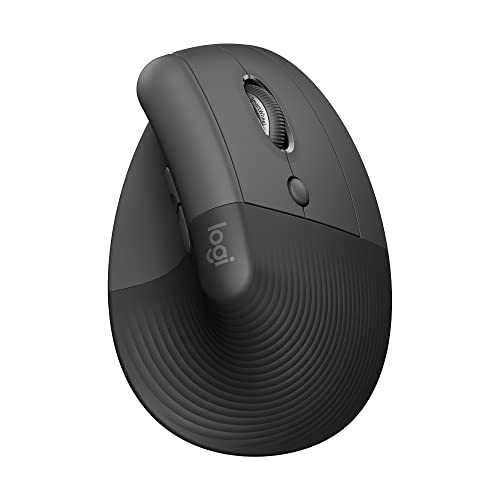
| Logitech Lift (Graphite) | Smaller hands new to vertical mice | A softer, smaller 57-degree shell that is easy to adapt to |
| Razer Pro Click V2 Vertical | Gamers who refuse to give up gaming hardware | A 71.7-degree grip with a gaming sensor and Chroma RGB |
| ProtoArc EM11 NL (Black) | A gentler budget for a first vertical mouse | Multi-device wireless with a wrist-friendly sculpted base |
How to Choose
Understand the angle. Vertical mice are described by how far they rotate your hand from flat. The Logitech pair sit at 57 degrees, a middle ground that feels natural within a day or two. The Razer Pro Click V2 Vertical leans further, at 71.7 degrees, closer to a true handshake. Steeper is not automatically better; it changes which muscles steer, and some players find the middle angle easier to aim with.
Size the shell to your hand, honestly. Vertical mice fail when they are the wrong size, because your fingers end up clawing to keep hold. The Lift is shaped for small to medium hands, the MX Vertical for medium to large, and the ProtoArc sits between. Measure from wrist crease to middle fingertip and compare against maker guidance before you order.
Expect an adjustment period, and plan for it. Your first days with a vertical mouse will feel clumsy, especially for precise clicks in shooters. Most players adapt within one to two weeks of mixed use. A sensible path is to work and play slower games on the vertical mouse first, then bring it into faster titles as the grip becomes automatic.
Gaming specs still matter, within limits. Vertical mice top out at lower sensor figures than esports mice, and none here offers the 8,000 Hz polling of a flagship shooter mouse. What you get instead is accurate optical tracking up to 4,000 DPI on the Logitech pair, which covers strategy games, MMOs, RPGs and casual shooters comfortably. The Razer entry closes much of the gap with a high-end sensor for players who split time between competitive and comfort play.
Buttons and wheels decide daily happiness. Check that the thumb buttons fall where your thumb actually rests — on a vertical mouse that position is higher than you expect. Quiet clicks, as on the Lift, matter if you share a room. Multi-device pairing matters if the same mouse must serve a work laptop and a gaming PC, which for most people with wrist issues is exactly the use case.
Best Options
Logitech MX Vertical

The MX Vertical is the reference design in this category. Its 57-degree angle was shaped with ergonomists, the shell supports the hand like a handshake, and the 4,000 DPI sensor needs less desk travel to cross a screen, which means less arm movement per hour. It pairs with up to three computers and can move the cursor between them with Logitech Flow.
Specs
- 57-degree vertical angle; optical sensor up to 4,000 DPI; 125 g; wireless via USB receiver or Bluetooth, pairs with 3 devices; rechargeable over USB-C with up to 4 months of battery; 6 buttons including a top DPI switch; model 910-005447.
Best for: Medium to large hands that want the most proven vertical mouse for combined work and play, with premium materials and software.
Watch out for: The sensor and polling are productivity grade, so fast flick shots in competitive shooters will feel a step behind an esports mouse. The premium positioning also makes it the considered purchase of this guide.
Logitech Lift (Graphite)
The Lift takes the same 57-degree idea and softens it: a smaller, rounder shell, a snug thumb rest and quiet clicks that will not annoy anyone nearby. It is the vertical mouse most often recommended to first-time switchers because the learning curve is gentle, and its battery runs up to two years on a single AA cell.
Specs
- 57-degree vertical angle; optical sensor, 400 to 4,000 DPI; 125 g; wireless via Bluetooth or Logi Bolt USB receiver; up to 24 months on 1 AA battery; 6 buttons with quiet clicks; shaped for small to medium hands, right-handed.
Best for: Smaller hands, shared spaces and anyone nervous about adapting to a vertical shape who wants the friendliest possible on-ramp.
Watch out for: Large hands will find the shell cramped, and the grip can feel like holding a ball rather than resting in a handshake. Like its bigger sibling, it is a comfort tool first and a gaming mouse second.
Razer Pro Click V2 Vertical
Razer’s first vertical mouse is the gamer’s entry in this guide. The 71.7-degree tilt is the steepest here, yet underneath sits proper gaming hardware: a high-end Razer optical sensor, HyperSpeed wireless, mechanical-grade battery life measured in months, and Chroma RGB underglow. Six buttons, including a dedicated prompt button, cover MMO and desktop duties alike.
Specs
- 71.7-degree vertical tilt; Razer Focus Pro optical sensor; 6 buttons; HyperSpeed 2.4 GHz wireless, Bluetooth and wired USB-C modes; multi-device connectivity across Windows and Mac; battery life up to 6 months; Chroma RGB lighting; model RZ01-05250100-R3U1.
Best for: Players with wrist discomfort who still play fast games and want one mouse that does not ask them to retire their gaming standards.
Watch out for: The steep angle takes the longest to adapt to of any pick here, and precision clicking during that window will frustrate competitive players. It is also a large mouse, so small hands should choose the Lift instead.
ProtoArc EM11 NL (Black)

The ProtoArc EM11 NL is the accessible way to find out whether a vertical shape helps you before committing to a premium brand. It offers a sculpted vertical shell with a broad base that supports the side of the hand, three-device wireless pairing, and adjustable sensitivity for moving between work screens and slower-paced games.
Specs
- Vertical ergonomic shell with wrist-supporting base; optical sensor with adjustable DPI up to 2,400; connects to 3 devices over 2.4 GHz USB receiver and Bluetooth; rechargeable over USB-C; 6 buttons; Windows and Mac support; model EM11 NL.
Best for: A first vertical mouse, a second mouse for the work desk, or anyone who wants the posture change without premium pricing.
Watch out for: The 2,400 DPI ceiling and basic switches mark it as a comfort and productivity tool; fast shooters are beyond its brief. Materials and software are a step below the Logitech pair.
Which One Fits
Choose the MX Vertical for the safest long-term answer in medium to large hands. Choose the Lift if your hands are smaller or you share your space and value quiet clicks. Choose the Pro Click V2 Vertical if gaming performance is non-negotiable and you are willing to climb the steepest learning curve. Choose the ProtoArc EM11 NL to test the vertical idea at the gentlest cost, or to keep a second desk comfortable.
Whichever you pick, give it two honest weeks of daily use before judging. Posture changes feel wrong before they feel right.
One more consideration for households and shared desks: a vertical mouse is a personal fit in a way a flat mouse is not. Hand size, angle preference and even which hand is affected all change the right answer, so a mouse that suits one person in the house may genuinely not suit another. If two people share a desk and both want the posture, budget for two shapes rather than one compromise, or keep a conventional mouse as the shared spare.
Common Mistakes
Expecting a mouse to fix a medical problem. Ergonomic shapes can reduce the strain of a twisted forearm posture, but carpal tunnel symptoms have many causes. Persistent numbness or pain deserves a medical opinion, not just new hardware.
Gripping a vertical mouse like a conventional one. Squeezing defeats the purpose. Rest the hand against the shell, let the side of the palm carry the weight, and steer with the whole forearm for large movements.
Judging the shape in the first hour. Almost everyone aims badly on day one with a vertical mouse. Quitting early is the most common reason people conclude vertical mice do not work for them.
Ignoring the rest of the desk. A vertical mouse cannot compensate for a desk at the wrong height or a wrist pressed into a hard edge all day. Chair height, desk height and breaks matter as much as the mouse, and they cost nothing to adjust.
FAQ
Can you game properly on a vertical mouse?
For most genres, yes. Strategy, MMO, RPG and simulation titles play comfortably once you adapt, and the Razer pick here handles faster games well. Only high-level competitive shooter play, built on years of flat-mouse muscle memory, is a genuine compromise.
How long does it take to get used to a vertical mouse?
Most people feel clumsy for two or three days, functional within a week, and natural inside two weeks of daily use. Mixing work hours with slower games during that window makes the switch much easier.
Which angle is better, 57 degrees or steeper?
Neither is universally better. The 57-degree Logitech designs are easier to aim with and adapt to. The steeper Razer shape rotates the forearm further toward neutral. Comfort is personal, and hand size plus your existing symptoms should guide the choice.
Should I switch completely or keep my gaming mouse too?
Many players keep both: the vertical mouse for work and slower games, a conventional mouse for competitive sessions. That hybrid setup reduces total hours spent in a flat posture without sacrificing ranked performance.
Final Verdict
For most people with wrist discomfort who still want to play, the MX Vertical is the dependable centre of this category, and the Lift is its smaller-handed twin. The Pro Click V2 Vertical is the exciting one, proof that ergonomic and gaming hardware can live in the same shell. The ProtoArc EM11 NL makes the experiment affordable. Pick by hand size first, angle second, and give your arm the two weeks it needs to learn.
Related guides
More from Amazon
Programs that pair well with the guide above. Offers and eligibility are set by Amazon and may change.
Free shipping on eligible items, Prime Video and more. Eligible new members can start with a free trial.
Start a Prime free trialAd-free music streaming. Eligible new subscribers can start with a free trial.
Try Music Unlimited freeA Prime membership for ages 18-24 with a trial period. Eligibility is set by Amazon.
See Prime for Young AdultsAudiobooks and podcasts to listen to on the go. Eligible new members can start with a free trial.
Try Audible freeAs an Amazon Associate we earn from qualifying purchases.