The best routers for home networks are the ones that keep every device in the house connected at the same time without slowing down, dropping a video call, or leaving a dead zone at the far end of the hallway. A home network today carries far more than a laptop and a phone. It carries streaming boxes, game consoles, smart televisions, doorbells, thermostats, tablets, and work laptops, often all at once, and the router is the single piece of hardware that decides whether all of that traffic flows smoothly or turns into buffering, lag, and frustration.
Many households still use the router supplied by their internet provider, and that is often the weakest link in the whole setup. A provider-supplied unit is built to be adequate for an average household, not to handle a busy home with a dozen or more connected devices, a gamer in one room, and a video meeting in another. Upgrading to a capable standalone router gives you stronger WiFi coverage, faster wireless standards, and more control over security and parental controls.
This guide covers four routers that suit different kinds of homes. One is the balanced WiFi 6E pick for most households. One is built around gaming traffic and low latency. One brings tri-band WiFi 6E and wide coverage to a larger home. And one is the ASUS ecosystem pick for households that may add mesh nodes later. Each one is a standalone router, not a modem, so it connects to your existing modem or fiber terminal and takes over WiFi and routing for the whole home.
Our Top Picks
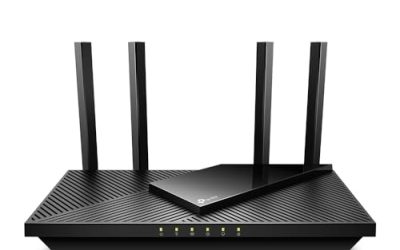
 TP-Link AXE5400 Tri-Band WiFi 6E RouterWiFi 6E, Tri-Band AXE540012.91 x 10.43 x 4.72 inches1.5 poundsCheck on Amazon

Top 3 picks at a glance

How to Choose
1. WiFi Standard: WiFi 6 or WiFi 6E
The WiFi standard is the first thing to check, because it sets the ceiling for speed and capacity. WiFi 6 handles crowded networks far better than older WiFi 5 hardware, thanks to OFDMA and MU-MIMO, which let the router talk to several devices at once instead of serving them one by one. WiFi 6E adds a third band on the 6 GHz frequency, which is far less congested than the 2.4 GHz and 5 GHz bands. If your phones, laptops, and consoles support WiFi 6E, that clean 6 GHz lane can deliver noticeably smoother performance in a busy household.
2. Bands and Combined Throughput
Routers are described by their band count and a combined throughput figure, such as AX1800, AX5700, or AXE7800. A dual-band router has 2.4 GHz and 5 GHz bands. A tri-band router adds a second 5 GHz band or a 6 GHz band. Tri-band models spread devices across more lanes, which matters when many devices are active at once. The combined throughput number is a sum of the theoretical maximums of all bands, not the speed any single device will reach, so use it to compare routers in the same class rather than as a promise of real-world speed.
3. Coverage and Home Size
Coverage depends on the size and layout of your home, the materials in your walls, and where the router sits. A single powerful router with external antennas can cover a typical apartment or a two-bedroom home. A larger home, a home with thick walls, or a home spread across several floors may need a router with stronger antennas and higher transmit power, or a router that can join a mesh system later. Place the router in a central, elevated spot, away from thick walls and metal objects, and avoid tucking it inside a cabinet.
4. Wired Ports and Internet Speed
Wireless speed gets the attention, but wired ports decide whether the router can keep up with your internet plan. Look for a multi-gig WAN port, such as a 2.5 Gbps port, if your plan is faster than gigabit or if you want headroom for the future. Count the LAN ports too: four gigabit LAN ports cover a desktop PC, a console, a streaming box, and a network drive, while a router with 2.5 Gbps LAN ports gives wired devices even more room.
5. Processor, Memory, and Device Capacity
A router is a small computer, and its processor and memory decide how well it copes with dozens of connected devices. A quad-core processor with ample memory handles simultaneous streams, large downloads, and smart home traffic without the router slowing down or needing frequent restarts. This matters most in households with many smart devices, because each one holds a connection even when idle. Check the device capacity the manufacturer lists, and leave headroom above your actual device count.
6. Security, Parental Controls, and Mesh Support
Security features protect every device on the network, including smart home gadgets that cannot run their own antivirus software. Look for WPA3 encryption, automatic firmware updates, a built-in firewall, and network security that flags malicious sites. Parental controls let you set schedules, filter content, and pause internet access for specific devices, which is useful in a family home. Mesh support is worth checking even if you do not need it today: routers that can join a mesh system from the same brand let you extend coverage later by adding a node, instead of buying a whole new setup.
Top Picks
1. TP-Link Archer AXE75
The TP-Link Archer AXE75 is the most balanced pick in this guide, and the one that fits the widest range of homes. It is a tri-band WiFi 6E router with a combined AXE5400 throughput rating, a dedicated 6 GHz band, and a 2.5 Gbps WAN port, all in a compact chassis with six antennas. That combination covers the three things most households need: a clean high-speed band for newer devices, enough total capacity for simultaneous streaming and gaming, and a wired port that can accept a gigabit or multi-gig internet connection without becoming a bottleneck.
The 6 GHz band is the standout feature. Because fewer neighbouring networks use it, it stays clear of the congestion that slows down the 2.4 GHz and 5 GHz bands in apartment buildings and dense neighbourhoods. Devices that support WiFi 6E can use it for video calls, cloud gaming, and large downloads, while older devices stay on the 5 GHz and 2.4 GHz bands. The quad-core processor keeps the router responsive under load, and OneMesh support lets you add a compatible TP-Link extender later to reach a room the main unit cannot cover on its own.
The AXE75 suits a household that wants WiFi 6E without paying flagship money for throughput it will never use. Its combined throughput is more than enough for gigabit internet and several simultaneous streams, and the 6 GHz band is where the real benefit lives for newer laptops, phones, and consoles. Setup runs through the TP-Link Tether app, which walks through the connection steps and gives you parental controls, guest network settings, and HomeShield security features in one place.
One caveat is that the 6 GHz band has shorter range than 5 GHz, so devices in far rooms will fall back to the other bands, which is normal behaviour. The router also has gigabit LAN ports rather than multi-gig LAN, so a wired desktop will top out at gigabit speeds even though the WAN port is faster.
2. ASUS RT-AX86U Pro
The ASUS RT-AX86U Pro is the gaming-focused pick, built for a household where online play shares the network with streaming and work. It is a dual-band WiFi 6 router with an AX5700 combined throughput rating, a 2.0 GHz quad-core processor, 1 GB of memory, and a 2.5 Gbps WAN and LAN port that can handle multi-gig internet. A dedicated gaming port gives a wired console or PC priority on the network, and the Mobile Game Mode in the ASUS Router app can prioritise a phone for smoother play.
What sets this router apart is the way it manages traffic. Adaptive quality of service lets you prioritise gaming traffic over background downloads, so a large update on one device does not spike latency on another. AiProtection Pro, powered by Trend Micro, adds network security with no subscription, and the router supports VPN features, port forwarding, and AiMesh, so it can become the hub of a larger ASUS mesh network if your home grows.
This router suits a gamer who also runs a busy household network. The combination of a strong processor, generous memory, and traffic prioritisation keeps latency low when the network is under load, and the gaming port is a simple, practical touch: plug the console in and it gets priority without any configuration.
The main caveat is that it is a WiFi 6 router, not WiFi 6E, so there is no 6 GHz band for the newest devices. In practice that matters less than it sounds, because the 5 GHz band on this model is fast and the processor keeps it responsive, but a household that has already moved to WiFi 6E devices may prefer a tri-band WiFi 6E model instead.
3. NETGEAR Nighthawk RAXE300
The NETGEAR Nighthawk RAXE300 brings tri-band WiFi 6E to a larger home. It is an AXE7800 router with eight streams, a 6 GHz band, and coverage rated for homes up to 2,500 square feet with up to 40 connected devices. The winged Nighthawk design houses four external antennas and a 1.7 GHz quad-core processor, and the router carries a 2.5 Gbps WAN port alongside gigabit LAN ports, so it can accept a fast internet connection and feed wired devices at the same time.
The higher throughput rating and eight streams are what make this model the pick for a larger household. More streams mean the router can serve more devices simultaneously with less waiting, which shows up as smoother performance when several people are streaming, gaming, and working at the same time. The 6 GHz band gives newer devices a clean lane, while the two other bands carry older phones, tablets, and smart home gadgets.
The RAXE300 suits a family in a larger home, or a household with a high device count that has outgrown a basic router. If your home has dead zones at the far end, thick walls between rooms, or a long list of smart home devices, the combination of tri-band WiFi 6E, strong antennas, and a capable processor is a meaningful step up.
There are two caveats to note before ordering. First, the RAXE300 is a large router, so check that you have shelf space for it and that its antennas will not be blocked by nearby objects. Second, a Renewed listing for this model circulates under a separate code, so match the listing by ASIN B0B1LZMH78 and model RAXE300-100NAS and check the condition field before ordering, to make sure you are getting a new unit rather than a refurbished one.
4. ASUS RT-AXE7800

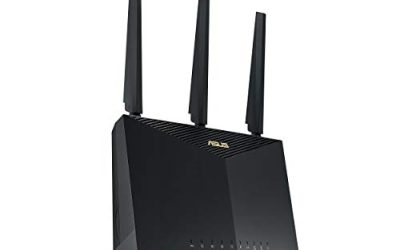
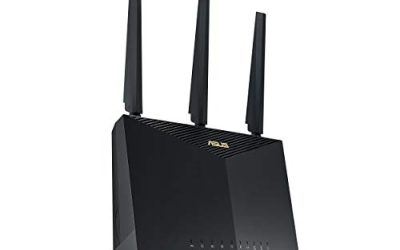
The ASUS RT-AXE7800 is the mid-range WiFi 6E pick for a household that wants ASUS security and mesh features without stepping up to a flagship ROG model. It is a tri-band WiFi 6E router with an AXE7800 combined throughput rating, a 6 GHz band, a 2.5 Gbps WAN and LAN port, and a 1.7 GHz quad-core processor. Six external antennas give it solid coverage for a medium to large home, and AiMesh support means it can link with other ASUS routers to form a single mesh network.
Security is a strong point here. AiProtection Pro provides network-level protection, ASUS Safe Browsing flags malicious sites, and the router supports Instant Guard VPN and built-in VPN features for secure remote access. Parental controls let you manage screen time and filter content per device, which is useful in a family home.
This router suits a household that already owns ASUS gear, or one that plans to build an AiMesh network over time. Starting with a capable tri-band WiFi 6E router and adding a matching node later is a practical way to cover a large or awkwardly shaped home, and the RT-AXE7800 is strong enough to anchor that setup.
The main caveat is size and placement: six antennas need room, and the router performs best in an open, central spot rather than tucked behind a television. It is also more router than a small apartment needs, so a household with a handful of devices and a modest internet plan may find a simpler model does the same job.
Comparison Table
| Router | WiFi Standard | Bands | Combined Throughput | Fastest Wired Port | Key Strength |
|---|---|---|---|---|---|
| TP-Link Archer AXE75 | WiFi 6E | Tri-band | AXE5400 | 2.5 Gbps WAN | Balanced WiFi 6E for most homes |
| ASUS RT-AX86U Pro | WiFi 6 | Dual-band | AX5700 | 2.5 Gbps WAN/LAN | Gaming traffic priority and low latency |
| NETGEAR Nighthawk RAXE300 | WiFi 6E | Tri-band | AXE7800 | 2.5 Gbps WAN | Wide coverage for larger homes |
| ASUS RT-AXE7800 | WiFi 6E | Tri-band | AXE7800 | 2.5 Gbps WAN/LAN | ASUS security and AiMesh expansion |
Which One Is Right for You?
Start with the size of your home and the number of devices on your network. If you live in an apartment or a medium-sized house, have a gigabit or slower internet plan, and want WiFi 6E at a sensible tier, the TP-Link Archer AXE75 is the natural starting point. It covers the essentials well and leaves you room to add an extender later if a far room needs help.
If gaming latency is the priority, the ASUS RT-AX86U Pro earns its place. The dedicated gaming port, traffic prioritisation, and strong processor are built for the moment when a game, a stream, and a download all compete for the same connection. It gives up the 6 GHz band, but for a gaming household the latency management matters more than the extra band.
For a larger home or a household with many devices, choose between the two AXE7800 models. The NETGEAR Nighthawk RAXE300 is the pick when coverage and device capacity come first, with its eight streams and wide coverage rating. The ASUS RT-AXE7800 is the pick when you want ASUS security features and a clear path to an AiMesh setup, or when you already own ASUS networking gear and want everything to work together.
Whichever model you choose, match the router to your internet plan. A router with a 2.5 Gbps WAN port is wasted on a slow plan, and a basic router will bottleneck a multi-gig plan. Check your plan speed, count your devices, and measure the farthest room from where the router will sit. Those three numbers will point you to the right pick faster than any single specification.
Frequently Asked Questions
Do I need a WiFi 6E router if my devices are older?
Not necessarily. A WiFi 6E router still works with older WiFi 5 and WiFi 6 devices, because it broadcasts on the 2.4 GHz and 5 GHz bands as well as the 6 GHz band. Older devices simply use the bands they support. A WiFi 6E router is worth it if you plan to keep the router for several years, since new phones, laptops, and consoles increasingly support the 6 GHz band, and the extra band keeps the network less congested as you add devices.
Can one router cover a large house?
A single powerful router can cover many homes, but it depends on layout, wall materials, and where the router sits. A home with thick walls, several floors, or a long floor plan may still have weak spots at the far end. In that case, choose a router that supports a mesh system from the same brand, and add a matching node to extend coverage. Moving the router to a central, elevated position often improves coverage more than any setting change.
What is the difference between a modem and a router?
A modem connects your home to your internet provider, while a router creates the local network inside your home and shares the connection among your devices over WiFi and Ethernet. Some provider units combine both functions in one box. The routers in this guide are standalone routers, so they connect to your existing modem or fiber terminal. If your provider supplied a combined unit, you can usually set it to bridge or passthrough mode and let your new router handle WiFi and routing.
How often should I replace my router?
Most households benefit from replacing a router every four to six years, or sooner if it cannot keep up with the device count, drops connections, or lacks the WiFi standard your devices use. Signs that it is time to upgrade include frequent restarts, weak coverage in rooms that used to be fine, and slow speeds even when you are close to the router. Firmware updates can extend the life of a router, so keep them installed, but no update can add a new WiFi standard or a faster wired port.
Disclosure: As an Amazon Associate, we may earn from qualifying purchases.
Related guides
More from Amazon
Programs that pair well with the guide above. Offers and eligibility are set by Amazon and may change.
Free shipping on eligible items, Prime Video and more. Eligible new members can start with a free trial.
Start a Prime free trialAd-free music streaming. Eligible new subscribers can start with a free trial.
Try Music Unlimited freeA Prime membership for ages 18-24 with a trial period. Eligibility is set by Amazon.
See Prime for Young AdultsAudiobooks and podcasts to listen to on the go. Eligible new members can start with a free trial.
Try Audible freeAs an Amazon Associate we earn from qualifying purchases.