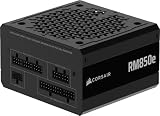
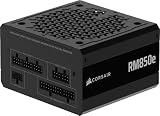
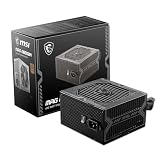
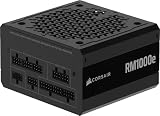
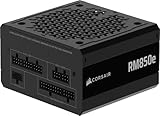
Choosing a power supply for a small PC build usually comes down to one fork in the road: standard SFX or the longer SFX-L format. Both fit cases that accept smaller power supplies, both deliver enough wattage for modern graphics cards, and both cost roughly the same per watt. The difference is physical — and that difference shapes your airflow, your noise levels, and how much room you have left over for cables and components. Here’s how to decide which one belongs in your build.
Our Top Picks
 ASUS ROG Loki SFX-L 750W Platinum Power Supply750W|Black4.9 x 4.9 x 2.5 inches4 poundsCheck on Amazon


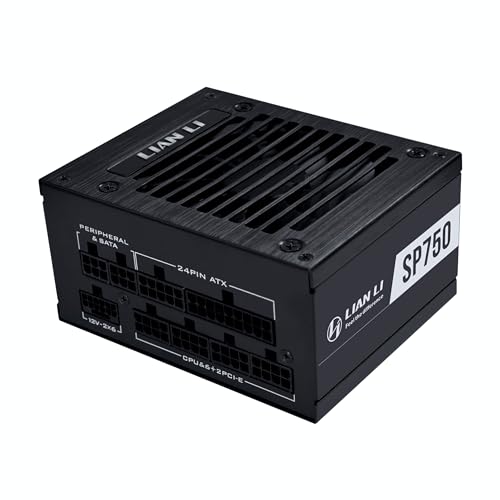
Top 3 picks at a glance
Quick Verdict
Get a standard SFX unit if: your case is compact (under roughly 15 liters), you want maximum clearance for a long graphics card or front radiator, or you plan to move the PSU into another build later. Standard SFX measures about 125 mm long by 63.5 mm tall by 100 mm wide.
As an Amazon Associate we earn from qualifying purchases at no extra cost to you.


Get an SFX-L unit if: your case explicitly supports it, you want a larger, quieter 120 mm fan instead of a smaller 92 mm one, and you can spare the extra 30 mm of length. SFX-L runs about 130 mm long in the same 63.5 × 100 mm footprint, so depth — not height or width — is the trade-off.
Performance per dollar is close enough that the shape of your case, not the spec sheet, should make the call.
Side by Side
| Factor | Standard SFX | SFX-L |
|---|---|---|
| Dimensions | ~125 × 100 × 63.5 mm | ~130 × 100 × 63.5 mm |
| Typical fan size | 80–92 mm, often runs faster | 120 mm, spins slower at load |
| Case clearance needed | Fits nearly all SFX-supporting cases | Needs ~5+ mm extra depth; some cases exclude it |
| GPU clearance impact | Leaves more room for long cards | Can force shorter GPU or slimmer cooler choices |
| Price range (750W Gold class) | Check on Amazon | Check on Amazon |
| Wattage ceiling | Commonly up to 850W–1,000W | Often tops out lower; 750W is a common sweet spot |
| Noise tendency | Smaller fan, higher RPM under load | Larger fan, generally quieter under sustained load |
| Maintenance | Dust filters/blowout every 6–12 months | Same schedule; slightly larger fan intake to clean |
| Resale/portability | Easier to resell — fits more cases | Smaller buyer pool due to clearance limits |
| Best for | True mini-ITX builds under ~15L | Slightly larger small-form-factor cases with room to spare |
Where Sfx Wins
Standard SFX is the universal small-form-factor format. If your case is a genuinely tiny volume — think sub-15L consoles-style builds — the five millimeters you save in PSU length can be the difference between fitting a triple-slot graphics card and not. Cable routing also gets easier: the shorter body leaves a pocket of air behind the PSU shroud that works as breathing room for cable bulk.
Compatibility is the bigger story. Virtually every case that takes a small power supply takes standard SFX; SFX-L support is hit or miss and always listed in the fine print. That also matters at resale time — a used SFX unit appeals to anyone with any SFX case, while an SFX-L unit has a narrower audience.
Where Sfx L Power Supply for Small Builds Wins
The whole point of SFX-L is acoustics. By stretching the chassis to fit a 120 mm fan, manufacturers let the fan spin at lower RPM for the same cooling. In a small case where the PSU sits millimeters from a hot graphics card, that headroom is real — sustained gaming sessions tend to be quieter on a well-built SFX-L unit than on a comparable standard SFX one with a 92 mm fan.
SFX-L units also tend to be the flagships of a maker’s small-format lineup. That’s where you find premium features: higher efficiency certifications, ATX 3.0 compatibility, PCIe 5.0 connectors for modern GPUs, and long warranties.
If your case lists SFX-L support and you’re not fighting for GPU clearance, the larger fan is usually worth taking.
Cost Over 5 Years
Small-format power supplies are a buy-once category. A quality unit from either camp carries a 7–10 year warranty and should outlast two or three GPU upgrades.
Efficiency is where the formats barely differ — both come in Gold and Platinum tiers, so your electricity cost is determined by the rating, not the size. A 750W Gold unit at typical gaming loads wastes roughly 10–12% of drawn power as heat; a Platinum unit wastes closer to 8%. rates — meaningful over a decade, not a tiebreaker.
If anything, standard SFX holds a slight edge in total cost of ownership because it resells for more and moves between builds freely.
Which One for Your Home
Small Apartment
Space is the whole reason you’re building small, so go standard SFX. Prioritize fully modular cabling — in a cramped desk setup, unused cables are the enemy.
Family with Kids or Pets
If the PC lives on or near the floor, fan noise matters less than reliability and dust control. Either format works, but an SFX-L with a big, slow 120 mm fan and a 10-year warranty (the ROG Loki class of unit) means one less thing to think about, and the lower-RPM fan pulls less dust through over time. Plan a compressed-air blowout every six months, especially in homes with shedding pets.
Rental
Renters rebuild and relocate often, so portability wins: standard SFX. It fits whatever small case you own now and whatever you buy next, and it resells quickly when it’s time to move. Keep the box and all modular cables — a complete used SFX unit typically recoups 50–60% of its price.
Long-Term Home
If this PC will sit in one place for five-plus years and your case supports SFX-L, buy the premium option. The efficiency savings compound slowly but surely, and the decade-long warranty matches how long you’ll actually own it.
FAQ
Can I use an SFX-L power supply in a case that only lists SFX support?
Usually no. The SFX-L body is roughly 5 mm longer, and many compact cases simply don’t have the depth — the PSU shroud or a drive cage gets in the way. Check your case’s specification page for “SFX-L” explicitly; if it isn’t listed, assume it doesn’t fit.
Is SFX-L quieter than standard SFX?
Generally, yes, at sustained loads. The 120 mm fan moves the same air at lower RPM than a 92 mm fan, which means less fan noise under a heavy graphics card. At idle and light loads, both formats are inaudible in most modern units with zero-RPM fan modes.
How many watts do I actually need for a small build?
For a modern mid-range GPU (200–250W class) paired with a 65W–105W CPU, 750W is the practical sweet spot and leaves headroom for transient spikes. Compact builds with 350W-class flagship GPUs should look at 850W–1,000W — where standard SFX has the wider selection.
Is an ATX power supply ever a better choice for a small build?
Only if your case is large enough to be “small” in name only — many mid-tower and console-style cases around 20–25 liters accept full ATX units, which cost less per watt and offer the widest selection. Below roughly 18 liters, SFX and SFX-L are your realistic options.