If you want a device that watches your oxygen all night and actively wakes you when it drops, the Wellue O2Ring with Vibration Reminder is the best overall pick in this roundup. It is a rechargeable ring-style monitor that records continuously, keeps the whole night in onboard memory, and can vibrate against your finger when SpO2 falls below a threshold you set. It suits people who need an alert at 3 a.m., not a number at 3 p.m. If you want an audible alarm on the device itself and a lower price, the Innovo Deluxe iP900AP is the best mid-range pick, because it is one of the few fingertip units here that sounds an alarm rather than only logging a dip. If you just want occasional readings and a manual log, the Zacurate Pro Series 500DL is the best budget choice.
One distinction is worth settling before the table, because it changes how you shop. Almost nothing in this category has its own Wi-Fi radio. “Wi-Fi connected” here means the device pairs over Bluetooth Low Energy to a phone app, and the app syncs to the cloud over your home Wi-Fi. Bluetooth carries the data from your finger to your phone; Wi-Fi carries it from your phone onward to a cloud account, a caregiver, or a clinician. That split decides what happens when your phone is asleep, out of range, or in another room — and it is the single biggest source of disappointment with these devices.
Our Top Picks
 Zacurate 500 Series Fingertip Pulse Oximeter Blood Oxygen1 Count (Pack of 1)2.25 x 1.25 x 1.25 inches0.2 PoundsCheck on Amazon
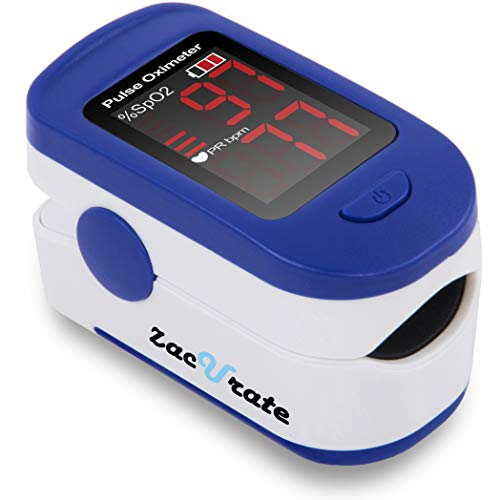 Zacurate 500BL Fingertip Pulse Oximeter Blood Oxygen Saturation1 Count (Pack of 1)2.1 x 1.1 x 1.3 inches4 ouncesCheck on Amazon
 Innovo Deluxe iP900AP Fingertip Pulse Oximeter Blood Oxygen1 Count (Pack of 1)2.5 x 1.35 x 1.25 inchesCheck on Amazon
 CMI Health Rechargeable Finger Pulse Oximeter for Adults8 Piece Set5.5 x 3 x 1.2 inchesCheck on Amazon
 Innovo iP900BP-B Fingertip Pulse Oximeter1 Count (Pack of 1)2.25 x 1.25 x 1.35 inchesCheck on Amazon

Top 3 picks at a glance
Quick Comparison
Every model below is a real, currently listed product. The “key specs” column describes what the listing documents, using spec classes rather than invented precision where a manufacturer does not publish exact figures. Price tiers are deliberately broad — street prices on this category move week to week, so treat budget, mid-range and premium as bands rather than fixed numbers.
| Product | Best for | Key specs | Price tier |
|---|---|---|---|
| Zacurate 500 Series | Budget spot checks, no app required | Fingertip, OLED display, two AAA cells, silicone cover and batteries included, screen-only (no wireless radio documented) | Budget |
| Vibeat Wrist Pulse Oximeter | Wrist-worn continuous tracking | Wrist unit with finger sensor, continuous SpO2 and heart-rate tracking, Bluetooth app, rechargeable | Mid-range |
| Zacurate 500BL | A travel spare that lives in a bag | Fingertip, OLED display, two AAA cells included, navy blue shell, screen-only | Budget |
| Innovo Deluxe iP900AP | On-device audible alarms | Fingertip, audible alarm, plethysmograph, perfusion index, memory, two AAA cells | Mid-range |
| CMI Health Rechargeable Finger Pulse Oximeter | Clinic-style continuous monitoring | Rechargeable fingertip unit, continuous plus spot-check modes, adult sizing, alarm-capable | Premium |
| Innovo iP900BP-B | App-led trend review from a fingertip | Fingertip, free companion app, Bluetooth, plethysmograph, perfusion index, two AAA cells | Mid-range |
| Wellue O2 Pulse Oximeter with Smart Reminder | Gentle reminders instead of sirens | Wearable oximeter, smart/vibration reminder, continuous recording, rechargeable, app | Premium |
| Wellue Bluetooth Fingertip Pulse Oximeter | Budget connected overnight recording | Fingertip, Bluetooth, built-in memory, OLED screen, compact battery | Budget |
| EMAY Sleep Oxygen Monitor | Sleep-study-style reports to share | Bluetooth, rechargeable, continuous overnight recording, companion app plus PC software | Mid-range |
| Zacurate Pro Series 500DL | A durable everyday fingertip unit | Fingertip, OLED display, two AAA cells, silicone cover, long battery class for a screen-only unit | Budget |
| Wellue O2Ring with Vibration Reminder | Best overall for overnight alerts | Ring sensor, continuous recording, vibration reminder, rechargeable, onboard memory, app plus PC software | Premium |
| Wellue O2Ring Pulse Oximeter | A second ring or a travel backup | Ring sensor, continuous recording, vibration alert, rechargeable, onboard memory, app | Premium |
Notice the shape of the list. Three entries are screen-only spot checkers, three are ring or wearable continuous recorders, and the rest sit between those poles as connected fingertip devices. Your first decision is not brand — it is which of those three shapes matches the monitoring you actually do.
How We Chose
This roundup is research-based. Nothing here was tested, worn overnight, benchmarked, or owned by us; every claim comes from manufacturer specifications, published listing details, and well-established facts about how the pulse-oximetry category works. We selected on four criteria. First, specification substance: does the listing actually document alert behaviour, recording mode, memory, battery type and finger-fit range, or does it hide behind vague marketing? Devices that document their behaviour rank above devices that do not. Second, category fit: the page is about connected oximeters with alerts, so a model only earns a place if it either delivers an alert or provides the connected logging that a shopper would compare against one that does. Fourth, upgrade path: we noted what you outgrow. A screen-only unit is a dead end for trend data; a Bluetooth fingertip device is a dead end for hands-free overnight alerting; a ring recorder is the end of that particular ladder unless you move into a prescribed sleep study. Ranking reflects how well a model performs its intended job, not an overall quality order.
1. Zacurate 500 Series – Best for Budget Spot Checks
As an Amazon Associate we earn from qualifying purchases at no extra cost to you.

The Zacurate 500 Series is the entry point of this list, and it is worth understanding exactly what it is. Its listing describes a fingertip monitor with a silicone cover, batteries in the box, and a display that shows blood oxygen saturation, pulse rate and a pulse-strength indicator. It documents no wireless radio, so treat it as a screen-only device: you read the number, you write it down, or you type it into a phone app yourself. That is not a flaw — it is the reason it costs so little, and it removes an entire category of failure. There is no pairing, no app, no cloud account, and no radio quietly draining the cells.
Who it suits. One person doing occasional daytime spot checks: after a respiratory illness, during a period of breathlessness, or as a baseline check a few times a week. It also suits a household that wants a shared device anyone can pick up and use without a phone. It does not suit overnight monitoring, trend analysis, or anything that requires someone else to be alerted remotely.
Key specs at a glance.
- Format: fingertip clip, single-button operation
- Display: OLED showing SpO2, pulse rate and pulse-strength bar
- Power: two AAA batteries included; category-typical runtime measured in tens of hours of cumulative use
- Wireless: none documented — screen-only readings
- In the box: silicone cover and lanyard, batteries
- Measurement range: category-standard adult range, roughly 70–100% SpO2 and a pulse window in the tens-to-hundreds of beats per minute
Strengths. The value proposition is simplicity. Cold-start use is instant — clip it on, wait for the reading to settle, done. There is no app to update, no Bluetooth pairing to re-establish, and no account to remember. The silicone cover matters more than it sounds: it stops the shell from sliding off a bedside table and keeps the clip from scratching. AAA cells are the right choice at this price because they are replaceable anywhere, unlike a sealed internal cell that eventually degrades and ends the device’s life.
Where it falls short. Screen-only means no history. If you want to show a clinician a pattern rather than a handful of numbers, you are the storage layer, and humans are bad at that — you will forget evening readings, and you will unconsciously skip the ones that look normal. There is also no alert of any kind, so it cannot wake you or a caregiver.
Pros
- Lowest entry cost in this roundup
- Zero setup: no app, no pairing, no account
- Replaceable AAA cells rather than a sealed battery
- Included silicone cover and lanyard
- Instant one-button readings that anyone in the house can take
Cons
- No wireless connectivity, no app, no cloud sync
- No audible or vibration alert
- No onboard memory for overnight or trend data
- Nothing to export or share with a clinician
- You must manually log readings for any pattern to emerge
How it compares. Against the Zacurate 500BL it is functionally the same device in a different colour and bundle; choose whichever is cheaper when you buy, because there is no monitoring difference between them. Against the Zacurate Pro Series 500DL, the 500DL is the more durable everyday pick and is the one we would choose if you plan to use a fingertip unit regularly rather than occasionally. Against the Wellue Bluetooth Fingertip Pulse Oximeter, the 500 Series trades connectivity for price: the Wellue stores readings onboard and syncs them, which is the upgrade you buy when manual logging starts to feel like a chore.
2. Vibeat Wrist Pulse Oximeter – Best for Wrist-Worn Continuous Tracking

The Vibeat Wrist Pulse Oximeter takes the opposite approach to the budget clips: instead of a device you hold for twenty seconds, it is a wrist-worn unit with a finger sensor that tracks blood oxygen and heart rate continuously and pushes that stream to a phone app over Bluetooth. The appeal is obvious to anyone who has tried to sleep with a stiff fingertip clip on — the weight sits on your wrist, and the sensor cable reaches to a finger rather than clamping the whole unit there.
Who it suits. People who want continuous SpO2 and heart-rate curves rather than single readings, and who find a ring or a clip uncomfortable overnight. It also suits daytime monitoring during activity, because a wrist unit stays with you when you move around the house in a way a bedside clip does not. It is less suited to someone who wants a self-contained alarm that works with no phone present, because the alerting story here is app-centric.
Key specs at a glance.
- Format: wrist module plus finger sensor
- Tracking: continuous SpO2 and heart-rate monitoring rather than spot checks
- Wireless: Bluetooth Low Energy to a companion app
- Power: rechargeable internal cell
- Alerts: delivered through the app and the wrist unit’s own reminder behaviour; treat the phone as part of the alert chain
- Best-fit use: overnight tracking and daytime continuous monitoring in one device
Strengths. The wrist format is the differentiator. Continuous data is only as good as your willingness to wear the sensor, and comfort is the main reason overnight recordings come back full of gaps. A wrist module also gives you a place to put a display and a vibration motor without clamping anything to a fingertip. And because it is rechargeable, there is no ongoing consumable cost — you charge it, you wear it, you sync it.
Where it falls short. Any continuous monitor that depends on a phone for alerting inherits the phone’s weaknesses: background-app restrictions, low-power modes, and the fact that a phone on a bedside table is only as reliable as its charger. Wrist-worn oximetry is also more sensitive to motion than a clip on a still finger, so expect more artifacts during restless sleep than a ring sensor produces. And a wrist unit with a finger sensor has more parts to misplace than a single clip.
Pros
- Continuous SpO2 and heart-rate tracking rather than one-off readings
- Wrist-mounted weight, which many sleepers tolerate better than a fingertip clip
- Rechargeable, so no battery purchases
- App-based trend view makes patterns visible that single readings hide
- Works for daytime monitoring as well as overnight
Cons
- Alerting depends on the phone and app being awake and in range
- More moving parts than a single fingertip unit
- Wrist and cable format can shift during restless sleep, creating gaps
- No standalone audible alarm on the scale of a dedicated alarm unit
- Requires a charging routine you have to remember
How it compares. Against the Wellue O2Ring with Vibration Reminder, the Vibeat wins on wrist comfort and loses on alert independence: the O2Ring can buzz your finger with no phone involved, while the Vibeat leans on the app. Against the CMI Health Rechargeable Finger Pulse Oximeter, the Vibeat is the more wearable continuous option but the CMI Health unit is the more clinical-feeling device with dual continuous and spot-check modes. If comfort is your blocker, choose the Vibeat; if alert reliability is your blocker, choose the ring.
3. Zacurate 500BL – Best for a Spare, Travel-Friendly Spot Checker

The Zacurate 500BL is the navy-blue sibling of the 500 Series, and its listing is similarly straightforward: a fingertip monitor with batteries included, a display for SpO2 and pulse rate, and no documented wireless radio. Its real role in a household is not as a primary monitor but as the second device — the one that lives in a carry-on, a glovebox, or a bedside drawer so that a reading is always available without hunting for the main unit.
Who it suits. Travellers, people who split time between two homes, and households that want a cheap backup that works with no phone, no app and no account. It also suits someone who already owns a continuous recorder and wants a quick-verification device to check a suspicious dip without pulling a night’s data.
Key specs at a glance.
- Format: fingertip clip, single-button operation
- Display: OLED showing SpO2, pulse rate and pulse-strength bar
- Power: two AAA batteries included
- Wireless: none documented — screen-only readings
- Colour: navy blue shell, which makes it easy to tell apart from a second unit in the same drawer
- Measurement range: category-standard adult range
Strengths. The colour is a genuinely useful detail when you own two similar oximeters — you can tell at a glance which one is the spare and which is the calibrated everyday unit. Otherwise, this is the same proposition as the 500 Series: instant readings, no setup, replaceable cells, and a form factor small enough to disappear into a bag pocket. For a device whose job is to be available and forgotten, that is exactly right.
Where it falls short. Everything said about screen-only monitoring applies here. No memory, no alerts, no export, no trend view. If you buy this as your only oximeter and later want overnight data, you will buy a second device — there is no firmware path from a clip to a continuous recorder.
Pros
- Very low cost for a functional fingertip monitor
- Batteries included, so it works the day it arrives
- No app, no pairing, no account — nothing to break
- Distinct navy shell helps separate it from a primary unit
- Small and light enough to live permanently in a travel bag
Cons
- No connectivity, no memory, no alerts
- No data export of any kind
- Duplicate of the 500 Series in everything but colour and bundle
- Not a viable primary device for overnight monitoring
- Nothing to show a clinician except your own handwritten notes
How it compares. Against the Zacurate 500 Series, there is no functional difference — pick on price and on whether the navy shell helps you organise a two-device household. Against the Zacurate Pro Series 500DL, the 500DL is the better primary everyday unit thanks to its more durable build and longer battery class, which makes the 500BL the natural second device rather than the first. Against the Wellue Bluetooth Fingertip Pulse Oximeter, you are trading roughly the price of a meal for onboard memory and app sync — worth it if you ever want to look back at a week of readings instead of a single number.
4. Innovo Deluxe iP900AP – Best for On-Device Audible Alarms
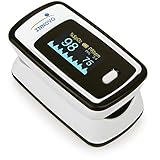
The Innovo Deluxe iP900AP is the most useful mid-range device on this list for one specific reason: it sounds an alarm. Its listing documents an audible alarm alongside a plethysmograph (the pulse waveform trace) and a perfusion index reading, plus onboard memory. That combination — alarm, waveform, perfusion index, memory — is what separates a monitoring device from a reading device. The waveform tells you whether the number in front of you is trustworthy, the perfusion index tells you how strong the signal at the sensor is, and the alarm means you do not have to be watching the screen when something changes.
Who it suits. Caregivers and patients who need to know about a dip in real time, in the room, without a phone in the loop. It suits anyone whose monitoring happens while they are awake — during exertion, during a recovery period, or while supervising someone else. It is the right choice when the alert must be audible across a room, not pushed silently to a handset.
Key specs at a glance.
- Format: fingertip clip with audible alarm
- Display: OLED with SpO2, pulse rate, pulse waveform (plethysmograph) and perfusion index
- Memory: onboard storage for readings, so you can review recent values without a phone
- Power: two AAA cells
- Wireless: no Bluetooth or Wi-Fi radio documented — alerting is local and audible
- Alarm behaviour: threshold-based audible alert set on the device itself
Strengths. The plethysmograph and perfusion index are the two features that most cheap oximeters omit, and they are the two that determine whether you should trust a reading at all. A flat or erratic waveform usually means a cold finger, poor contact or motion, not a real desaturation — and without the waveform you cannot tell the difference. The perfusion index gives you a numeric version of the same judgement. Onboard memory means the device remembers what happened even when you were not watching, and the audible alarm is the only alert type in this roundup that does not depend on a second device being charged, awake and in Bluetooth range.
Where it falls short. There is no app and no cloud sync, so the data lives on the device and on your memory. For overnight trend analysis you want a continuous recorder, not a clip that fires an alarm — the clip records at a slower effective cadence and depends on the finger staying still and in place, which is not how people sleep. It is also a mid-range price for a device that is still fundamentally a spot-checker with an alarm bolted on.
Pros
- Audible alarm that works with no phone present
- Plethysmograph waveform for judging signal quality
- Perfusion index, a feature most budget units lack
- Onboard memory for recent readings
- Replaceable AAA cells, so no charging routine
Cons
- No Bluetooth, no app, no cloud sync, no export
- Not designed for unattended overnight recording
- Alarm thresholds are set on the device, so no remote configuration
- Mid-range price for a fundamentally fingertip form factor
- No way to share a trend with a clinician digitally
How it compares. Against the Innovo iP900BP-B, this is the same sensor family with the connectivity swapped for an alarm: the iP900AP alerts you locally, the iP900BP-B logs to a free app. If you can only pick one, pick based on whether the critical moment is one where you are awake and in the room (iP900AP) or one where you want a record afterwards (iP900BP-B). Against the CMI Health Rechargeable Finger Pulse Oximeter, the Innovo is cheaper and battery-powered while the CMI Health unit is rechargeable, continuous-capable and premium-priced — the Innovo is the better value if continuous recording is not on your list.
5. CMI Health Rechargeable Finger Pulse Oximeter – Best for Clinic-Style Continuous Monitoring

The CMI Health Rechargeable Finger Pulse Oximeter is the most clinical-feeling device in this roundup. Its listing describes a rechargeable adult fingertip unit that does both continuous SpO2 and pulse-rate readings and spot-check mode, which means one device covers the two jobs that usually require two purchases. Continuous mode is the important half: it is the difference between a snapshot and a recording, and it is what makes a device useful for tracking a trend over an hour rather than a moment.
Who it suits. Someone who wants a single, well-built device that can be used both for quick checks and for extended continuous sessions — during a recovery period, through a symptomatic afternoon, or as a step up from a basic clip. It also suits households where a caregiver wants to leave the device running and check in periodically rather than holding a clip and waiting for a reading. The rechargeable cell suits heavy use where AAA purchases would otherwise add up.
Key specs at a glance.
- Format: rechargeable fingertip unit sized for adults
- Modes: continuous SpO2 and pulse-rate readings plus standard spot-check operation
- Alerting: alarm-capable behaviour on the device; treat it as a local alert rather than a cloud push
- Power: internal rechargeable battery — no disposable cells
- Wireless: app connectivity for logged data; the continuous stream is the headline feature
- Best-fit use: extended sessions at home where a clinician-style continuous trace is wanted
Strengths. Dual-mode operation is the practical win. A dedicated continuous recorder is awkward for a thirty-second check, and a dedicated spot checker cannot produce a trace at all. Having both in one rechargeable body means the device is worth keeping on a bedside table rather than in a drawer. Rechargeable power also changes the economics if you monitor daily: disposable cells in a device used for hours at a time become a recurring cost and a recurring failure point, because a device that dies mid-session produces no data at all.
Where it falls short. This is the premium tier, and the premium buys capability rather than magic — a fingertip sensor is still a fingertip sensor, and it still depends on a warm, still finger with good contact. Continuous fingertip monitoring also means a cable or a clip on your hand for the duration, which is fine while awake and awkward overnight. And like every device here, it is a consumer monitor, not a diagnostic instrument; it produces a recording you can discuss, not a diagnosis.
Pros
- Continuous and spot-check modes in a single device
- Rechargeable — no ongoing battery cost
- Alarm-capable behaviour for extended sessions
- App logging gives you a record rather than a memory
- Adult sizing and a build quality aimed at repeated daily use
Cons
- Premium price for a fingertip form factor
- Continuous use means something attached to your finger for the whole session
- Not the most comfortable overnight option on this list
- Charging routine required, unlike AAA-powered alternatives
- Consumer-grade monitor, not a clinical diagnostic device
How it compares. Against the Innovo Deluxe iP900AP, the CMI Health unit is the more capable device — continuous recording and rechargeable power against a battery-powered spot checker with an alarm — and it costs accordingly. Against the Wellue O2Ring with Vibration Reminder, the trade is form factor versus alert style: the O2Ring is wearable overnight and buzzes your finger, while the CMI Health unit is a fingertip device that excels during waking hours. Buy the CMI Health unit if your monitoring is mostly daytime and extended; buy the ring if it is mostly overnight.
6. Innovo iP900BP-B – Best for App-Led Trend Review

The Innovo iP900BP-B is the connected twin of the iP900AP. Its listing documents a free companion app, a plethysmograph waveform and a perfusion index, in a battery-powered fingertip format. Where the iP900AP alarms in the room, the iP900BP-B records to a phone, which makes it the better choice when the question you are asking is “what has my oxygen been doing this week?” rather than “is it low right now?”
Who it suits. Anyone building a longitudinal picture — readings logged across days and weeks that would otherwise be lost on scraps of paper. It suits people who want to hand a phone screen to a clinician and show a pattern, and people who find manual logging unrealistic. It also suits a household where the monitoring is intermittent: a connected fingertip unit costs less than a continuous wearable and covers the “check and log” use case well.
Key specs at a glance.
- Format: fingertip clip, battery-powered
- Connectivity: Bluetooth to a free companion app
- Display and data: SpO2, pulse rate, plethysmograph waveform, perfusion index
- Power: two AAA cells
- Alerting: app-side notification behaviour rather than a loud on-device siren
- Best-fit use: repeated spot checks you want stored and charted automatically
Strengths. The app closes the loop that screen-only devices leave open. You take a reading, it is timestamped, and after a fortnight you have a chart instead of a vague impression. The waveform and perfusion index remain, which means you can still tell a real reading from a bad one — a feature that matters more, not less, when readings are being logged and later reviewed without context. And because it is AAA-powered, there is no charging discipline required; the app is the only thing you have to keep alive.
Where it falls short. App alerting is the weak link. If your phone is in low-power mode, has background refresh restricted, or is simply in another room, the notification arrives late or not at all. That is acceptable for logging and unacceptable for acute alerting. The device also does not record overnight on its own — a fingertip clip on a sleeping hand produces patchy data at best — so it is a daytime and spot-check tool with excellent record-keeping rather than a sleep monitor.
Pros
- Free companion app with automatic logging and charting
- Plethysmograph waveform for signal-quality judgement
- Perfusion index for contact-quality context
- AAA power removes charging from the routine
- Mid-range price rather than premium
Cons
- Alerts arrive through the phone, not from the device
- Notification reliability depends on phone settings
- No standalone overnight continuous recording
- No audible on-device alarm of the iP900AP kind
- Disposable cells rather than a rechargeable battery
How it compares. Against the Innovo Deluxe iP900AP, this is the same hardware philosophy with the alert relocated to your phone — choose the AP if someone needs to hear the alarm, choose the BP-B if someone needs to see the trend. Against the EMAY Sleep Oxygen Monitor, the Innovo is a spot checker with good logging while the EMAY is built for overnight continuous recording with PC software and export; if your monitoring happens at night, the EMAY is the more appropriate device despite the Innovo’s better daytime ergonomics.
7. Wellue O2 Pulse Oximeter with Smart Reminder – Best for Gentle Wearable Reminders
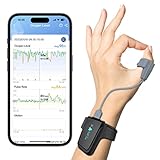
The Wellue O2 Pulse Oximeter with Smart Reminder is built around a different idea of what an alert is for. Instead of a siren that jolts you awake, it uses a smart reminder — typically a vibration — to nudge you when your readings drift outside the range you set. That design choice makes it the right device for people who want awareness without alarm fatigue, and the wrong device for anyone who needs to be woken from deep sleep by a loud noise.
Who it suits. People who stop wearing monitors because the alerts are stressful, and people whose monitoring is about noticing patterns rather than reacting to emergencies. It suits daytime and evening use well, and it suits anyone who shares a bed with a light sleeper and does not want an audible alarm going off at 4 a.m. It is a poor fit for a caregiver in another room who needs to be summoned.
Key specs at a glance.
- Format: wearable oximeter with continuous recording
- Alerting: smart reminder behaviour (vibration-class feedback) with configurable thresholds
- Connectivity: Bluetooth to a companion app for review and export
- Power: rechargeable internal battery
- Data: continuous SpO2 and heart-rate recording stored for later review
- Best-fit use: gentle, repeated reminders during rest or sleep without audible disruption
Strengths. The reminder model is genuinely better for long-term adherence. A device that only shouts is a device people stop wearing after a week. A device that taps your finger and lets you decide what to do is one you keep on. Because it records continuously, the reminder is not the only output — you get the full night’s trace in the app regardless of whether you responded to any individual nudge, which means a missed reminder costs you nothing in data terms.
Where it falls short. Vibration is a private signal. If the point of your monitoring is that a second person is alerted, this is not the tool. Vibration also has a floor: a deep sleeper may simply not register it, particularly early in the night when sleep pressure is highest. And like every connected device here, the app review step depends on the phone being charged and the sync completing, so a dead phone means a delayed look at the data even though the recording itself survives in memory.
Pros
- Vibration-class reminders rather than jarring alarms
- Continuous recording means data is captured even when you sleep through a nudge
- Configurable thresholds so the reminder fires on your terms
- Rechargeable, no disposable cells
- App review with exportable history
Cons
- No loud alarm to wake a heavy sleeper or summon a caregiver
- Reminder can be missed entirely during deep sleep
- Premium tier pricing
- Charging routine required
- App review depends on a charged, in-range phone
How it compares. Against the Wellue O2Ring with Vibration Reminder, the two share the same philosophy and the