The best wall mount garage door openers for quiet access are the LiftMaster 8500W or 98022 for premium, battery-backed installations, the Chamberlain RJO101 for a residential smart-home setup, and the Genie 6170 for a strong alternative—provided your door has a compatible torsion-spring system and enough side-room.
A wall-mounted, or jackshaft, opener frees the ceiling for storage, lighting, a lift, or a tall vehicle. It also removes the long ceiling rail and hanging motor that can transmit vibration through the garage structure. However, these openers are not universal replacements: door balance, torsion hardware, side clearance, cable routing, and the location of the power outlet matter as much as the opener’s advertised horsepower.
As an Amazon Associate we earn from qualifying purchases at no extra cost to you.


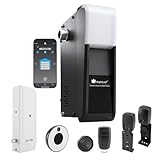
Our Top Picks
 Genie 6072H-O Residential Wall Mounted Garage Door Opener7 x 8.8 x 12.01 Inches26.9 PoundsCheck on Amazon


Top 3 picks at a glance
Quick comparison of leading wall-mount openers
| Model | Drive and rated class | Battery backup | Smart controls | Best fit |
|---|---|---|---|---|
| LiftMaster 8500W | Jackshaft; 3/4 HP equivalent | Integrated backup system | myQ app, alerts, remote monitoring | Premium residential doors and garages needing dependable backup power |
| LiftMaster 98022 | Jackshaft; 3/4 HP equivalent | Battery backup included | myQ app and connected accessories | Newer premium installations where lighting and connected features matter |
| Chamberlain RJO101 | Residential jackshaft; 3/4 HP class | Included on applicable package configurations | myQ app, notifications, connected control | Homeowners wanting a compact smart opener without commercial-style hardware |
| Genie 6170 | Direct-drive jackshaft; 1-1/4 HP class | Check the exact package; backup may require an accessory | Aladdin Connect compatibility varies by configuration | Owners prioritizing direct-drive operation and broad lifting capacity |
Specifications and included accessories can vary by revision, installer package, and region. Confirm the model number and contents before purchase, especially for battery backup and smart-home equipment.
What to check before choosing
1. Confirm that your door can use a jackshaft opener
Most wall-mount openers are designed for sectional garage doors with a torsion shaft above the door. The opener mounts beside that shaft and turns it directly. A typical extension-spring system is usually not suitable without conversion work, and one-piece tilt-up doors generally require a different opener design.
The door must also be properly balanced. Disconnect the existing opener and manually lift the door halfway. It should remain close to that position rather than falling or shooting upward. If it moves heavily or unevenly, repair the springs, cables, rollers, or hinges first. A more powerful motor does not safely compensate for a badly balanced door.
2. Measure clearance, not just ceiling height
Wall mounting solves ceiling-obstruction problems, but it creates side-clearance requirements. Measure from the end of the torsion shaft to the nearest side wall, and check whether the shaft extends far enough for the drive unit and mounting hardware. Also inspect the area around the cable drum, bearing plate, vertical track, and wall outlet.
- Ceiling clearance: Wall mounting is useful when a ceiling rail would interfere with a vehicle lift, overhead shelving, or a high roof.
- Side clearance: The motor needs a solid mounting surface beside the torsion shaft. A narrow jamb, corner, or obstruction may require a different installation plan.
- Shaft length: The torsion bar must provide enough usable length for the drive sprocket or coupling. Do not assume a short shaft can accept an opener without modification.
- Outlet location: Plan for a grounded receptacle near the opener. Avoid extension cords as a permanent solution.
3. Match the opener to door size and construction
Residential jackshaft openers commonly support standard sectional doors, but maximum door height, width, weight, drum diameter, and lift type differ by model. A tall insulated steel door may be easier to lift than a smaller but unusually heavy solid-wood door. Oversized doors, vertical-lift doors, high-lift conversions, and rolling doors need model-specific approval.
Check four items in the installation manual: maximum door area, maximum door height, compatible drum size, and whether the model permits your lift configuration. If your door uses unusual hardware, have a garage-door technician verify compatibility before ordering.
Noise: where wall-mount models help and where they do not
A jackshaft opener is often quieter inside the room because there is no ceiling rail trolley moving along a long metal track. Direct drive also eliminates several belt or chain contact points. The largest remaining noise sources are usually the door itself: worn rollers, loose hinges, dry bearings, cable drums, and a door rubbing the tracks.
For the quietest result, replace damaged nylon rollers, lubricate hinges and bearing points with garage-door lubricant, tighten loose fasteners, and keep the tracks clean. Do not grease the tracks; excess grease attracts grit and can make the rollers drag. If the door slams, shudders, or squeals, an opener upgrade alone will not fix the cause.
The LiftMaster 8500W and 98022 are strong choices when low perceived noise and vibration are priorities. The Genie 6170’s direct-drive design is also attractive for a quiet installation. The Chamberlain RJO101 is a practical choice for typical residential doors, particularly when the rest of the system is already compatible with myQ accessories.
Battery backup: calculate what it can really provide
Battery backup is valuable during outages, but it is intended for short-term door operation, not for powering the whole garage. A useful way to estimate endurance is:
Approximate runtime = usable battery watt-hours ÷ energy used per door cycle.
For example, assume a backup battery has roughly 100 Wh available after conversion losses and reserve capacity, and one open-and-close cycle consumes about 10 Wh. The theoretical result is 10 cycles. Because cold temperatures, aging, door friction, and safety reserves reduce capacity, planning for approximately 5–8 complete cycles is more realistic than relying on the theoretical maximum.
Battery performance is especially important if the garage door is your primary exit during an outage. Choose a model with an included backup system, test it twice a year, and replace the battery according to the manufacturer’s interval. If backup is optional, include the battery, mounting hardware, and compatible control equipment in the total cost.
Smart-home controls and security
LiftMaster and Chamberlain residential systems commonly use myQ for app control, door-position notifications, schedules, and selected connected accessories. Genie models may use Aladdin Connect, either built in or through an approved accessory depending on the exact opener. Verify compatibility with your preferred platform rather than assuming that “Wi-Fi” means native support for every smart-home ecosystem.
Smart access is most useful when notifications are configured carefully. Enable alerts for an open door after a chosen time, but avoid schedules that could close the door while someone is working in the garage. Use a unique account password and multifactor authentication where available. A wall-mounted opener should also have a physical emergency release and properly adjusted safety reversal sensors; app control is not a substitute for those safeguards.
Installation complexity and total cost
Installing a wall-mount opener is more involved than swapping a ceiling-mounted trolley. The installer must secure the motor to framing, connect it to the torsion shaft, install a floor or wall-mounted safety sensor system, set travel limits, pair remotes, and verify emergency release operation. Torsion springs and lift cables store dangerous energy, so spring adjustment and shaft modifications are best left to a trained garage-door technician.
Professional installation can add several hundred dollars, especially when the door needs new rollers, bearings, wiring, shaft extensions, or spring work. A lower-priced opener is not a bargain if the existing door hardware is worn or incompatible.
Decision matrix
| Your situation | Most sensible direction | Reason |
|---|---|---|
| Low ceiling, overhead storage, or vehicle lift | LiftMaster 8500W, 98022, or Chamberlain RJO101 | All use the side-mounted jackshaft layout; verify side-wall and shaft clearance. |
| Frequent power interruptions | Battery-equipped LiftMaster or compatible RJO101 package | Backup operation is included rather than added as an uncertain accessory. |
| Strong preference for direct-drive operation | Genie 6170 | Its direct-drive design minimizes conventional chain-and-rail components. |
| Existing torsion shaft is short or crowded | Pause and get a compatibility inspection | Mounting geometry may rule out a jackshaft opener regardless of motor power. |
| One-piece, extension-spring, or unusual door | Model-specific professional assessment | Common residential wall-mount specifications may not apply. |
Frequently asked questions
Can I install a wall-mount opener on an extension-spring garage door?
Usually not without conversion work. Most wall-mount openers are designed for sectional doors with a torsion shaft above the door, while a typical extension-spring system is generally unsuitable as-is. One-piece tilt-up doors also usually need a different opener design. Have a garage-door technician verify the door and hardware before ordering.
How can I tell whether my garage door is balanced enough for a jackshaft opener?
Disconnect the existing opener and lift the door manually to about halfway. It should remain near that position rather than falling or rising quickly. If it feels heavy or moves unevenly, the springs, cables, rollers, or hinges may need repair. A stronger motor does not safely correct an improperly balanced door.
Will a wall-mounted opener make a noisy garage door quiet?
It can reduce opener-related noise, but it may not quiet the door itself. A jackshaft design removes the ceiling rail trolley and can reduce vibration through the structure. Worn rollers, loose hinges, dry bearings, cable drums, or tracks can remain noisy. Repair damaged hardware, lubricate appropriate points, and keep tracks clean.
What should I inspect around the torsion shaft before buying?
Check the usable shaft length, the distance from the shaft end to the nearest side wall, and the space around the cable drum, bearing plate, and vertical track. Confirm that the wall can support the opener and that a grounded receptacle is nearby. A narrow jamb or short shaft may require a different installation plan.
Can I use app control as a replacement for the emergency release or safety sensors?
No. App control does not replace a physical emergency release or properly adjusted safety-reversal sensors. LiftMaster and Chamberlain residential systems commonly use myQ, while Genie models may use Aladdin Connect depending on the configuration. Verify compatibility with the exact opener, and use a unique password with multifactor authentication where available.
Bottom line
Choose the LiftMaster 8500W or 98022 when premium construction, quiet operation, battery backup, and a mature connected ecosystem matter most. Choose the Chamberlain RJO101 for a compact residential smart-home installation when its compatibility requirements are met. Choose the Genie 6170 when direct-drive operation and capacity are more important than having the same accessory ecosystem as LiftMaster and Chamberlain.
Before buying, prioritize the order that prevents expensive mistakes: verify door type, torsion hardware, shaft and side clearance, door balance, battery requirements, and smart-home compatibility. Those checks determine whether a wall-mount opener delivers genuinely quiet access—or becomes an incompatible motor attached to a door that still needs repair.