Our Top Picks
Top 3 picks at a glance

The Best Rokinon Lenses, by What You Shoot
The best Rokinon lenses depend on your camera mount and shooting style: choose the AF 85mm F1.4 for autofocus portraits, the AF 14mm F2.8 for wide-angle landscapes and architecture, or a manual cine lens such as the 35mm T1.5 DS for controlled video work. Before buying, confirm the exact mount and whether the lens is autofocus or manual—the same focal length can behave quite differently across Rokinon’s photo and cine lines.
Quick comparison
| Lens | Best use | Focus | Maximum aperture | Key trade-off |
|---|---|---|---|---|
| Rokinon AF 85mm F1.4 | Portraits | Autofocus | F1.4 | Large and less forgiving of focus errors at F1.4 |
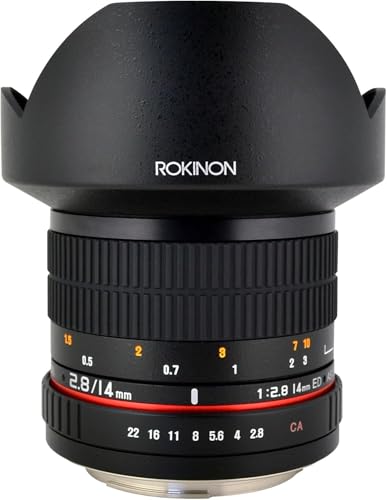
| Rokinon AF 14mm F2.8 | Landscape, architecture, night sky | Autofocus | F2.8 | Wide perspective can exaggerate foreground and edge distortion |
| Rokinon 12mm F2.0 NCS CS | Compact-camera landscapes and astrophotography | Manual | F2 | Made for select APS-C mirrorless systems; not a universal full-frame option |
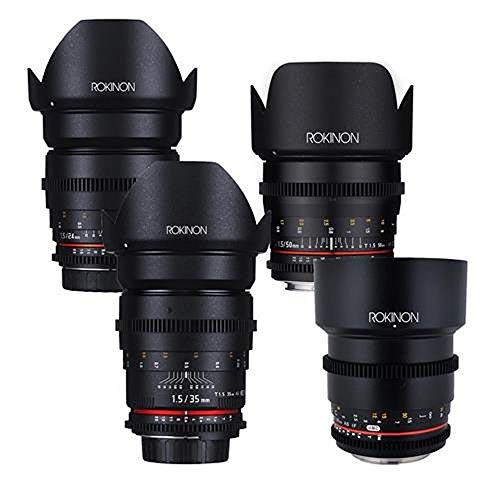
| Rokinon 35mm T1.5 DS | Video and narrative filmmaking | Manual | T1.5 | Requires deliberate focus; cine housing is less convenient for casual stills |
| Rokinon 24mm T1.5 DS | Wide video shots and low-light scenes | Manual | T1.5 | Manual operation and cine-style mechanics add bulk |
Model availability and mount options vary by version and region. Treat the names above as starting points, not proof that a particular copy fits your camera.
As an Amazon Associate we earn from qualifying purchases at no extra cost to you.


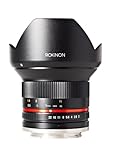
Choose by camera first, then by subject
Rokinon lenses are sold under the Samyang name in some markets, and a lens may be offered in only certain mounts. Check the manufacturer’s listing or the lens’s exact product label for your mount—such as Sony E, Canon RF, Nikon Z, Fujifilm X, or Micro Four Thirds—before comparing prices. Also check whether the lens covers full frame or is designed for a smaller sensor.
| Your situation | A sensible starting choice | Why | Check before buying |
|---|---|---|---|
| You photograph people and need eye-detection AF | AF 85mm F1.4 | Portrait focal length and wide aperture help separate a subject from the background | Exact mount, body compatibility, and AF behavior with your camera |
| You shoot wide landscapes on a full-frame body | AF 14mm F2.8 | Captures a broad view; autofocus can help when recomposing quickly | Corner rendering, filter needs, and whether the lens is the correct full-frame version |
| You use an APS-C mirrorless camera for night landscapes | 12mm F2.0 NCS CS | Wide angle and F2 aperture are useful when light is scarce | Manual focus and APS-C coverage; verify mount availability |
| You pull focus during planned video takes | 35mm T1.5 DS or 24mm T1.5 DS | Cine-style manual focus and T-stop markings suit controlled production | Matching mount, focus-gear setup, and framing on your sensor size |
Portraits: prioritize focus reliability, not just F1.4
The AF 85mm F1.4 is the most direct Rokinon choice for portraits when you want autofocus and shallow depth of field. Its wide aperture can soften a background and help in dim light, but at F1.4 the in-focus area is thin. A small focus error can put an eye out of focus, so use eye detection if your camera supports it and take a short burst rather than trusting one frame.
For more consistent sharpness across the face, try F2 or F2.8. The extra depth of field makes it easier to keep both eyes sharp when the subject is angled, while still producing background separation. The trade-off is that you need more light, a slower shutter, or a higher ISO. In bright outdoor light, the wider aperture may also require a suitable exposure setting or neutral-density filter.
Autofocus performance depends on the lens version, camera body, firmware, and subject movement. If your portraits involve running children, sports, or rapid changes in distance, check compatibility reports for your particular body rather than assuming every third-party AF lens tracks like a native lens.
Landscapes: wide does not always mean sharp edge to edge
The AF 14mm F2.8 is a full-frame wide-angle option for broad vistas, architecture, and night scenes. For a smaller mirrorless system, the 12mm F2.0 NCS CS is a compact manual-focus alternative designed for selected APS-C cameras. On APS-C, 12mm gives roughly the same field of view as an 18mm lens on full frame, while a 14mm lens on full frame remains 14mm in field-of-view terms.
Ultra-wide lenses make nearby objects look dramatically larger than distant ones. That can give a landscape depth, but it can also stretch people, trees, or buildings near the edges. Keep important subjects away from the extreme corners and level the camera when photographing architecture. For maximum detail, focus carefully and try one stop down from wide open—often around F4 or F5.6—then inspect the corners at full magnification. Stopping down too far, such as F16 or F22, can reduce fine detail through diffraction.
For stars, begin around F2.8 on the 14mm or F2 on the 12mm, then test the corners. If stars smear or become visibly distorted at the edges, stop down slightly or use a shutter speed shorter than the familiar 500 rule suggests. That rule is only a rough estimate; sensor resolution and viewing size affect how much star movement you can tolerate.
Video: understand T-stops and manual focus
Rokinon’s DS cine lenses, including the 24mm T1.5 DS and 35mm T1.5 DS, are designed for manual control. T-stops describe transmitted light, which makes exposure matching between lenses more predictable than relying on marked F-stops alone. Their geared focus rings can also make repeatable focus pulls easier with compatible follow-focus equipment.
That advantage matters most on a planned shoot. Manual focus is a drawback for spontaneous filming or moving subjects unless an operator, external monitor, or camera focus-assist tools are part of the setup. Cine lenses can also be heavier and costlier than simple still-photo lenses. If you mostly film handheld with continuous autofocus, an autofocus photo lens may be the more practical buy; if you regularly pull focus, a cine lens’s mechanics can justify the extra effort.
Sharpness, aperture, and value: what the specifications leave out
A sharpness score does not tell you whether a lens suits your work. Center sharpness, corner sharpness, contrast, distortion, flare, and focus accuracy all affect the final image. A fast lens can look less crisp at its maximum aperture and improve when stopped down, while a wide-angle lens may show its weakest performance in the corners. For landscapes, edge detail matters; for portraits, pleasing rendering and reliable focus may matter more.
When comparing prices, use broad market ranges rather than judging the lens by its cheapest listing. Rokinon photo lenses are often positioned as lower-cost alternatives to first-party lenses, but prices vary substantially with mount, condition, and sales. Cine lenses generally cost more than basic manual photo lenses because their controls and housing target video workflows. Compare the total setup cost too: a manual lens may call for a monitor or follow-focus accessories, while a front-heavy lens may need additional support.
A practical buying check
- Match the mount exactly. Do not assume a lens for one mirrorless mount can be used on another without an adapter, or that autofocus and electronic aperture will work through every adapter.
- Confirm sensor coverage. The 12mm F2.0 NCS CS is an APS-C-oriented lens; check coverage before using it on full frame.
- Choose AF or manual deliberately. AF is useful for moving people and quick stills. Manual focus is appropriate when you can set up a shot or need repeatable video pulls.
- Budget for your working aperture. If you plan to stop a lens down for corner sharpness, consider whether the available light lets you do so at a shutter speed you can use.
- Check filters and accessories. Some ultra-wide designs may not accept ordinary screw-in filters, and cine gears may need to match your focus equipment.
For most portrait photographers, start with the AF 85mm F1.4 if it is available for your mount and your body supports its autofocus features. For full-frame wide views, consider the AF 14mm F2.8; for a compact APS-C night-landscape setup, consider the 12mm F2.0 NCS CS. Choose a DS cine lens when manual focus, exposure consistency, and geared controls are useful parts of your video workflow—not simply because its T-stop number looks fast.
Frequently asked questions
Are Rokinon and Samyang lenses the same brand?
Rokinon lenses are sold under the Samyang name in some markets. Because naming and mount availability can vary by version and region, check the manufacturer’s listing or the exact product label before buying. Confirm the camera mount, autofocus or manual operation, and whether the lens covers full frame or a smaller sensor.
Can I use the Rokinon 12mm F2.0 NCS CS on a full-frame camera?
The Rokinon 12mm F2.0 NCS CS is designed for selected APS-C mirrorless systems, so you should confirm its coverage before using it on full frame. It is not a universal full-frame option. Also verify the exact mount, because availability differs among camera systems and regions.
What aperture should I use for sharp portraits with the AF 85mm F1.4?
Try F2 or F2.8 when you want more consistent sharpness across a face. At F1.4, the in-focus area is thin, so a small focus error can leave an eye soft, especially when the subject is angled. Stopping down requires more light, a slower shutter, or a higher ISO, but can still preserve background separation.
Does the 14mm lens need special filters?
The AF 14mm F2.8 may not accept ordinary screw-in filters, so check the specific lens design before purchasing filters or other accessories. Ultra-wide lenses can also exaggerate foreground and edge distortion. Keep important subjects away from extreme corners, and level the camera when photographing architecture.
What makes a cine lens different from a manual photo lens?
A DS cine lens such as the 24mm T1.5 DS or 35mm T1.5 DS provides T-stop markings, geared focus rings, and mechanics suited to repeatable focus pulls. These features are useful for planned video work, especially with compatible follow-focus equipment. Cine lenses can be heavier and less convenient for casual stills than simple manual photo lenses.