The best plate carriers for comfort and fit are low-profile, highly adjustable designs like the Crye Precision JPC 2.0, Ferro Concepts FCPC V5, and Spiritus Systems LV-119 for most users, because they balance skeletal weight, plate retention, and ventilation better than heavier overt carriers while still supporting modular load-bearing.
As an Amazon Associate we earn from qualifying purchases at no extra cost to you.


Our Top Picks


Top 3 picks at a glance
How to Choose a Plate Carrier for Comfort and Fit First
Comfort is not about padding alone. A comfortable carrier locks the plates tight to your torso, distributes weight to your shoulders and upper back evenly, and stays ventilated and stable when you move. If a carrier is too large, too loose, or incompatible with your plates, you will feel pressure points, shifting, and heat buildup within minutes. Use these decision criteria in order:
- Plate Match: Your carrier size must match your actual plate size, not your T-shirt size. A medium SAPI is typically 9.5″ x 12.5″ and a large is 10.25″ x 13.25″. If the carrier bag is too big, plates will cant forward and dig into your collarbones.
- Weight Distribution: Look for wide, load-spreading shoulder straps, a structural cummerbund, and a design that keeps weight high on the chest rather than hanging on the shoulders.
- Adjustability: You need at least 4 points of adjustment: shoulder strap length, cummerbund circumference, plate bag height, and cummerbund ride height.
- Ventilation and Materials: This determines heat management under load, especially if you wear the carrier for more than an hour.
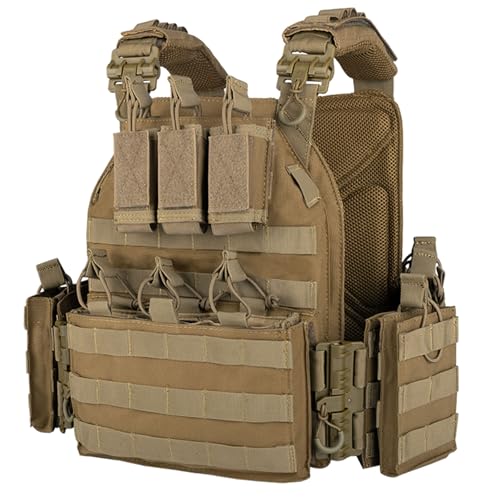
- Load-Bearing Needs: Decide if you need a slick carrier for armor only or a modular platform for magazines, medical, and radios.
Plate Compatibility: Sizing and Cut Matter More Than Brand
Most quality carriers are built around the SAPI/ESAPI sizing system, which is the de facto standard for hard armor in the US. Commercial plates are sold as SAPI, Swimmer, Shooter, and Stand-Alone cuts. Mismatch here is the most common cause of poor fit.
Common Plate Sizes and Compatible Carriers
| Plate Size / Designation | Nominal Dimensions | Typical User Height / Chest | Carrier Sizing to Look For |
|---|---|---|---|
| Small SAPI | 8.75″ x 11.75″ (222 x 298mm) | 5’4″ – 5’8″, 32″ – 36″ chest | Small plate bags, S cummerbund |
| Medium SAPI | 9.5″ x 12.5″ (241 x 318mm) | 5’8″ – 6’0″, 37″ – 41″ chest | Medium plate bags, M cummerbund |
| Large SAPI | 10.25″ x 13.25″ (260 x 337mm) | 6’0″ – 6’3″, 42″ – 46″ chest | Large plate bags, L cummerbund |
| Swimmer Cut (10×12) | 10″ x 12″ flat, clipped corners | Variable – favors mobility | Carriers labeled “Swimmer” or “10×12” |
| Shooter Cut (10×12) | 10″ x 12″ with angled top corners | Variable – most common commercial | Most “10×12” carriers, check corner clearance |
Key fit check: When properly adjusted, the top of the front plate should sit at the suprasternal notch (about one finger below your collarbone) and cover your vitals to about 1-2 inches above the belly button. The back plate should be level with the front. If you have to over-tighten shoulder straps to get that ride height, the carrier is too big or the plates are too small for the bag. Carriers like the Velocity Systems SCARAB LT and Defense Mechanisms MEPC use separate elastic plate retention and internal sizing straps to lock smaller shooter-cut plates inside a SAPI-sized bag without rattling, while minimalist designs like the Ferro Concepts Slickster require you to order the exact plate-bag size.
Materials, Weight, and Ventilation Compared
The shell material determines abrasion resistance, weight, and how hot the carrier runs. Avoid choosing 1000D Cordura by default if comfort is the priority.
- 500D Cordura: Standard on Crye JPC 2.0, Spiritus LV-119, and Ferro FCPC. About 30% lighter than 1000D, more pliable, and faster to dry. Sufficient abrasion resistance for training, law enforcement, and civilian use. Usually 6.5 to 7.5 oz per square yard.
- 1000D Cordura: Found on heavier overt carriers like the Crye AVS and Eagle Industries carriers. Maximum abrasion and field durability, but stiffer and hotter. Adds 6-10 oz to total carrier weight.
- Laminate / Squadron-type: Laser-cut laminate used on Spiritus LV-119 and Shaw Concepts ARC V2. Eliminates MOLLE webbing weight and creates a thinner, more flexible cummerbund that conforms to the torso. Less snag-prone but can delaminate if exposed to prolonged high heat.
- Mesh and Spacers: The inner face matters most for comfort. Carriers with 3D spacer mesh or Airlite-style padded mesh on the plate bag interior and shoulder straps flow air and reduce pressure. Fully slick carriers without mesh trap sweat immediately.
Skeletal Weight vs. Loaded Weight: A Worked Calculation
Spec sheets list “carrier weight” without plates or pouches, which is misleading. Calculate your all-in fighting weight to understand how weight distribution will feel:
Example loadout for a medium user:
- Carrier (Ferro FCPC V5, size M): 1.9 lbs
- Pair of Level IV ceramic plates (Medium SAPI, 7.2 lbs each): 14.4 lbs
- Loaded magazine placard (3x AR mags): 3.1 lbs
- IFAK + TQ: 1.4 lbs
- Radio + general purpose pouch: 1.2 lbs
- Total: 22.0 lbs
At 22 lbs, about 60-70% of the load should be carried on the shoulders and upper chest, and 30-40% should be stabilized and slightly borne by the cummerbund wrapping the ribcage. If your cummerbund is just elastic with no structure (common on ultra-light slick carriers), that 22 lbs will swing and pull forward when you run, forcing your traps to compensate. A structural cummerbund with integrated soft armor pockets or semi-rigid inserts, as on the Crye JPC 2.0 and Shaw ARC V2, transfers lateral sway into torso compression, which feels dramatically more stable after 30 minutes.
Adjustability and Fit Systems That Actually Help
Look for these features if fit and comfort are your primary filters:
- First-Spear Tubes or SwiftClips: Found on the Ferro FCPC, Spiritus LV-119 with Tubes adapter, and Shaw ARC. They let you don and doff without readjusting and provide consistent, repeatable tension. Essential if you share gear or layer over clothing.
- Elastic Cummerbund with Multiple Columns: A true elastic cummerbund should stretch 3-4 inches and have at least 4 MOLLE columns per side for pouches. Elastic keeps the carrier breathing with your chest. Non-elastic cummerbunds feel secure initially but restrict breathing under exertion.
- Shoulder Strap Padding and Routing: H-style straps (Crye JPC) distribute better than X-straps for narrow shoulders. Padded removable sleeves help with 15+ lb plate loads. Check if comms and hydration tubes can be routed internally to avoid hot spots.
- Rear Plate Bag Adjustment: The best carriers have a ladder or Velcro internal height adjustment so you can raise or lower the rear bag independently of shoulder straps. This prevents the rear plate from sagging low and pulling the front plate away from your chest.
Sizing tip: Measure your actual plate, then measure your chest at the nipple line with a tape. If you are between sizes, size down for the plate bag and size up for the cummerbund if the manufacturer sells them separately. Spiritus Systems, Ferro Concepts, and Defense Mechanisms all sell plate bags and cummerbunds separately for this reason.
Load-Bearing Capacity: Slick vs. Modular
Do not pay for MOLLE you will not use. Extra webbing and material add weight and heat.
| Carrier Class | Example Models | Bare Carrier Weight (M) | Best For | Comfort Trade-Off |
|---|---|---|---|---|
| Ultra-Minimal Slick | Ferro Concepts Slickster, Spiritus LV-119 Overt | 0.9 – 1.4 lbs | Low-vis, armor-only, training under kit | Most ventilated, least load support; needs placard for mags |
| Light Modular | Crye JPC 2.0, Defense Mechanisms MEPC | 1.6 – 2.1 lbs | General purpose, range, patrol, classes | Best balance of comfort and capacity for most users |
| Structural / Heavy | Crye AVS, Velocity Systems SCARAB | 2.8 – 3.6 lbs | High loadouts, breaching, extended operations | Superior weight distribution, but hotter and heavier |
If you only need to carry 3 magazines and a medical kit, a light modular carrier with a removable front placard is more comfortable than a heavy carrier covered in pouches. A slick carrier with a Velcro placard system gives you the option to go slick in minutes, which is why the LV-119 and Slickster are popular for civilian and plainclothes use. If you need to carry 6+ magazines, side plates, radio, and sustainment, the AVS-style harness with a structured cummerbund and load-bearing waist will be more comfortable under 30+ lbs because it prevents sag.
Decision Matrix: Match Your Situation to the Right Type
| Your Primary Use Case | Plate Type You Own / Plan to Buy | Recommended Carrier Type | Why It Fits Better |
|---|---|---|---|
| Civilian training, home defense, 2-4 hour range sessions | 10×12 Shooter Cut ceramic or lightweight UHMWPE | Light Modular (Crye JPC 2.0, Defense Mechanisms MEPC) | Flexible 500D, breathable mesh, enough MOLLE without excess weight |
| Concealment / low-profile under jacket | SAPI or Swimmer 10×12 | Ultra-Minimal Slick (Ferro Slickster, LV-119) | Thin profile, slick front, elastic cummerbund hides under clothing |
| Law enforcement patrol, high heat | Department-issued SAPI Medium/Large | Light Modular with spacer mesh + structural cummerbund | Ventilation and stability for 8+ hour wear with duty belt |
| Heavy loadout, side plates + radio + breaching | ESAPI Large with side plates 6×8 | Structural (Crye AVS, SCARAB LT) | Rigid frame transfers weight off shoulders, supports side plate weight |
| Smaller frame, needs maximum adjustability | Small SAPI or 10×12 | LV-119 or Shaw ARC V2 with multiple bag/cummerbund sizes | Separately sized components prevent swimming in the carrier |
Final Fit Check Before You Keep It
Once you have plates in the carrier, do this 2-minute check in front of a mirror:
- Tighten cummerbund so you can slide a flat hand but not a fist between it and your ribs. It should not ride up when you raise your arms overhead.
- Jump in place 10 times. Plates should not clunk or shift more than 0.5 inch. If they do, tighten internal retention or add plate backer foam.
- Shoulder straps should sit flat, not digging into the neck. You should be able to shrug without straps lifting the front plate off your chest.
- Check breathing: Take 5 deep breaths. If the cummerbund restricts expansion, loosen one column of elastic. Comfort is elastic tension, not tightness.
- Wear it for 15 minutes with your intended load. Hot spots on the top edge of the front plate or lower back indicate incorrect ride height, not a need for more padding.
Frequently asked questions
How should I check whether my plate carrier fits correctly?
Check that the front plate sits at the suprasternal notch, about one finger below your collarbone, and covers your vitals to about 1-2 inches above your belly button. The back plate should be level with the front. If you have to over-tighten the shoulder straps to achieve that position, the carrier may be too large or the plates too small for the bag.
Should I size a carrier by my height or by my plates?
Match the plate bag to your actual plate size first, rather than choosing by T-shirt size or height. The article lists typical user heights as rough guidance, but says plate-to-bag mismatch is a common cause of poor fit. Measure your plate and check whether its size and cut are compatible with the carrier.
What is the difference between swimmer-cut and shooter-cut plates?
Both are listed as 10×12 designs, but their corner shapes differ. Swimmer-cut plates have clipped corners and favor mobility; shooter-cut plates have angled top corners and are described as the most common commercial cut. Check corner clearance with the carrier, since not every bag fits every plate cut.
Why can a lightweight carrier feel unstable when loaded?
A lightweight carrier can feel unstable if its cummerbund is elastic without enough structure to control sway. The article explains that a load can swing and pull forward, making the shoulders compensate. A structural cummerbund can stabilize lateral movement, while an ultra-light slick carrier generally offers less load support.
When should I choose a modular carrier instead of a slick one?
Choose a modular carrier if you need to attach items such as magazines, medical gear, or a radio. A slick carrier suits armor-only use and can take a placard when needed, while extra webbing and material add weight and heat. For a small loadout, the article recommends considering a light modular carrier with a removable front placard.