Our Top Picks
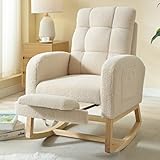
 SAETSFEG Rocking Chair Nursery Teddy Upholstered Glider RockerStandard20 x 17.32 x 18.5 inches27.01 PoundsCheck on Amazon


Top 3 picks at a glance
Best Nursery Rocking Chairs for Comfort: choose by fit, glide, and cleanup
The best nursery rocking chairs for comfort are the ones that let your feet rest flat, support your back without forcing you upright, glide quietly through a full feeding, and fit the room with enough clearance to move safely. For most families, a padded glider with a washable or wipeable upholstery option is the easiest all-around choice; a traditional rocker suits rooms where a longer front-to-back arc is welcome.
Compare the main chair types
| Chair type | Typical seat depth | Motion and room needs | Best fit | Watch for |
|---|---|---|---|---|
| Traditional rocker | 19–22 in | Arcing motion; allow about 24–30 in of clear space in front and behind | Small budgets or a classic look | Rocker rails can shift on hard floors; the motion may feel less controlled |
| Glider | 20–23 in | Back-and-forth movement on a fixed base; commonly needs about 18–24 in of front-and-back clearance | Frequent feeds and steady, quiet motion | Check the base width and whether the chair can glide close to a wall |
| Swivel glider | 20–23 in | Glides and turns; allow room for the chair’s full rotation | Reaching a side table or changing direction without standing | The swivel base can take more floor area than the seat suggests |
| Reclining glider | 20–24 in | Glides and reclines; needs extra rear clearance when opened | Caregivers who want a supported rest position | Measure the fully reclined depth, not just the upright footprint |
These are practical ranges, not guarantees: manufacturers measure seats differently, and cushion shape changes usable depth. Use the listed dimensions as a screening tool, then compare the exact chair’s seat and movement envelope.
As an Amazon Associate we earn from qualifying purchases at no extra cost to you.


Match the chair to your body and routine
1. Check seat depth before padding
Sit back against the backrest. Ideally, you can keep your lower back supported while leaving roughly 2–3 inches between the seat edge and the backs of your knees. A seat that is too deep can make shorter caregivers perch forward; one that is too shallow may leave taller users without enough thigh support. If caregivers differ in height, prioritize a supportive back and a seat that suits the person who will use the chair most often, or look for a model with a separate lumbar cushion.
2. Look for cushioning that stays supportive
Softness is not the same as comfort over a long feed. Very plush cushions can feel inviting initially but compress enough that your hips sink and your lower back rounds. Look for a seat with resilient support beneath the upholstery, a backrest that reaches the shoulders, and arms high enough to rest your elbows without shrugging. For side-feeding or holding a sleeping baby, broad, padded arms can matter more than decorative extras.
If possible, assess the chair in the posture you expect to use: feet supported, shoulders relaxed, and arms resting rather than holding all their weight. A matching ottoman can improve comfort, but it adds floor space and may slide away. It is not a substitute for a seat that fits your legs.
3. Prioritize smooth, predictable movement
A good glide should start with a gentle push and continue without a sudden jerk, grinding sound, or abrupt stop. A traditional rocker moves on an arc, so it may require more attention to placement and floor protection. A glider usually follows a more controlled path, which can be easier when you are holding a baby or reaching for a bottle. Swivel models add convenience, but confirm that turning does not make the base feel loose or unstable.
Use this room-fit calculation before buying
Measure the chair’s full motion envelope—not only the frame. For a standard glider listed at 30 inches deep, with 10 inches of movement allowance in front and 10 inches behind, plan for about 50 inches of clear front-to-back space (30 + 10 + 10). Add the ottoman’s depth and a gap for your legs if you plan to use one. A recliner needs a separate measurement in its fully open position.
Keep the path to the crib and doorway clear, and avoid placing the chair where a moving base can catch a rug edge, cord, or blanket. If space is tight, compare the manufacturer’s assembled width and depth with the room’s usable area, including nearby tables and drawers. A compact chair that technically fits but blocks access is not a practical fit.
Choose upholstery for the messes you expect
- Removable, washable covers: convenient for recurring spills, but check whether the care label allows machine washing and whether replacement covers are available.
- Performance fabric: often designed to resist stains and wear. Confirm the permitted cleaning method; “performance” does not mean every cleaner is safe.
- Leather or coated upholstery: generally easy to wipe, but can feel cool or sticky depending on the room and clothing. Follow the manufacturer’s care instructions to avoid drying or cracking the finish.
- Textured woven fabric: can look forgiving between cleanings, but food, lint, and pet hair may collect in the weave.
For any material, ask how to handle milk, spit-up, and diaper cream before they happen. Blot rather than scrub fresh spills, test any cleaner on a hidden patch, and avoid soaking the cushion or mechanism. A washable throw over the seat can help, but it should not bunch near moving parts or create a slippery surface.
Decision matrix: which style suits your setup?
| Your situation | Look for | Why |
|---|---|---|
| Small room or narrow walkway | Compact glider with measured movement clearance | A fixed-base glide is easier to plan around than a wide swivel or deep recliner |
| Several caregivers with different heights | Moderate seat depth, supportive back, broad arms | More adaptable posture matters more than extreme plushness |
| Frequent spills or pets | Removable washable cover or clearly specified wipe-clean upholstery | Cleaning instructions are more useful than a fabric label alone |
| Hard floors | Stable glider base or a rocker with suitable floor protection | Helps limit sliding, scuffs, and unwanted noise |
| Long feeds and contact naps | Resilient seat cushion, lumbar support, and comfortable arm height | Reduces pressure and fatigue during extended sitting |
| Want to recline or turn | Reclining or swivel glider, after checking the full footprint | Extra movement is useful only if the room can accommodate it |
Final buying checks
Before choosing among the best nursery rocking chairs, verify the chair’s weight capacity, assembled dimensions, seat depth, cushion care instructions, and warranty coverage. Check whether the glide mechanism is covered separately from the upholstery, and whether the chair requires assembly or has a return policy that accounts for its size.
For a balanced choice, start with fit and footprint, then compare cushioning, glide quality, and cleanability. A chair that supports your posture and can be cleaned without guesswork will usually serve a nursery better than one chosen for looks or extra features alone.
Frequently asked questions
How much clearance does a nursery glider need?
Plan around the chair’s full motion envelope, not just the frame. For a standard glider listed at 30 inches deep, add roughly 10 inches of movement allowance in front and 10 inches behind, giving about 50 inches of clear front-to-back space. Add the ottoman’s depth if you use one, and measure a recliner in its fully open position.
What seat depth is right for a nursery rocking chair?
Sit back against the backrest and check that roughly 2–3 inches remain between the seat edge and the backs of your knees while your lower back stays supported. Most chairs run 19–24 inches deep depending on type, but manufacturers measure differently, so treat listed dimensions as a screening tool and compare the exact chair’s usable seat.
Is a rocker or a glider better for feeding a baby?
A glider usually follows a more controlled back-and-forth path on a fixed base, which can be easier when holding a baby or reaching for a bottle, and it commonly needs about 18–24 inches of front-and-back clearance. A traditional rocker moves on an arc, needs roughly 24–30 inches of clear space, and its rails can shift on hard floors.
Which upholstery is easiest to clean in a nursery?
Removable, washable covers suit recurring spills if the care label permits machine washing, while performance fabrics resist stains but still require the permitted cleaning method. Leather or coated upholstery wipes easily but can feel cool or sticky. Whichever you choose, blot fresh spills rather than scrubbing, test cleaners on a hidden patch, and avoid soaking the cushion.
Do I need an ottoman with a nursery rocking chair?
A matching ottoman can improve comfort, but it adds floor space and may slide away during use, so it is not a substitute for a seat that fits your legs. If you plan to use one, include its depth plus a gap for your legs in your room-fit calculation, and keep the path to the crib and doorway clear.