The best Bowers & Wilkins speakers are the 607 S3 for small rooms and desktops, the 603 S3 or 705 S3 for medium living rooms, the 702 S3 or 804 D4 for large open-plan spaces, and the Zeppelin or Formation Flex for wireless multi-room use, because each line is tuned for a different room volume, listening distance, and placement constraint.
As an Amazon Associate we earn from qualifying purchases at no extra cost to you.


Our Top Picks
 Bowers & Wilkins AM-1 Architectural Monitor Outdoor Speakers8.27 x 7.09 x 12.2 inches10.32 poundsCheck on Amazon
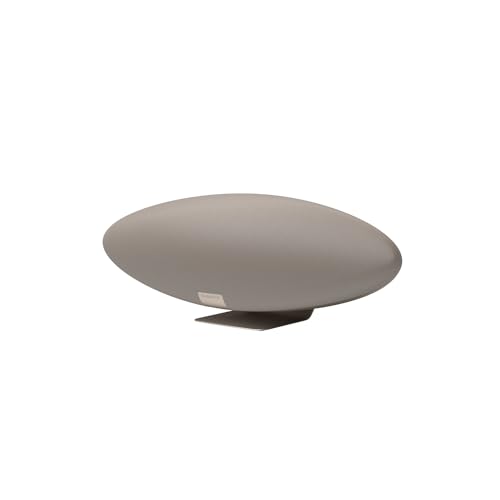 Bowers & Wilkins Zeppelin Pro Edition Wireless Speaker7.64 x 25.59 x 8.27 inches22.7 PoundsCheck on Amazon

Top 3 picks at a glance
How Bowers & Wilkins Sound Signatures Differ by Series
Bowers & Wilkins uses the same core technologies across lines — Continuum midrange cones, Decoupled Double Dome tweeters, and Aerofoil bass drivers — but voicing and cabinet engineering change significantly as you move up. Understanding this prevents buying more speaker than your room can support.
600 Series S3: Neutral and Forgiving
Models like the 607 S3, 606 S3, and 603 S3 are the most forgiving of placement and electronics. The 600 Series S3 is slightly forward in the upper midrange for clarity at low volumes, with a controlled roll-off above 28kHz. Bass is tuned for punch rather than sub-bass extension, which makes them work well against a wall or on a bookshelf without overwhelming a 12-20 square meter room. They pair well with modest integrated amplifiers and do not require high-current handling to sound balanced.
700 Series S3: More Resolution and Scale
The 702 S3, 703 S3, 704 S3, 705 S3, and 706 S3 add the Biomimetic Suspension and a more rigid cabinet with better bracing. The result is lower midrange coloration, faster transient response, and a wider soundstage. The tweeter-on-top design on the 702 S3, 703 S3, and 705 S3 improves dispersion and image height, but also makes them more revealing of poor recordings and bright electronics. They need more breathing room and a better amplifier than the 600 Series to show their advantage.
800 Series Diamond: Reference-Level Detail
The 801 D4, 802 D4, 803 D4, 804 D4, and 805 D4 use Diamond dome tweeters, Matrix bracing, and Turbine Head midrange enclosures. The sound is notably more transparent, with less treble harshness at high volumes and far better micro-detail. Bass is deeper and tighter, but also more sensitive to room modes. These models are designed for dedicated listening rooms or large living rooms where you can place them 0.8 to 1.2 meters from the front wall and treat first reflections.
Formation and Zeppelin: Wireless Voicing
The Zeppelin, Formation Duo, Formation Flex, Formation Wedge, and Panorama 3 soundbar are voiced for near-wall and corner use with built-in DSP correction. They have a slightly warmer low-mid tuning to compensate for small cabinets and focus on wide dispersion for casual listening rather than pinpoint imaging. Connectivity is Wi-Fi, AirPlay 2, Bluetooth aptX Adaptive, and Spotify Connect, not passive speaker wire.
Choosing by Room Size and Listening Distance
Speaker size should match room volume and your primary listening distance. A large floorstander in a small bedroom will excite room modes and sound boomy, while a compact bookshelf in a 40 square meter open plan will sound thin at 4 meters.
| Model | Type | Sensitivity (dB @ 1W/1m) | Frequency Response (-6dB) | Recommended Amp Power | Ideal Room Size | Ideal Listening Distance |
|---|---|---|---|---|---|---|
| 607 S3 | Bookshelf, 2-way | 84 | 40Hz – 28kHz | 30 – 100W | 10 – 18 m² | 1.5 – 2.5 m |
| 606 S3 | Bookshelf, 2-way | 88 | 40Hz – 28kHz | 30 – 120W | 12 – 22 m² | 1.8 – 3.0 m |
| 603 S3 | Floorstander, 3-way | 90 | 29Hz – 28kHz | 30 – 200W | 18 – 30 m² | 2.5 – 4.0 m |
| 705 S3 | Bookshelf, 2-way with Tweeter-on-Top | 88 | 45Hz – 33kHz | 30 – 120W | 15 – 28 m² | 2.0 – 3.5 m |
| 702 S3 | Floorstander, 3-way with Tweeter-on-Top | 90 | 28Hz – 33kHz | 30 – 300W | 25 – 45 m² | 3.0 – 5.0 m |
| 805 D4 | Standmount, 2-way Diamond | 88 | 34Hz – 35kHz | 50 – 120W | 18 – 32 m² | 2.5 – 4.0 m |
| 804 D4 | Floorstander, 3-way Diamond | 89 | 24Hz – 35kHz | 50 – 200W | 25 – 50 m² | 3.0 – 5.0 m |
| Zeppelin | Wireless all-in-one | N/A (active 240W system) | 35Hz – 24kHz | Built-in amplification | 10 – 25 m² | 1.0 – 3.0 m (nearfield to midfield) |
Use this as a starting filter: if your room is under 15 square meters or you sit within 2 meters, a 607 S3 or 606 S3 on stands will image better than a 603 S3 pushed against the wall. If you are over 30 square meters and sit 3.5 meters away, the 702 S3 or 804 D4 maintains dynamics and bass weight where compact models fall off.
How Much Amplifier Power Do You Actually Need? Worked Calculation
Sensitivity ratings are measured at 1 meter with 1 watt. In a real room you sit further away, which reduces level. This determines whether your amplifier has enough headroom for peaks without clipping.
Formula for peak SPL at the listening position:
SPL at listening position = Sensitivity + 10 × log10(Power) − 20 × log10(Distance)
Example 1: Bowers & Wilkins 606 S3 (88 dB sensitivity) at 3 meters with a 60W amplifier:
10 × log10(60) = 17.8 dB. 20 × log10(3) = 9.5 dB. SPL = 88 + 17.8 − 9.5 = 96.3 dB peak. That is enough for 85 dB average listening with 11 dB of dynamic headroom, which covers most music and gaming.
Example 2: Same speaker at 4 meters with a 30W amplifier:
10 × log10(30) = 14.8 dB. 20 × log10(4) = 12.0 dB. SPL = 88 + 14.8 − 12.0 = 90.8 dB peak. This leaves only about 5 dB headroom above 85 dB, so orchestral crescendos or game explosions will compress. Move to 90W or choose a 90 dB model like the 603 S3 to regain headroom.
Practical rule: For rooms over 25 square meters and distances over 3 meters, target an amplifier that can deliver 80–150W into 8 ohms with stable 4-ohm performance for the 700 and 800 Series. For small rooms under 20 square meters, 30–60W is sufficient for the 600 Series.
Connectivity and Placement Requirements Compared
Passive Speakers: 600, 700, and 800 Series
All passive models use single or bi-wire binding posts and require an external amplifier or AV receiver. They offer no built-in streaming, voice control, or HDMI. The advantage is upgrade flexibility and higher ultimate fidelity with quality electronics. The requirement is proper cable runs, an amplifier with appropriate damping factor, and attention to placement.
Placement guidance by design:
- Bookshelf models (607 S3, 606 S3, 705 S3, 805 D4): Place on rigid stands 60–65 cm high so the tweeter is at ear height. Keep 30–50 cm from rear wall, 60+ cm from side walls, and toe-in 10–15 degrees so you can just see the inner side panel from the listening seat.
- Floorstanders (603 S3, 704 S3, 702 S3, 804 D4): Require 50–100 cm from front wall due to rear-firing Flowports. In rooms with hard floors, use the supplied spikes with floor protectors. Keep at least 2 meters between the speakers for proper soundstage width.
- Tweeter-on-Top models (705 S3, 702 S3, 703 S3, all 800 Series Diamond): Do not place inside a cabinet or tight bookshelf. The isolated tweeter needs free space to disperse. Avoid placing within 30 cm of a large TV edge that can cause diffraction.
Wireless and Soundbar: Zeppelin, Formation, Panorama 3
The Zeppelin, Formation Flex, Formation Duo, Formation Wedge, Formation Bass, and Panorama 3 are active with built-in amplification, DAC, and streaming. Inputs typically include Wi-Fi, AirPlay 2, Bluetooth with aptX Adaptive, Spotify Connect, and on Panorama 3, HDMI eARC and optical. Formation models can form a wireless 5.1 system when paired with Formation Bass and Flex as surrounds.
Placement is far simpler: designed for credenzas, sideboards, or wall-mounting within 10–20 cm of a wall. Panorama 3 is specifically tuned for under-TV placement and includes height channels for Dolby Atmos and DTS:X virtualization. No amplifier matching or speaker cable is needed, but you trade the ability to swap electronics and the wider soundstage of separated passive speakers.
Decision Matrix: Map Your Situation to the Right Model
| Your Situation | Best Match | Why |
|---|---|---|
| Small bedroom, office, or gaming desk (10–16 m²), near-field listening, limited budget | 607 S3 or 606 S3 | Compact, forgiving of wall proximity, reaches satisfying volume with 30–60W; 606 S3 adds scale for slightly larger desks |
| Medium apartment living room (18–28 m²), mixed music, TV, and gaming from 2.5–3.5 m | 603 S3 or 705 S3 | 603 S3 gives full-range floorstander bass without sub; 705 S3 gives superior imaging and Tweeter-on-Top detail if you have stands and space |
| Large open-plan or dedicated listening room (28–45 m²), critical music listening, quality amplifier available | 702 S3 or 804 D4 / 805 D4 | Higher sensitivity and dynamic headroom at distance; Diamond tweeter and better cabinet reduce fatigue at high levels |
| No amplifier, need minimal wiring, multi-room or kitchen/bedroom use | Zeppelin or Formation Flex | All-in-one streaming, wall-friendly DSP tuning, stereo pairing option; usually $300–$700 depending on configuration |
| Home theater focus, Dolby Atmos, single-box simplicity | Panorama 3 | HDMI eARC, virtual Atmos, upward-firing drivers; pairs with Formation Bass for low-frequency impact |
| Custom install or in-wall/ceiling required | CWM7.3 S2 or CWM8.3 Series | In-wall design with B&W driver tech, paintable grilles, uses AV receiver power |
Budget Ranges and System Pairing Tips
These ranges vary by finish and retailer.
Pairing tips that affect value more than cable upgrades:
- Do not pair 702 S3 or 804 D4 with entry-level AV receivers rated below 80W into 8 ohms. Their impedance dips below 4 ohms in the bass, which will cause thermal limiting and soft bass. Choose an amplifier rated for 4-ohm continuous operation.
- For 600 and 700 Series in untreated rooms, add a 60–80 Hz high-pass if using a subwoofer. This reduces boom from wall proximity and lets you place bookshelves closer to the wall without muddiness.
- If gaming on PC, passive speakers require a DAC or amplifier with low latency. Wireless Formation and Zeppelin add 100–200 ms latency over Wi-Fi/Bluetooth, so use HDMI eARC or optical for TV gaming and wired analog/USB for desktop passives.
- Bi-wiring offers minimal benefit. Spend instead on proper stands, isolation, and room treatment. A 5 cm thick rug between speakers and listening position reduces floor reflections more than any cable.
Frequently asked questions
Do the 600 Series speakers need a subwoofer?
No, a subwoofer is not required for the 603 S3 to provide full-range floorstander bass in a medium apartment living room. The 607 S3 and 606 S3 are tuned for punch rather than sub-bass extension, while the 603 S3 reaches 29Hz to -6dB. Whether you add a subwoofer depends on your preferred bass depth, room, and listening distance.
Can bookshelf Bowers & Wilkins speakers be placed directly on a desk?
Yes, the 607 S3 and 606 S3 can suit desktops and near-field listening, but rigid stands are recommended for bookshelf models when possible. The article specifies stands 60–65 cm high, with the tweeter at ear height. For a desk or small room, keeping the speaker placement clear and avoiding excessive wall proximity can help preserve imaging.
Which speakers are easiest to use without an amplifier?
The Zeppelin, Formation Flex, Formation Duo, Formation Wedge, and Panorama 3 are easiest because they have built-in amplification, DAC, and streaming. They do not require amplifier matching or speaker cable. The Panorama 3 also supports HDMI eARC and optical, while wireless models use connections such as Wi-Fi, AirPlay 2, Bluetooth aptX Adaptive, and Spotify Connect.
Can Formation speakers be used as part of a surround system?
Yes, Formation models can form a wireless 5.1 system when paired with Formation Bass and Flex as surrounds. The Formation range includes the Formation Flex, Formation Duo, Formation Wedge, and Formation Bass. This approach avoids speaker cable and external amplification, but it gives you less ability to swap electronics than a passive system using separate speakers and an amplifier.
Why should 800 Series speakers not be placed close to the front wall?
800 Series speakers need space from the front wall because their deeper, tighter bass is more sensitive to room modes. The article recommends placing them 0.8 to 1.2 meters from the front wall and treating first reflections. Models such as the 801 D4, 802 D4, 803 D4, 804 D4, and 805 D4 are intended for dedicated listening rooms or large living rooms.
Final Recommendations by Room
For a small room where you sit close and want the simplest high-quality setup, the 607 S3 on stands or a Zeppelin on a sideboard delivers the best balance of clarity and placement flexibility. For a typical living room that handles music, gaming, and TV at 3 meters, the 603 S3 is the most versatile passive choice, while the 705 S3 is the better pick if you prioritize imaging and already own a capable amplifier. For large rooms or dedicated two-channel systems where you can pull speakers into the room and invest in electronics, the 702 S3 gives 90 percent of the 800 Series scale at a lower cost, and the 804 D4 or 805 D4 is the upgrade that audibly reduces treble grain and cabinet coloration at high volumes.
Measure your room, estimate your listening distance, and work backward from the power calculation. That approach narrows the entire Bowers & Wilkins catalog to one or two models that will actually sound right in your space, rather than simply buying the largest speaker you can afford.