Our Top Picks


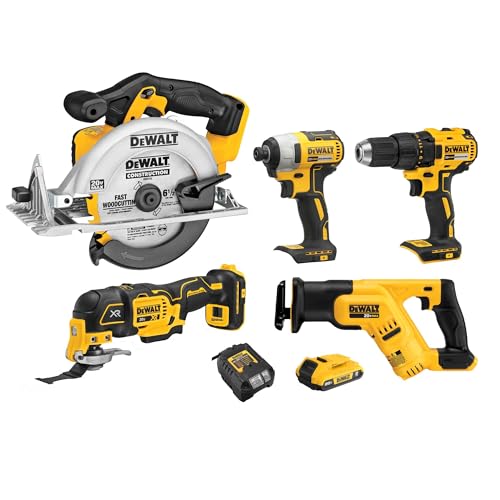

Top 3 picks at a glance
Best power tool combo kits: quick picks
The best power tool combo kits match the tools you’ll use most to a battery platform you can afford to expand—not simply the kit with the highest tool count. For most homeowners, a compact 18V or 20V cordless drill-and-impact-driver kit is the sensible starting point; tradespeople should prioritize batteries, job-ready tools, and warranty support; and occasional DIYers can save with a smaller kit or a reputable 12V platform.
| Situation | Good kit type to consider | Why it fits | Budget to expect |
|---|---|---|---|
| Occasional home repairs | 12V drill-driver kit, or compact 18V/20V drill kit | Lower cost and weight; enough for furniture, fixtures, and light drilling | Varies |
| General DIY and renovation | 18V/20V drill and impact driver with two batteries | Versatile pair, with a second battery to limit downtime | Varies |
| Regular carpentry or maintenance | Drill, impact driver, circular saw, and at least two batteries | Adds useful cutting capacity without filling the case with rarely used tools | Varies |
| Daily trade use | Pro-grade 18V/20V platform kit with larger batteries and service support | Better suited to sustained work and a growing tool collection | Varies |
What to compare before buying
Included tools: useful pair or inflated tool count?
A drill-driver and impact driver are a practical core: use the drill for holes and controlled fastening, and the impact driver for repeated screw driving. A circular saw is a meaningful addition if you cut sheet goods or lumber. A reciprocating saw can be useful for demolition and rough cuts, while a work light is handy but should not make a kit seem more valuable than it is.
As an Amazon Associate we earn from qualifying purchases at no extra cost to you.


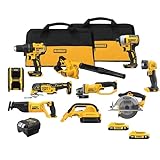
Check whether the kit includes bare tools you would actually buy separately. A large bundle can cost less per tool yet still be poor value if most of those tools will sit unused. Also verify what “kit” means: batteries, charger, and a carrying case may be absent from some tool bundles.
Voltage and battery ecosystem
12V tools are generally smaller and lighter, making them attractive for overhead work, cabinetry, and routine home fixes. An 18V or 20V platform is the common choice for broader tool selection and more demanding jobs. In typical cordless tool lines, 18V and 20V Max describe the same nominal battery class; the 20V figure is commonly the maximum voltage measured at full charge, not a separate performance tier.
Battery compatibility is platform-specific, even within a brand. Confirm the exact battery family and whether the tools in the kit use the same packs as the tools you might add later. A compact pack makes a drill easier to handle; a higher-capacity pack can help a saw run longer, but adds weight. The capacity printed in amp-hours (Ah) indicates stored charge, not a guaranteed runtime: load, material, tool condition, and battery age all matter.
Runtime: estimate from the job, not the label
Here is a simple planning estimate for a 5Ah battery on an 18V platform. Its nominal energy is about 18V × 5Ah = 90 watt-hours. If a tool draws an average of 300W while actively working, the ideal runtime is 90Wh ÷ 300W = 0.3 hours, or 18 minutes of continuous operation. Real runtime can be lower, and most jobs involve pauses, so that battery may last much longer by the clock—but the estimate shows why a high-load saw can drain a pack much faster than a drill used intermittently.
For work that cannot stop, budget for at least two batteries and a charger that can replenish them during breaks. If you already own compatible packs, buying a tool-only kit can be economical; otherwise, compare the full kit price rather than assuming the bare-tool price is the real cost.
Case, warranty, and expansion cost
Inspect the case arrangement in product photos and descriptions. A molded hard case protects tools and organizes accessories, but may be bulky or tied to one kit. A soft bag is easier to carry and can fit extra batteries, though it offers less protection. Some kits use stackable storage cases; check whether the tools and batteries have fitted spaces or simply move around inside.
Warranty terms vary by brand, product, and region. Compare the written coverage for the tools and batteries separately, the registration deadline, and whether proof of purchase is required. A longer advertised tool warranty does not automatically mean batteries receive the same coverage.
The platform’s long-term cost includes more than the first kit. Check the typical price of a replacement battery, a fast charger, and the bare tools you might add. A cheaper starter bundle can become expensive if spare packs are costly or the platform has limited tool availability. Conversely, an ecosystem with many compatible tools can make the first kit a better investment if you plan to expand.
Which kit style fits your budget?
Under $250: keep the kit focused
At this level, look for a compact drill-driver kit or a drill-and-impact-driver bundle from an established platform. A two-tool kit with two batteries is often more useful than a larger set with one small battery. If your projects are light and occasional, a 12V set can be a comfortable choice. Choose an 18V/20V bundle if you expect to add a saw or other higher-load tool later.
$250–$500: the practical all-rounder range
This is where a drill, impact driver, and circular saw bundle can make sense for DIY renovations and property maintenance. Compare battery capacity and quantity carefully: a kit with one large pack may suit cutting better, while two moderate packs can keep a drill and driver in rotation. Do not pay extra for a tool you do not need just to reach a headline tool count.
$500 and up: buy for daily use, not maximum bundle size
For frequent professional work, prioritize the platform’s suitable tools, battery availability, charger speed, and accessible warranty service. A higher-cost kit may be worthwhile if it includes robust batteries and tools that would otherwise be separate purchases. For specialized work, it can be smarter to buy a smaller core kit and add the right tool later than to accept a bundle that misses the tool your work requires.
A quick decision matrix
- Furniture, shelves, and occasional repairs: choose a light drill-driver kit; add an impact driver only if you regularly drive long screws.
- Decking, framing, or repeated fastening: choose an 18V/20V drill-and-impact-driver kit with two batteries.
- DIY cutting and renovation: look for a circular saw bundle, but check that the included battery capacity suits sustained cutting.
- Overhead installation or tight spaces: favor a compact 12V or compact 18V/20V line over a heavier high-capacity setup.
- Existing compatible batteries: compare tool-only pricing, but confirm the exact battery family before purchasing.
- Building a collection: choose based on the cost and availability of the next three tools you expect to buy, not just today’s discount.
Frequently asked questions
Are 18V and 20V cordless tools different battery classes?
No. In typical cordless tool lines, 18V and 20V Max describe the same nominal battery class; the 20V figure is commonly the maximum voltage measured at full charge. However, batteries remain platform-specific, even within one brand. Confirm the exact battery family before assuming a pack will work with a tool or future additions.
Do I need both a drill-driver and an impact driver?
Not necessarily, but they serve different purposes. A drill-driver is suited to making holes and controlled fastening, while an impact driver is useful for repeated screw driving. For occasional furniture, shelves, and repairs, a drill-driver may be enough. If you regularly drive long screws, adding an impact driver can be worthwhile.
How many batteries should a combo kit include?
For work that cannot stop, plan on at least two batteries and a charger that can replenish them during breaks. A two-tool kit with two batteries is often more useful than a larger set with one small battery. The best quantity also depends on whether you are using a drill intermittently or a higher-load tool such as a saw.
What does a battery’s Ah rating tell me?
An amp-hour rating indicates stored charge, not guaranteed runtime. Actual runtime depends on load, material, tool condition, and battery age. A higher-capacity pack can help a saw run longer, but it also adds weight. A compact pack may make a drill easier to handle, so capacity should match the tool and job.
Should I buy a bare tool if I already own batteries?
Yes, a tool-only purchase can be economical when you already own compatible packs. First confirm that the new tool uses the exact same battery family. If you do not already have compatible batteries, compare the complete kit price, including batteries and charger, rather than treating the bare-tool price as the true cost.
Bottom line
For many buyers, the best power tool combo kits are compact drill-and-impact-driver bundles on a platform with affordable batteries and the tools needed for future projects. Homeowners can prioritize weight and price; renovation DIYers should look for a circular saw and two batteries; and professionals should weigh sustained runtime, service, and expansion cost. Compare the complete package—including charger, batteries, case, and warranty—before deciding which kit is the best value.