Two 120mm fans can spin at the same RPM yet move different amounts of air at very different noise levels. The reason is in the blades, their count, shape, curvature, and the gap to the frame. Understanding blade design helps you read past the marketing and pick fans that actually suit intake, exhaust, or radiator duty.
As an Amazon Associate we earn from qualifying purchases at no extra cost to you.

Our Top Picks

Blade count and shape
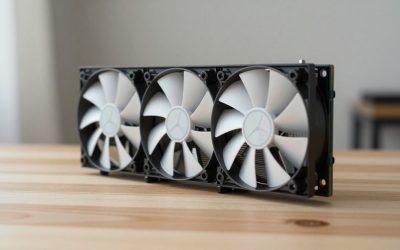
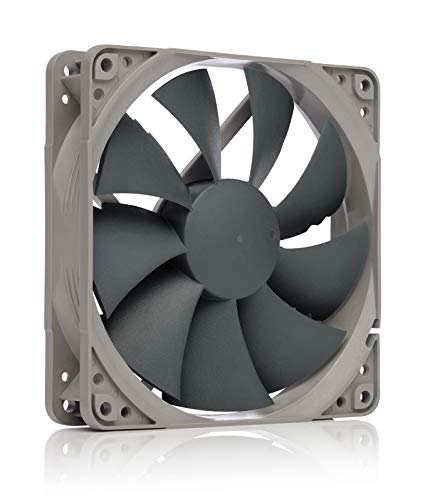
Fans typically have 7 to 11 blades. Fewer, wider blades tend to favor raw airflow at lower back-pressure; more, closely spaced blades build higher static pressure, the ability to push air through resistance like a dense radiator or dust filter. Blade curvature and the angle of attack shape how aggressively each blade grabs air, and serrated or tapered tips are added to break up the noise-producing turbulence at the blade edge.
Airflow vs static-pressure designs
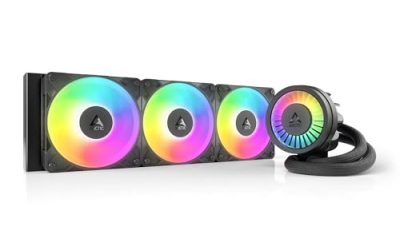
An airflow-optimized fan has an open, high-CFM design meant for unobstructed spaces (an open case front or as an exhaust). A static-pressure fan has blades that nearly fill the frame with a tight tip clearance, so it maintains push through radiators and filters. Using the wrong type, an airflow fan on a thick radiator, wastes cooling potential.
| Design trait | Effect | Best duty |
|---|---|---|
| Fewer wide blades | High CFM, low pressure | Open intake/exhaust |
| More close blades | High static pressure | Radiators, dense filters |
| Tight tip clearance | Better pressure, more edge noise | Radiators |
| Serrated/tapered tips | Lower turbulence noise | Quiet builds |
Why noise varies at the same RPM
Noise comes largely from turbulence, air detaching messily off blade edges and the frame. Well-shaped blades keep airflow attached longer, so a good fan at 1,200 RPM can be both quieter and more effective than a cheap one at the same speed. Bearing type matters too (fluid-dynamic and maglev bearings run quieter and last longer than sleeve bearings), but the acoustic character, that low whoosh versus a high whine, is set mostly by blade geometry.
How to choose in practice
Match the fan to the job: airflow-style fans for open case positions, static-pressure fans for radiators and restrictive filters. Look for a good balance of CFM and static pressure (mmH2O) on the spec sheet, and prefer fans with noise-reduction tip features and quality bearings if silence matters. Blade count alone is a weak indicator, judge the full spec, not the picture.
Reading the numbers that matter
When comparing fans, three figures tell the real story. CFM (cubic feet per minute) is raw airflow. Static pressure (mmH2O) is push against resistance. And noise (dBA) is loudness. A fan optimized for one usually gives up a little of another, so the “best” fan depends on the job. A useful shortcut is the airflow-to-noise ratio: a fan that delivers high CFM at a low dBA is well-engineered, regardless of blade count. Also watch the fan’s usable range, a good fan spins smoothly from a near-silent 400-500 RPM up to its max, letting a fan curve keep it whisper-quiet at idle and ramp only under load. Cheap fans often cannot start reliably at low RPM, forcing them to run louder than necessary all the time.
FAQ
Do more blades always mean more airflow?
No. More blades usually raise static pressure, not raw airflow, and can add noise. Fewer, wider blades often move more air in open spaces. The right choice depends on whether the fan pushes against resistance (radiator/filter) or moves freely (open intake).
Can one fan do both intake and radiator duty well?
Some balanced or hybrid fans compromise between the two and are fine for general use. But for the best results, use static-pressure fans on radiators and dense filters, and airflow fans in open positions, matching design to load beats a jack-of-all-trades.
Bottom line
Blade count, shape, and tip clearance decide whether a fan favors airflow or static pressure, and blade geometry drives how much noise it makes at a given RPM. Read CFM, static pressure, and bearing type together, then match airflow fans to open positions and static-pressure fans to radiators and filters.