Build or move a PC to a high-altitude city and you might notice slightly higher temperatures, even with the same hardware. Thinner air really does change how cooling and, to a smaller degree, power supplies behave. The effects are modest for most people but worth understanding if you live well above sea level or run gear in a mountain data closet.
As an Amazon Associate we earn from qualifying purchases at no extra cost to you.


Why thinner air cools less
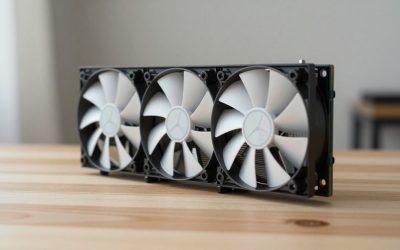
Air cooling works by carrying heat away with a mass of air. At higher altitude the air is less dense, so each cubic meter a fan moves contains fewer molecules to absorb heat. A fan spinning at the same rpm shifts the same volume but less mass, which reduces its cooling effectiveness. The result is a few degrees higher temperatures per couple of thousand meters of elevation.
How much does it actually matter?
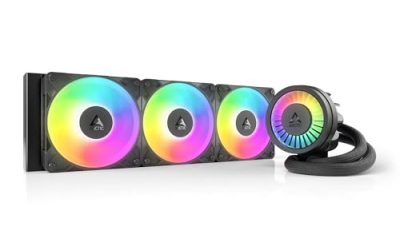
For a gamer at 1,500 to 2,500 meters, expect roughly 2 to 5 C higher load temperatures than at sea level, all else equal. It is noticeable in logs but rarely changes what hardware you can run. Liquid cooling is affected too, because the radiator still relies on air to shed heat, though the coolant’s heat capacity buffers the change slightly.
| Altitude | Approx air density vs sea level | Rough cooling impact |
|---|---|---|
| Sea level | 100% | Baseline |
| 1,000 m | ~90% | +1-2 C |
| 2,000 m | ~82% | +2-4 C |
| 3,000 m | ~74% | +4-6 C |
PSU derating at altitude
Power supplies are also affected, for two reasons. Thinner air cools the PSU’s own components less, and lower air pressure slightly reduces the voltage at which air insulates, so manufacturers publish a derating curve. Most consumer PSUs are rated for full output up to around 2,000 meters and then derate a small percentage per thousand meters above that. For typical home altitudes the derating is negligible; it matters mainly for industrial gear at very high elevations.
Practical adjustments
If you live high up, give yourself a little thermal headroom: a slightly more aggressive fan curve, one extra intake fan, or a cooler rated a tier above what sea-level charts suggest. Leaving 10 to 15 percent PSU headroom, which is good practice anyway, covers any altitude derating you are likely to encounter without a second thought.
FAQ
Will my PC overheat if I move it to a high-altitude city?
Almost certainly not. You may see a few degrees higher temperatures, but a healthy build with reasonable cooling has enough margin to absorb that. Only a machine already running at its thermal limit at sea level would need attention.
Do I need a bigger PSU at high altitude?
For normal home elevations, no. Consumer PSUs handle full load up to about 2,000 meters, and the modest headroom you should already leave covers the small derating above that. Extreme elevations in industrial settings are where derating charts become a real design factor.
Fans, pumps, and altitude
Air-moving parts feel altitude the most because they depend on air density, but sealed liquid components are largely immune. A pump moving coolant does not care about air pressure, and the coolant’s heat capacity is unchanged, so the only altitude-sensitive part of a liquid loop is the radiator, which still needs air to shed heat. This means a liquid-cooled build loses a little less to altitude than a purely air-cooled one, though the radiator’s air side still takes a small hit.
Acoustic behavior shifts too. To move the same mass of thinner air, fans must spin faster, so a build that was whisper-quiet at sea level may run its fans a little harder and louder at elevation to hold the same temperatures. Budget a small amount of extra fan speed, and therefore noise, as part of the altitude tax rather than expecting identical behavior to a sea-level machine.
Do hard drives really have altitude limits?
Conventional air-filled hard drives are rated to a maximum operating altitude, often around 3,000 meters, because the heads fly on a cushion of air that thins with elevation. Helium-sealed drives and solid-state drives sidestep this entirely, so for very high installations an SSD avoids the concern completely.
Bottom line: thinner high-altitude air cools a little less and derates PSUs slightly above 2,000 meters, adding a few degrees for most people. A touch more fan headroom and the usual PSU margin absorb it easily.