When your fingers stiffen up mid-session or your wrist aches for hours after you stop playing, the buying decision is not really about sensor speed. It is about which mouse shape lets you keep playing comfortably: a vertical shell that keeps your forearm untwisted, a wide contoured body your palm can rest on instead of grip, or a trackball that moves the cursor while your hand stays still. Each shape shifts work away from different joints, so the right pick depends on where your discomfort actually shows up.
This guide is for palm-grip players whose fingers protest during long sessions, gamers whose wrists flare up after desk time, and slower-paced strategy, RPG and MMO players who need comfort over hours rather than flick speed. Every pick below was chosen from the names and specifications on its Amazon product page. One honest note up front: no mouse treats arthritis. A better shape can reduce the movements that aggravate sore joints, but persistent pain deserves a conversation with a clinician.
Our Top Picks
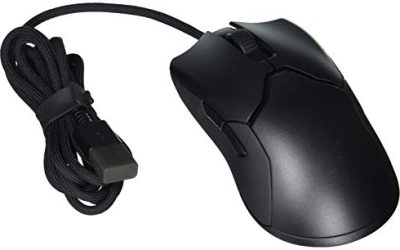
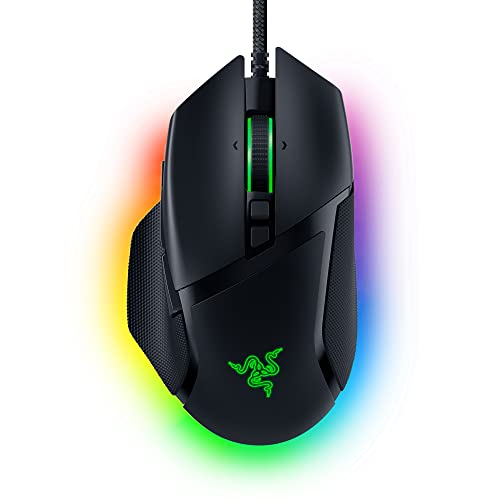 Razer Basilisk V3 Customizable RGB Wired Ergonomic GamingMouse2.96 x 5.12 x 1.67 inches0.2 poundsCheck on Amazon

Top 3 picks at a glance

Quick Picks
As an Amazon Associate we earn from qualifying purchases
| Product | Best for | Key spec from title |
|---|---|---|
| Keychron M5 8K | A vertical shape with no gaming compromises | Up to 30K DPI with 8,000 Hz polling |
| Razer Pro Click V2 Vertical | Work-and-play desks with long wireless sessions | 6-button ergonomic design, up to 6 months of battery |
| Logitech MX Vertical | Medium-to-large hands trying a vertical mouse | 57° vertical angle, 4,000 DPI sensor |
| Logitech MX Ergo S | Players who want their arm to stay put | Thumb trackball with 0° or 20° tilt |
| Razer Basilisk V3 | Palm-grip players who will not go vertical | 26K DPI optical sensor, 11 programmable buttons |
How to Choose
Start with the shape that unloads the joint that hurts
Shape matters more here than any sensor figure. A vertical mouse rotates your hand into a handshake position, so your forearm bones stop crossing and your wrist stays closer to neutral; that helps most when pain sits in the wrist or forearm. A contoured ergonomic mouse keeps the familiar flat orientation but adds a thumb rest and a palm-filling hump, which suits fingers that ache from pinching a small mouse. A trackball removes arm movement altogether: your thumb rolls the ball while the mouse body never travels, which is the gentlest option when shoulder, elbow or wrist movement itself is the trigger.
Match the angle and shell size to your hand
Vertical mice are not interchangeable. Angles run from roughly 57 degrees on the Logitech MX Vertical to 71.7 degrees on Razer’s Pro Click V2 Vertical, and the steeper shell changes how your fingers reach the buttons. Shell length matters just as much: a vertical mouse that is too small forces your fingers to curl and hover, which recreates the strain you were trying to escape. Check the listing dimensions against your current mouse, favour a shape your whole palm can rest on, and remember that nearly every vertical and contoured design here is right-handed only.
Run a higher DPI so your hand travels less
Every centimetre your hand drags the mouse is movement your joints have to produce. A higher DPI setting moves the cursor further for the same physical travel, so raising sensitivity is a genuine comfort feature, not just a performance tweak. The MX Vertical’s 4,000 DPI sensor is roughly four times what basic office mice offer, and the gaming-grade sensors in this guide go far beyond that. Pair a higher DPI with a larger mousepad edge-to-edge habit change: smaller, slower hand movements, with fine aim handled by sensitivity curves rather than wrist sweeps.
Count buttons, and notice how much force each click takes
Stiff fingers struggle most with repeated clicking and with reaching awkwardly placed side buttons. Programmable buttons let you move frequent actions — push-to-talk, healing, inventory, a sniper clutch — onto whichever finger or thumb still feels strong, and tilt wheels and extra thumb keys spread the load further. Click effort varies too: light optical switches, like the ones in the Basilisk V3, register with less travel and force than older mechanical designs. Before buying, check the listing for button count, button placement photos and switch type, because those details decide how your hands feel at hour three.
The 5 Best Options
Keychron M5 8K

The M5 is the rare vertical mouse that was clearly specced by people who play games. Its upright shell keeps your forearm untwisted, yet underneath sits a PixArt 3950 sensor with up to 30,000 DPI and an 8,000 Hz polling rate over wired and 2.4 GHz connections — numbers no office vertical mouse attempts. At 95 grams it is also light for this category, so lifting and repositioning it asks less of sore fingers. Programmable buttons and a thumb wheel give you places to move repeated actions, and Bluetooth 5.3 covers the work laptop when the session ends.
Specs
- Sensor: PixArt 3950 optical, up to 30,000 DPI
- Polling rate: up to 8,000 Hz (wired and 2.4 GHz)
- Connectivity: 2.4 GHz, Bluetooth 5.3, USB wired
- Weight: 95 g
- Battery: rechargeable, 600 mAh
- Buttons: programmable buttons with thumb wheel
Best for: Gamers who want a vertical, handshake grip without giving up a flagship gaming sensor.
Watch out for: The tall vertical shell suits palm and relaxed grips; committed fingertip-grip players may find the shape takes real adjustment time.
ASIN: B0F3X9G276
Razer Pro Click V2 Vertical
Razer’s first vertical mouse leans the furthest into the handshake idea, with a 71.7-degree angle and a raised base support that lifts your wrist off the desk so it glides instead of dragging. The Focus Pro 30K optical sensor tracks even on glass, and the mechanical switches are rated for 60 million clicks, so the hardware side is properly gaming-grade. Battery life is the headline for comfort, though: up to six months per charge means you never wrestle a cable or think about charging mid-week, and a five-minute top-up returns three working days of use.
Specs
- Sensor: Razer Focus Pro 30K optical, 99.8% resolution accuracy
- Angle: 71.7° vertical ergonomic design with base support
- Buttons: 6 buttons, up to 9 programmable controls via Razer Synapse
- Connectivity: HyperSpeed 2.4 GHz, Bluetooth (3 hosts), USB-C wired
- Battery: up to 6 months; 5-minute charge gives 3 working days
- Switches: mechanical, rated for 60 million clicks
- Lighting: 18-zone Chroma RGB underglow
Best for: Players who split the day between work and gaming and want one vertical mouse that rarely needs charging.
Watch out for: Full button customisation and the AI Prompt button run through Razer Synapse 4, so check the listing’s software requirements for your operating system.
ASIN: B0DVD5RTZ5
Logitech MX Vertical
The MX Vertical is the long-established reference point in this category, and its restraint is exactly why it works for sore hands. The 57-degree angle is steep enough to untwist your forearm without the buttons feeling like they sit on a wall, the textured shell keeps a relaxed grip secure, and your thumb gets a proper rest instead of hovering. Its 4,000 DPI sensor is modest next to gaming flagships, but that figure means less hand travel than a standard mouse, and a button on top switches cursor speed instantly when you need precision. It pairs with up to three computers.
Specs
- Angle: 57° vertical, natural handshake position
- Sensor: 4,000 DPI high-precision optical with cursor speed switch
- Connectivity: Bluetooth and USB receiver, up to 3 computers
- Battery: rechargeable, up to 4 months per charge; 1-minute charge gives 3 hours
- Fit: medium-to-large right hands
- Dimensions: 4.72 x 3.11 x 3.09 inches
Best for: Medium-to-large hands moving to a vertical mouse for the first time, especially for turn-based, strategy and simulation games.
Watch out for: The 4,000 DPI ceiling and office-grade polling make it a poor fit for competitive shooters, and there is no left-handed version.
ASIN: B07FNJB8TT
Logitech MX Ergo S

A trackball answers a different problem: what if moving the mouse is itself what hurts? With the MX Ergo S your hand rests on a sculpted shell and your thumb rolls a large ball, so your wrist, elbow and shoulder stay still while the cursor does the travelling. The hinge adjusts between a flat 0 degrees and a tilted 20 degrees, letting you settle on the wrist angle that feels least loaded. Six programmable buttons cover the essentials, a precision mode button slows the ball for careful aiming or photo work, and the battery runs for months between USB-C charges.
Specs
- Tracking: thumb-operated trackball with precision mode button
- Tilt: adjustable hinge, 0° or 20°
- Buttons: 6 programmable buttons
- DPI: up to 2,048
- Connectivity: Bluetooth and Logi Bolt USB receiver
- Battery: USB-C rechargeable, up to 120 days per charge
Best for: Players whose pain comes from pushing a mouse around the desk, and anyone short on desk space.
Watch out for: Trackball aim has a real learning curve in shooters, and the ball needs occasional cleaning to keep rolling smoothly.
ASIN: B0D6PTR6MP
Razer Basilisk V3
Not everyone can adapt to a vertical shell, and the Basilisk V3 is the pick for players who have tried and bounced off. It keeps the conventional flat orientation but wraps it around a wide, palm-supporting body with a genuine thumb rest, so your hand rests on the mouse instead of pinching it — the pinch is what many sore fingers object to. You lose nothing on performance: a Focus+ 26K sensor, eleven programmable buttons to redistribute work across your hand, optical switches that actuate with a light touch, and a tilt wheel that adds two more low-effort inputs for long sessions.
Specs
- Sensor: Razer Focus+ optical, up to 26,000 DPI
- Buttons: 11 programmable buttons
- Scroll wheel: HyperScroll tilt wheel with free-spin and tactile modes
- Switches: Razer Optical Mouse Switches Gen-2
- Connectivity: wired USB
- Lighting: 11 Chroma RGB zones
- Dimensions: 130.0 x 75.4 x 42.7 mm; approx. 101 g
Best for: Palm-grip players who want maximum support and buttons from a traditional shape, especially for RPGs and MMOs.
Watch out for: It is wired only and right-handed; the cable adds a small amount of drag that the wireless picks above avoid.
ASIN: B09C13PZX7
Which One Fits Your Situation
Your fingers ache during long RPG or MMO sessions
Start with the Keychron M5 8K or the Razer Pro Click V2 Vertical. Both rotate your hand out of the flat pinch position that tires finger joints, and both offer enough programmable buttons to move spam-heavy abilities onto your strongest fingers. The M5 adds genuine gaming speed; the Razer adds months of battery and a wrist-lifting base.
Your wrist and forearm are where the pain lives
The Logitech MX Vertical is the measured choice here. Its 57-degree angle directly targets forearm rotation, its sensor cuts the distance your hand travels, and its size suits the medium-to-large hands that often find smaller ergonomic mice cramping. Give any vertical shape a week of shorter sessions before judging it.
Moving the mouse across the desk is the painful part
Choose the Logitech MX Ergo S. A thumb trackball removes arm and wrist travel entirely, the adjustable tilt lets you fine-tune your wrist angle, and the stationary body also suits small desks and couch setups. Expect slower, deliberate play styles to feel natural first while your thumb learns fine control.
You play fast games and cannot give up a normal shape
The Razer Basilisk V3 keeps the flat, familiar orientation and full gaming performance while supporting your palm and thumb properly. It will not unload your wrist the way a vertical mouse does, but paired with a higher DPI setting and remapped side buttons, it asks noticeably less of your fingers than a small esports mouse.
Common Mistakes
- Buying a tiny ultralight esports mouse: the claw grip it demands is one of the hardest positions for stiff fingers to hold.
- Assuming every vertical mouse fits: angle and shell length vary widely, and a mismatched one just moves the strain elsewhere.
- Leaving DPI at a low default: low sensitivity forces long arm sweeps, undoing the benefit of an ergonomic shell.
- Ignoring button placement and click force: a mouse can have a perfect shape and still exhaust the one finger doing all the work.
- Treating a mouse as a medical fix: shape changes reduce aggravating movements, but they do not treat arthritis, and new or worsening pain needs professional advice.
Frequently Asked Questions
Can you actually play games on a vertical mouse?
Yes, with an adjustment period. Aiming becomes an arm-and-hand motion rather than a wrist flick, and most players need several sessions before it feels natural. Slower genres feel comfortable almost immediately. If you want vertical ergonomics with the least performance compromise, the Keychron M5’s 8,000 Hz polling and flagship sensor close most of the gap to a conventional gaming mouse.
Is a trackball a sensible choice for gaming?
For strategy, simulation, RPG and turn-based games, yes: the cursor moves while your arm stays still, which is precisely the point for painful wrists and shoulders. Fast competitive shooters are harder, because thumb aim tops out below fingertip aim for most people. The MX Ergo S’s precision mode button helps with careful shots and detailed work between matches.
What DPI should I set if my joints hurt?
Higher than you probably use now. A setting in the 1,600 to 3,200 range in Windows, matched with a moderate in-game sensitivity, lets small hand movements cover the screen so your wrist and fingers travel less. Raise it gradually over a few days; if you overshoot targets constantly, your sensitivity is too high regardless of comfort, and your aim will suffer.
Will an ergonomic mouse cure my arthritis?
No. Arthritis is a medical condition, and no mouse shape treats it. What the mice in this guide can do is reduce specific aggravating movements — forearm twisting, finger pinching, long arm sweeps — so playing is more comfortable. If pain persists, swells or limits daily tasks beyond gaming, speak to a doctor or hand therapist rather than shopping for another mouse.
Related guides
More from Amazon
Programs that pair well with the guide above. Offers and eligibility are set by Amazon and may change.
Free shipping on eligible items, Prime Video and more. Eligible new members can start with a free trial.
Start a Prime free trialAd-free music streaming. Eligible new subscribers can start with a free trial.
Try Music Unlimited freeA Prime membership for ages 18-24 with a trial period. Eligibility is set by Amazon.
See Prime for Young AdultsAudiobooks and podcasts to listen to on the go. Eligible new members can start with a free trial.
Try Audible freeAs an Amazon Associate we earn from qualifying purchases.