Modern games are huge, and a library of a dozen big titles can fill a 1TB drive on its own. Four terabytes is the size where you stop uninstalling games to make room. The real question is which kind of 4TB SSD fits your machine: an internal NVMe stick for the fastest load times, a SATA drive for a roomy secondary slot, or a portable drive for carrying a library between systems.
This guide is for PC gamers who want one large drive for installed games rather than a stack of small ones. The eight options mix PCIe 5.0 and 4.0 NVMe, SATA, and USB external designs, so connection type matters as much as the brand. Comparisons rely on the speeds and features stated in each listing, which are maximum figures and not typical real-world results.
Our Top Picks




Top 3 picks at a glance
Quick Picks
As an Amazon Associate we earn from qualifying purchases at no extra cost to you.




| Product | Best for | Key feature from the listing |
|---|---|---|
| Samsung 990 PRO 4TB | Main game drive on a PCIe 4.0 board | PCIe 4.0 M.2 2280, up to 7,450 MB/s |
| Samsung 9100 PRO 4TB | PCIe 5.0 builds | PCIe 5.0 x4, up to 14,800 MB/s |
| SanDisk Extreme Portable 4TB (new) | Rugged portable library | Up to 2000MB/s, IP65, AES encryption |
| Samsung T9 Portable 4TB | Fast external storage | USB 3.2 Gen 2×2, up to 2,000 MB/s |
| SanDisk Extreme Portable 4TB (old model) | Rugged portable at a lower speed | Up to 1050MB/s, IP65 |
| TEAMGROUP T-Force Vulcan Z 4TB | Roomy SATA second drive | 2.5-inch SATA III, 550/470 MB/s |
| SSK Portable SSD 4TB | Light-use external with cables included | Up to 1050MB/s, A and C cables |
| Silicon Power A55 4TB | SATA drive for older systems | 3D NAND, 2.5-inch 7mm SATA III |
How to Choose
Interface: NVMe, SATA, or USB
NVMe M.2 drives plug directly into the motherboard and offer the highest speeds. SATA drives top out around 550 MB/s, which is fine for a game library but slower for loading. USB external drives vary by port: the USB 3.2 Gen 2×2 on the Samsung T9 only reaches its listed speed on a matching port. Check your motherboard’s slots before choosing.
PCIe 4.0 or 5.0
A PCIe 5.0 drive lists much higher maximum speeds but only reaches them on a compatible board and usually runs hotter, so plan on a heatsink. For game loading, the extra speed over PCIe 4.0 is less dramatic than the numbers suggest. Match the drive to your platform rather than paying for bandwidth you cannot use.
NAND Type and Cache
Some listings mention QLC NAND and SLC cache, such as the TEAMGROUP drive. QLC stores more bits per cell and can slow down after the cache fills during large writes, which matters when copying a big game library. TLC drives usually hold speed better. If the listing does not say, look up the specification before buying.
Durability, Encryption, and What to Ignore
Portable drives list dust and water resistance, drop protection, and encryption. Those features matter if you travel, not if the drive sits on a desk. Ignore sequential speed claims as a measure of game loading, since many games are limited by CPU and decompression. Budget drives cut corners with simple controllers, little cache, and no heatsink.
The 8 Best Options
Samsung 990 PRO 4TB
A PCIe 4.0 M.2 2280 drive with listed speeds up to 7,450 MB/s, aimed at gaming and heavy workstations. It is the natural main drive for a modern desktop with a PCIe 4.0 slot.
- Strength: high-speed NVMe in the standard M.2 2280 size.
- Strength: 4TB capacity for a large game library in a single slot.
- Trade-off: it needs a free M.2 slot and benefits from airflow or a heatsink.
It is a strong all-round choice for players who want every installed game on a single fast drive, with no juggling between disks when a new release arrives. Skip it if your motherboard has no spare M.2 slot or only supports older interfaces.
Samsung 9100 PRO 4TB
A PCIe 5.0 x4 drive with listed speeds up to 14,800 MB/s. It targets builders with a PCIe 5.0 slot and a desire for the fastest drive available.
- Strength: the highest listed speed among these options.
- Strength: 4TB capacity with M.2 2280 format.
- Trade-off: it benefits from a PCIe 5.0 slot and good cooling.
It suits enthusiasts building a new platform who also edit large video or asset files, where raw throughput can help more than it does for game loading. Skip it if your board is PCIe 4.0 only, since you would not use its full speed.
SanDisk Extreme Portable 4TB (new)
The newer Extreme Portable lists up to 2000MB/s, IP65 water and dust resistance, up to 3M drop protection, 256-bit AES encryption, and USB-C 3.2 Gen 2.
- Strength: rugged build with encryption listed.
- Strength: faster than the older model of the same name.
- Trade-off: the listed speed depends on matching USB ports.
It works for LAN parties and travel, where a drive rides in a bag and gets plugged into several machines in a day. Skip it if the drive will stay plugged into one desktop.
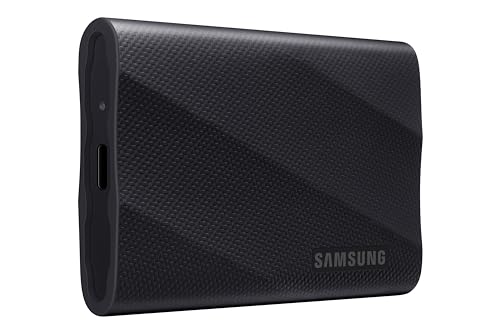
Samsung T9 Portable 4TB
A portable SSD with USB 3.2 Gen 2×2 and listed speeds up to 2,000 MB/s, marketed for gaming, students, and professionals.
- Strength: fast external transfers on a compatible port.
- Strength: 4TB of capacity in a pocketable form.
- Trade-off: the full speed requires a USB 3.2 Gen 2×2 port.
It suits users who move large game libraries between a desktop and a laptop, or who keep a console-style library on a drive that follows them from room to room. Skip it if your computers only have older USB ports.
SanDisk Extreme Portable 4TB (old model)
The older Extreme Portable lists up to 1050MB/s read speeds with IP65 resistance, 3M drop protection, and AES encryption.
- Strength: rugged features are the same as the newer model.
- Strength: USB-C 3.2 Gen 2 connection.
- Trade-off: the listed speed is about half the new model.
It is a fit if you want rugged storage and do not need top speed, since many games load acceptably from a drive at this level. Skip it if the newer model is available at a similar cost.
TEAMGROUP T-Force Vulcan Z 4TB
A 2.5-inch SATA III drive using 3D NAND with QLC and an SLC cache, with listed speeds of 550/470 MB/s.
- Strength: 4TB on SATA, useful in systems with open drive bays.
- Strength: works with older motherboards lacking M.2 slots.
- Trade-off: QLC and SATA speeds mean slower writes after the cache fills.
It fits a second drive for installed games in a desktop with a spare 2.5-inch bay, where capacity matters more than speed. Skip it if you want the fastest game load times.
SSK Portable SSD 4TB
An aluminum external drive listing up to 1050MB/s, USB 3.2 Gen 2, both A and C cables, SMART TRIM, an LED light, and OTG support.
- Strength: both cable types included.
- Strength: aluminum body helps with heat.
- Trade-off: the listing does not mention rugged ratings.
It suits a desk backup or casual library, and the phone-friendly OTG support in the listing is a bonus for creators who offload footage. Skip it if you need a drive built for rough travel.
Silicon Power A55 4TB
A 2.5-inch, 7mm SATA III internal drive with 3D NAND and SLC cache. It is a plain 4TB option for older systems.
- Strength: 7mm thickness fits slim bays.
- Strength: simple SATA connection.
- Trade-off: SATA speeds are slower than NVMe and external drives.
It suits upgrading an older PC or laptop where a slim drive is needed and the goal is simply more room for games. Skip it if you have an M.2 slot and want faster loads.
Which One Fits Your Situation
You Are Building a New Gaming PC
The Samsung 990 PRO 4TB is a sensible default for a PCIe 4.0 board, while the Samsung 9100 PRO 4TB makes sense on a PCIe 5.0 platform.
You Travel to LANs in 2026
The SanDisk Extreme Portable 4TB (new) adds ruggedness and encryption. The Samsung T9 is the faster choice if your ports support USB 3.2 Gen 2×2.
You Have an Older Desktop
Choose the TEAMGROUP T-Force Vulcan Z or the Silicon Power A55 for a simple SATA upgrade, and expect load times slower than NVMe.
Common Mistakes
- Buying PCIe 5.0 for a motherboard that only supports PCIe 4.0.
- Plugging a fast external drive into a slow USB port.
- Ignoring QLC behavior when copying a large library.
- Skipping a heatsink for a fast NVMe drive.
- Treating peak speed as the same as real game loading speed.
Related guides
- How To Set Up Computer Speakers For Better Sound At Your Desk
- How To Check Whether Your Ram Is Running At Its Rated Speed
- How To Choose The Right Monitor Riser Height For Your Desk
Frequently Asked Questions
Is 4TB enough for a game library?
For many players, yes. A single drive holds dozens of titles, though some very large games take 100GB or more each.
Can I play games from an external SSD?
Often yes on a PC, but the speed depends on the USB port. An internal NVMe drive is usually the better choice.
Is a SATA SSD fast enough for games?
It is fast enough for most games, though load times are slower than NVMe. It suits secondary storage.
Do I need a heatsink?
Fast NVMe drives can run warm. Many motherboards include M.2 heatsinks, and PCIe 5.0 drives especially benefit from one.
Related guides
More from Amazon
Programs that pair well with the guide above. Offers and eligibility are set by Amazon and may change.
Free shipping on eligible items, Prime Video and more. Eligible new members can start with a free trial.
Start a Prime free trialAd-free music streaming. Eligible new subscribers can start with a free trial.
Try Music Unlimited freeA Prime membership for ages 18-24 with a trial period. Eligibility is set by Amazon.
See Prime for Young AdultsAudiobooks and podcasts to listen to on the go. Eligible new members can start with a free trial.
Try Audible freeAs an Amazon Associate we earn from qualifying purchases.