A benchmark chart looks like a simple shopping list: fastest card on top, buy the highest one you can stretch to. The real decision is harder, because a card’s chart position only means something at your resolution, in your games, with your settings. A GPU that tops a 4K ray tracing chart can be wasted money on a 1080p esports monitor, while a mid-tier card that looks ordinary in synthetic scores can be exactly right for 1440p raster gaming.
This guide is for three kinds of buyers: 4K players who want to know which cards actually sit at the top of the stack, 1440p players choosing between the crowded upper-middle tiers, and 1080p players who want strong benchmark results without paying for performance their monitor cannot show. The five cards below were picked from the names and specifications on their Amazon product pages, then ordered by the performance tier those specifications support.
Our Top Picks
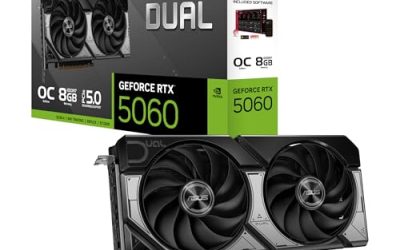
 ASUS SFF-Ready Prime NVIDIA GeForce RTX 5070 GraphicsRTX507012 x 5 x 2 inches3.3 poundsCheck on Amazon

Top 3 picks at a glance


Quick Picks
As an Amazon Associate we earn from qualifying purchases.
| Product | Best for | Key spec from title |
|---|---|---|
| MSI GeForce RTX 5090 32G GAMING TRIO OC | The top of every benchmark tier list | 32GB GDDR7, 512-bit memory bus |
| PNY GeForce RTX 5070 Ti OC Triple Fan | High-end 4K and heavy ray tracing | 16GB GDDR7, 2572 MHz boost clock |
| Sapphire PULSE RX 9070 XT | Top-tier raster performance at 1440p and 4K | 16GB GDDR6, boost clock up to 2970 MHz |
| ASUS Prime GeForce RTX 5070 | 1440p high-refresh gaming | 12GB GDDR7, 2.5-slot SFF-Ready design |
| Sapphire PULSE RX 9060 XT 16GB | 1080p and entry 1440p benchmark value | 16GB GDDR6, RDNA 4 architecture |
How to Choose
Read the Right Kind of Benchmark First
Benchmarks come in two families, and they answer different questions. Synthetic tests such as 3DMark run the same controlled scene on every card, which makes them excellent for ranking raw hardware tiers and poor at predicting any single game. In-game benchmarks use real titles, so they reflect drivers, game engines and settings, but results shift between test systems. Use synthetic scores to place a card in a tier, then confirm with in-game results from the titles you actually play, at the resolution and settings you actually use, before treating any ranking as final.
Match the Tier to Your Resolution
A card’s benchmark standing is not fixed; it changes with resolution. At 1080p, the CPU and game engine cap frame rates early, so flagship cards bunch together and mid-tier cards look deceptively close to the top. At 4K, the GPU does nearly all the work, memory bandwidth matters far more, and the tiers separate clearly. This is why the cards in this guide are ordered by the tier their hardware supports rather than by any single chart: decide whether you play at 1080p, 1440p or 4K first, then only compare cards inside the tier built for that target.
Separate Raster Rankings From Ray Tracing Rankings
Most published charts mix two different contests. In traditional raster rendering, AMD and NVIDIA cards of the same class often finish close together. Turn on ray tracing and the order reshuffles, because dedicated ray hardware and upscaling features such as DLSS and FSR change the result as much as raw shader power does. Before trusting a ranking, check which mode produced it. If you play with ray tracing enabled, weight ray tracing results and upscaling support heavily; if you leave it off, a card that leads the raster chart is the more honest pick.
Check VRAM, Power and Fit Before the Score
The specifications on a product page predict benchmark staying power better than a launch-day chart does. VRAM capacity and memory bus width decide whether a card holds its position as games grow heavier, especially at 1440p and 4K. Check the listing for the recommended power supply wattage and the connector type, confirm the card’s length and slot thickness against your case, and be honest about your CPU: a flagship GPU paired with an old processor posts benchmark numbers well below its tier in CPU-limited games, no matter what the chart promised.
The 5 Best Options
MSI GeForce RTX 5090 32G GAMING TRIO OC
Every benchmark hierarchy this generation starts with the RTX 5090, and this MSI GAMING TRIO OC version is the reference point the rest of the stack is measured against. Its listing pairs the Blackwell flagship chip with 32GB of GDDR7 on a 512-bit bus, the widest memory configuration in this guide, which is exactly the hardware profile that keeps a card on top when tests move to 4K with ray tracing. It suits builders who want the highest tier outright and have the power supply, case space and CPU to let it stretch.
Specs
- GPU: NVIDIA GeForce RTX 5090, Blackwell architecture
- Memory: 32GB GDDR7, 512-bit interface
- Extreme Performance clock: 2497 MHz
- Outputs: 3x DisplayPort 2.1a, 1x HDMI 2.1b
- Interface: PCIe 5.0
- Model: G5090-32GTC
Best for: 4K high-refresh gaming and the top benchmark tier without compromise
Watch out for: Confirm your power supply meets the listing’s recommendation and that your case fits this large triple-fan card before ordering
ASIN: B0DT7L98J1
PNY GeForce RTX 5070 Ti OC Triple Fan
The RTX 5070 Ti is the tier most 4K buyers should study first: it sits one step below the flagship in benchmark rankings while keeping the same 16GB of GDDR7 and 256-bit bus as the tier above it needs to stay consistent at high resolution. PNY’s OC Triple Fan version runs a 2572 MHz boost clock in a 2.98-slot cooler, and its listing leads with DLSS 4 support, which matters because upscaling results are where this class separates itself in ray-traced games. Choose it for a high-end build that skips the flagship premium.
Specs
- GPU: NVIDIA GeForce RTX 5070 Ti, Blackwell architecture
- Memory: 16GB GDDR7, 256-bit interface
- Boost clock: 2572 MHz
- Outputs: HDMI 2.1 and DisplayPort 2.1
- Design: 2.98-slot, triple fan
- Model: VCG5070T16TFXPB1-O
Best for: 4K gaming and ray tracing one tier below the flagship
Watch out for: The 2.98-slot cooler is thick; verify vertical clearance if you run other expansion cards
ASIN: B0DXL7GSYC
Sapphire PULSE RX 9070 XT
Sapphire’s PULSE RX 9070 XT is the raster-performance headline of the upper tiers. AMD’s RDNA 4 chip and a boost clock rated up to 2970 MHz put it in the same benchmark conversation as cards a class above it in traditional rendering, and the full 16GB of GDDR6 means its position does not depend on keeping texture settings trimmed at 1440p or 4K. Where it asks for a trade is ray tracing and upscaling, where its results land a step behind the NVIDIA tier. For raster-first players, that trade is often the smart one.
Specs
- GPU: AMD Radeon RX 9070 XT, RDNA 4 architecture
- Memory: 16GB GDDR6
- Boost clock: up to 2970 MHz
- Outputs: 2x HDMI, 2x DisplayPort
- Model: 11348-03-20G
Best for: 1440p and 4K raster gaming at the top of the value end of the high tier
Watch out for: Weigh ray tracing benchmarks separately; this card’s ranking drops a tier when heavy ray tracing is the test
ASIN: B0DTHMPWFR
ASUS Prime GeForce RTX 5070
The RTX 5070 is where benchmark tiers meet the resolution most players actually use. Its 12GB of GDDR7 and Blackwell feature set place it firmly in the 1440p high-refresh tier, and it still posts credible 4K results when upscaling is part of the test settings. ASUS builds this Prime version to a 2.5-slot, SFF-Ready format with Axial-tech fans and a Dual BIOS, which makes it the easiest card in this guide to fit into smaller cases. Pick it if your benchmark target is a fast 1440p monitor rather than a 4K television.
Specs
- GPU: NVIDIA GeForce RTX 5070, Blackwell architecture
- Memory: 12GB GDDR7
- Outputs: HDMI 2.1 and DisplayPort 2.1
- Interface: PCIe 5.0
- Design: 2.5-slot, SFF-Ready, Axial-tech fans, Dual BIOS
- Model: PRIME-RTX5070-12G
Best for: 1440p high-refresh gaming in standard or small-form-factor builds
Watch out for: The 12GB frame buffer is the first spec to feel tight in future 4K tests; at 1440p it is well matched
ASIN: B0DS6V1YSY
Sapphire PULSE RX 9060 XT 16GB

The RX 9060 XT anchors the entry tier of this ranking, and the detail that earns this specific PULSE model its place is in the title: 16GB of GDDR6, double the frame buffer of the cut-down variants of this class. In benchmark terms that memory is what keeps the card’s 1440p results stable instead of collapsing when texture loads rise, while at 1080p it simply runs the tier it was built for. It is the right benchmark buy for esports and mainstream gaming builds that still want headroom to grow into 1440p.
Specs
- GPU: AMD Radeon RX 9060 XT, RDNA 4 architecture
- Memory: 16GB GDDR6
- Edition: Gaming OC
- Interface: PCIe 5.0 x16
- Model: 11350-03-20G
Best for: 1080p high-refresh gaming and first steps into 1440p
Watch out for: This chip also sells in a lower-memory variant under a nearly identical name; check the listing title says 16GB before buying
ASIN: B0F9LN5VZ6
Which One Fits Your Situation
You Play at 4K and Want the Chart-Topping Result
Start with the MSI RTX 5090 GAMING TRIO OC, because at 4K the tiers separate and its 32GB of GDDR7 on a 512-bit bus is the hardware the top position is built on. If the flagship stretch is too far, the PNY RTX 5070 Ti is the same conversation one tier down, especially with ray tracing and DLSS in the test. Either way, pair the card with a strong CPU, or your benchmark runs will land below the published tier.
Your Monitor Is 1440p and High Refresh
This is the most contested tier, and two cards here split it by priority. The Sapphire PULSE RX 9070 XT leads if your games are raster-heavy and you want the strongest traditional benchmark standing. The ASUS Prime RTX 5070 answers if you use ray tracing and NVIDIA upscaling, or if your case needs its slimmer 2.5-slot SFF-Ready format. Both are honest 1440p picks; the mistake is paying for the tier above when your monitor cannot display the difference.
You Game at 1080p, Mostly Esports and Mainstream Titles
Take the Sapphire PULSE RX 9060 XT 16GB and spend the savings elsewhere in the build. At 1080p the flagship tiers compress together because the CPU becomes the limit, so the benchmark gap you would be paying for largely disappears on your monitor. The 16GB frame buffer still matters: it protects the card’s standing as you raise texture settings and gives it a genuine second life if you move to a 1440p display later.
You Mix Gaming With Streaming and Content Work
Benchmark charts for creators add an axis: encoder quality and upscaling features during capture. That pushes the NVIDIA cards up the order, and the PNY RTX 5070 Ti is the balanced pick, with 16GB of GDDR7 for timeline work and DLSS 4 for the gaming side. If your projects are raster gaming footage with light editing, the RX 9070 XT remains competitive, but check the benchmark suite of your editing software before deciding, because GPU acceleration support varies by application.
Common Mistakes
- Comparing benchmark scores gathered on different test systems, drivers and settings as if they were one chart.
- Judging a card by its boost clock alone, when core count, memory bus and VRAM decide its actual tier.
- Buying a flagship-tier card for a 1080p monitor, where CPU limits erase most of the gap you paid for.
- Choosing a low-memory variant of a chip because the model name matches the benchmark you read.
- Forgetting the supporting parts: power supply wattage, connector type, case length and slot thickness from the listing.
Frequently Asked Questions
Do synthetic benchmarks predict real game performance?
They predict tiers, not frame rates. A synthetic suite runs one workload on every card, so it ranks hardware capability reliably and is the fastest way to see which class a card belongs to. Real games add engines, drivers and settings on top of that hardware, which is why two cards adjacent in a synthetic chart can swap places in a given title. Use synthetics to shortlist, check in-game results.
Why does a card’s ranking change between 1080p and 4K?
Because the bottleneck moves. At 1080p the CPU feeds frames faster than GPUs can be stressed, so results compress and mid-tier cards look close to flagships. At 4K the GPU renders four times the pixels of 1080p, memory bandwidth and VRAM dominate, and the tiers spread to their real spacing. A ranking is meaningful at the resolution it was measured at, which is why this guide orders cards by tier.
How much VRAM do benchmarks reward at 1440p and 4K?
Enough that capacity is now a tier marker. Cards with 16GB hold their benchmark position at 1440p and 4K as texture loads climb, while smaller frame buffers force reduced settings that change what is being measured. The listings in this guide make the split visible: 32GB at the flagship tier, 16GB through the high and entry tiers worth buying, and 12GB as the working minimum for a serious 1440p card.
Is the fastest card in the benchmarks always the best buy?
Only if your display and games can use it. The top of the chart earns its place at 4K with ray tracing, but that card is capped by a 1080p monitor or an older CPU in a system. The best buy is the card whose tier matches your resolution, your settings and the rest of your PC, which is why matching tier to situation matters more than ranking.
Related guides
More from Amazon
Programs that pair well with the guide above. Offers and eligibility are set by Amazon and may change.
Free shipping on eligible items, Prime Video and more. Eligible new members can start with a free trial.
Start a Prime free trialAd-free music streaming. Eligible new subscribers can start with a free trial.
Try Music Unlimited freeA Prime membership for ages 18-24 with a trial period. Eligibility is set by Amazon.
See Prime for Young AdultsAudiobooks and podcasts to listen to on the go. Eligible new members can start with a free trial.
Try Audible freeAs an Amazon Associate we earn from qualifying purchases.