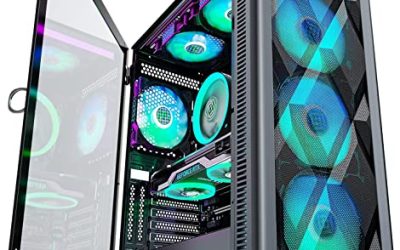
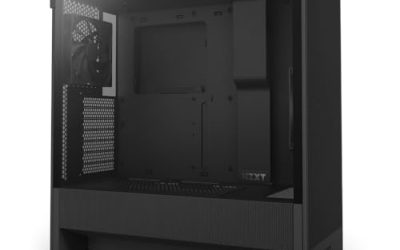
The RTX 5080 is a beast of a GPU, and it deserves a power supply that can actually feed it. But here’s the catch most shoppers run into: prebuilt listings bury the PSU spec three paragraphs down, and stand-alone PSU pages drown you in marketing jargon like “PCIe 5.1 ready” without explaining what matters. If you’re shopping for a complete RTX 5080 gaming PC — or upgrading an existing build with a fresh 850W unit — the power supply is the one component you can’t afford to get wrong. Underspec it and you’ll hit transient spike shutdowns mid-benchmark; overpay for headroom you don’t need and that’s budget you could have put toward a better CPU cooler or faster RAM.
NVIDIA’s recommendation for the RTX 5080 is an 850W supply with a native 12V-2×6 connector, and that’s exactly what this roundup focuses on. We’ve split the picks into two camps: complete prebuilt RTX 5080 gaming PCs that ship with quality 850W-class power, and stand-alone 750W-850W ATX 3.1 units if you’re building or upgrading yourself. Every pick below is ranked for a specific kind of buyer in 2026, from the no-compromise flagship to the budget-conscious stand-alone PSU that still carries full ATX 3.1 certification.
As an Amazon Associate we earn from qualifying purchases at no extra cost to you.



Our Top Picks


Top 3 picks at a glance
Quick Picks
| Product | Best for | Price |
|---|---|---|
| STORMCRAFT Phantom RTX 5080 Gaming PC (9800X3D, 32GB, 2TB) | Best overall prebuilt value | Check on Amazon |
| Skytech Gaming Azure 3 (9800X3D, 850W Gold ATX 3, 360mm AIO) | Best premium prebuilt cooling | Check on Amazon |
| ZOTAC MEK Gaming PC Apocalypse (9800X3D, RTX 5080) | Best boutique-brand prebuilt | Check on Amazon |
| MSI MAG A750GL PCIE5 750W | Best budget ATX 3.1 PSU | Check on Amazon |
| Skytech Gaming Azure 3 (7800X3D, RTX 5080) | Best value RTX 5080 prebuilt | Check on Amazon |
| NZXT C850 Gold ATX 3.1 | Best 850W stand-alone PSU | Check on Amazon |
| CORSAIR RM750e ATX 3.1 | Best compact 750W alternative | Check on Amazon |
| ASUS ROG Strix 850W Gold | Best premium enthusiast PSU | Check on Amazon |
How We Compared
Our criteria were simple and consistent across every product. For prebuilts, the PSU had to be an 850W or better unit with ATX 3.0 or ATX 3.1 compliance — the spec that guarantees handling of the RTX 5080’s transient power spikes — paired with a current-generation CPU (the AMD Ryzen 7 9800X3D or 7800X3D), at least 32GB of DDR5, and a fast NVMe SSD. We also weighed cooling: a 360mm AIO or a well-vented case matters when you’re pushing a 16GB VRAM GPU and a 120W-class CPU in the same chassis.
For stand-alone power supplies, we required 80 Plus Gold efficiency, full modularity, native 12V-2×6 or 12VHPWR cabling, and a warranty of at least seven years — the industry’s way of signaling confidence in the internals. We also factored in physical footprint (compact ATX units fit small-form-factor cases better), price-to-wattage ratio, and brand warranty support. We did not invent lab test results here; where we cite a spec, it comes from the manufacturer’s own listed features.
The 8 Best Picks
1. STORMCRAFT Phantom RTX 5080 Gaming PC
It’s the right call for buyers who want maximum frame-per-dollar in a complete, ready-to-run desktop.
- Best price-to-performance ratio of the 9800X3D prebuilts we ranked
- 32GB DDR5 and 2TB NVMe out of the box — no immediate upgrades needed
- PSU brand and efficiency rating are less prominently specified than competitors
Skip it if you want a fully documented, premium-tier cooling stack and can stretch to the Skytech below.
2. Skytech Gaming Azure 3 (9800X3D, 850W Gold ATX 3, 360mm AIO)
You also get a 360mm ARGB AIO cooler keeping the 4.7GHz Ryzen 7 9800X3D in check, 32GB of DDR5-6000, a 2TB NVMe SSD, and Windows 11 preinstalled. It’s for buyers who want the power delivery question answered on the spec sheet, not buried in a listing.
- Confirmed 850W Gold ATX 3 PSU with native support for the RTX 5080
- 360mm ARGB AIO provides serious thermal headroom for the 9800X3D
Skip it if the STORMCRAFT Phantom covers your needs at a lower price — just verify the PSU details there first.
3. ZOTAC MEK Gaming PC Apocalypse
It’s a good fit for buyers who trust ZOTAC’s GPU heritage and want a boutique-built system rather than a big-box assembly. The MEK line traditionally emphasizes clean cable management and compact mid-tower footprints, which helps with airflow.
- Priced between the two other 9800X3D prebuilts, with strong GPU pedigree
- ZOTAC’s experience as an NVIDIA board partner shows in the GPU selection
- Memory and storage configuration not as explicitly listed as rivals
4. MSI MAG A750GL PCIE5
It’s a fully modular 750W unit with 80 Plus Gold efficiency, ATX 3.1 and PCIe 5.1 readiness, and a native dual-color 12V-2×6 cable — the connector the RTX 5080 actually uses. Its compact footprint fits smaller mid-tower cases, and the 10-year warranty removes the usual anxiety about budget power supplies.
- Fully modular with a 10-year warranty — rare at this price
- 750W offers less transient headroom than an 850W unit on spike-heavy loads
Skip it if you plan to pair the RTX 5080 with a heavily overclocked CPU or want maximum longevity — go 850W instead.
5. Skytech Gaming Azure 3 (7800X3D, RTX 5080)
In pure gaming terms, the 7800X3D gives up little to its successor — you’re typically looking at modest frame deltas rather than a generational gap.
- Lowest-priced complete RTX 5080 prebuilt in this roundup by a wide margin
- 7800X3D remains a top-tier gaming CPU with excellent efficiency
- Less CPU headroom for streaming or heavy multitasking than the 9800X3D builds
Skip it if you’re a creator who needs every bit of CPU throughput — the 9800X3D configs are worth the premium for mixed workloads.
6. NZXT C850 Gold ATX 3.1
It’s fully modular, 80 Plus Gold certified, and built to the ATX 3.1 spec, meaning it’s designed specifically around the transient spikes modern GPUs like the RTX 5080 generate.
- Fully modular cabling keeps builds tidy in glass-panel cases
- Fan curve and internal platform are more basic than the ROG Strix below
Skip it if you want premium fan bearings and heatsink mass — the ASUS ROG Strix is that upgrade, at a price.
7. CORSAIR RM750e ATX 3.1
It’s ATX 3.1 and PCIe 5.1 ready, meaning it includes the native 12V-2×6 connector for the RTX 5080, and Corsair’s modern RM “e” platform keeps the unit compact — a genuine benefit in smaller ATX cases where PSU length is tight. It’s for builders who want a known-quantity brand at the same price as the field.
- Compact design fits smaller ATX chassis more easily than longer units
- 750W ceiling again means less spike headroom than 850W-class picks
Skip it if your budget allows the NZXT C850 — that extra 100W is worthwhile insurance on an RTX 5080 system.
8. ASUS ROG Strix 850W Gold PSU
What you’re paying for is the hardware: ROG-grade heatsinks, an Axial-tech fan design (the same fan tech ASUS uses on its flagship GPUs), dual ball fan bearings rated for far longer lifespans than sleeve bearings, and 0dB Technology that keeps the fan completely off at low loads. With full modularity, 80 Plus Gold certification, and a 10-year warranty, it’s built to outlive two or three GPU upgrades.
- Axial-tech fan and dual ball bearings for longevity and near-silent 0dB operation
- ROG heatsinks and a 10-year warranty justify the premium for long-term builds
Buying Guide
Wattage and ATX 3.1: Why 850W Is the Sweet Spot
NVIDIA specifies an 850W PSU for the RTX 5080, and ATX 3.0/3.1 compliance is the real differentiator. The ATX 3.x spec requires supplies to tolerate GPU transient spikes — brief excursions well above a card’s rated draw — without tripping overcurrent protection. Both the MSI MAG A750GL and NZXT C850 carry ATX 3.1 certification with native 12V-2×6 cables, eliminating the adapter cables that caused problems in early PCIe 5-era builds.
Efficiency, Modularity, and Warranty
80 Plus Gold (roughly 87-90% efficiency at typical loads) is the practical baseline — every stand-alone pick here qualifies. Gold units run cooler and quieter than Bronze, and the savings on a gaming PC’s electricity add up over years. Full modularity matters too: connect only the cables you need, which improves airflow and makes cable management in glass-panel cases dramatically easier. Finally, check the warranty length — the MSI and ASUS units carry 10-year coverage, which signals high-grade internal components. Treat warranty length as a proxy for build quality when spec sheets look similar.
For Prebuilt Buyers: Verify the PSU Before You Buy
The dirty secret of the prebuilt market is that PSU specs are often vague — “850W” tells you nothing about whether it’s Gold-rated, ATX 3-compliant, or from a reputable OEM. The Skytech Azure 3 stands out here because its listing explicitly states an 850W Gold ATX 3 PSU, which is exactly what an RTX 5080 system should carry. Before buying any prebuilt, confirm three things: the PSU’s wattage, its 80 Plus rating, and ATX 3.0/3.1 compliance with a native 12V-2×6 connector.
Our Verdict
For most buyers, the answer depends on which side of the prebuilt divide you’re on. Building or upgrading yourself? Tight on budget? Want the enthusiast option and plan to keep the PSU for a decade? The ASUS ROG Strix 850W is genuinely better hardware. Whichever you choose, insist on ATX 3.x and a native 12V-2×6 connector — your RTX 5080 will thank you.
FAQ
Is 850W enough for an RTX 5080?
Yes. NVIDIA recommends an 850W power supply for the RTX 5080, and that’s the sweet spot for a complete system pairing it with a CPU like the Ryzen 7 9800X3D or 7800X3D. A quality 750W ATX 3.1 unit like the MSI MAG A750GL can work in a modest system, but 850W gives you comfortable transient headroom and upgrade space for future GPUs.
Do I need a native 12V-2×6 cable, or is an adapter fine?
A native 12V-2×6 cable is strongly preferred. It’s a single, fully seated connector rated for the full power the RTX 5080 can draw, whereas adapters split the load across multiple PCIe cables. Every ATX 3.0/3.1 PSU in this roundup — the MSI MAG A750GL, NZXT C850, CORSAIR RM750e, and ASUS ROG Strix — includes native 12V-2×6 support.
Is a 750W PSU OK for an RTX 5080 gaming PC?
It can be, with caveats.