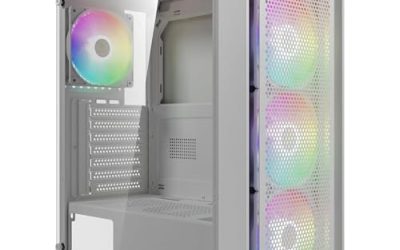
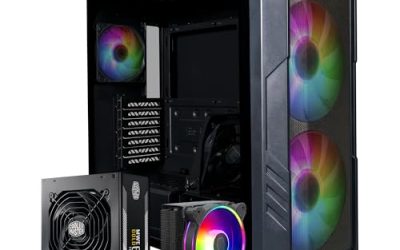
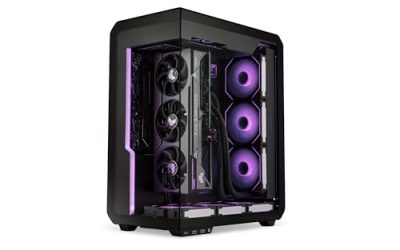
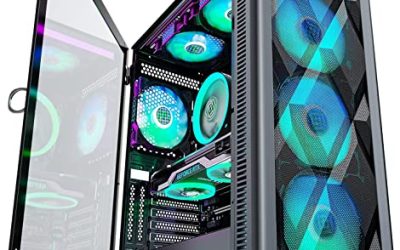
Shopping for an ASUS ROG case is a different exercise from shopping for a generic tempered-glass box. The Republic of Gamers lineup is built around oversized parts: E-ATX motherboards, graphics cards that run past 400mm, and radiators that come in pairs. Before brand loyalty even enters the picture, the real decision is which ROG chassis matches the hardware already on your desk, or the hardware you plan to buy next.
This guide is for builders who want the ROG look and the headroom that goes with it, and who need to choose between a full tower and a mid-tower, or between a standard motherboard layout and a BTF (back-connector) layout. Five distinct chassis are covered below. White colorways of the same models are left out so each entry is a genuinely different case, and the ASUS Prime AP304 was skipped because it belongs to a different product line than ROG. Everything here is judged from the specifications stated in the listings, which is the safest way to compare cases in 2026.
Our Top Picks
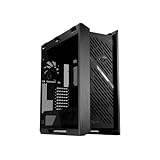
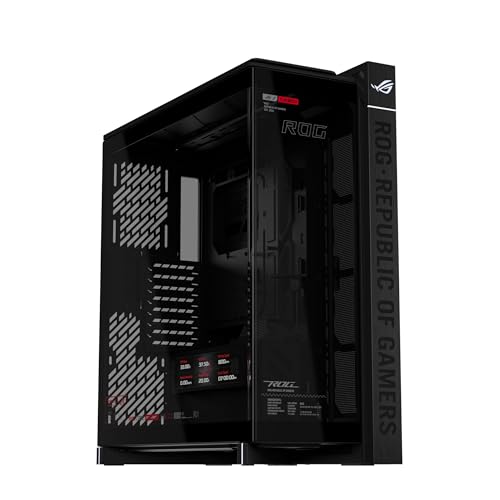 ASUS ROG Cronox E-ATX Full-Tower Gaming PC CaseGR801|Black|w/o Fans22.99 x 9.76 x 24.37 inches33.5 PoundsCheck on Amazon
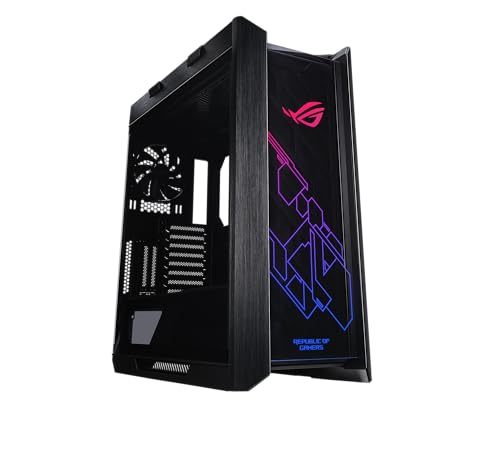 ASUS ROG Strix Helios RGB EATX Mid-Tower GamingGX601|Black22.24 x 9.8 x 23.26 Inches39.7 PoundsCheck on Amazon
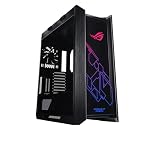
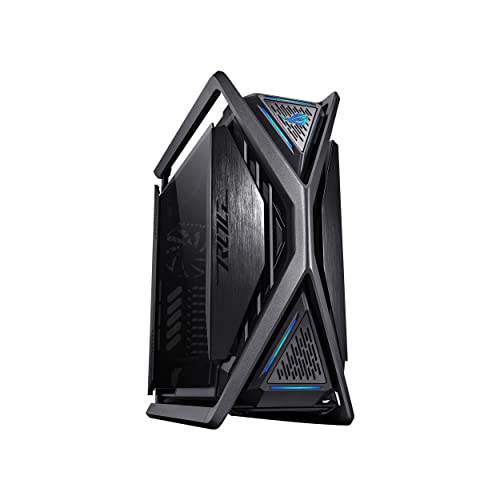 ASUS ROG Hyperion GR701 E-ATX Full-Tower Gaming PCGR701|Black25.94 x 10.55 x 25.16 inches55 poundsCheck on Amazon
 ASUS ROG Hyperion GR701 White Edition E-ATX FullGR701|White24.5 x 24.5 x 14 inches55.6 poundsCheck on Amazon
Top 3 picks at a glance
Quick Picks
As an Amazon Associate we earn from qualifying purchases at no extra cost to you.


| Product | Best for | Key spec from the title |
|---|---|---|
| ROG Cronox | BTF builds with big radiators | Dual 360mm radiators, 400mm graphics cards, E-ATX and BTF boards |
| ROG Strix Helios II | Heavy cards that need support | Graphics cards up to 450mm, graphics card braces, dual glass side panels |
| ROG Strix Helios | A smaller E-ATX footprint | Mid-tower, radiators up to 420mm, graphics cards up to 450mm |
| ROG Hyperion GR701 | Airflow-first full tower | Four built-in 140mm fans, ARGB fan hub, dual 420mm radiators |
| ROG Hyperion GR701 BTF Edition | Hidden-cable BTF systems | Same GR701 fan and radiator layout, 460mm graphics card clearance |
How to Choose
Match the motherboard format first
Every case in this list is described as E-ATX or EATX capable, which means it can take boards wider than the standard ATX size. That matters only if you own or plan to buy one of those wide boards; a regular ATX board fits in all of them with room to spare. The bigger question is BTF. A BTF motherboard moves power and signal connectors to the back of the board so the front of the build looks nearly cable-free. The Cronox lists BTF board support in its title and one Hyperion variant is sold specifically as a BTF Edition. If you use a conventional board, you can ignore that label and shop on airflow and size alone.
Measure graphics card length with a safety margin
The listings state clearance figures of 400mm, 450mm, and 460mm. Those are maximums, and they usually assume no front radiator in the way. Measure your card from bracket to the far end of the shroud, then add about 30mm so the power cable has room to bend. A card that lands within 20mm of the stated limit becomes a frustrating install. The Helios II adds graphics card braces, which is worth having if you own a heavy card that tends to sag in the slot.
Plan radiators and fans together
Dual 360mm, 420mm, and dual 420mm radiator support are the headline numbers across this group. The useful check is where each radiator mounts and whether a thick one will collide with a tall memory kit or the top of the motherboard. Fan count is the second half. The Hyperion cases state four built-in 140mm fans plus an ARGB fan hub, so they ship ready for airflow. For the others, the titles do not state a fan count, so budget for fans or verify the bundle before you order.
What to ignore and where corners get cut
Ignore lighting adjectives and the name of the glass shape. A curved panel looks distinctive, but it says nothing about how much air reaches the front fans. Smaller cases cut corners on radiator thickness, drive bays, and front I/O. In this lineup the biggest compromise is the opposite: size. Full towers demand desk space and serious weight capacity, and a mid-tower like the Helios trades some of that bulk for a tighter fit around the same 450mm card limit.
One more habit pays off: write down the three numbers that actually constrain your build, namely card length, cooler or radiator size, and motherboard format. Then read each listing against that short list instead of scanning for the flashiest photo. Cases at this size are awkward to return, so a ten-minute check with a tape measure before ordering is cheaper than any shipping label.
The 5 Best Options
ASUS ROG Cronox
The Cronox is a full-tower E-ATX case with a curved tempered glass panel, and the title promises room for dual 360mm radiators and 400mm graphics cards. It also lists both E-ATX and BTF motherboard support, which makes it the most flexible choice here for someone who might switch board styles later. That combination suits a builder planning a custom-loop or dual-radiator system around a flagship card.
- Strength: dual 360mm radiator support gives a loop builder real cooling headroom.
- Strength: accepts both E-ATX and BTF boards, so the case outlives a motherboard swap.
- Trade-off: the 400mm card limit is the lowest in this group, so the longest cards may not fit.
Skip it if your graphics card is among the longest on the market, or if you want a small desk-friendly chassis.
ASUS ROG Strix Helios II
The Helios II is an EATX gaming case with dual tempered glass side panels and support for graphics cards up to 450mm. The listing specifically mentions graphics card braces, which hints at a design built for heavy modern cards. If you want a showpiece that lets you see the build from two sides, the dual-panel layout is the draw, and the 450mm limit leaves comfortable room for most large cards.
- Strength: 450mm graphics card support covers a very wide range of current cards.
- Strength: card braces help keep a heavy graphics card level over time.
- Trade-off: dual glass panels look striking but hold heat and add weight compared with mesh designs.
Skip it if your priority is raw airflow in a hot room, or if you like panels that are easy to lift off one-handed.
ASUS ROG Strix Helios
This is the mid-tower in the group: an EATX case with tempered glass panels and RGB, supporting radiators up to 420mm long and graphics cards up to 450mm long. It is the entry point if you want ROG styling and an E-ATX-capable frame without committing to full-tower dimensions. The 420mm radiator number is generous for a case described as a mid-tower.
- Strength: 420mm radiator support in a mid-tower footprint is unusually generous.
- Strength: 450mm graphics card clearance matches the bigger Helios II.
- Trade-off: the title does not list built-in fans, so budget for airflow separately.
Skip it if you want a full tower with dual radiators or expect fans to arrive pre-installed.
ASUS ROG Hyperion GR701
The GR701 is an E-ATX full-tower that states four built-in 140mm fans, an ARGB fan hub, dual 420mm radiator support, and room for a 460mm graphics card. That last figure is the largest clearance in this list. The pre-installed fans plus a hub mean airflow is addressed from the first boot, and the hub simplifies lighting control for builders who want a coordinated look.
- Strength: four 140mm fans are already included, saving a separate fan purchase.
- Strength: 460mm card and dual 420mm radiator support suit the largest builds.
- Trade-off: it is a full tower, so it needs generous desk or floor space.
Skip it if you have limited room, or if your parts would look lost inside a case this large.
ASUS ROG Hyperion GR701 BTF Edition
The BTF Edition keeps the same four 140mm fans, ARGB hub, and dual 420mm radiator layout as the standard GR701, but it is aimed at back-connector motherboards. The appeal is a cleaner front-of-build look with fewer visible cables. If you already own a compatible BTF board and graphics card, this is the version that makes the pairing purposeful.
- Strength: built for BTF systems, which keep most cabling behind the motherboard tray.
- Strength: inherits the airflow-heavy fan layout and large radiator support of the GR701.
- Trade-off: it only makes sense if your parts use BTF connectors, so check compatibility first.
Skip it if you use a standard motherboard and graphics card, because the standard GR701 is the simpler match.
Which One Fits Your Situation
You are building a custom liquid loop
The ROG Cronox is the natural fit, because dual 360mm radiators are right in the title. If you want even more clearance for a very long card and thicker radiators, step up to the ROG Hyperion GR701, which pairs dual 420mm support with a 460mm card limit.
You own a very heavy graphics card
The ROG Strix Helios II is the pick, since its listing calls out graphics card braces along with 450mm card support. A card that sags is the kind of problem the braces exist to solve.
Desk space is limited
Choose the ROG Strix Helios. It keeps E-ATX capability and 450mm card support in a mid-tower body, which is the least bulky way to stay inside the ROG family.
You want clean cabling
If your motherboard uses back connectors, the ROG Hyperion GR701 BTF Edition is the purpose-built choice. Without a BTF board, the regular GR701 gives you the same fans and radiator layout with fewer constraints.
Common Mistakes
- Buying a BTF Edition case for a motherboard that uses standard front connectors.
- Treating the maximum card length as a target rather than a limit, leaving no room for the power cable.
- Assuming every case includes fans; only the Hyperion listings state built-in fans in the title.
- Ignoring desk or floor space until a full tower arrives and does not fit under the monitor shelf.
- Paying extra for dual glass panels when the system will sit in a warm room that needs airflow.
Related guides
- Sustainable Gaming Pc Power Supply Efficiency Guide
- Noctua Nh-D15 Vs Thermalright Peerless Assassin 120
- Thermal Paste Application Method For Lga1851
Frequently Asked Questions
Do these cases fit a regular ATX motherboard?
Yes. E-ATX capable chassis are built for wider boards, and a standard ATX board mounts inside them with extra room around it. Just confirm the standoff positions in the manual before installing.
What does BTF mean on a case listing?
BTF refers to a motherboard design that moves power and signal connectors to the back of the board. A BTF-ready case has openings and routing space for that style. Without a BTF motherboard, you do not need it.
Which ROG case has the most graphics card clearance?
Based on the listed specs, the Hyperion GR701 and its BTF Edition state 460mm, which is the highest figure here. The Helios, Helios II, and Cronox list 450mm, 450mm, and 400mm respectively.
Why are the white editions not listed?
The white versions of these models repeat the same layout in a different color, so listing them would pad the guide without adding a different case. If you prefer a lighter look, check whether the model you choose is sold in white.