Server cooling has little in common with gaming-PC cooling. The decisive spec is not RGB or fan count but the chassis height in rack units: a 1U case leaves roughly 40mm of vertical room, a 2U case about twice that, and a 4U case is tall enough for a conventional tower. Pick a cooler by the shape of the box, then by the socket, and only after that by thermal rating. Get the order wrong and the lid will not close.
This guide is for people building or repairing small servers and workstations: a homelab file server, a firewall box, a rackmount node, or a Threadripper or Epyc workstation. The five coolers below are all labeled for server or workstation use and cover three families of sockets: the Intel desktop-class LGA1700 and LGA1851 used by entry-level server boards, AMD’s SP3 and TR4 generation, and the newer sTR5 and SP6 sockets. Three other coolers in the original shortlist were consumer desktop models with no rack-unit rating, so they are left out.
Our Top Picks
 SilverStone Technology XE01-1700A 1U Server/Workstation CPU Cooler for3.5 x 3.5 x 1.1 inchesCheck on Amazon
Top 3 picks at a glance
Quick Picks
As an Amazon Associate we earn from qualifying purchases at no extra cost to you.


| Product | Best for | Key spec from the title |
|---|---|---|
| ARCTIC Freezer 4U-M (Rev. 2) | 4U racks and tall tower chassis | AMD and Intel, 4U and up |
| SilverStone XE02-1700S | 2U small form factor servers on Intel | 2U, LGA1700 and LGA1851 |
| Noctua NH-U14S TR5-SP6 | Threadripper and Epyc workstations | 165mm height, sTR5 and SP6 sockets |
| SilverStone XE01-1700A | Slim 1U Intel servers | 1U, LGA1700 and LGA1851 |
| SilverStone XE02-SP3S | 2U AMD Epyc and Threadripper platforms | 2U, SP6, SP3 and TR4 sockets |
How to Choose
Match the cooler height to the rack unit
Rack units are the first filter. A 1U chassis is about 44mm tall inside the standard rack frame, so only very low coolers qualify, and the cooler has to push air front to back through a duct. A 2U chassis gives a bit more room, enough for a compact heatsink with a shroud or a small fan. A 4U or tower chassis can take a large tower such as the Noctua NH-U14S, which is listed at 165mm height. Read the case spec for maximum CPU cooler height and compare it with the cooler’s listing, because a rack-unit label alone does not tell you the clearance.
Check socket and retention hardware
Server sockets are not interchangeable. The SilverStone XE01-1700A and XE02-1700S cover LGA1700 and LGA1851, which fit entry-level server boards that use desktop-class Intel chips. The XE02-SP3S lists SP6, SP3, and TR4, and the Noctua model names sTR5 and SP6. Many server boards use a fixed backplate and screw pattern, so match the cooler to the exact socket name on the board, not to the brand of the processor. AMD’s large sockets also have different mounting patterns from consumer AM4 or AM5.
Think about airflow direction and fan control
In a server, airflow is set by chassis fans pulling air from front to back through a tunnel. A passive or low-fan heatsink relies on that airflow, while a tower with its own fans can work in a less ducted chassis. The 4U cooler from ARCTIC is designed for the taller space where a dedicated fan makes sense. Look for PWM fan control so the board can ramp speed with load, and check that the heatsink fin direction matches the airflow path in your case.
Match cooling capacity to the workload, and what to ignore
Servers often run at steady load for weeks, not in bursts, so sustained thermal capacity matters more than short-term boost behavior. Compare the processor’s rated power with the cooler’s stated capability in the full listing. Ignore gaming-style features such as lighting and screens. Budget models often cut corners on mounting hardware and fan bearings, which matters when a machine runs around the clock. Ask about warranty terms before buying for a production system, not just a homelab.
One more habit pays off in server builds: write down the chassis model, the board model, and the exact processor before you shop. A tower workstation that happens to hold server parts is a very different cooling problem from a short-depth rack case, even when both use the same socket. Photographs of the mounting area, taken before you remove the old cooler, make it easy to confirm that the new retention parts line up. Also note whether the board has a fixed backplate or a cooler-specific bracket, because that decides whether the new heatsink bolts straight on or needs extra hardware.
Finally, think about service. A server cooler that needs the board removed from the chassis to swap a fan is a real cost in a rack that sits in a closet or a leased facility. Favor designs where the fan can be replaced without disturbing the heatsink, and keep a spare fan or two on the shelf if the machine does important work. If the system is an always-on file server or firewall, quiet and reliable fans are worth more than an extra few degrees of headroom.
The 5 Best Options
ARCTIC Freezer 4U-M (Rev. 2)
This is the pick for tall server chassis. The title says it is for AMD and Intel and made for 4U and up, which means it assumes a roomy case where a larger heatsink and fan can work. It suits a homelab server in a 4U rack case or a workstation tower that holds server-grade components and needs a cooler with room to breathe.
- Strength: built for 4U and larger chassis, with AMD and Intel support.
- Strength: server-focused design, not a repurposed desktop cooler.
- Trade-off: too tall for 1U and 2U cases.
Skip it if you are building in a 1U or 2U chassis.
SilverStone XE02-1700S
The XE02-1700S is a 2U small-form-factor cooler for LGA1700 and LGA1851. It fits entry-level Intel server and workstation boards in short rack cases, such as a firewall, a small virtualization host, or a storage server. The 2U rating gives it more room than a 1U design, which usually helps keep fan noise down.
- Strength: purpose-built for 2U chassis.
- Strength: supports LGA1700 and LGA1851 for current entry-level Intel platforms.
- Trade-off: Intel-only, with no AMD support in the title.
Skip it if your board uses an AMD server socket or your chassis is 1U.
Noctua NH-U14S TR5-SP6
Noctua’s model targets AMD’s newest large sockets: sTR5 for Threadripper and SP6 for Epyc. The title lists a 165mm height and describes it as a quiet, high-end tower for server and workstation use. It is the match for a tower workstation that handles rendering, simulation, or development loads, where the processor is large and power draw is high.
- Strength: made for sTR5 and SP6 sockets.
- Strength: low-noise tower design for workstation environments.
- Trade-off: 165mm height needs a roomy tower case, not a rack.
Skip it if you use Intel or a slim rackmount chassis.
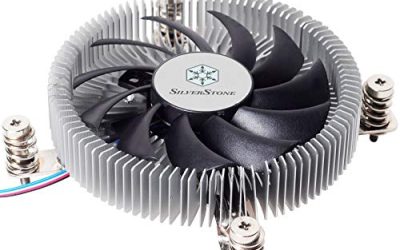
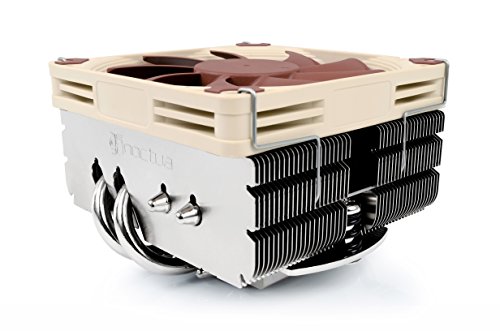
SilverStone XE01-1700A
This is the slim option: a 1U server and workstation cooler for LGA1700 and LGA1851. The 1U form factor means it is aimed at dense rack setups where every unit counts, such as colocation nodes or compact edge servers. In such cases, chassis airflow does much of the work, so the cooler suits systems with strong front-to-back fans.
- Strength: 1U profile fits the slimmest rack cases.
- Strength: LGA1700 and LGA1851 coverage for Intel entry-level boards.
- Trade-off: a 1U cooler has less thermal capacity than larger designs, so processor choice matters.
Skip it if you have 2U or more of space and want quieter operation.
SilverStone XE02-SP3S
The XE02-SP3S is a 2U small-form-factor cooler for AMD server sockets, with SP6, SP3, and TR4 in the title. It makes sense for an Epyc-based rack server or a Threadripper-based workstation in a short chassis. It gives AMD builders a 2U option in the same product family as the Intel models above.
- Strength: covers SP6, SP3, and TR4 sockets.
- Strength: 2U form factor suits short rack cases.
- Trade-off: no sTR5 listed, so check the exact socket before ordering.
Skip it if your board uses sTR5 or an Intel socket.
Which One Fits Your Situation
You are building a 1U Intel node
The SilverStone XE01-1700A is the one for a 1U chassis with an LGA1700 or LGA1851 board.
You have a 2U chassis and Intel or AMD
For Intel, choose the SilverStone XE02-1700S. For AMD SP6, SP3, or TR4, choose the SilverStone XE02-SP3S.
You are building a Threadripper or Epyc workstation in a tower
The Noctua NH-U14S TR5-SP6 matches sTR5 and SP6 and fits tower cases with room for a 165mm cooler.
You are building in a tall 4U or larger case
The ARCTIC Freezer 4U-M (Rev. 2) is made for 4U and up and supports both brands. It is also the sensible swap for a loud stock cooler in a home lab, because a larger heatsink lets fans run slower. AMD workstation owners with sTR5 or SP6 boards can use the Noctua NH-U14S TR5-SP6 for the same reason.
If two of these scenarios overlap, let the chassis break the tie. Rack height is a hard limit, while thermal margin is something you can tune with fan curves and airflow. Buyers who run a machine around the clock should also leave a little headroom in the cooler’s capability rather than sizing it to the exact processor, since dust and warm room air slowly erode the margin over the years. A small amount of spare capacity keeps fans at a lower, quieter speed and extends their life, which matters more in an always-on box than in any desktop. Keep the board manual handy when you order so you can confirm the socket name one last time.
Common Mistakes
- Choosing a cooler by processor brand instead of the exact socket name on the board.
- Ignoring chassis height in rack units and discovering the lid will not close.
- Buying a consumer tower for a 1U or 2U case.
- Forgetting that slim server coolers depend on chassis fans to push air through the heatsink.
- Selecting on lighting or looks for a machine that will sit in a rack and run around the clock.
Related guides
- Noctua Nh-D15 Vs Thermalright Peerless Assassin 120
- Sustainable Gaming Pc Power Supply Efficiency Guide
- Thermal Paste Application Method For Lga1851
Frequently Asked Questions
Can I use a gaming CPU cooler in a server?
Only if the chassis has enough height and the socket matches. Rack cases often limit height to a few dozen millimeters, which rules out most consumer towers.
What does 1U or 2U mean for coolers?
It is the rack-unit height of the chassis the cooler is designed for. A 1U cooler is the slimmest, and a 2U cooler allows a bit more heatsink height.
Do I need special coolers for Epyc and Threadripper?
Yes. Those sockets are larger and use different mounting patterns from consumer sockets. Use a cooler that lists your exact socket, such as sTR5, SP6, or SP3.
Is noise important in a server?
In a data center it matters less, but in a home office or closet it matters a great deal. Larger, slower fans in a taller chassis usually give the best noise result in 2026 and beyond.