Our Top Picks


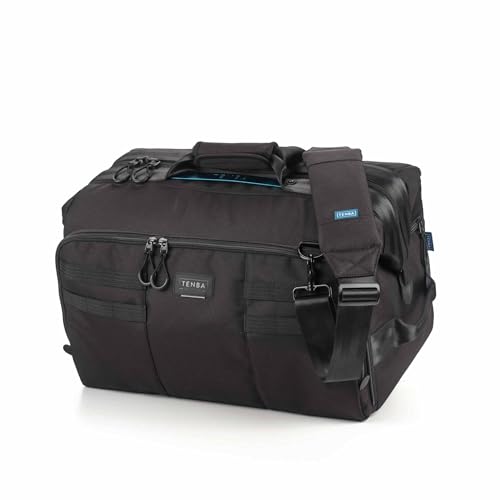


Top 3 picks at a glance
Quick Comparison: Best Tenba Camera Bags
The fastest way to narrow down the best Tenba camera bags is to start from your actual kit, not from bag capacity marketing. A full-frame body with a 70-200mm f/2.8 attached needs roughly 22–26cm of internal height and a deep main compartment; a compact mirrorless kit with two small primes can live comfortably in a 6–10L bag. The table below maps every model in this roundup to the kit it serves best, along with the spec class that matters most and a general price tier.
| Model | Best For | Key Specs (Class) | Price Tier |
|---|---|---|---|
| Tenba Axis v2 20L Backpack | One-body serious kit + 14″ laptop, day hikes | ~20L, side + rear access, 14″ laptop sleeve, all-weather cover included | Premium |
| Tenba Axis v2 24L Backpack | Two-body or gripped-body kit + 16″ laptop, travel | ~24L, dual side access, 16″ laptop sleeve, expansion, airline overhead fit | Premium |
| Tenba DNA 16 Pro Messenger | Urban shooters wanting grab-and-go messenger with laptop | Messenger, fits body + 2–3 lenses + tablet/laptop, weather-resistant flap | Mid-range |
| Tenba Cineluxe v2 Shoulder Bag 21 Hightop | Cinema/video rigs, camera-left-built, matte box ready | ~21L class, high-top lid for built rigs, shoulder carry, accessory pockets | Premium |
| Tenba Fulton v2 16L Backpack | Hybrid photo + personal gear day trips | ~16L, flip top + roll top, rear camera compartment, tripod straps | Mid-range |
| Tenba BYOB 10 Camera Insert | Converting any backpack or tote into a camera bag | Insert, holds body + 1–2 lenses, padded dividers, zippered closure | Budget |
| Tenba Axis v2 6L Sling | Minimal mirrorless kit, all-day walkaround sling | ~6L sling, single-body + 1–2 small lenses, quick-access rotation | Budget |
| Tenba Fulton v2 10L Backpack | Compact mirrorless kit + essentials, light travel | ~10L, roll-top + camera compartment, tripod carry | Budget |
| Tenba Solstice v2 12L Sling | Hiking/walkaround with fast front access | ~12L sling, body + 2 lenses, weather cover, chest-strap compatible | Mid-range |
| Tenba Fulton v2 14L All Weather Backpack | Wet-climate day hikes with a medium kit | ~14L, all-weather materials, roll-top + camera compartment | Mid-range |
| Tenba DNA 9 Slim Messenger | Single-body street kit, ultralight daily carry | Slim messenger, body + 1–2 lenses, weather-resistant flap | Budget |
| Tenba DNA v2 Shoulder Bag 16 | Premium messenger for mirrorless + laptop commuters | Messenger, body + 2–3 lenses, laptop/tablet sleeve, weather-resistant | Premium |
How We Chose
Every bag here was selected by comparing published specifications, manufacturer dimensions, internal compartment layouts, and documented materials against the actual kits photographers carry in 2026. We looked for Tenba bags that cover a genuine range of use cases rather than a cluster of near-identical products: a sling for street shooters, a backpack for hikers, a messenger for commuters, an insert for people who refuse to buy another bag, and a cinema-oriented shoulder bag for video rigs. Category fit was the first filter — a bag that tries to do everything usually does nothing well, so we favored models with a clearly defined job.
From there we weighed padding quality (density and coverage of base and lid padding, not just wall thickness), weather protection (included rain covers versus fabric-only DWR finishes), access pattern (rear, side, top, or flap), comfort under load (strap design, back-panel ventilation, hip or sternum support), and airline practicality (whether the bag meets typical carry-on envelope dimensions and fits under a seat). Price is expressed only as a tier because listings move constantly. Upgrade path mattered too: several models in this list share accessory ecosystems — dividers, tripod straps, insert compatibility — so a smaller bag can grow into a larger one without changing habits. Where Tenba publishes exact interior dimensions we used them; where it doesn’t, we describe capacity by spec class and by the configuration the bag is designed to hold.
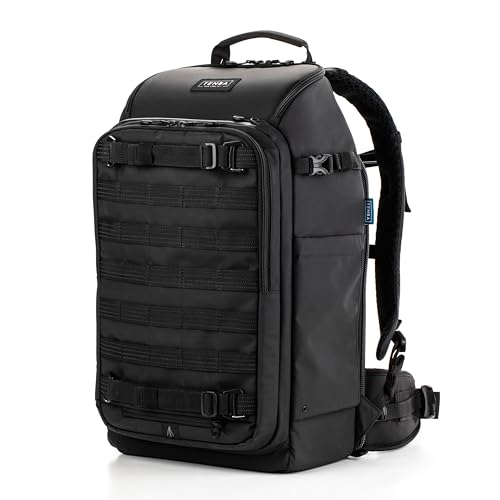
1. Tenba Axis v2 20L Backpack – Best for One-Body Serious Kits and 14″ Laptops
As an Amazon Associate we earn from qualifying purchases at no extra cost to you.

The Axis v2 20L is the sweet spot in Tenba’s backpack line: big enough for a professional-feeling kit, small enough to carry all day without wanting to take it off. It suits the photographer who runs one primary body, three or four lenses including a fast telephoto zoom, a 14-inch laptop, and the usual accessories — and who wants to get the camera out without stopping to unload the whole pack.
Key Specs (Spec Class)
- Capacity class: approximately 20 liters total
- Laptop sleeve: sized for a 14-inch laptop
- Access: side access for the camera compartment plus a rear-or-panel access for the full kit
- Weather protection: included all-weather cover plus water-repellent fabric
- Carry: padded harness with sternum strap, ventilated back panel
- Tripod carry: side straps
What makes the Axis v2 20L worth its premium tier is the dual-access design. Side access matters more than photographers admit: on a hike or at an event, the difference between a ten-second camera retrieval and a two-minute one determines how many shots you actually take. The 20L size keeps the loaded bag around the weight where a day of carry stays comfortable — assuming you don’t overload the laptop sleeve and top compartment with non-photographic gear.
The internal dividers are repositionable, which is the difference between a bag that fits your kit and a bag that almost fits it. A typical load might be a full-frame body with a 24-70mm attached, a 70-200mm, a wide prime, and a flash — roughly the maximum this bag handles before it starts to feel stuffed. The laptop sleeve is padded and suspended slightly off the base, which is the correct design for drop protection.
Pros
- Side access plus full rear access covers both grab-shooting and gear organization
- 20L hits a rare balance between capacity and all-day comfort
- Included all-weather cover rather than a sold-separately accessory
- Fits a 14-inch laptop, so it doubles as a commute bag
- Repositionable dividers adapt as your kit changes
Cons
- Premium tier pricing for a bag that won’t hold a gripped body plus a 400mm-class telephoto
- 20L leaves little room for bulky personal gear on travel days
- Side access on the 20L favors one shoulder orientation, which takes getting used to
Versus the Axis v2 24L: the 24L is the direct upgrade for anyone who shoots two bodies, uses a battery grip, or carries a 16-inch laptop. The 20L wins on weight and compactness; the 24L wins on capacity and airline-friendly travel organization. If your kit fits the 20L today with room to spare, buy the 20L — the extra four liters otherwise becomes empty space you carry for no reason.
2. Tenba Axis v2 24L Backpack – Best for Two-Body Kits and 16″ Laptops

The Axis v2 24L is the working photographer’s version of the bag above: same architecture, more volume, and a laptop sleeve that swallows a 16-inch machine. It suits wedding and event shooters, sports photographers with two bodies, and travelers who want camera gear and a full-size laptop in a single carry-on-compatible bag.
Key Specs (Spec Class)
- Capacity class: approximately 24 liters total
- Laptop sleeve: sized for a 16-inch laptop
- Access: dual side access plus rear panel access to the full compartment
- Weather protection: included all-weather cover, water-repellent fabrics
- Carry: padded harness, sternum strap, ventilated back panel, load-lifter style adjustment
- Tripod carry: side compression straps
The jump from 20L to 24L is more meaningful than the numbers suggest, because backpacks don’t scale linearly — the extra four liters come mostly from depth and height in the main compartment, which is exactly where camera gear benefits. A 24L bag can hold two bodies (one with a 70-200mm attached), two to three additional lenses, a flash, and a 16-inch laptop, and still have a top pocket for cables, batteries, and a light jacket.
The dual side access is the feature that justifies the premium tier for event work. With a bag on both shoulders, you can rotate it to either hip and pull a body out without removing the pack or setting anything down. That matters when you’re moving through a crowded venue and can’t put a bag on the floor. The rear panel access then lets you reorganize the whole kit at once when you reset between shooting phases.
Airline practicality is where the 24L earns its keep. At roughly 24 liters, it sits within the carry-on envelope of most major airlines and is designed to fit in overhead bins; you should still verify the specific dimensional limits of your carrier, because regional jets and budget carriers have tighter envelopes than the standard roll-aboard size. As a personal item it’s too large on strict airlines, so treat it as your main cabin bag rather than a second bag.
Pros
- Holds a genuine two-body professional kit with fast dual side access
- 16-inch laptop sleeve makes it a true one-bag work and travel solution
- Rear panel access for full reorganization without unpacking everything
- Comfortable harness for the weight this capacity implies
- All-weather cover included
Cons
- Premium pricing; the largest investment in this roundup
- Fully loaded, it’s heavy enough that all-day carry without a hip belt gets tiring
- Overkill for a single-body mirrorless kit — you’d pay for capacity you never use
Versus the Axis v2 20L: choose the 24L if you shoot two bodies, use a grip, or carry a 16-inch laptop. Choose the 20L if portability and weight matter more than maximum capacity. The 24L is also the better travel bag because the extra depth holds a layer of clothing or a compact travel tripod without deforming the camera compartment.
3. Tenba DNA 16 Pro Messenger Bag – Best for Urban Shooters Who Want Grab-and-Go Access

The DNA 16 Pro is the messenger for photographers who work out of a bag all day rather than carrying a backpack. It suits street, documentary, and event shooters who want a body plus two or three lenses accessible from a flap that opens in one motion, along with a laptop or tablet for editing or client review on location.
Key Specs (Spec Class)
- Format: messenger / shoulder bag with wide flap opening
- Capacity: DSLR or mirrorless body plus multiple lenses and accessories
- Laptop/tablet: internal sleeve for a laptop or large tablet
- Weather protection: weather-resistant flap and base, water-repellent fabric
- Carry: wide shoulder strap with pad; messenger profile sits close to the body
- Organization: front organizer pockets for batteries, cards, cables
Messengers solve a problem backpacks create: access while standing. A flap that folds open gives you the whole kit at once, which is what you want when you’re changing lenses on a sidewalk or in a press area. The DNA 16 Pro is sized so that a full-frame body with a standard zoom attached can sit vertically in the main compartment, with additional lenses in dividers beside it.
The trade-off is load distribution. On one shoulder, a fully loaded messenger becomes uncomfortable faster than a backpack, which is why the DNA 16 Pro is best treated as a moderate-kit bag rather than a “bring everything” bag. The wide, padded strap helps, but physics is physics: if your kit exceeds what you’d comfortably carry in one hand for an hour, a backpack is the better format.
Where the DNA 16 Pro shines is the combination of camera protection and civilian looks. It reads as a normal messenger bag, which matters in locations where a camera backpack signals “expensive gear inside.” The weather-resistant flap handles rain during a dash between locations; for sustained downpours, a dedicated rain cover is still the safer option.
Pros
- One-motion flap access to the entire kit
- Discreet messenger profile suitable for urban environments
- Laptop/tablet sleeve makes it a working bag, not just a camera bag
- Weather-resistant construction for typical rain exposure
- Mid-range pricing for a bag this capable
Cons
- Single-shoulder carry limits how heavy a kit you’ll want to load
- Less padding around the base than a dedicated backpack compartment
- Doesn’t carry a tripod as naturally as the backpacks in this list
Versus the DNA v2 Shoulder Bag 16: the DNA v2 is the newer-generation messenger in the same size class with updated materials and organization, and it sits in the premium tier. If you want the latest generation and don’t mind the higher tier, the v2 is the more future-proof choice; if you find the DNA 16 Pro at a mid-range price, it remains an excellent messenger for the same job.
4. Tenba Cineluxe v2 Shoulder Bag 21 Hightop – Best for Built Video Rigs

Most camera bags are designed around stills kits, and a built cinema rig — camera with cage, top handle, monitor, matte box, and follow focus — simply doesn’t fit the compartment geometry of a stills bag. The Cineluxe v2 Shoulder Bag 21 Hightop is built for exactly that problem: a high-top lid that accommodates a camera left assembled rather than stripped down for transport.
Key Specs (Spec Class)
- Format: shoulder bag with an elevated (“hightop”) lid
- Capacity class: approximately 21-liter class, sized for built cinema rigs
- Interior: deep main compartment for camera with accessories attached
- Access: wide top opening for lifting a rig straight out
- Organization: accessory pockets for batteries, cables, monitor, tools
- Carry: shoulder strap designed for heavier loads; reinforced construction
The hightop design is the entire point. A standard bag forces you to remove a top handle, monitor, or matte box before closing the lid — which means every shoot begins and ends with rigging, and every lens change risks losing a small accessory. The Cineluxe v2’s raised lid means the rig stays built, so you arrive on set, pull the camera out, and shoot.
This is a specialist bag, and it should be bought as one. It’s not the right choice for a stills photographer with a body and three lenses; the geometry is wasted on a kit that doesn’t need vertical clearance. It’s the right choice for a solo operator, a documentary shooter, or a small-crew DP who needs one protected transport bag for a rig that would otherwise sit loose in a hard case.
Shoulder carry for a cinema rig is a deliberate compromise: it’s easier to load and unload than a backpack, and easier to keep an eye on in a busy production environment, but a fully built rig plus batteries is heavy enough that you won’t want to walk far with it. Treat it as a set bag and a vehicle-to-location bag rather than a hiking pack.
Pros
- High-top lid keeps a built rig assembled during transport
- Deep compartment accommodates cages, top handles, and monitors
- Wide opening makes extraction and repacking fast on set
- Organization pockets sized for cinema accessories rather than stills trinkets
Cons
- Premium tier pricing for a single-purpose bag
- Not efficient for standard stills kits
- Shoulder-carry format limits how far you’d want to haul a heavy rig
Versus the Axis v2 24L: if your work is stills-first with occasional video, the Axis 24L carries more varied gear and distributes weight better. If your work is video-first with a rig that stays built, the Cineluxe v2 is the only bag in this list designed around that requirement.
5. Tenba Fulton v2 16L Backpack – Best for Hybrid Photo and Personal Gear Day Trips

The Fulton v2 16L is the backpack for photographers who don’t want a dedicated camera bag. Its roll-top upper section holds personal gear — a jacket, lunch, a water bottle — while the lower camera compartment protects a mirrorless or DSLR kit. It suits day hikers, travelers, and casual shooters who want one bag for the whole day out.
Key Specs (Spec Class)
- Capacity class: approximately 16 liters total
- Layout: roll-top upper section plus dedicated camera compartment
- Camera fit: mirrorless or DSLR body with one to two lenses
- Access: top roll closure for personal gear; separate access to camera compartment
- Tripod carry: external straps
- Weather protection: water-repellent fabric; rain cover recommended for sustained rain
The split layout is what separates the Fulton from the Axis line. Where an Axis bag is a camera bag first, the Fulton is a daypack that happens to protect a camera. The roll-top expands and compresses with your load, which makes it far more comfortable on a hike where the non-photographic cargo varies — a full roll-top on the way out, a compressed one on the way back after you’ve eaten the sandwiches.
The camera compartment is sized for a realistic day kit rather than a working kit: one body with a lens attached plus one spare lens, or a body plus two compact primes. If you try to fit a 70-200mm f/2.8, a second body, and a flash, you’ve bought the wrong bag — move up to the Axis v2 20L or 24L. The Fulton’s strength is that it does the hybrid job well at a mid-range tier instead of pretending to be a professional workhorse.
Pros
- Roll-top personal section makes it a true dual-purpose bag
- Camera compartment is separate, so gear never mixes with food or clothing
- Comfortable for a full day of walking
- Mid-range tier for a bag with real versatility
- Tripod straps included
Cons
- Camera capacity is modest — one body plus one or two lenses
- No laptop sleeve in the same class as the Axis bags
- Roll-top access to personal gear is slower than a zip-top lid
Versus the Fulton v2 14L All Weather: the 14L is smaller and built with all-weather materials for wet climates; the 16L gives you more personal-cargo room for dry-weather day trips. If rain is a regular feature of where you shoot, the 14L All Weather is the better buy; if you just need more space, take the 16L.
6. Tenba BYOB 10 Camera Insert – Best for Turning Any Bag Into a Camera Bag

The BYOB 10 — Bring Your Own Bag — is the answer for photographers who already own a backpack, tote, or travel bag they love and refuse to replace. It’s a padded insert that drops into whatever you carry, giving a DSLR or mirrorless body plus one or two lenses the same protection as a dedicated camera bag at budget-tier cost.
Key Specs (Spec Class)
- Type: padded camera insert with zippered closure
- Capacity: DSLR or mirrorless body plus one to two lenses
- Interior: repositionable padded dividers
- Protection: padded walls and base; soft interior lining
- Portability: grab handle; fits inside a larger bag
- Color option: blue
The case for an insert is simple arithmetic. A dedicated camera backpack costs mid-range to premium money and only does one job. An insert costs budget-tier money and converts a bag you already own — which is often more comfortable, more discreet, or simply already broken in — into a camera carrier. If you travel with one personal item and one cabin bag, an insert lets your personal item do double duty without a second bag fee.
The BYOB 10 is sized for the compact end of the spectrum: a mirrorless body with a prime or standard zoom attached, plus one additional lens, plus a battery and cards. That’s the kit most people actually shoot with on a normal day. The zippered closure means you can pull the insert out of your bag and carry it alone, which is useful when you’re moving between a hotel room and a shoot location.
The limitation is protection depth. An insert protects against bumps and scratches inside a bag; it does not replace the structure of a dedicated camera bag, and it won’t protect a camera from a hard drop onto concrete the way a fully padded backpack compartment will. Treat it as the budget-smart option for urban and travel use, not for rugged field work.
Pros
- Budget-tier price converts an existing bag into a camera bag
- Repositionable dividers adapt to different kits
- Zippered closure allows standalone use
- Compact enough to fit inside most daypacks and totes
Cons
- No weather protection of its own — it inherits whatever your outer bag offers
- Limited capacity: one body plus one or two lenses at most
- No carry system beyond the grab handle
Versus the Axis v2 6L Sling: the sling gives you a dedicated carry system and quick access for roughly the same kit; the insert gives you flexibility at a lower price. If you already love your everyday bag, buy the insert. If you want a dedicated camera carry solution, buy the sling.
7. Tenba Axis v2 6L Sling Bag – Best for Minimal Mirrorless Kits and All-Day Walkaround

The Axis v2 6L Sling is the smallest dedicated camera bag in this roundup and one of the most useful. It suits mirrorless shooters who carry one body and one or two small lenses, and it solves the problem backpacks can’t: carrying a camera without looking like you’re carrying a camera bag at all.
Key Specs (Spec Class)
- Capacity class: approximately 6 liters
- Format: sling that rotates from back to chest for access
- Camera fit: mirrorless body plus one to two compact lenses
- Access: quick-access opening without removing the sling
- Weather protection: water-repellent fabric; all-weather cover class protection
- Carry: single strap worn cross-body, rotates to front
The sling format’s advantage is rotation. Instead of taking the bag off, you swing it from your back to your chest and open the main compartment in one continuous motion. For street photography and travel, that means you’re never putting your bag on the ground and never setting your camera down — the two moments when gear most often gets damaged or stolen.
At 6 liters, the honest capacity is one body with a compact zoom or prime attached, one spare lens, a battery, cards, and a phone. That’s it. If you’re carrying a 70-200mm or a second body, this is the wrong bag — but if you’ve deliberately built a small kit, a 6L sling is the most ergonomic way to carry it. The weight stays centered on your back rather than pulling on one shoulder like a messenger, which matters over a full day.
Budget-tier pricing makes it an easy second bag even for photographers who already own a backpack, and it’s the bag most likely to actually leave the house with you for casual shooting.
Pros
- Rotating sling gives fast access without removing the bag
- Small and light enough to carry all day without noticing it
- Keeps a camera secure on your back in crowded areas
- Budget-tier pricing
- Water-repellent construction for light weather
Cons
- 6L capacity is genuinely minimal — one body, one or two small lenses
- Not suitable for telephoto zooms, grips, or second bodies
- Single-strap carry distributes weight less evenly than a backpack
Versus the Solstice v2 12L Sling: the Solstice doubles the capacity for a kit with two lenses plus accessories and adds hiking-oriented features, at a mid-range tier. If your kit has outgrown the 6L, the Solstice is the natural step up without switching to a backpack.
8. Tenba Fulton v2 10L Backpack – Best for Compact Mirrorless Kits on Light Travel

The Fulton v2 10L is the smaller sibling in the Fulton line, aimed at mirrorless shooters who want a proper backpack rather than a sling but don’t need to carry much. It suits day trips, city travel, and light hikes where the camera kit is one body plus a lens or two and everything else is minimal.
Key Specs (Spec Class)
- Capacity class: approximately 10 liters
- Layout: roll-top personal section plus camera compartment
- Camera fit: mirrorless body with one to two lenses
- Color: tan/olive
- Tripod carry: external straps
- Weather protection: water-repellent fabric
Ten liters is a real constraint, and the Fulton 10L is honest about it. You get a mirrorless body with a lens attached, one spare lens, and a small amount of personal gear in the roll-top. That’s a kit that covers most street, travel, and walkaround shooting without inviting you to carry equipment you won’t use.
The backpack format at this size is the differentiator. A 10L sling and a 10L backpack hold similar volume, but a backpack keeps weight on both shoulders, which is noticeably more comfortable over several hours even at low weight. If your day involves standing, walking, and shooting continuously, the two-shoulder design wins. If your day involves sitting, riding, and squeezing through crowds, the sling wins.
The tan/olive colorway is a practical choice for travel: it looks less like camera equipment than a black technical bag, which is a real security consideration in tourist areas. The trade-off is that lighter fabrics show dirt faster, so expect to clean it more often.
Pros
- Genuinely light and compact for all-day carry
- Two-shoulder carry is more comfortable than a same-size sling
- Roll-top personal section separates gear from camera kit
- Discreet, non-technical appearance in tan/olive
- Budget-tier pricing
Cons
- 10L fills up fast — minimal personal cargo capacity
- No laptop sleeve
- Not enough room for telephoto zooms or second bodies
Versus the Fulton v2 14L All Weather: the 14L adds capacity for a larger lens or more personal gear and includes all-weather materials, at a mid-range tier. If your kit is truly one body and one lens, the 10L is lighter and cheaper; if you’re already planning to add a second lens, buy the 14L now rather than upgrading later.
9. Tenba Solstice v2 12L Sling Bag – Best for Hiking and Walkaround With Fast Front Access

The Solstice v2 12L sits between the minimal 6L sling and a full backpack, and it’s aimed at photographers who hike or walk long distances with a medium kit. It suits a body plus two lenses plus accessories, with access designed to be fast without taking the bag off.
Key Specs (Spec Class)
- Capacity class: approximately 12 liters
- Format: sling with front access
- Camera fit: DSLR or mirrorless body plus two lenses
- Weather protection: included weather cover class protection
- Carry: single cross-body strap; chest-strap compatible
- Extras: tripod or jacket carry capability
Twelve liters is the point where a sling stops being a minimal bag and starts being a practical one. A body with a standard zoom attached, a wide lens, a telephoto prime, batteries, and a filter pouch fit without the bag becoming a jigsaw puzzle every time you close it.
The hiking orientation shows in the details: a strap setup that keeps the bag stable when you’re moving over uneven ground, weather protection as a baseline rather than an add-on, and enough structure that a heavy lens doesn’t deform the bag’s shape against your back. On a trail, a sling’s single-strap design is a compromise compared to a backpack’s two-shoulder harness, but the front-access benefit is real when you’re shooting intermittently as you walk.
Mid-range pricing positions it as the sensible middle option: more capacity and better weather protection than the budget sling, less capacity than the Axis backpacks, and a carry format that favors movement over standing still.
Pros
- 12L holds a realistic three-lens kit in a sling format
- Weather protection included as standard
- Stable carry for walking and light hiking
- Front access without removing the bag
- Mid-range pricing
Cons
- Single-strap carry is less comfortable than a backpack over long distances
- No laptop compartment
- Less capacity than the Fulton 16L or Axis backpacks
Versus the Axis v2 6L Sling: the Solstice is the upgrade for anyone whose kit has outgrown one or two small lenses. You pay mid-range instead of budget, but you get roughly double the usable capacity and better weather protection.
10. Tenba Fulton v2 14L All Weather Backpack – Best for Wet-Climate Day Hikes With a Medium Kit

The Fulton v2 14L All Weather is the bag for photographers who shoot outdoors in places where rain isn’t an exception. It combines the Fulton line’s roll-top plus camera compartment layout with all-weather construction, in a black/black camo colorway that keeps a low profile in the field.
Key Specs (Spec Class)
- Capacity class: approximately 14 liters
- Layout: roll-top personal section plus dedicated camera compartment
- Camera fit: mirrorless or DSLR body plus one to two lenses
- Weather protection: all-weather materials as a core design feature
- Carry: two-shoulder harness, compact daypack profile
- Tripod carry: external straps
“All Weather” in Tenba’s naming means the bag is built to handle exposure that a standard water-repellent finish won’t. For anyone who has watched a rain shower roll across a valley while their camera bag sat on a rock, that’s not a marketing detail — it’s the difference between finishing the hike with dry gear and drying out a lens overnight.
Fourteen liters is a deliberate middle point: enough for a camera body, a spare lens, and a compact personal load, but not so much that the bag becomes a burden on a long uphill walk. The camera compartment remains separate from the roll-top section, so a wet rain shell never sits against a camera body.
The black camo finish serves a practical purpose outdoors — it doesn’t flash reflections or stand out against foliage — and it also hides trail dust better than lighter colorways. If you shoot wildlife, hiking landscapes, or simply spend a lot of time outdoors in unpredictable weather, the All Weather version is the most sensible Fulton to own.
Pros
- All-weather construction designed for real outdoor exposure
- Separate camera and personal compartments
- Compact enough for long hikes without back strain
- Low-profile black camo colorway for field use
- Mid-range pricing for weather-ready construction
Cons
- 14L limits you to one body and one or two lenses
- No laptop sleeve
- Roll-top access is slower than a zip lid when you need something quickly
Versus the Fulton v2 16L: the 16L offers more personal cargo room; the 14L All Weather offers better protection for wet conditions. If rain is a regular part of your shooting, choose the All Weather; if you mostly shoot in dry conditions and need more space for personal gear, the 16L is the better fit.
11. Tenba DNA 9 Slim Messenger Bag – Best for a Single-Body Street Kit

The DNA 9 Slim is the lightest messenger option in this roundup, designed around a single body and one or two lenses. It suits street photographers, commuters, and anyone who wants the smallest possible bag that still protects a real camera kit.
Key Specs (Spec Class)
- Format: slim messenger with flap closure
- Camera fit: mirrorless or DSLR body plus one to two lenses
- Color: blue
- Weather protection: weather-resistant flap and water-repellent fabric
- Carry: shoulder strap; slim profile sits close to the body
- Organization: front pockets for small accessories
Slim is the operative word. The DNA 9’s depth is minimal, which means it hugs your side instead of swinging, and it doesn’t announce itself as a camera bag. For city shooting where discretion matters and you’re moving through crowds, that profile is an advantage rather than a limitation.
The capacity is honest: one body with a compact lens attached, plus one additional small lens. A full-frame body with a 70-200mm will not fit comfortably; a mirrorless body with a 35mm and a 50mm will fit with room for batteries and cards. If that’s your kit — and for a lot of street and documentary photographers it is — the DNA 9 Slim is a budget-tier way to carry it properly.
Weather resistance is flap-level: fine for drizzle and brief exposure, but a sustained downpour will eventually soak through. If you regularly shoot in rain, pair it with a rain cover or step up to a bag with all-weather construction.
Pros
- Slim profile is discreet and easy to carry in crowds
- Budget-tier pricing for a proper messenger
- Flap access is fast and simple
- Weather-resistant fabric for light rain
- Blue colorway stands out from the usual black bags
Cons
- Very limited capacity — one body and one spare small lens
- Not suitable for telephoto zooms or grips
- No dedicated laptop compartment in the larger class of the DNA 16 Pro
Versus the DNA 16 Pro Messenger: the 16 Pro holds a substantially larger kit and includes a laptop/tablet sleeve, at a mid-range tier. If you’re deciding between them, the question is simply whether you ever carry more than one body and two small lenses — if yes, buy the 16 Pro.
12. Tenba DNA v2 Shoulder Bag 16 – Best for Premium Messenger Carry With a Laptop

The DNA v2 Shoulder Bag 16 is the newest-generation messenger in this list, aimed at mirrorless and DSLR shooters who want flap access, a laptop sleeve, and updated materials in a single premium bag. It suits commuters who shoot before and after work, travel photographers, and anyone who prefers a shoulder bag to a backpack.
Key Specs (Spec Class)
- Format: messenger / shoulder bag, second generation
- Camera fit: mirrorless or DSLR body plus two to three lenses
- Laptop/tablet: internal sleeve for a laptop or tablet
- Weather protection: weather-resistant flap and water-repellent fabrics
- Organization: dedicated pockets for batteries, cards, cables, and personal items
- Carry: padded shoulder strap, messenger profile
As a second-generation design, the DNA v2 reflects lessons learned from the original DNA line: improved internal organization, refined materials, and a layout that separates camera gear from work or personal items more cleanly. The 16-class size holds a body with a standard zoom attached, two additional lenses, and a 13–14-inch-class laptop, which is the sweet spot for a working messenger.
Premium tier pricing is justified by materials and refinement rather than capacity — you’re paying for a bag that feels good to use every day and holds up over years of use, not for more space. If cost is the deciding factor, the DNA 16 Pro covers a similar brief at a mid-range tier; if longevity and current-generation design matter, the v2 is the better long-term buy.
Like all messengers, it’s not the right choice for a heavy kit. Two bodies, a 70-200mm, and a laptop on one shoulder will become uncomfortable within an hour. Keep the load moderate and the DNA v2 is one of the most pleasant ways to carry a camera kit and a laptop together.
Pros
- Second-generation design with refined organization
- Holds a real working kit plus a laptop or tablet
- Weather-resistant construction for urban conditions
- Messenger access is fast and doesn’t require removing the bag
- Premium materials and build for long-term use
Cons
- Premium tier pricing
- Single-shoulder carry limits total load
- Less suited to hiking or long-distance walking than a backpack
Versus the DNA 16 Pro Messenger: the v2 is the newer generation at a premium tier; the 16 Pro is the older generation at a mid-range tier. For most buyers the functional difference is small — the v2 wins on refinement and longevity, the 16 Pro wins on value.
How to Choose a Tenba Camera Bag
The single biggest mistake in buying a camera bag is choosing capacity by aspiration rather than by your actual kit. Photographers routinely buy bags for the gear they plan to own, then carry a bag that’s half empty — which means extra weight, worse weight distribution, and a camera that shifts around in an oversized compartment. Start by measuring what you actually carry on a typical shoot, then buy the bag that fits that kit plus roughly 15% headroom. Not 50%.
Step 1: Count your kit in volume, not in items
Camera gear volume is driven by the largest dimension of your biggest lens, not by the number of items. Use this rough volume budget for internal compartment sizing:
| Kit Configuration | Rough Compartment Volume Needed | Tenba Models That Fit |
|---|---|---|
| Mirrorless body + 1 compact prime | 3–4 liters | BYOB 10 insert, Axis v2 6L Sling |
| Mirrorless body + 2 small lenses | 5–7 liters | Axis v2 6L Sling, DNA 9 Slim, Fulton v2 10L |
| DSLR/mirrorless body + 2 lenses incl. medium zoom | 8–11 liters | Solstice v2 12L, Fulton v2 14L All Weather, DNA 16 Pro |
| Body + 3–4 lenses incl. 70-200mm class | 12–16 liters | Fulton v2 16L, DNA v2 Shoulder Bag 16, Axis v2 20L |
| Two bodies + 3–4 lenses + flash | 18–24 liters | Axis v2 20L, Axis v2 24L |
| Built cinema rig with cage, monitor, matte box | 18–22 liters (vertical clearance critical) | Cineluxe v2 Shoulder Bag 21 Hightop |
The 70-200mm f/2.8 zoom is the single component that most often forces a bag upgrade. It’s typically 20cm or more long and roughly 9cm in diameter — nearly the size of a small camera body by itself. If your kit includes one, size your bag for it attached or in a dedicated vertical slot; don’t assume a bag rated for “three lenses” means three lenses of that size.
Step 2: Match the access pattern to how you shoot
Access pattern matters more than most buyers expect, because it determines how often you actually use the camera. There are four patterns in this list:
- Rear panel access (Axis backpacks): best for security, worst for speed. You take the bag off and lay it down. Ideal for travel, transit, and anywhere theft is a concern.
- Side access (Axis v2 20L and 24L): the best compromise. You swing the bag to one hip and open without removing it. Ideal for events, hiking, and street work.
- Flap access (DNA messengers): the whole kit opens at once. Ideal for standing work where you change lenses frequently and have a place to set nothing down — a messenger’s flap keeps everything visible on your body.
- Top or front access (Cinlcuxe Hightop, slings, Fulton roll-tops): fastest for a single item, slowest for reorganizing. Ideal for rigs that stay built or slings that rotate to the chest.
If you shoot in crowds or on transit, prioritize rear and side access. If you shoot in a fixed location with gear laid out on a surface, flap access is faster. If you shoot a built video rig, top access with vertical clearance is non-negotiable.
Step 3: Decide how much weather protection you actually need
Tenba bags in this list span three levels of weather protection, and paying for more than you need is wasted money:
- Water-repellent fabric only (Fulton v2 10L and 16L, DNA 9 Slim, Axis slings): handles drizzle, light snow, and brief exposure. Not for sustained rain.
- Weather-resistant flap and base (DNA 16 Pro, DNA v2 Shoulder Bag 16): better coverage because flaps shed water away from the opening. Good for urban rain and commuting.
- All-weather construction or included cover (Fulton v2 14L All Weather, Axis v2 20L and 24L, Solstice v2 12L, Cineluxe v2): designed for real exposure. Choose this class if you shoot outdoors in unpredictable weather, do multi-hour hikes, or work in coastal or tropical environments.
A useful rule: if you’ve ever had to stop shooting because of rain in the last year, buy the all-weather class. If you can’t remember the last time, save the money and buy the tier below.
Step 4: Check the airline envelope before you commit
Airline practicality is about external dimensions, not liters. Most major airlines allow a main cabin bag around 55 × 40 × 20cm (22 × 16 × 8 inches), though this varies and budget carriers are often tighter. Practical guidance for this list:
- Axis v2 24L: sized for main cabin carry-on on most full-service airlines; verify against your specific carrier’s limits, and expect it to be too large for a strict personal-item allowance.
- Axis v2 20L: comfortably within main cabin limits on most carriers; can sometimes pass as a personal item on generous airlines, but don’t count on it.
- Fulton v2 10L and 14L: personal-item size on most carriers — the best options if you’re flying with two bags and want the camera bag to be the small one.
- DNA messengers and slings: generally compress well and fit under the seat in front of you, which makes them excellent secondary bags.
- Cineluxe v2 Shoulder Bag 21: treat as main cabin baggage, and check it against regional jet limits, which are tighter than mainline.
If you fly frequently, measure your bag loaded — not empty — because a fully packed bag bulges beyond its stated dimensions at the seams. A bag that passes the sizer empty may not pass it full.
Step 5: Weigh comfort against the load you’ll actually carry
Comfort scales with load, and load scales with capacity. A 24L backpack loaded to capacity weighs meaningfully more than a 6L sling, and it will be on your shoulders for hours. Two rules of thumb worth applying:
- Under about 5kg total: any format works — sling, messenger, or backpack. Choose by access preference, not comfort.
- Over about 8kg total: two-shoulder carry becomes important, and a hip belt or load-bearing harness starts to matter more than padding. This is where the Axis backpacks outperform every messenger and sling in this list.
Additionally, consider how long you’ll carry the bag without setting it down. A messenger is fine for a two-hour shoot with frequent stops; it’s punishing on a six-hour hike. A sling is excellent for continuous walking with light loads; it’s the wrong choice once the weight climbs. Match the format to the duration, not just the kit.
Step 6: Plan your upgrade path before you buy
Camera bags are rarely bought once. If you’re early in building a kit, buy a bag that accommodates the next lens rather than the current one — but only one step ahead, not three. Practical upgrade paths within this list:
- Axis v2 6L Sling → Solstice v2 12L → Axis v2 20L → Axis v2 24L
- Fulton v2 10L → Fulton v2 14L All Weather → Fulton v2 16L → Axis v2 20L
- BYOB 10 insert → any dedicated bag above, keeping the insert as a secondary option
- DNA 9 Slim → DNA 16 Pro → DNA v2 Shoulder Bag 16 (if you stay with messengers)
Note that crossing from messenger to backpack isn’t a lateral move — it changes how you shoot. Photographers who switch formats often keep both: a messenger for urban work and a backpack for outdoor and travel days. If you’re unsure which you are, buy the cheaper format first and let real use tell you.
Step 7: Prioritize padding where it matters
Not all padding is equal. What matters, in order:
- Base padding: the most common impact point when a bag is set down. All Tenba bags in this list have a padded base, but the deeper compartments in the Axis backpacks and Cineluxe protect more effectively because the camera sits further from the ground.
- Divider density: rigid, repositionable dividers prevent lenses from knocking against each other. This matters more than wall thickness for internal protection.
- Lid and top padding: protects against compression from above, which matters in overhead bins and full vehicles.
- Laptop sleeve suspension: the Axis backpacks suspend the laptop sleeve off the base, which is the correct design if you’re carrying a laptop alongside camera gear.
If you carry a tripod or light stands strapped externally, check that the straps anchor to reinforced points rather than through thin fabric loops — a recurring wear point on cheaper bags.
Frequently Asked Questions
What size Tenba bag do I need for a full-frame camera with a 70-200mm lens?
You need at least a 12–16L dedicated compartment to fit a body plus a 70-200mm f/2.8 comfortably, and realistically a 20L class bag if you want the lens attached to the body plus additional lenses. The 70-200mm is typically around 20cm long, so it requires either a deep vertical slot or a horizontal position across the bag’s width. The Axis v2 20L is the smallest bag in this list that handles that kit without forcing compromises.
Is a sling bag or a backpack better for travel photography?
A sling is better if your kit is light, you move through crowds, and you want fast access without stopping. A backpack is better if your kit is heavier, you walk long distances, or you’re carrying a laptop. For travel specifically, the deciding factor is usually weight: once a loaded bag exceeds roughly 5–6kg, two-shoulder carry becomes significantly more comfortable over a full day.
Do Tenba bags come with a rain cover?
It depends on the model. The Axis v2 20L and 24L include all-weather covers, and the Fulton v2 14L All Weather is built with all-weather materials. Many other models in this list rely on water-repellent fabric and weather-resistant flaps, which handle light rain but not sustained downpours. If you shoot in wet conditions regularly, prioritize bags in the all-weather class.
Can I fit a laptop in a Tenba messenger bag?
Yes, several models include internal laptop or tablet sleeves — the DNA 16 Pro, the DNA v2 Shoulder Bag 16, and both Axis v2 backpacks have dedicated sleeves sized for common laptop dimensions (up to 14-inch on the Axis 20L and 16-inch on the Axis 24L). The slim and budget messengers in this list generally don’t include a laptop compartment in the same size class, so check the specific model before buying.
What’s the difference between the Tenba Axis v2 20L and 24L?
The main differences are total capacity, laptop size, and depth. The 20L is designed around a single-body kit with a 14-inch laptop; the 24L adds roughly four liters of usable space, supports a 16-inch laptop, and accommodates a two-body kit or a gripped camera. The 24L is also the better travel bag because the extra depth holds a clothing layer or compact tripod without distorting the camera compartment.
Is a camera insert like the BYOB 10 as protective as a dedicated camera bag?
No. An insert provides padding against bumps, scratches, and contact with other items inside a bag, but it doesn’t provide the structural protection of a dedicated camera compartment. It’s an excellent budget option for urban and travel use where the bag stays on your person, but for rugged field work, drops, or heavy loads, a dedicated bag with a padded base and rigid dividers is the safer choice.
Can the Cineluxe v2 Shoulder Bag 21 hold a stills camera kit instead of a video rig?
It can, but it’s inefficient. The hightop lid is designed to provide vertical clearance for a built cinema rig, which means a standard stills kit will rattle around in more space than it needs. If you primarily shoot stills, the Axis backpacks or DNA messengers will carry the same kit in a smaller, better-organized footprint. The Cineluxe makes sense only if you need to keep a rig assembled.
How do I stop a Tenba bag from sagging when it’s fully loaded?
Two things help. First, use the compression straps — most Tenba backpacks and slings have side compression that pulls the load toward your back and prevents the bag from bulging away. Second, don’t over-pack the outermost pockets with heavy items; put batteries, power banks, and lenses close to the back panel and light items in front pockets. If the bag still sags, you’re likely carrying more than its rated capacity, and moving up one size class is the correct fix.
Closing Recommendation by Reader Situation
If you shoot a single body with two or three lenses and want one bag that does everything, buy the Tenba Axis v2 20L — it’s the best overall balance of capacity, access, comfort, and weather protection in this list. If you shoot two bodies, use a battery grip, or carry a 16-inch laptop, move up to the Axis v2 24L.
If you work out of a bag on city streets and want fast flap access with a laptop, the DNA 16 Pro Messenger is the value pick and the DNA v2 Shoulder Bag 16 is the premium long-term buy. If your priority is a built cinema rig that stays assembled, the Cineluxe v2 Shoulder Bag 21 Hightop is the only bag here designed around that requirement.
If you hike, travel light, or shoot outdoors in unpredictable weather, choose the Fulton v2 14L All Weather for wet climates or the Fulton v2 16L for more personal cargo in dry ones. For a minimal mirrorless walkaround kit, the Axis v2 6L Sling and the Solstice v2 12L Sling cover the light and medium ends of that spectrum. And if you already own a bag you love and simply want to carry a camera in it, the Tenba BYOB 10 insert solves the problem for less than the cost of a dedicated bag.