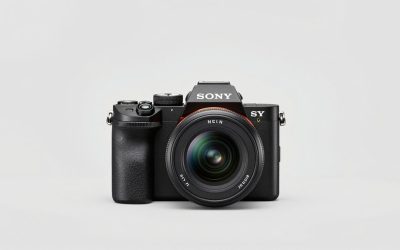
The best cinema cameras in 2026 depend on the production: choose the ARRI ALEXA 35 for maximum highlight latitude and a proven professional workflow, the Sony BURANO for full-frame versatility with built-in electronic ND, the Canon EOS C400 for a compact all-rounder, or the Blackmagic URSA Cine 12K LF when resolution and post-production flexibility matter most.
As an Amazon Associate we earn from qualifying purchases at no extra cost to you.


Our Top Picks


Top 3 picks at a glance
Best cinema cameras compared
| Camera | Sensor and resolution | Dynamic range | Internal ND | Recording strengths | Typical body price |
|---|---|---|---|---|---|
| ARRI ALEXA 35 | Super 35, 4.6K | 17 stops claimed | Motorized FSND, 0.6–2.4 stops | ARRI LogC4, Apple ProRes, Codex Compact Drive | Varies |
| ARRI ALEXA 265 | Large format, 4.6K | 17 stops claimed | Motorized FSND, 0.6–2.4 stops | ARRI LogC4, ARRIRAW, ProRes | Varies |
| Sony BURANO | Full frame, 8.6K | About 16 stops claimed | Variable electronic ND | 16-bit RAW output, XAVC, CFexpress Type B | Varies |
| Canon EOS C400 | Full frame, 6K | About 16 stops claimed | Electronic ND, up to 10 stops | 6K Cinema RAW Light, XF-AVC, CFexpress Type B | Varies |
| Blackmagic URSA Cine 12K LF | Large format, 12K | Up to 16 stops claimed | Built-in motorized ND | Blackmagic RAW, optional high-speed media | Varies |
| Sony FX6 | Full frame, 4K | About 15 stops claimed | Variable electronic ND | 10-bit XAVC-I, RAW output | Varies |
| RED KOMODO-X | Super 35, 6K | About 16 stops claimed | No | 6K REDCODE RAW, CFexpress Type B | Varies |
Dynamic-range figures are manufacturer claims or commonly cited operating figures, not a guarantee that every scene will deliver the same result. Lens, exposure, ISO strategy, lighting, noise reduction and the final delivery format all affect the usable image.
Which camera is best for each production?
| Your production | Best fit | Why | What to budget for |
|---|---|---|---|
| High-end drama, commercials or feature film | ARRI ALEXA 35 or ALEXA 265 | Natural highlight roll-off, stable color science and extensive monitoring and lens support | ARRI media, power, 15 mm or 19 mm support, focus accessories and a larger crew |
| Solo operator, documentary or fast company production | Sony FX6 or Canon EOS C400 | Internal ND, manageable size, autofocus options and practical broadcast-style connectivity | Extra batteries, CFexpress cards and a top handle or compact shoulder rig |
| Full-frame commercial work with many lens choices | Sony BURANO | PL and E-mount compatibility, electronic ND and high-resolution full-frame capture | Fast CFexpress media, PL lenses or an E-mount zoom set, and a robust shoulder solution |
| Heavy reframing, VFX or large-format finishing | Blackmagic URSA Cine 12K LF | 12K acquisition, Blackmagic RAW and a workflow designed around DaVinci Resolve | High-capacity media, fast storage, powerful grading hardware and a substantial rig |
| Compact gimbal, vehicle or crash-camera work | RED KOMODO-X | Small box form, global shutter and RAW flexibility | External ND, power distribution, monitoring and stabilization hardware |
Dynamic range: ARRI still leads when lighting is difficult
The ALEXA 35 is the safest choice when the image must survive bright windows, reflective costumes and deep shadows in the same frame. Its Super 35 sensor is not the largest here, but the camera’s highlight behavior and LogC4 workflow are often more important than pixel count. It is particularly strong for narrative work where matching multiple cameras and lenses matters more than delivering 8K.
The ALEXA 265 brings the same general image philosophy to a large-format body. It suits productions that want shallower depth of field or existing large-format lens coverage without moving to a high-resolution, heavily data-intensive workflow.
The BURANO, C400, FX6 and URSA Cine provide substantial latitude, but their advantages are different. Sony’s cameras are efficient and flexible for mixed lighting; Canon offers a very practical production package; Blackmagic offers more resolution and a RAW-centered post workflow. Do not buy a 12K camera solely for dynamic range: resolution, storage and grading complexity are separate trade-offs.
Codecs and media costs change the real camera budget
ARRI’s ProRes files are straightforward for editorial, while ARRIRAW preserves more control at the cost of storage and processing. Sony XAVC-I is a practical high-quality acquisition codec, and Sony’s RAW output can be recorded externally when the production needs it. Canon Cinema RAW Light offers a middle ground between compressed acquisition and extremely large uncompressed-style files.
Blackmagic RAW is attractive when the edit and grade are already built around DaVinci Resolve. REDCODE RAW provides efficient RAW capture and strong reframing potential, but the best workflow depends on the post-production team’s software, storage and backup discipline.
Here is a useful storage calculation. Suppose a production records 6K RAW at an average 1,000 Mbps for 90 minutes:
1,000 megabits per second ÷ 8 = 125 megabytes per second.
125 × 5,400 seconds = 675,000 MB, or roughly 675 GB.
That is one camera’s recording volume before audio, formatting overhead, duplicate backups, proxies and discarded takes. In practice, plan for at least 2 TB of working and backup capacity per 90-minute camera roll at that data rate. A 12K RAW workflow can multiply the storage requirement, so the cost of media and backup drives may exceed the difference between two camera bodies.
Internal ND filters are more valuable than extra resolution
Internal neutral-density filters let you maintain a chosen shutter angle and aperture as light changes. That matters for documentary, weddings, outdoor interviews and moving between interiors and sunlight. The FX6 and BURANO use variable electronic ND, which is exceptionally fast for run-and-gun exposure control. Canon’s C400 uses an electronic ND system with a wide range, while the ALEXA 35, ALEXA 265 and URSA Cine use motorized filter mechanisms.
The KOMODO-X has no internal ND. It can still produce excellent footage, but the rig needs a matte box with trays, screw-on filters or an electronic variable-ND solution. That adds front weight and makes lens changes slower. If your camera moves from a dark room to direct sun several times a day, built-in ND can save more time than a higher frame rate.
Lens mounts: choose the ecosystem before the body
- PL: The standard choice for cinema primes and zooms. It is robust and repeatable, but PL lenses are expensive and usually manual-focus.
- PL and E-mount flexibility: The BURANO is unusually adaptable because it supports PL lenses and native E-mount lenses. This makes it possible to use cinema glass on a feature set and lighter autofocus lenses for documentary work.
- RF mount: The C400 works with Canon RF lenses and can use adapted EF lenses. This is useful for owners of Canon stills or cinema glass, but check adapter support and autofocus behavior before committing to a lens package.
- EF mount: The URSA Cine 12K LF EF version is convenient for an existing EF collection. Its short flange distance on other versions can support broader adaptation options.
- Interchangeable mount systems: RED cameras can be configured for different professional lens requirements. Verify the exact mount, flange depth and lens coverage when ordering.
A full-frame sensor does not automatically make a camera better. It changes field of view, depth of field and lens coverage. If a production already owns a large Super 35 lens library, the ALEXA 35 or KOMODO-X may be more economical than replacing lenses for a full-frame body.
Stabilization and rigging requirements
Most dedicated cinema cameras do not include the sensor-shift stabilization found in many hybrid cameras. The usual solution is a tripod, shoulder rig, gimbal, vehicle mount or optical stabilization in the lens. The FX6, C400 and BURANO are easier to operate handheld because they combine compact bodies with practical grips, ND control and professional monitoring connections, but they still benefit from a shoulder pad and counterweight for long takes.
The KOMODO-X is physically small but not automatically simple. Its box shape needs a monitor, battery plate, media, top or side handles and often a cage. A bare body may be light enough for a gimbal, while a fully built camera can exceed the gimbal’s payload once a cinema zoom, wireless video transmitter and follow-focus motor are added.
A useful rigging check is to add every component before choosing stabilization:
- Camera body and media: approximately 1–3 kg
- Lens: approximately 0.5–3 kg
- Battery, plate, cage and handles: approximately 1–2 kg
- Monitor, wireless video and focus motor: approximately 0.5–1.5 kg
A package that appears to be a 4 kg camera can easily become a 7–8 kg operating rig. Select a gimbal or support system with meaningful payload headroom rather than matching the manufacturer’s maximum limit exactly.
Recommended buying decisions
Choose the ALEXA 35 when image consistency is the priority
It is the strongest choice for productions that can support professional media, accessories and crew. Its 4.6K resolution is sufficient for most theatrical, television and commercial deliveries, while the image and workflow reduce surprises in difficult lighting.
Choose the BURANO when one body must cover several jobs
Its full-frame sensor, electronic ND, PL/E-mount flexibility and high-resolution recording make it a strong bridge between cinema and documentary operation. It is more expensive than the C400 or FX6, but it can reduce the need for a second camera system.
Choose the C400 or FX6 for efficient small-crew production
Both offer internal ND and compact professional operation. The C400 is appealing for Canon lens owners and 6K RAW capture; the FX6 is particularly effective when low-light performance, autofocus and variable ND are more important than maximum resolution.
Choose the URSA Cine 12K LF for a RAW-first post pipeline
It makes sense when the production has fast storage, a capable DaVinci Resolve workflow and a real reason to reframe or deliver at very high resolution. For ordinary 4K interviews, the extra data and rigging are usually unnecessary.
Frequently asked questions
How much storage should be planned for a 6K RAW production?
Plan for at least 2 TB of working and backup capacity for each 90-minute camera roll recorded at an average 1,000 Mbps. The calculation produces roughly 675 GB of recording volume for one camera before audio, formatting overhead, duplicate backups, proxies and discarded takes. A 12K RAW workflow can require substantially more storage, so media and backup costs need separate consideration.
Is a full-frame cinema camera automatically better than a Super 35 camera?
No, a full-frame sensor is not automatically better than a Super 35 sensor. It changes field of view, depth of field and lens coverage, while image consistency, lens availability and workflow may matter more. Productions that already own a large Super 35 lens library may find the ALEXA 35 or KOMODO-X more economical than replacing lenses for a full-frame camera.
What should be checked before choosing a cinema camera lens mount?
Check the lenses you already own, their coverage, the mount’s flange depth and whether adapters preserve the autofocus behavior you need. PL supports cinema primes and zooms, while the BURANO accepts both PL and E-mount lenses. The C400 supports RF lenses and adapted EF lenses, and the URSA Cine 12K LF EF version suits existing EF collections.
What accessories are needed to build a usable compact cinema-camera rig?
A compact cinema-camera rig may need a monitor, battery plate, media, handles and often a cage. Depending on the production, it may also require a matte box, external ND, power distribution, wireless video transmitter or follow-focus motor. Add every component, including the lens, before checking whether a gimbal’s payload is sufficient for the completed camera.
Which camera is most suitable when the post-production workflow is built around DaVinci Resolve?
The Blackmagic URSA Cine 12K LF is the most directly suited because Blackmagic RAW is attractive when the edit and grade are already built around DaVinci Resolve. Its 12K acquisition can support heavy reframing and large-format finishing, but it also requires high-capacity media, fast storage, powerful grading hardware and a substantial rig.
Final verdict
The best cinema cameras are not ranked by resolution alone. Pick the ALEXA 35 for the most dependable high-end image, the ALEXA 265 for large-format ARRI production, the BURANO for flexible full-frame work, the C400 or FX6 for efficient crews, the URSA Cine 12K LF for resolution-heavy RAW production, and the KOMODO-X for compact global-shutter rigs. Before buying, price the complete system—lenses, ND solution, media, batteries, monitoring, stabilization and backup storage—because those production requirements often determine the better camera more than the body specification.