Once you decide liquid cooling is the goal, a second question appears: do you buy a sealed all-in-one (AIO) cooler, or build a custom open loop from separate parts? Both circulate coolant to move heat to a radiator, but they differ enormously in cost, effort, performance ceiling, and maintenance. Choosing the wrong one means either overspending on complexity you do not need or under-buying for a system you intended to push hard. Here is how to decide.
As an Amazon Associate we earn from qualifying purchases at no extra cost to you.


Our Top Picks
 Thermalright Aqua Elite 240 V3 Water Cooling CPUAE240 BLACK V34.72 x 0.98 x 4.72 Inches0.2 PoundsCheck on Amazon


Top 3 picks at a glance
The fundamental difference
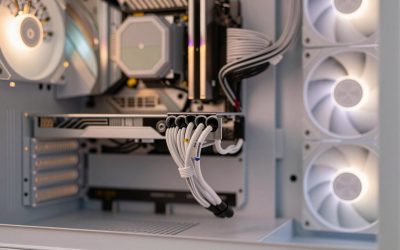
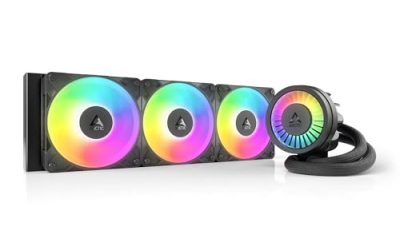
An AIO ships pre-filled and sealed: a pump-block, tubing, and radiator that mount in under an hour and never need refilling. A custom loop is assembled from a separate pump, reservoir, water blocks, radiators, fittings, tubing, and coolant that you plumb, fill, and bleed yourself, and that you can expand to cool the GPU as well as the CPU.
| Factor | AIO | Custom loop |
|---|---|---|
| Typical cost | Varies | Varies |
| Install time | ~30-60 min | Several hours |
| Cools GPU too? | No (CPU only) | Yes, if planned |
| Maintenance | None (sealed) | Flush every ~12 months |
| Peak performance | Very good | Highest |
| Leak risk | Minimal | Requires leak testing |
When an AIO is the right call
For the vast majority of gamers, an AIO is the smarter choice. A 240mm to 360mm unit cools even high-end CPUs well, installs quickly, needs zero maintenance, and costs a fraction of a custom loop. If your goal is strong CPU temperatures, a clean look, and no ongoing fuss, an AIO delivers 90% of the thermal result for a small share of the money and effort.
Pick your radiator size
Match the radiator to CPU heat output: a 240mm suits mid-range chips, a 280mm or 360mm suits high-core-count or overclocked CPUs. Bigger radiators cool the same load with quieter fans.
When a custom loop makes sense
A custom loop earns its cost and complexity in three cases: you want to cool both CPU and GPU on one loop for the lowest possible temperatures, you are chasing an extreme overclock that needs more radiator surface than any AIO offers, or you want a personalized, showpiece build with hard tubing and custom coloring.
The maintenance reality
Custom loops are not fit-and-forget. Coolant degrades, and neglected loops grow biological gunk or suffer galvanic corrosion from mixed metals. Budget time for an annual flush and refill; if that sounds tedious, an AIO is the honest answer.
The noise and looks angle
Beyond raw temperatures, the two options differ in character. A large AIO radiator cools with slow, quiet fans and a small pump hum, making it easy to build a near-silent system. A custom loop, with more radiator surface, can run its fans even slower for the same heat, but it adds a more prominent pump and reservoir that some people love the look of and others find noisier. If silence is the goal, both can achieve it; if a visual centerpiece is the goal, the custom loop’s hard tubing and coolant are unmatched.
Total cost of ownership
Look past the sticker price. An AIO is a one-time purchase that you replace as a unit in 5-7 years. A custom loop costs more upfront and then carries ongoing costs for replacement coolant and the occasional fitting or tube, plus your time for maintenance. Factoring in that lifetime cost and effort usually reinforces the same conclusion: buy the AIO unless a specific goal, GPU cooling, extreme overclocking, or aesthetics, genuinely requires the loop.
FAQ
Is a custom loop worth it just for a CPU?
Rarely, from a pure performance standpoint. A good 360mm AIO cools a single CPU nearly as well for a fraction of the cost and effort. A custom loop for CPU alone is justified mainly by aesthetics or the intent to add the GPU later. If temperature is the only goal, the AIO wins on value.
Which is more reliable long-term?
A sealed AIO has fewer failure points and no user maintenance, typically lasting 5-7 years before the pump or coolant fades. A custom loop can outlast that if maintained, but it depends entirely on regular flushing and correct metal choices. For hands-off reliability, the AIO is the safer bet.
Bottom line
Match the tool to the goal and you will not overspend on complexity you never needed.