Our Top Picks
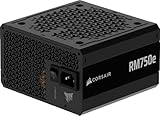
 CORSAIR RM750e ATX 3.1 PCIe 5.1 Ready 750W750 watts5.91 x 5.51 x 3.35 inches3.3 poundsCheck on Amazon

The Short Answer
Yes — but only if you’re buying a new power supply anyway. ATX 3.1 is genuinely better matched to RTX 50 series graphics cards because it uses the native 12V-2×6 connector (the updated, safer version of 12VHPWR), builds in support for transient power spikes, and mandates that the PSU handle at least 200% of its rated wattage for short bursts. That last part matters a lot, because RTX 50 series cards are notorious for millisecond-long power excursions well above their rated draw. If your current PSU is healthy, modern (released within the last few years), and has at least 150W of headroom above your expected system load, there’s no urgent reason to replace it. The one condition: upgrade to ATX 3.1 if your existing unit is more than five or six years old, is rated under 750W, or lacks a native 12V-2×6 cable — otherwise, keep your money.
What You Actually Get
ATX 3.1 is an Intel-defined specification, finalized in early 2023, that formalizes what high-end GPUs actually demand from a power supply. The headline features:
As an Amazon Associate we earn from qualifying purchases at no extra cost to you.

- Native 12V-2×6 connector. This is the revised version of the 16-pin connector that replaced 12VHPWR. It has shorter sense pins and longer conductor pins, so the connection only completes when the plug is fully seated — a direct fix for the melting-connector reports that plagued early RTX 40 series adopters using sketchy adapters.
- Transient spike tolerance. ATX 3.0/3.1 units must survive power excursions up to 200% of rated wattage for 100 microseconds without tripping protection circuits. RTX 5090 and 5080 cards can spike hard; a PSU built to this spec shrugs it off instead of shutting your system down mid-game.
- Excursion-ready cabling. The 12V-2×6 cable itself is rated to carry up to 600W on a single connector, so a single cable covers every RTX 50 series card currently sold.
- Lower standby and no-load efficiency. The spec tightens requirements at idle and low loads, which is where a gaming PC spends most of its life.
What you don’t get: higher sustained efficiency. ATX 3.1 is about robustness and connectors, not efficiency ratings. An 80 Plus Gold ATX 3.1 unit and an 80 Plus Gold older unit convert AC to DC at roughly the same efficiency. The Gold badge on either the GM850 or RM750e is doing the efficiency work; ATX 3.1 is doing the durability work.
Pros
- Native 12V-2×6 cable included — no adapter, no daisy-chained PCIe pigtails, no seating-ambiguity risk at the GPU.
- Handles GPU transients up to 200% of rated output for short bursts, which prevents nuisance shutdowns with RTX 5090/5080 builds.
- Future-proof for one build cycle — RTX 50 series and whatever comes next both use 12V-2×6, so the PSU carries over.
- Lower idle draw under the spec’s no-load and standby requirements.
- Cleaner cable management with a single 600W-capable cable replacing two or three 8-pin runs.
Cons
- It’s redundant if your PSU is already healthy. A quality ATX 2.x unit paired with a well-seated NVIDIA adapter works fine for most 5070/5070 Ti builds.
- Wattage matters more than the spec label. A 750W ATX 3.1 unit is the floor for a 5080 system with a high-end CPU; buying ATX 3.1 at too low a wattage doesn’t solve anything.
- Spec compliance isn’t quality. Budget ATX 3.1 units exist with mediocre capacitors and short warranties — the standard doesn’t guarantee a ten-year unit.
- Smaller inventory of units at odd form factors. SFX and SFX-L ATX 3.1 choices are still thinner than traditional ATX, which matters for small-form-factor builds.
- Modularity and noise vary widely even among compliant units at the same price.
Who Should Buy It
Buy an ATX 3.1 PSU if you’re building a new PC around an RTX 50 series card, if you’re upgrading from a 600–700W unit older than five years, or if your current PSU lacks a native 12V-2×6 connection and you’d rather not run an adapter into a 450W+ GPU. An 850W Gold ATX 3.1 unit weighs roughly 3–4.5 pounds (1.4–2 kg) in a standard ATX footprint of about 150 × 86 × 140–160mm, so it drops into any mid-tower case without clearance drama.
Who Should Skip It
Skip the upgrade if your current PSU is a reputable 750W+ unit less than five years old and running clean — buy the adapter-free experience later, when you’d replace the PSU anyway. Also skip it if you’re running an RTX 5060 or 5060 Ti; those cards draw 145–180W and spike modestly, so a good existing 650–750W unit has ample headroom. And if you’re on a strict budget, every dollar moved from PSU spec-compliance to GPU tier is better spent — a 5070 Ti with an older Gold-rated PSU outperforms a 5070 with a new ATX 3.1 unit.
Cheaper Alternatives
| Option | Cost | Trade-off |
|---|---|---|
| Keep your existing 750W+ Gold-rated PSU and use NVIDIA’s included 12V-2×6 adapter | Check on Amazon | Adapter seating requires care; no built-in transient headroom, but fine for 5070-class and below |
| ATX 3.0 unit (native 12VHPWR, not 12V-2×6) on clearance | Varies | Slightly older connector revision; still spike-tolerant, but check the sense-pin revision before buying |
| Quality non-ATX 3.1 Gold unit at higher wattage (e.g., 850W) | Varies | Requires the adapter cable and two PCIe runs on big cards; no spec-guaranteed spike handling |
FAQ
What wattage do I need for an RTX 50 series card?
NVIDIA’s guidance runs 550W for the 5060, 650W for the 5070, 750W for the 5080, and 1000W for the 5090. In practice, add headroom for a power-hungry CPU: 750W is comfortable for a 5070 Ti system with a mainstream eight-core CPU, while 5080 builds should target 850W.
Is ATX 3.1 different from PCIe 5.1?
They’re related but separate labels. ATX 3.1 is the PSU specification covering transients and standby behavior; PCIe 5.1 (or PCIe CEM 5.1) refers to the graphics-card power standard that adopts the 12V-2×6 connector. Most units marketed as one are compliant with both, including the Segotep GM850 and Corsair RM750e.
Do I still need an adapter cable with an ATX 3.1 PSU?
No. ATX 3.1 units ship with a native 12V-2×6 cable that plugs directly into the GPU’s 16-pin port. That’s one of the main practical reasons to upgrade — the adapter is the component most often implicated in connector problems.
Will an older PSU damage my RTX 50 card?
Not inherently. A healthy, quality PSU won’t damage the card — the realistic risks are nuisance shutdowns from transient spikes on high-draw cards and connector issues from poorly seated adapters. The upgrade is about reliability margins and convenience, not protecting your GPU from imminent harm.