A home theater PC lives under a TV or inside a media cabinet, so its case has to look like audio gear, not a gaming tower. The decision this keyword implies is about format: a horizontal chassis that stacks beside a receiver, a motherboard size that matches the parts you already own, and enough room to hold a capable graphics card or a cooler without sounding like a jet.
This guide is for builders assembling a living-room PC for streaming, emulation, light gaming or a media server. All seven cases below are small or low-profile in spirit, and most come from the same HTPC-focused maker, so the comparison is mostly about motherboard support, cooling features and front connectivity. Judgments come from title details only, and no dimensions or noise figures are claimed.
Because so many of these cases share a maker and a design language, the differences come down to board size, cooling headroom, front ports and finish. Read the table first, then use the criteria below to narrow the field to two candidates.
Our Top Picks
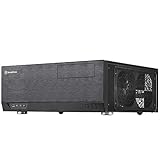
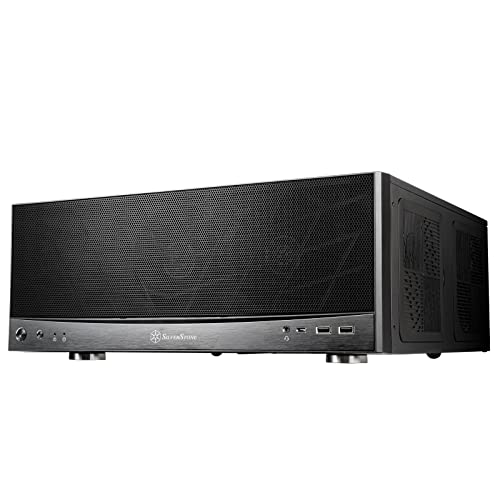 Silverstone Technology Grandia 11 Compact ATX Home Theater15.71 x 17.33 x 6.93 inches1 poundsCheck on Amazon
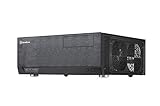
 Silverstone Technology Crown 04 Premium Home Theater PC18.03 x 17.32 x 9.41 inches30.6 poundsCheck on Amazon

Top 3 picks at a glance
Quick Picks
As an Amazon Associate we earn from qualifying purchases at no extra cost to you.


| Product | Best for | Key feature from the title |
|---|---|---|
| Silverstone GD09 (SST-GD09B) | Classic AV-rack look | Faux aluminum design, ATX/Micro-ATX |
| Silverstone Grandia 11 (GD11B) | Cooler-conscious builds | Compact ATX, 240mm radiator support |
| Silverstone GD09B-C | Modern front connectivity | USB Type C front port, ATX/Micro-ATX |
| Silverstone Grandia GD09B (Aluminum) | Premium metal finish | Aluminum, ATX and SSI-CEB support |
| Silverstone Milo ML03B | Small living-room setups | Aluminum and steel, Micro-ATX |
| Silverstone Crown 04 (CW04TB) | Showpiece entertainment racks | Premium HTPC design |
| Zalman CUBIX | Compact budget media PC | Micro-ATX and Mini-ITX, 80mm fan |
How to Choose
Match the case to your motherboard size
Cases here support ATX, Micro-ATX or Mini-ITX boards. Choose the board size first: Micro-ATX is a common middle ground for HTPCs, while ATX offers more expansion slots for capture cards, extra storage controllers or a larger GPU. Mini-ITX leads to the smallest builds but needs careful component choices.
Plan cooling and power supply fit
A quiet living-room PC is a balance between component heat and fan speed, so aim for parts that run cool rather than counting on loud fans to compensate.
HTPC cases often limit cooler height and fan sizes, so check the stated cooling support. A case that lists 240mm radiator support leaves room for liquid cooling. If the listing only mentions a small fan, plan on a low-profile air cooler. Also confirm the power supply type the case expects, since some accept standard ATX units and some prefer SFX.
Think about the TV cabinet
Measure the shelf width, depth and height, then add a few inches of clearance for cables at the back. Horizontal cases sit beside a receiver and need ventilation clearance. Front ports matter too: if you want a USB Type C connection for a keyboard dongle or storage, look for it in the title. The finish should also match your gear, whether brushed metal or matte black.
What to ignore, and where budget models cut corners
Ignore decorative claims about faux aluminum unless the look matters to you. Budget cases cut corners on fan quality, dust filtering and metal thickness, which affects noise and rattle. Notice that premium finishes cost more but do not change how the parts inside perform. Also ignore the temptation to buy a bigger chassis just in case; a living-room PC that is too deep for the cabinet shelf ends up on the floor, and then the whole point of the format is lost. Think about drive bays too, since a media server may need room for several hard drives while a streaming box needs only one SSD.
The 7 Best Options
Silverstone GD09 (SST-GD09B)
A home theater case with a faux aluminum front for ATX and Micro-ATX motherboards. It is meant to look at home next to an AV receiver.
- Strength: supports both ATX and Micro-ATX boards.
- Strength: AV-style front fits a media cabinet.
- Trade-off: the faux aluminum finish is cosmetic rather than solid metal.
It makes sense for a first HTPC where the goal is a clean, rack-friendly look with room for a standard board. Skip it if you want real aluminum or modern front USB.
Silverstone Grandia 11 (SST-GD11B)
A compact ATX HTPC case with support for a 240mm radiator, aimed at builders who want liquid cooling in a living-room chassis.
- Strength: 240mm radiator support is rare in HTPC cases.
- Strength: compact ATX layout keeps the footprint reasonable.
- Trade-off: the title does not describe front connectivity or finish.
A builder who wants a quiet, gaming-capable living-room PC will find the radiator option more relevant than the styling. Skip it if you want a traditional air-cooled build or a premium metal front.
Silverstone GD09B-C
The revised GD09 with a faux aluminum design, ATX and Micro-ATX support and a new USB Type C front port.
- Strength: front USB Type C suits modern peripherals.
- Strength: familiar GD09 layout and motherboard support.
- Trade-off: it keeps the faux aluminum finish of the standard GD09.
This is the pick for someone who plugs in a wireless keyboard receiver, a phone or a drive at the front of the cabinet. Skip it if you do not need a Type C port and prefer a lower-cost version.
Silverstone Grandia GD09B (Aluminum)
An aluminum HTPC case supporting ATX and SSI-CEB motherboards in black, positioned as a more premium version of the Grandia line.
- Strength: aluminum construction with a premium look.
- Strength: unusually broad motherboard support, including SSI-CEB.
- Trade-off: the title does not list modern front ports.
It suits a permanent entertainment center where the PC is meant to look like a piece of audio equipment. Skip it if you want a smaller footprint or the USB Type C variant.
Silverstone Milo ML03B
A Micro-ATX media center case in aluminum and steel in black, designed for compact living-room builds.
- Strength: aluminum and steel construction.
- Strength: Micro-ATX keeps the build smaller than ATX towers.
- Trade-off: Micro-ATX limits expansion slots for extra cards.
It is a good match for a media center built around a Micro-ATX board with integrated or modest graphics. Skip it if you need a full ATX board.
Silverstone Crown 04 (SST-CW04TB)
A premium HTPC case listed under the Crown line. The title offers few specifics beyond its home theater positioning.
- Strength: premium HTPC positioning for display-worthy cabinets.
- Strength: from a maker with a long history of HTPC chassis.
- Trade-off: the title lacks detail on motherboard size, cooling or ports.
Because the title says so little, confirm board size, cooler height and power supply type on the full listing first. Skip it if you need to verify motherboard and cooler support before buying.
Zalman CUBIX Compact Case
A small Micro-ATX and Mini-ITX case with heavy-duty 0.8T steel, an 80mm fan, USB 3.0 and room for an ATX power supply. The title also names DTX and small form factor builds.
- Strength: supports Micro-ATX and Mini-ITX boards in a compact shell.
- Strength: standard ATX power supply fit simplifies sourcing.
- Trade-off: a single 80mm fan limits airflow for hotter components.
It works for a spare-parts media box in a bedroom or office where looks matter less than size. Skip it if you plan a high-power graphics card or a premium look.
Which One Fits Your Situation
You want a living-room PC with a TV-friendly look
The Silverstone GD09B-C pairs the AV-style front with a USB Type C port. If you prefer real aluminum, the Grandia GD09B is the more premium route.
You want liquid cooling in a media cabinet
The Grandia 11 lists 240mm radiator support, which is its main distinction. Check cooler and fan clearances for your specific parts.
You need a small, simple build
The Milo ML03B or the Zalman CUBIX keep things compact. Choose the Zalman for Mini-ITX flexibility, or the Milo if you want an aluminum and steel finish.
Whichever case you pick, build the system on a table first, check fan noise at idle, then slide it into the cabinet. That order makes fixes much easier than discovering a problem after the cables are routed.
Common Mistakes
- Choosing a case before confirming the motherboard size you plan to use.
- Ignoring cooler height limits, then finding a tall air cooler will not fit.
- Putting a hot graphics card into a case with only a small fan.
- Skipping ventilation clearance in the cabinet around the case.
- Forgetting that some HTPC cases expect a specific power supply type.
Related guides
- How To Set Up Computer Speakers For Better Sound At Your Desk
- How To Check Whether Your Ram Is Running At Its Rated Speed
- How To Choose The Right Monitor Riser Height For Your Desk
Frequently Asked Questions
Do I need a special HTPC case?
No, but HTPC cases are shaped and styled for AV racks. A standard mini tower works too if it fits the cabinet and you do not mind how it looks.
Can an HTPC case hold a gaming graphics card?
Some can, but clearance and airflow vary. Check the listing and the case dimensions against the card length before buying.
Is 240mm radiator support useful in a media PC?
It lets a liquid cooler handle hotter parts while keeping fan noise lower. For a basic streaming PC it is unnecessary, but it helps a gaming-capable build.
Which motherboard size is best for a home theater build?
Micro-ATX is a balanced choice. In 2026, many builders still choose it for the mix of expansion slots and a smaller case, with Mini-ITX as the compact alternative.
Related guides
More from Amazon
Programs that pair well with the guide above. Offers and eligibility are set by Amazon and may change.
Free shipping on eligible items, Prime Video and more. Eligible new members can start with a free trial.
Start a Prime free trialAd-free music streaming. Eligible new subscribers can start with a free trial.
Try Music Unlimited freeA Prime membership for ages 18-24 with a trial period. Eligibility is set by Amazon.
See Prime for Young AdultsAudiobooks and podcasts to listen to on the go. Eligible new members can start with a free trial.
Try Audible freeAs an Amazon Associate we earn from qualifying purchases.