Our Top Picks
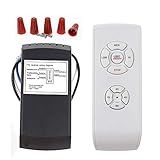
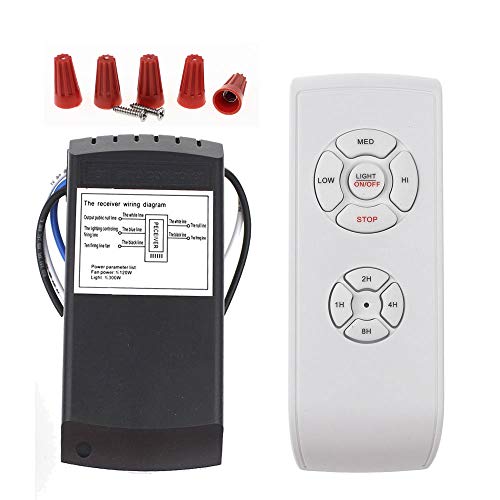 LPHUMEX Universal Ceiling Fan Remote Control KitStandard4.9 x 1.4 x 5.6 Inches0.45 poundsCheck on Amazon
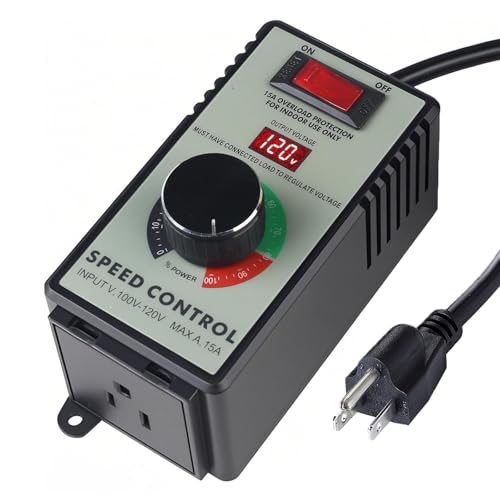 Cdmall AC Motor Speed Controller for Brushed Motors5.5 x 2.4 x 2.25 Inches0.18 PoundsCheck on Amazon
The Short Answer
The one condition: it has to match your fan’s motor type. An AC motor speed controller works on standard single-speed AC fans; it will hum, stutter, or burn out on a DC motor fan, which needs its own DC-specific control.
What You Actually Get
“Fan controller” covers two different products, and picking the right category matters more than any brand name.
As an Amazon Associate we earn from qualifying purchases at no extra cost to you.

Variable speed controllers are small inline or wall-mount units wired between the wall outlet (or switch) and the fan. A typical unit like the Cdmall AC motor speed controller handles up to 15 amps at 120 volts — roughly 1,800 watts, far more than any household fan draws — and includes an LED voltage readout and overload protection. You turn a dial and the fan slows down or speeds up continuously rather than clicking through preset speeds. These work on duct fans, exhaust fans, shop fans, drills, routers, and other brushed universal AC motors.
Remote control kits replace the pull chains on ceiling fans. A kit like the LPHUMEX universal ceiling fan remote converts a standard 3-in-1 AC motor ceiling fan into a remote-operated one: fan off/low/medium/high, light on/off and dimming on compatible fixtures, plus a timing function that shuts the fan off after 1, 2, 4, or 8 hours. The receiver box wires into the fan’s canopy — that narrow metal dome at the ceiling — and most canopies have 1 to 2 inches of spare depth to accommodate it. Installation is a 20–40 minute job for a comfortable DIYer: kill the breaker, drop the canopy, wire the receiver in series with the motor and light, tuck it back up, and pair the remote.
Both approaches cost about the same.
Pros
- Fixes dead pull chains. If the chain mechanism on a ceiling fan strips out — one of the most common fan failures — a remote kit makes the fan fully usable again without touching the motor.
- Comfort you can actually feel. Continuous speed adjustment lets you dial in airflow instead of choosing between “still air” and “wind tunnel,” which matters most in bedrooms and home offices.
- Quiet operation at night. Dropping an exhaust or duct fan to 50–60% speed cuts noise noticeably and often makes a loud fan nearly silent.
- Modest energy savings. A ceiling fan on low draws roughly 15–30 watts versus 55–75 watts on high, so slowing it down trims a little off the bill — though the savings alone won’t justify the purchase.
- Timer functions prevent waste. Remote kits with 1/2/4/8-hour shutoffs mean you can fall asleep with the fan running and know it shuts itself off.
- Genuine overload protection. Quality variable controllers include thermal cutoffs that protect the motor if something jams the blades.
Cons
- Motor compatibility is unforgiving. Speed controllers are for brushed universal AC motors only. Using one on a DC motor fan, a blower motor, or a shaded-pole motor can damage the motor and void the warranty.
- Some AC motors hum at low speeds. Voltage-reducing controllers can produce an audible buzz, especially below about 40% output. It’s usually minor but real.
- Canopy space can be tight. Older or low-profile ceiling fans sometimes lack the 1–2 inches of clearance the receiver needs, forcing an awkward mounting.
- No smart features. These are RF remotes and dial controllers. You don’t get app control, voice commands, thermostat triggers, or integration with a smart home system.
- Range and line-of-sight quirks. RF remotes generally work through walls, but interference from neighboring units on the same frequency does happen with budget kits.
Who Should Buy It
Buy a fan controller if your ceiling fan’s pull chains are broken or annoying, if you have a single-speed fan that’s too loud or too aggressive for the room, or if you run an exhaust, duct, or shop fan that needs throttling. If you’re comfortable with basic wiring — or know someone who is — the value is undeniable.
Who Should Skip It
Skip it if you own a DC motor fan; it needs a DC-compatible control and a generic AC controller will damage it. Skip it if you want app scheduling, voice control, or room-temperature automation — a smart fan switch or a purpose-built smart controller fits better. Skip it if your fan already has working multi-speed wall controls, since you’d be paying to duplicate function.
Cheaper Alternatives
| Option | Cost | Trade-off |
|---|---|---|
| Replace the pull chain switch itself | Check on Amazon | Fixes a broken chain for less, but no remote function and still requires opening the fan housing |
| Use the fan’s existing speed settings more deliberately | Check on Amazon | Free, but you’re stuck with the preset speeds the fan shipped with |
| Smart fan switch (wall-mounted, e.g. app + voice controlled) | Check on Amazon | Full automation and scheduling, but costs 2–3x more and needs a neutral wire and Wi-Fi |
| Plug-in fan dimmer/rheostat for portable fans | Check on Amazon | Similar function to a speed controller but only for plug-in fans; same motor-type caveats apply |
| Replacement window or box fan with built-in thermostat | Check on Amazon | Solves comfort outright but only if you were open to replacing the fan anyway |
FAQ
Will a fan controller work on any ceiling fan?
No. Universal remote kits work on most standard AC motor ceiling fans, including common Hunter, Harbor Breeze, Westinghouse, and Honeywell models, but they won’t work on DC motor fans. Check the label on the motor housing — if it says DC, you need a DC-specific remote kit. Also confirm your fan canopy has roughly 1.5–2 inches of spare depth for the receiver.
How hard is installation?
A variable speed controller on a plug-in fan takes five minutes — it wires inline or sits between the plug and the outlet. A ceiling fan remote kit is more involved: breaker off, canopy dropped, four to five wire connections, canopy reassembled, remote paired.
Can a speed controller damage my fan motor?
It can, if you use the wrong type. Controllers designed for brushed universal AC motors shouldn’t be used on DC motors, shaded-pole motors, or capacitor-start motors. Used on the correct motor type, the overload protection in quality units actually adds a layer of safety rather than risk. A slight hum at very low speeds is normal on some AC motors and isn’t harmful.
Do fan controllers save enough electricity to pay for themselves?
Not on their own.