The processor sits at the center of every gaming PC, feeding frames to the graphics card and handling the game logic, physics and background tasks that run alongside your play. Pick a CPU that is too weak and even a strong graphics card spends its time waiting; pick one that is far beyond your needs and budget that could have gone to the GPU, memory or storage disappears into cores you never use. The good news is that the current field is compact and well defined, with a handful of chips covering everything from a sensible mid-range build to a no-compromise flagship rig.
This guide rounds up five processors that make sense for gaming in 2026: three AMD X3D models with stacked cache, one high-core-count Intel alternative on a different platform, and one streamlined six-core option for tighter budgets. Each pick is covered with its listed specifications, the kind of build it suits, and the platform commitment it asks for, because the socket you choose today decides which motherboards and memory kits you can buy tomorrow.
As an Amazon Associate, we earn from qualifying purchases.
Our Top Picks



Top 3 picks at a glance
Quick answer
For most gaming builds, the AMD Ryzen 7 9800X3D is the headline pick, pairing eight cores with 3D V-Cache on the AM5 platform. Players who also stream or create should look at the 16-core Ryzen 9 9950X3D, while the Ryzen 7 7800X3D remains a proven X3D option. Intel builders get the Core i7-14700K on LGA1700, and the Ryzen 5 9600X covers leaner budgets.
AMD Ryzen 7 9800X3D
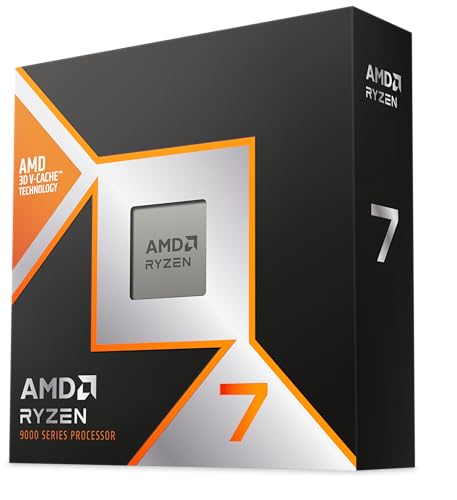
The Ryzen 7 9800X3D is the chip most gaming builds in 2026 will be planned around. It is an eight-core, 16-thread processor for AMD’s Socket AM5, with a base clock of 4.7 GHz and a boost clock of up to 5.2 GHz. Its defining feature is AMD’s 3D V-Cache technology, which stacks additional cache on the processor to reach 96MB in total, a design aimed squarely at keeping game data close to the cores. It supports DDR5 memory and includes integrated Radeon graphics, which is handy for troubleshooting a build before the graphics card goes in or for running a display during a GPU upgrade. As a single-chiplet eight-core design, it keeps its layout simple: every core has the same access to the stacked cache, with no split personality to manage.
Specs
- Cores / threads: 8 / 16
- Socket: AM5
- Base clock: 4.7 GHz
- Boost clock: up to 5.2 GHz
- Cache: 96MB
- Cache technology: 3D V-Cache
- Memory support: DDR5
- Integrated graphics: Radeon graphics
- Model: 100-100001084WOF
This is the natural pick for a dedicated gaming machine, especially one built around a high-refresh-rate monitor where the CPU has to keep up with a fast graphics card. Because it sits on AM5, it also fits the same motherboards and DDR5 kits as the other AMD picks in this guide, which keeps upgrade planning simple.
AMD Ryzen 9 9950X3D
The Ryzen 9 9950X3D is the flagship option for players who ask more of their PC than gaming alone. It doubles the core count of the 9800X3D to 16 cores and 32 threads, runs a base clock of 4.3 GHz with boost up to 5.7 GHz, and carries 144MB of total cache built on AMD’s second-generation 3D V-Cache and the Zen 5 architecture. Like the other AMD picks here, it uses Socket AM5 and includes integrated Radeon graphics. The extra cores do not change much in a game that only leans on a few threads, but they give streamers, video editors and heavy multitaskers real headroom to encode, render or compile while a game is running.
Specs
- Cores / threads: 16 / 32
- Socket: AM5
- Base clock: 4.3 GHz
- Boost clock: up to 5.7 GHz
- Cache: 144MB total
- Cache technology: 2nd-gen 3D V-Cache
- Architecture: Zen 5
- Integrated graphics: Radeon graphics
- Part number: 100-100000719WOF
Choose this chip if your PC doubles as a workstation or a streaming rig and you want one processor that covers both jobs without compromise. If the machine will only ever run games, the smaller 9800X3D above delivers the same platform and cache concept in a simpler, more focused package.
AMD Ryzen 7 7800X3D
The Ryzen 7 7800X3D is the previous-generation X3D gaming chip, and it remains widely available as an alternative route into the same idea. It offers eight cores and 16 threads on Socket AM5, with 3D V-Cache as its headline feature, and it belongs to AMD’s Ryzen 7000 series. That platform match matters: it drops into the same AM5 motherboards as the newer picks in this guide, so it can make sense for builders who already own an AM5 board or who find it positioned as the value option in the X3D family. Detailed boost clock and cache figures for this listing are not stated, so the comparison to make here is on the confirmed basics: core count, socket and the presence of the stacked cache.
Specs
- Cores / threads: 8 / 16
- Socket: AM5
- Cache technology: 3D V-Cache
- Series: Ryzen 7000
- Boost clock: not stated
- Cache size: not stated
This pick suits builders who want the X3D approach on an established AM5 setup and are comfortable that it is the older generation of the two eight-core options in this guide. New builders starting from scratch will usually weigh it directly against the 9800X3D and decide based on the rest of the build.
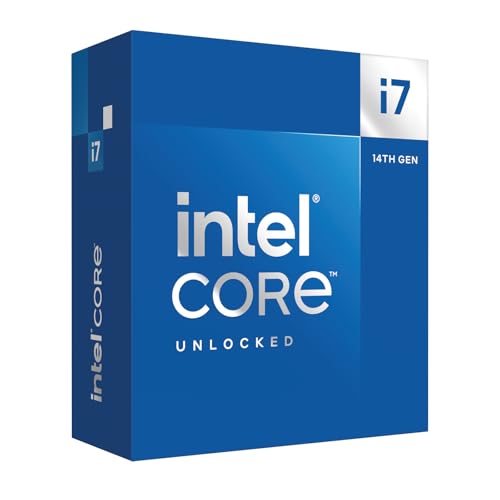
Intel Core i7-14700K
The Intel Core i7-14700K is the Intel-platform entry in this roundup, and it takes a different approach to core counts. It packs 20 cores in a hybrid layout of eight Performance cores and 12 Efficient cores, for 28 threads in total, with clock speeds of up to 5.6 GHz and 33MB of Intel Smart Cache. It is an unlocked processor, so it is built for owners who want to tune their system, and it includes Intel UHD Graphics 770 for integrated display output. The critical platform fact is the socket: the 14700K uses LGA1700, not AM5, so choosing it means choosing Intel motherboards and an entirely separate upgrade path from every AMD pick in this guide. Its listed base power is 125W, which is worth factoring into your cooling and power supply plans.
Specs
- Cores / threads: 20 (8 Performance + 12 Efficient) / 28
- Socket: LGA1700
- Max clock: up to 5.6 GHz
- Cache: 33MB Smart Cache
- Integrated graphics: Intel UHD Graphics 770
- Unlocked: yes
- Base power: 125W
- Model: BX8071514700K
This chip fits builders who are already committed to the LGA1700 platform, who want a high thread count for mixed gaming and productivity work, or who simply prefer Intel’s hybrid design. Just be clear-eyed about the commitment: an LGA1700 board cannot accept any of the AM5 processors above, and vice versa.
AMD Ryzen 5 9600X
The AMD Ryzen 5 9600X is the lean option in this lineup, a six-core, 12-thread processor on Socket AM5 built on the Zen 5 architecture. It has a base clock of 3.9 GHz, is unlocked for tuning, supports DDR5 memory and includes integrated Radeon graphics. Its boost clock is not stated in the listing details gathered for this guide. Six cores is a deliberate step down from the eight-core picks, and for gaming at mainstream resolutions with a mid-range graphics card it is a rational place to save money, because the AM5 socket leaves the door open to a drop-in upgrade to an X3D chip later without changing the motherboard or memory.
Specs
- Cores / threads: 6 / 12
- Socket: AM5
- Base clock: 3.9 GHz
- Boost clock: not stated
- Architecture: Zen 5
- Memory support: DDR5
- Integrated graphics: Radeon graphics
- Unlocked: yes
Pick the 9600X for a budget-conscious build that still sits on the current AMD platform, or as a sensible starting point for a first PC that you plan to grow. If competitive high-refresh gaming is the whole point of the machine, the X3D models above are the more direct answer.
How to choose
Start with the platform, because it outlives any single processor. Four of the five picks here use AMD’s Socket AM5 and DDR5 memory, while the Intel Core i7-14700K uses LGA1700. A motherboard only accepts one socket family, so this decision comes first and shapes every later upgrade. AM5 buyers get a clear in-socket ladder, from the six-core 9600X up through the X3D models, while LGA1700 buyers are building on a mature, well-stocked platform with a wide range of boards already on shelves.
Next, match core count to your workload honestly. Games lean on a handful of fast cores, which is why the eight-core X3D chips headline this guide. The 16-core 9950X3D earns its place when streaming, editing or other heavy work shares the machine, and the 14700K’s 28 threads serve a similar mixed workload on the Intel side. A pure gaming build rarely needs more than eight cores today.
Finally, weigh cache and clocks rather than clocks alone. The X3D models trade a little raw clock speed for a much larger cache, a trade made specifically with gaming in mind, while the 14700K pushes the highest thread count and a boost of up to 5.6 GHz in a conventional design. Also confirm the practical details before ordering: an adequate cooler for the chip’s power draw, a power supply with headroom, and, if you want a backup display output, the integrated graphics that all five of these processors include.
Who should skip
Skip this entire category of purchase if your current processor is recent and your games are already limited by your graphics card; a CPU swap will not fix a GPU bottleneck. Skip the flagship 9950X3D if the PC will only run games, since its extra eight cores would sit idle while costing you budget that belongs in the graphics card. Skip the 14700K if you already own an AM5 motherboard, and skip every AM5 pick if you own an LGA1700 board, because the sockets are physically incompatible. And if you are building a basic office or media PC with no gaming ambitions, even the 9600X is more processor than you need.
FAQ
Is the Ryzen 7 9800X3D or the Ryzen 9 9950X3D better for a pure gaming PC?
For a machine that only plays games, the 9800X3D is the more focused pick: eight cores, 96MB of cache and 3D V-Cache on AM5. The 9950X3D doubles the cores and cache for people who also stream, edit video or run heavy background work, so its advantage shows up outside the game itself.
Can I use an Intel Core i7-14700K in an AM5 motherboard?
No. The 14700K uses Intel’s LGA1700 socket, while the AMD processors in this guide use Socket AM5. The two platforms need different motherboards and are not interchangeable, so the socket decision has to be made before you buy either the processor or the board.
Do these processors include integrated graphics?
Yes, all five picks list integrated graphics: the AMD models carry Radeon graphics, and the Intel Core i7-14700K carries Intel UHD Graphics 770. That is enough to run a display for setup and troubleshooting, but a dedicated graphics card is still the right choice for gaming.
Is six cores from the Ryzen 5 9600X enough for gaming?
For a mainstream gaming build paired with a mid-range graphics card, six cores and 12 threads is a workable starting point, and the AM5 socket leaves room to upgrade to an eight-core X3D processor later. Players chasing very high refresh rates in competitive titles will generally prefer the X3D picks.
Final verdict
The Ryzen 7 9800X3D is the default recommendation for a gaming-first build: eight cores, a 96MB cache with 3D V-Cache, and the flexibility of the AM5 platform. Step up to the Ryzen 9 9950X3D if your PC also handles streaming or creation work, and consider the Ryzen 7 7800X3D as the established previous-generation X3D alternative. Intel builders are served by the Core i7-14700K and its 20-core hybrid layout on LGA1700, while the Ryzen 5 9600X keeps the entry point sensible without leaving the current AMD platform. Decide the socket first, then pick the core count your workload actually uses.
Product and ASIN Reference
| Product | ASIN |
|---|---|
| AMD Ryzen 7 9800X3D | B0DKFMSMYK |
| AMD Ryzen 9 9950X3D | B0DVZSG8D5 |
| AMD Ryzen 7 7800X3D | B0BTZB7F88 |
| Intel Core i7-14700K | B0CGJ41C9W |
| AMD Ryzen 5 9600X | B0D6NN6TM7 |
Related guides
- 4 Best PCs for Streaming and YouTube Gaming: Encoder Choice, Bitrate Math and 7 Builds (2026)
- Best Desk Refresh Safflower Picks: 5 Golden Corner Fixes: 5 Compared (2026)
- Best Desk Refresh Verbena Picks: 5 Small Setup Upgrades: 5 Compared (2026)
- Best Desk Refresh Sorrel Picks for Work and Gaming Desks: 5 Compared (2026)
More from Amazon
Programs that pair well with the guide above. Offers and eligibility are set by Amazon and may change.
Free shipping on eligible items, Prime Video and more. Eligible new members can start with a free trial.
Start a Prime free trialAd-free music streaming. Eligible new subscribers can start with a free trial.
Try Music Unlimited freeA Prime membership for ages 18-24 with a trial period. Eligibility is set by Amazon.
See Prime for Young AdultsAudiobooks and podcasts to listen to on the go. Eligible new members can start with a free trial.
Try Audible freeAs an Amazon Associate we earn from qualifying purchases.