Pairing an RTX 5080 with the right power supply is one of those decisions that seems simple until you actually sit down to do it. NVIDIA’s official recommendation for a 5080 build is an 850W unit, and that number isn’t arbitrary — the card can pull short transient spikes well above its 360W rated board power, and an older PSU without ATX 3.1 protections can trip its overcurrent safeguards mid-game. That means the shopping list for a new build in 2026 is narrower than it used to be: you want a true ATX 3.1 unit with a native 12V-2×6 connector, not an adapter dangling off two PCIe 8-pin cables.
The good news is that this category has matured fast, and prices have come down dramatically. The catch is that not all of them are equal — some cut corners on ripple suppression or fan quality, and a few new brands have thin warranty support. We sorted through the current field to find the eight units worth your money, ranked from premium to budget, so your RTX 5080 gets clean, stable power for years.
As an Amazon Associate we earn from qualifying purchases at no extra cost to you.




Our Top Picks


Top 3 picks at a glance
Quick Picks
| Product | Best for | Price |
|---|---|---|
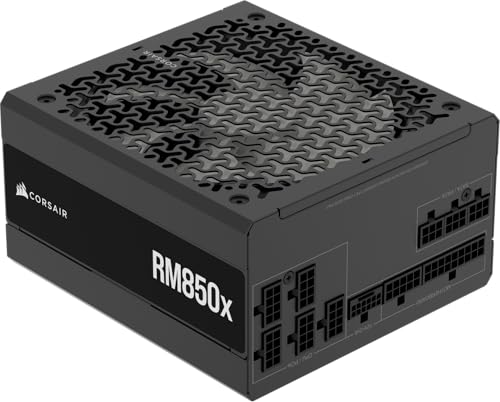
| CORSAIR RM850x ATX 3.1 | Overall best and quietest pick | Check on Amazon |
| 850W Fully Modular 80+ Gold (Black) | Varies | Check on Amazon |
| NZXT C850 Gold Core | Clean builds in NZXT cases | Check on Amazon |
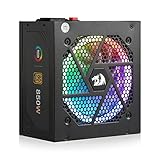
| Redragon RGPS-850W | Budget gaming builds | Check on Amazon |
| ASRock Steel Legend White SL-850GW | White-themed builds | Check on Amazon |
| Auotac 850W RGB | Showcase builds with RGB | Check on Amazon |
| Thermaltake Toughpower GT 850W Snow | White builds from a major brand | Check on Amazon |
| MOAIPLAY ORA PRO G1 | Quiet mid-tower builds on a budget | Check on Amazon |
How We Compared
Every unit on this list meets the non-negotiable baseline for an RTX 5080 build: a true ATX 3.1 specification with a native 12V-2×6 connector rated for at least 450W, so the GPU’s power cable plugs directly into the PSU housing without adapters. All eight are 80+ Gold certified, which matters more than most buyers realize — at a typical 500W gaming draw, the gap between Gold and Bronze efficiency is roughly 40-50 extra watts of heat inside your case every session.
Beyond that, we prioritized fully modular cabling for cleaner airflow, 135-140mm fans for lower noise at a given RPM, capacitors rated to 105°C, and multi-year warranties from manufacturers that will actually honor them. We excluded units with known adapter-based 12VHPWR solutions, non-modular cabling, or fan designs prone to coil whine complaints. Pricing below reflects typical street prices as of early 2026 and fluctuates by retailer.
The 8 Best Picks
1. CORSAIR RM850x ATX 3.1 — Best Overall
The RM850x is the benchmark the rest of this list is measured against. Cybenetics Gold efficiency certification, a native 12V-2×6 connector, and Corsair’s famously refined low-noise fan profile make it the safest possible pairing with an RTX 5080. Fully modular, black-sleeved cables and a 10-year warranty round it out.
- Pros: Cybenetics Gold efficiency with excellent acoustic behavior; native 12V-2×6 connector and full modularity
- Pros: 10-year Corsair warranty and proven long-term reliability
2. 850W Fully Modular 80+ Gold — Best Value
- Pros: 140mm fan keeps noise low even under GPU load
- Con: Minimal brand presence and unclear long-term warranty support
Skip it if you want a name-brand safety net behind the component that protects everything else in your system.
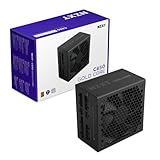
3. NZXT C850 Gold Core — Best for NZXT Builds
The C850 Gold Core pairs naturally with NZXT’s H-series cases, sharing the same clean aesthetic and CAM-friendly ecosystem thinking. It’s ATX 3.1 certified with 80+ Gold efficiency in a compact, tidy chassis, and NZXT’s build quality reputation applies here.
- Pros: ATX 3.1 compliance with clean, well-made cabling
- Pros: Quiet operation and solid NZXT warranty backing
Skip it if you’re not invested in the NZXT look — better value exists at this price.
4. Redragon RGPS-850W — Best Budget Gaming Pick
It’s a legitimate option for a 5080 build when every dollar needs to go toward the GPU.
- Pros: Fully modular cabling at a price where semi-modular is common
- Con: Fan and ripple performance aren’t documented to enthusiast standards
Skip it if you want Cybenetics-tested acoustics and ripple numbers you can verify.
5. ASRock Steel Legend White SL-850GW — Best White PSU
This is the sleeper of the list. For white-themed RTX 5080 builds, nothing else comes close on spec-per-dollar.
- Pros: 135mm FDB fan runs quiet and cool with intelligent speed control
- Con: White colorway limits matching options in black builds
Skip it only if you need black cables and housing.
6. Auotac 850W RGB — Best for Showcase Builds
The Auotac targets builders who want their PSU visible through a tempered-glass panel.
- Pros: RGB fan and dual-color 12V-2×6 cable for showcase builds
- Pros: Full ATX 3.1/PCIe 5.1 compliance with 105°C capacitors
- Con: RGB adds a failure point and isn’t for minimalist builds
Skip it if you’d rather not run extra lighting hardware inside a power supply.
7. Thermaltake Toughpower GT 850W Snow — Best Major-Brand White Pick
- Pros: Smart Zero fan delivers silence at idle and light loads
- Pros: Native 600W 12V-2×6 connector with 5-year Thermaltake warranty
- Con: Costs more than the better-certified ASRock white unit
Skip it if you want maximum certification for minimum spend — the ASRock wins that fight.
8. MOAIPLAY ORA PRO G1 — Best Quiet Budget Pick
It sits in the awkward middle of the price range, but its acoustic focus gives it a genuine identity.
- Pros: Quiet operation as a stated design priority
- Pros: Modern ATX 3.1 compliance with full modularity
Skip it if you value warranty track record over acoustics — Corsair or Thermaltake are safer long-term bets.
Buying Guide
Why ATX 3.1 and Native 12V-2×6 Matter for the RTX 5080
The RTX 5080 uses the 12V-2×6 connector standard, which is a physically revised version of the original 12VHPWR with shorter sensing pins and longer conductor pins — a change designed to reduce the melting risk that plagued early 40-series adapters. A PSU with a native 12V-2×6 connector on the housing gives you a single, properly seated cable engineered for the card’s transient spikes, which can momentarily exceed 1.5 times rated power. ATX 3.1-certified units are required to handle these excursions without tripping protection circuits, so treat the spec as mandatory, not optional, for a 5080 build.
Efficiency Certifications: Gold vs. Cybenetics Platinum
All eight units here are 80 Plus Gold, meaning roughly 90% efficiency at typical loads. The Cybenetics certification goes further by also grading noise and ripple under standardized testing — a Cybenetics Platinum unit like the ASRock SL-850GW will run cooler, quieter, and waste less electricity over its life. On an 850W PSU driving a 400W-class system, the difference between Gold and Platinum is modest in dollar terms but meaningful in heat output, which directly affects case temperatures and fan noise across your whole build.
Warranty, Capacitors, and Long-Term Safety
A power supply is the one component that can take the rest of your build down with it, so warranty length is a proxy for manufacturer confidence: Corsair and ASRock offer 10 years, Thermaltake offers 5, and the budget brands are vaguer. Capacitors rated to 105°C — ideally Japanese-made — degrade far slower than cheap 85°C parts, especially in warm cases.
Our Verdict
Tight on cash?
FAQ
Is 850W enough for an RTX 5080?
Yes. NVIDIA recommends an 850W power supply for the RTX 5080, whose rated board power is 360W. Even paired with a high-end CPU drawing 150-250W, a quality 850W ATX 3.1 unit leaves comfortable headroom for transient spikes without running the fan hard or triggering overcurrent protection.
Can I use a 12VHPWR adapter instead of a native 12V-2×6 connector?
You can, but we advise against it. Adapter cables that combine two or three 8-pin PCIe connectors introduce extra termination points and depend on correct seating to distribute load evenly — the main risk factors in connector overheating. A native 12V-2×6 output is a single engineered connection and is standard across every PSU on this list.
What’s the difference between ATX 3.0 and ATX 3.1?
ATX 3.1 replaced the 12VHPWR connector specification with the improved 12V-2×6 connector, which has revised pin lengths to detect and prevent partial insertion — the leading cause of connector melting. ATX 3.1 also tightened requirements on power excursion handling. For a new RTX 5080 build, buy ATX 3.1 rather than older ATX 3.0 stock.