A small PC case sounds like a simple choice until you realize that small can mean three different things: a compact ATX tower that still takes a full-size motherboard, a micro-ATX box that gives up a few expansion slots, or a tiny mini-ITX shell that forces you to plan every component. The shortlist below leans toward the first two, because those are the formats where a normal graphics card and a normal power supply still fit without custom parts.
This guide is for people trimming a desk footprint in 2026, building a living-room or dorm PC, or replacing a bulky tower with something that sits beside a monitor without dominating it. Five listings are judged strictly on their titles, which state motherboard support, fan counts, radiator support and graphics card length. Where a title leaves out something important, the review flags it, and you should confirm exact dimensions on the product page before buying. Cases whose titles describe standard ATX mid-tower designs are left out here, since they are not small in any practical sense and belong in a different roundup. The goal is a shortlist that actually frees up desk space, so a case has to earn its place on size as well as features.
Our Top Picks


Top 3 picks at a glance
Quick Picks
As an Amazon Associate we earn from qualifying purchases at no extra cost to you.


| Product | Best for | Key spec from the title |
|---|---|---|
| NZXT H5 Flow | Compact build with a full ATX board | 2 included 120mm fans, 360mm front radiator support |
| Cooler Master Q300L V1 | Budget micro-ATX airflow | 360mm graphics card support, 240mm AIO support |
| Lian Li A3-mATX | Modular small build with big GPU | 415mm GPU, 360 AIO, no fans included |
| Micro ATX Mini PC Case | Basic office or home server | Micro ATX, DTX and ITX, USB3.0, 3.5 inch HDD |
| Lian Li O11D Mini V2 Flow | Showcase build in a smaller shell | Five 120mm reverse-blade fans, panoramic glass |
How to Choose
Choose the motherboard size before the case
ATX boards measure 12 by 9.6 inches, micro-ATX boards trim the width to 9.6 by 9.6 inches, and mini-ITX boards are only 6.7 inches square. A case that lists micro-ATX support will not accept a full ATX board. Smaller boards usually have fewer memory slots and expansion slots, so count how many drives and add-in cards you actually need. Most gaming builds only need one graphics card and a couple of M.2 drives, which fit comfortably on a micro-ATX board.
Check graphics card length and cooler clearance
The most common failure in a small build is a graphics card that is too long. The Lian Li A3-mATX title lists 415mm GPU support and the Cooler Master Q300L lists 360mm, which are generous numbers for this class. Also check CPU cooler height and radiator support: a 360mm radiator needs front or top mounting room, while a 240mm radiator fits more small cases.
Airflow beats looks in a small shell
With less space, heat builds up faster. Look for a mesh or punched-metal front panel, space for at least two intake fans, and a clearly listed rear exhaust. A good rule is two intake fans for every one exhaust fan in a compact build with a hot graphics card, then adjust from there. Do not assume a glass panel hurts cooling, since many glass-sided cases vent through the front and bottom, but be wary of a solid front with no vents at all.
Where budget small cases cut corners
Entry-level boxes often skip pre-installed fans, use thin steel that vibrates, include only a few front ports, and provide limited cable routing room. If a title lists USB 3.0 only, expect no front USB-C. Plan for fans of your own if the listing says none included, and check that the power supply form factor matches what the case supports.
The 5 Best Options
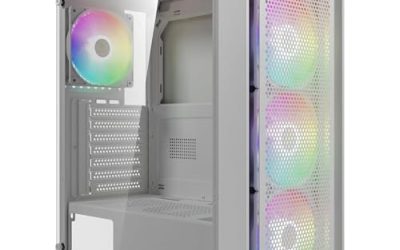
NZXT H5 Flow
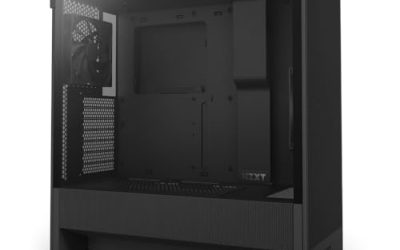
The largest case on this list, described as a compact ATX mid-tower. It suits buyers who want to keep a full-size ATX motherboard but cut the bulk of a traditional tower. The title lists two included 120mm fans, support for a 360mm front radiator and a tempered glass panel, which gives it a good starting point for airflow and liquid cooling.
- Strength: two fans are included, so you can build and run without buying extras first.
- Strength: 360mm front radiator support gives room for a larger all-in-one cooler than most small cases allow.
- Trade-off: it is the biggest option here, so it saves less desk space than a true micro-ATX box.
Skip it if you need the smallest possible footprint or want a mini-ITX shell, since this case is aimed at people who still want a full ATX board. Anyone moving from a large tower will notice the savings, but those coming from a micro-ATX box will find this a step up in size. Read it as a compact tower rather than a small-form-factor design.
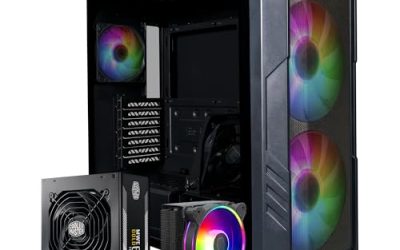
Cooler Master Q300L V1
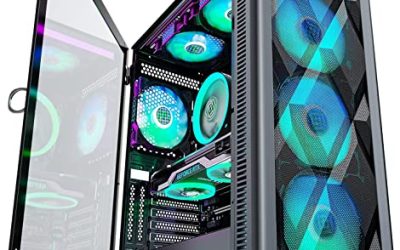
A micro-ATX case for budget builders who want a clear side panel and good airflow in a compact frame. The title lists high airflow, a transparent panel, 360mm graphics card support, 240mm AIO support and a Micro-ATX motherboard layout, which is a sensible spec set for a first gaming build.
- Strength: 360mm of graphics card room means most mainstream cards will fit.
- Strength: 240mm AIO support leaves room for liquid cooling in a small case.
- Trade-off: it only accepts micro-ATX and smaller boards, so a full ATX motherboard is out.
Skip it if you own an ATX board or want a 360mm radiator, since the title only lists 240mm support. It is also a poor match if you need a tidy showpiece with fans already installed, because the title does not state an included fan count, so budget for a quick check of the product page before you commit.
Lian Li A3-mATX
A modular micro-ATX and ITX case with a wood and black mesh look. The title lists 415mm GPU support, 360mm AIO support, a modularity design and no fans included, so it is built for buyers who want to choose their own cooling and have a long graphics card.
- Strength: 415mm GPU support is the most generous figure in this group and handles large cards.
- Strength: supports a 360mm AIO and both M-ATX and ITX boards for flexible small builds.
- Trade-off: no fans are included, so factor in the cost and setup of intake and exhaust fans.
Skip it if you want a case that arrives fully equipped, or if you plan to use a full ATX motherboard. Builders who enjoy tinkering will appreciate the modular layout, but first-timers may prefer a case that includes a complete fan set and a simpler interior to learn on.
Micro ATX Mini PC Case
A generic small black chassis for people who need a simple, basic box. The title lists support for Micro ATX, MATX, DTX and ITX boards, USB 3.0 on the front, and room for a 3.5-inch hard drive, which suits an office PC, a home server or a media machine.
- Strength: supports several small board sizes, including DTX and ITX, in one listing.
- Strength: the 3.5-inch drive bay is useful for bulk storage in a compact machine.
- Trade-off: the title gives no fan count, GPU length or radiator information, so planning requires extra checks.
Skip it if you plan to build a high-end gaming rig or need detailed clearance numbers before ordering. Check the power supply type and the height of your CPU cooler against the full listing, because both can be limiting in an inexpensive chassis, and treat the title as the start of your research rather than the end.
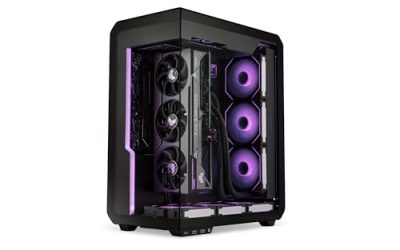
Lian Li O11D Mini V2 Flow
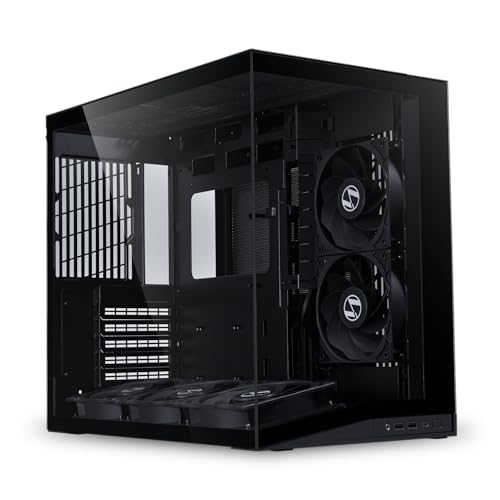
A showpiece small case for buyers who like a display build. The title lists five 120mm reverse-blade non-RGB fans, panoramic glass, a 10-degree angled intake and ATX support, which gives it a strong airflow setup in a smaller shell.
- Strength: five fans are included, so the case is ready for a strong airflow layout.
- Strength: panoramic glass shows off the components, and the non-RGB fans keep the look clean.
- Trade-off: a glass-heavy design leaves less room for hidden cable clutter and drive storage.
Skip it if you want a plain, practical office box or if you plan to stack a lot of storage drives. The panoramic layout rewards tidy cable work, so patient builders get the best results, while anyone in a hurry may find the interior less forgiving than a conventional solid-panel case.
Which One Fits Your Situation
You want a gaming PC that still takes a full ATX board
The NZXT H5 Flow is the safest choice, because it keeps ATX compatibility while staying compact and ships with two fans and room for a 360mm radiator.
You are on a tight budget and want a first micro-ATX build
The Cooler Master Q300L V1 pairs a transparent panel with high airflow and generous graphics card support, which covers the needs of a first build. Add a mid-range graphics card and a 240mm cooler or a good air cooler, and the result is a compact machine that does not look like an office box.
You own a very long graphics card
Go with the Lian Li A3-mATX and its listed 415mm GPU support, and add your own fans for intake and exhaust. The case is modular, so you can decide where the radiator and fans go. That flexibility suits builders who already know what cooling layout they want.
You just need a simple desktop for office work or storage
The Micro ATX Mini PC Case supports small boards and a 3.5-inch drive, which is enough for a quiet home machine or a small file server. Pair it with a low-power processor and a couple of spinning drives, and it can sit in a cupboard or under a TV without anyone noticing it.
Common Mistakes
- Buying an ATX motherboard for a case that lists only micro-ATX support.
- Forgetting that a case with no included fans needs extra fans before the first boot.
- Ignoring CPU cooler height, which can stop the side panel from closing.
- Choosing a case by looks alone and ending up with poor airflow.
- Assuming a small case fits any power supply; check the supported form factor.
Related guides
- Sustainable Gaming Pc Power Supply Efficiency Guide
- Noctua Nh-D15 Vs Thermalright Peerless Assassin 120
- Thermal Paste Application Method For Lga1851
Frequently Asked Questions
Do small PC cases run hotter?
They can, because there is less air volume. A mesh front, two intake fans and a clear exhaust path keep temperatures reasonable in a compact build.
Can a small case fit a full-size graphics card?
Often yes. The Lian Li A3-mATX lists 415mm and the Cooler Master Q300L lists 360mm, but you should always compare the card length with the case spec.
Is micro-ATX enough for gaming?
Yes. A micro-ATX board has enough slots for a graphics card, several drives and sufficient memory for most gaming systems.
Should I choose a case with fans included?
It saves time and money if the included fans suit your layout. If none are included, plan an extra purchase of at least two to three fans. Also check whether the case includes mounting for them, since some budget models only provide a few fan positions.