
Read a power supply’s fine print and you will often find two 80 Plus efficiency numbers, one at 115V and a higher one at 230V. It surprises builders that the exact same PSU is a couple of percent more efficient in Europe than in North America. The reason is basic electrical physics, and understanding it helps you interpret ratings and, if you have the option, wire a rig for slightly lower losses.
As an Amazon Associate we earn from qualifying purchases at no extra cost to you.


Our Top Picks
Pros & cons
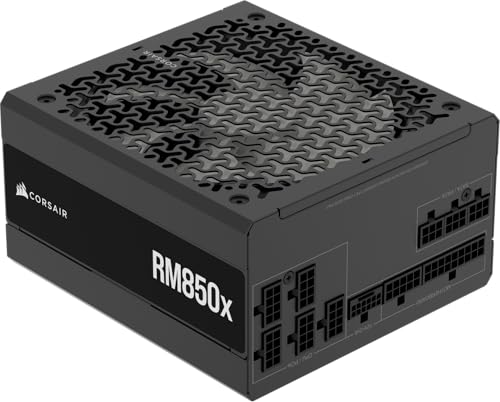
- 80 Plus Gold certification reaches up to 90 percent efficiency
- Zero Fan mode keeps the unit silent at low loads
- Fully modular flat cables simplify case cable management
- Native PCIe 5.1 connector still needs GPU compatibility checked
- 850W capacity may be more than smaller builds need


Top 3 picks at a glance
The current-and-resistance reason
Power equals voltage times current. To deliver the same wattage at half the voltage, a 115V supply must push roughly double the current of a 230V one. Resistive losses in wiring, traces, and switching components scale with the square of current, so higher current means disproportionately more heat wasted. At 230V the lower current cuts those losses, nudging measured efficiency up by about 1-2 percentage points across the load range.
Why 80 Plus lists both
The 80 Plus program tests at the input voltage a region uses, so a unit might be certified Gold at 115V but reach Platinum-like numbers at 230V. Higher tiers (Titanium) are sometimes only fully achievable at 230V, which is why some spec sheets footnote the top rating as a 230V figure.
| Load | Typical eff. at 115V | Typical eff. at 230V |
|---|---|---|
| 20% | ~88% | ~90% |
| 50% | ~90% | ~92% |
| 100% | ~87% | ~89% |
Does it change your power bill?
For most people the difference is minor. A 2% efficiency gain on a system pulling 400W means about 8W less waste heat, which over a year of heavy use is a few dollars at best. The more noticeable benefit is slightly less heat dumped into the room and a marginally quieter PSU fan, since the unit runs cooler.
Can you choose 230V?
In North America, standard wall outlets are 115V, but 230V circuits exist for appliances like dryers. Some enthusiasts with a 230V outlet available run their PC on it to capture the efficiency edge. It is a niche optimization and requires the correct receptacle and cable; for the vast majority, it is not worth rewiring a room over a couple of percent.
FAQ
Is a PSU more reliable at 230V?
Lower internal current means slightly less heat stress on components, which can marginally help longevity, but a quality unit is engineered to run reliably at both voltages. Do not expect a meaningful lifespan difference in normal use.
Which efficiency number should I trust on the label?
Use the figure matching your region’s voltage: 115V in North America, 230V in most of Europe and Asia. If a top-tier badge is footnoted “at 230V,” treat your real-world efficiency as the lower 115V value if you are on a 115V grid.
Bottom line
PSUs are 1-2% more efficient at 230V because lower current produces fewer resistive losses. The savings are real but small, mostly showing up as slightly less heat and fan noise rather than a big power-bill cut. Read the efficiency figure that matches your local voltage, and only consider a 230V circuit if one is already convenient.
It also helps to remember what efficiency actually measures: how much wall power reaches your components versus how much is lost as heat. An 90%-efficient unit pulling 400W from your parts draws about 444W from the wall, wasting ~44W. Bump that to 92% and the draw falls to ~435W, saving ~9W. The efficiency rating says nothing about how much power your GPU or CPU can use, only how cleanly the PSU converts it. So do not treat a higher 230V number as “more powerful”, it simply means slightly less waste heat for the same delivered wattage, which is why the practical difference is comfort and heat, not capability.









