It is a persistent belief in build forums: all those LEDs must get in the way, so RGB fans surely push less air than their plain siblings. The reality is more nuanced. RGB itself does not hurt cooling, but the design compromises that some RGB fans make can, and that distinction is worth understanding before you buy on looks alone.
As an Amazon Associate we earn from qualifying purchases at no extra cost to you.

Our Top Picks

LEDs do not block airflow
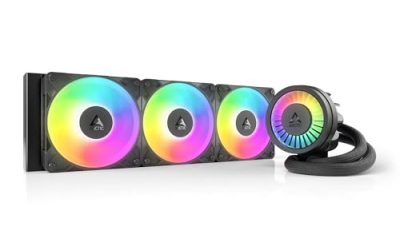
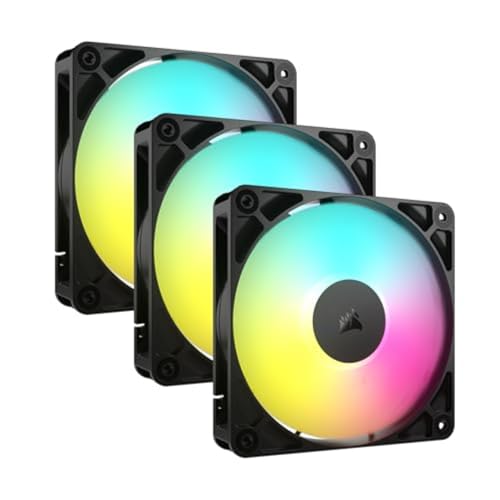
The lighting in a modern RGB fan sits in the hub and the frame, not across the blade path. The air still moves through the same blade area whether or not diodes are glowing. So the light show itself costs you essentially nothing in airflow or static pressure. A well-engineered RGB fan can perform identically to a non-RGB fan of the same design.
| Fan type | Typical airflow | Static pressure | Notes |
|---|---|---|---|
| Non-RGB airflow fan | High | Low-medium | Optimized for volume |
| Quality RGB fan | High | Medium | LEDs cost nothing |
| Cheap RGB fan | Medium | Low | Design compromises |
| Ring-lit RGB fan | Slightly lower | Slightly lower | Blade shape tradeoff |
Where RGB fans can fall behind
The catch is that lighting sometimes forces design choices. To make a bright, even light ring, some fans use translucent blades with less aggressive geometry, or a thicker frame that slightly reduces the effective blade area. Budget RGB fans in particular often prioritize the light show over blade engineering, so they may move a bit less air or make more noise at the same RPM than a purpose-built airflow fan. It is the compromise, not the RGB, that costs performance.
The wiring reality
RGB fans also add complexity: an extra lighting cable per fan, a controller or hub, and software. That does not affect cooling, but it does affect cable clutter and setup time. For a radiator or a high-heat build where every degree counts, many builders still reach for a top-tier non-RGB static-pressure fan and accept the plain look.
How to choose without losing cooling
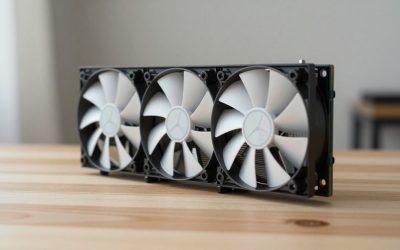
You can absolutely have both light and performance; just buy on specifications, not sparkle. Check the airflow (CFM) and static pressure (mmH2O) ratings, and match the fan to its job: high static pressure for radiators and restrictive filters, high airflow for open intakes. A quality RGB fan with strong numbers cools as well as any plain fan. Skip the ultra-cheap RGB bundles if temperatures are your priority.
FAQ
Does turning off the RGB lighting improve cooling?
No. The LEDs do not obstruct airflow, so switching them off changes nothing thermally. It only saves a trivial amount of power and, of course, the light. Cooling depends on blade design and RPM, not whether lights are on.
Are non-RGB fans always better for radiators?
Not always, but the best static-pressure radiator fans are often non-RGB because designers optimized purely for performance. Plenty of quality RGB fans also handle radiators well; just verify the static pressure rating before trusting a fan on a rad.
Bottom line
RGB fans do not cool worse because of their lighting; the diodes sit out of the airflow path. Weaker RGB fans underperform only when their design sacrifices blade quality for a brighter glow, which is common on cheap models. Buy on airflow and static-pressure numbers, match the fan to its role, and you can have both a light show and excellent cooling.