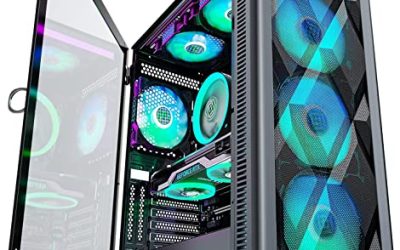
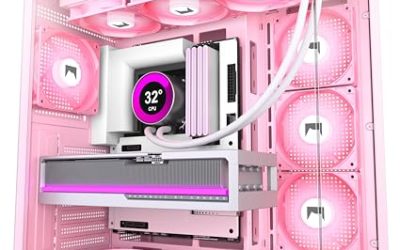
Designing a high-performance home workspace or entertainment zone requires balancing raw hardware horsepower with living space harmony. When integrating a modern processor like the AMD Ryzen 7 into your setup—whether custom-building a rig or selecting a high-end prebuilt like the KOTIN Gaming PC Desktop, Ryzen 7 9800X3D, RTX 5070 12GB, 32GB DDR5, 1TB SSD—one critical question dictates your system’s footprint, noise, and visual language: air cooling or liquid AIO (All-In-One)?
The Ryzen 7 processor family strikes an impressive balance between thermal efficiency and raw computing speed. Operating at base TDPs between 65W and 120W, and drawing up to 162W under heavy boost algorithms, these CPUs generate concentrated heat across a dense, single chiplet. Managing that heat effectively determines whether your workstation sits quietly in a cozy bedroom office or sounds like a jet engine taking off beside your reading chair. Evaluating an air cooler vs aio for ryzen 7 is as much about your home environment, interior aesthetics, and long-term peace of mind as it is about internal core temperatures.
As an Amazon Associate we earn from qualifying purchases at no extra cost to you.


Our Top Picks


Top 3 picks at a glance
Quick Verdict
For most home environments, a premium dual-tower air cooler is the smartest, most practical choice for a Ryzen 7 setup. It provides indefinite operational reliability, zero risk of fluid leaks, ultra-quiet operation, and lower upfront costs. However, an AIO liquid cooler wins if you prioritize clean desktop aesthetics inside a glass-paneled chassis, require complete RAM height clearance, or run continuous, heavy rendering loads inside a smaller enclosure where radiator heat can be exhausted directly out of the case frame.
Side by Side
| Feature / Metric | Air Cooler | AIO Liquid Cooler |
|---|---|---|
| Acoustic Comfort | Smooth, predictable fan swoosh (20–32 dB); no electrical pump whine | Very quiet fans; minor motor hum or pump buzz (22–35 dB) at higher RPMs |
| Durability & Lifespan | 10+ years; only moving parts are replaceable fans | 3 to 6 years; limited by pump wear and coolant permeation |
| Price Range | Check on Amazon | Varies |
| Maintenance Needed | Occasional dust blowing with compressed air | Dust radiator fins; full unit replacement required upon pump failure |
| Physical Space Needed | Requires 155–165mm height clearance inside case; bulky over RAM | Low CPU block height; requires 240mm or 360mm mounting space |
| Visual Aesthetic | Industrial, heavy, classic metallic heatsink look | Minimalist, sleek, exposes motherboard lighting and clean interiors |
| Transportability / Relocation | Heavy heatsinks (1.2–1.4 kg) exert lever force on motherboard when moved | Light CPU block; extremely safe to ship or move around the house |
| Thermal Response | Slightly higher initial thermal spikes; steady-state stabilization | Liquid absorbs thermal bursts instantly; slower heat saturation curve |
| Best For | Set-and-forget home offices, budget-conscious users, long-term stability | Showcase desk builds, compact cases, intense sustained creative workloads |
Where Air Cooler Wins
When weighing an air cooler vs aio for ryzen 7 from a home economics and lifestyle perspective, air coolers hold a distinct advantage in simplicity and longevity. A dual-tower air cooler consists of a copper baseplate, heat pipes, aluminum fins, and one or two standard cooling fans.
Acoustically, air coolers create a natural, low-frequency sound profile that blends seamlessly into residential backgrounds. In a peaceful bedroom setting where you might already run a whisper-quiet room circulating appliance like the Levoit Tower Fan for Bedroom, 28ft/s Fans that Blow Cold Air, 28dB Quiet, the soft air-rush of a high-end heatsink fan feels organic and unobtrusive. There is no high-pitched 2,800 RPM pump motor humming continuously in the background when your computer is idling at night.
Air coolers are also exceptionally cost-effective.
Where Aio for Ryzen 7 Wins
All-In-One liquid coolers excel at elevating the overall visual presentation of a modern home office space. Removing a bulky 1.3 kg metal heatsink opens up the interior of your computer case, displaying custom memory kits, ambient motherboard backlighting, and clean cable routing through a glass side panel. High-end custom system builds—such as the STORMCRAFT Phantom RTX 5080 Gaming PC Ryzen 7 9800X3D 32GB DDR5 2TB SSD—frequently leverage liquid cooling to achieve an ultra-modern aesthetic that looks like a curated piece of art on a modern oak or walnut desk.
Beyond visual appeal, AIO coolers offer superior thermal headroom during burst computing tasks. The liquid coolant within a 240mm or 360mm radiator loop acts as a thermal buffer, absorbing sudden temperature spikes when launching heavy applications without forcing fan speeds to ramp up instantly. Radiators also vent CPU heat directly out of the top or front of the computer case, preventing hot air from lingering near your graphics card or ambient desk workspace.
Furthermore, AIOs offer total clearance for memory modules. High-profile RGB RAM sticks fit effortlessly under a slim liquid cooling block, whereas large air coolers often overhang RAM slots, requiring fans to be mounted higher or limiting tall memory choices.
Cost Over 5 Years
To accurately compare an air cooler vs aio for ryzen 7, look at total ownership costs over a typical five-year computer lifespan:
Which One for Your Home
Small Apartment or Studio
In compact living spaces, ambient room temperatures rise faster, and acoustic control is paramount. If your PC sits close to your bed or living room sofa, pair a dual-tower air cooler with a quiet room fan like the DREO Tower Fan for Bedroom, 28ft/s Velocity, Ultra Quiet Fan, 8 Speeds to maintain balanced air circulation across your studio. Air coolers maintain a warm, steady exhaust without introducing mechanical pump whine into small spaces.
Family with Kids or Pets
Homes with active children or inquisitive pets benefit from mechanical simplicity. Desktop towers sitting on floor mats or low desks are vulnerable to accidental bumps. An air cooler eliminates liquid spill hazards, though if you frequently move the PC tower to store it away from toddlers, ensure the case is positioned carefully to protect the motherboard from heavy heatsink leverage.
Rental Property Setup
If you live in a rental with strict noise or space layouts, an air cooler offers complete peace of mind. It requires no complex radiator mounting strategies, fits standard mid-tower enclosures, and stays virtually maintenance-free across multiple tenant moves.
Long-Term Home Office (2026 Trends)
For dedicated home offices, design trends in 2026 emphasize streamlined desk surfaces, hidden cables, and glass-paneled PC cases. An AIO cooler delivers that showroom-clean, floating-block look that elevates custom interior office furniture setups, especially when matching dark timber or minimalist white studio designs.
FAQ
Will a Ryzen 7 thermal throttle if cooled by a standard air cooler?
No. A high-quality dual-tower air cooler with six heat pipes easily dissipates the 65W to 120W TDP of a Ryzen 7 processor under normal gaming and productivity tasks without hitting thermal throttling limits.
Is liquid leakage a real risk with modern AIO liquid coolers?
Liquid leaks in quality AIOs are extremely rare today due to reinforced anti-permeation tubing and sealed factory construction. However, pump degradation over 4 to 6 years remains a mechanical reality that eventually requires unit replacement.
Are AIO coolers noticeably quieter than air coolers?
Not necessarily. While AIO fans can spin slower under light loads due to liquid thermal absorption, the continuous operation of the liquid pump introduces a faint background motor hum that low-noise air cooler fans avoid entirely at idle.
How do I know if a large air cooler will fit inside my computer case?
Check your PC case specifications for maximum CPU cooler height (typically needing 160mm or more) and verify your memory module height to ensure the front cooler fan does not collide with your RAM sticks.