Bringing fresh air into your home or equipment enclosure seems simple enough: turn on a fan and draw air inside. However, when selecting fans for intake applications—whether you are pulling cool outdoor air through a window, ventilating an entertainment center cabinet, or building a custom home air filtration box—you immediately face a fundamental engineering choice: static pressure fans vs high airflow fans for intake.
High airflow fans prioritize raw air volume, measured in cubic feet per minute (CFM). They excel when air has a wide, unobstructed pathway to move through. On the other hand, static pressure fans are engineered with specialized blade geometry designed to push or pull air through restrictive obstacles like fine insect screens, dense HEPA filters, tight intake grilles, and narrow cabinet slots. Choosing the wrong type for your intake can result in noisy operation, reduced air exchange, motor strain, and premature dust buildup inside your living spaces or equipment housings.
As an Amazon Associate we earn from qualifying purchases at no extra cost to you.



Whether you are setting up a whole-room window intake using a dedicated window unit or assembling a custom enclosure intake using compact 120 mm PC-style fans, understanding how pressure resistance interacts with fan design is the key to creating a quiet, efficient home ventilation system.
Our Top Picks



Top 3 picks at a glance
Quick Verdict
Choose static pressure fans for intake if your setup forces air through fine mesh, thick dust filters, decorative grilles, or narrow cabinet channels. Their high millimeter-water (mmH2O) rating ensures air continues to flow steadily despite high physical resistance.
Choose high airflow fans for intake if you are drawing air through wide, unobstructed openings like standard window frames or large open ducts where maximum room air turnover (CFM) is required without restrictive barriers.
Side by Side
| Feature / Attribute | Static Pressure Intake Fans | High Airflow Intake Fans |
|---|---|---|
| Primary Performance Focus | Overcoming physical resistance (mmH2O) | Maximizing total air volume (CFM) |
| Blade Design | Wider, flatter blades with tight gap spacing | Steeper pitch, curved blades with wide spacing |
| Ideal Intake Applications | Filtered windows, media cabinets, server closets | Open windows, unrestricted transfers, room flushes |
| Acoustic Comfort Under Load | Quieter when operating against dense filters | Can become noisy or produce turbulence behind screens |
| Power Consumption Range | 2 to 15 Watts (DC) / 20 to 40 Watts (AC) | 3 to 25 Watts (DC) / 30 to 60 Watts (AC) |
| Typical Price Range | Varies | Varies |
| Space Needed / Footprint | Compact (120 mm to 200 mm setups) | Larger (9″ dual window panels to 12″ frame units) |
| Maintenance Needs | Low fan wear; regular filter cleaning required | Moderate blade cleaning due to dust buildup on blades |
| Long-Term Durability | High (Fluid dynamic bearings handle resistance well) | High (Sleeve or ball bearings for open air draft) |
| Best For | Homes prioritizing dust filtration & cabinet cooling | Quick evening room cooling & high-volume air turnover |
Where Static Pressure Fans Wins
Static pressure fans are purpose-built to conquer resistance. In home intake scenarios, resistance is present everywhere. A standard window screen cuts airflow by up to 30%, while adding a high-efficiency MERV or HEPA dust filter increases static resistance exponentially. High airflow fans buckle under this load—their blades spin, but air simply slips back around the blade edges, drastically dropping effective air output.
Static pressure designs solve this through specialized geometry: broader blade surfaces, a smaller gap between blade tips and the outer frame, and a lower angle of attack. This allows the fan to build high directional force, forcing fresh intake air directly through tight weaves and crowded channels.
- Superior Performance Through Dust Filters: If you install a particulate filter on your fresh air intake to block pollen, smoke, or dust, a static pressure fan maintains strong delivery while high airflow units drop to a fraction of their rated capacity. Compact 120 mm options—such as the ARCTIC P12 Pro or the multi-unit ARCTIC P12 Pro PST – 5 Pack—feature high-static pressure engineering operating from 600 to 3000 RPM, making them exceptional choices for DIY filter boxes or media center cabinet intake grids.
- Quiet Operation Against Resistance: When a high airflow fan works against a screen or filter, it creates wind turbulence and motor strain, resulting in a high-pitched hum. Static pressure fans push air steadily, keeping acoustic output lower and smoother under load.
- Focused Air Stream: Rather than dispersing air outward in a wide cone, static pressure intake fans output a tight, straight beam of air. This makes them ideal for directing cool intake air deep into an enclosed cabinet, AV rack, or narrow hallway.
Where High Airflow Fans for Intake Wins
When there are no dense barriers in the way, high airflow fans are the undisputed kings of ventilation volume. If your goal is to flush out warm air from a bedroom on a cool summer evening by drawing in massive volumes of outdoor air through an open window frame, a high airflow system gets the job done in minutes.
High airflow blades feature aggressive pitches and wide surface curves engineered to scoop up vast quantities of air. Without high backpressure to push against, these fans move maximum cubic feet of air with lower motor effort per CFM delivered.
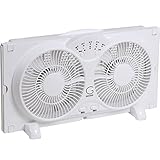
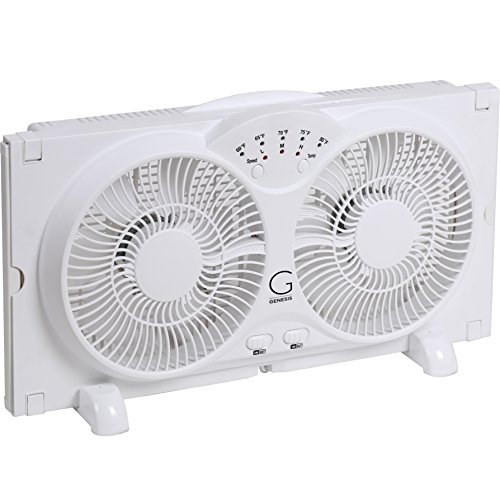
- Rapid Room Temperature Drops: For whole-room night cooling, dedicated window fan units equipped with dual high-velocity blades deliver unmatched throughput. Units like the Genesis Twin Fan High Velocity Reversible AirFlow Fan or the adjustable shinic 9″ Twin Window Fan Low-Noise Reversible Airflow move high volumes of fresh air rapidly into living spaces.
- Broad Spatial Coverage: High airflow fans disperse air in a wider pattern upon entering a room. This gentle, wide-angle breeze helps circulate air across an entire bedroom or living room rather than jetting it into a single spot.
- Cost-Effective Open-Air Ventilation: Per CFM generated in low-resistance environments, high airflow fans offer incredible value, delivering maximum fresh air intake per dollar spent.
Cost Over 5 Years
Evaluating static pressure fans vs high airflow fans for intake involves looking at both initial hardware expenditure and ongoing power consumption. Operating costs depend on whether you are running low-voltage DC fans (12V PWM units) in localized enclosures or full AC-powered window fan assemblies.
Looking ahead into 2026 energy standards, small DC static pressure fans remain remarkably economical.
For high airflow window units like the Genesis Twin Fan or shinic 9″ Twin Window Fan, wattage typically ranges between 35 and 55 Watts on medium to high speeds.
Which One for Your Home
Small Apartment
If you live in a compact apartment, noise control and space efficiency are top priorities. A dedicated high airflow twin window fan (such as the shinic 9″ unit fitting standard 23.5″-37″ window frames) provides instant relief by quickly exchanging stale indoor air with fresh outdoor air. However, if your apartment faces a busy street with ambient dust or smog, pairing a compact static pressure fan with a thin intake filter frame inside a window insert will keep air clean without sacrificing intake force.
Family with Kids and Pets
Homes with children and pets generate higher ambient dust, pet dander, and hair. In this environment, any intake system—whether for a room or an electronics cabinet—should include a washable or replaceable air filter. A static pressure fan setup is superior here, as it effectively pulls air through filter media without overheating or losing velocity as dust collects on the intake screen.
Rental Property
Renters need non-permanent intake solutions that require zero structural modification. Expandable high airflow twin window fans equipped with side accordion panels (like the Genesis Twin Fan) install in seconds without screws. They fit securely in existing window tracks and can be flipped to exhaust mode or removed entirely when moving out.
Long-Term Homeowner
For long-term homeowners building custom fresh-air supply ducts, crawlspace ventilation, or media cabinet cooling systems, static pressure fans offer the greatest versatility. Their ability to push air through ductwork, decorative grilles, and high-efficiency filtration boxes ensures reliable long-term performance, lower motor strain, and quieter continuous operation throughout the house.
FAQ
Can I use a static pressure fan as a regular window intake?
Yes. While static pressure fans are designed for restricted airflow, they function perfectly well in open windows. In fact, if your window has a tight insect screen or storm glass frame, a static pressure fan will often deliver better air velocity into the room than a standard high airflow fan.
How do high resistance dust filters affect high airflow fans?
High resistance filters (such as MERV 8 or higher) severely reduce the performance of high airflow fans. Because their blade pitch relies on low air backpressure, placing a filter directly in front of a high airflow fan causes the air to swirl uselessly around the blade edges, dramatically reducing actual airflow into your space.
Are twin window fans considered high airflow or static pressure?
Most commercial twin window fans are designed as high airflow units. They use wider 7-inch to 9-inch impellers meant to move large volumes of unrestricted air across living spaces. They perform best when window screens are clean and unobstructed by secondary filters.
What RPM range is ideal for low-noise home intake fans?
For small 120 mm DC intake fans, an operational range of 800 to 1500 RPM strikes the ideal balance between air pressure and ultra-quiet acoustics. Fans rated up to 3000 RPM (like the ARCTIC P12 series) offer immense thermal headroom, but running them at max speed is best reserved for severe heat dissipation rather than quiet daily living spaces.