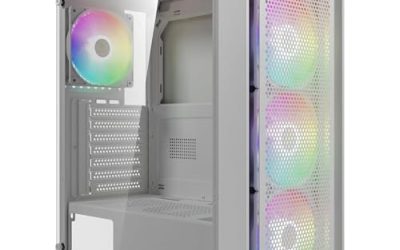
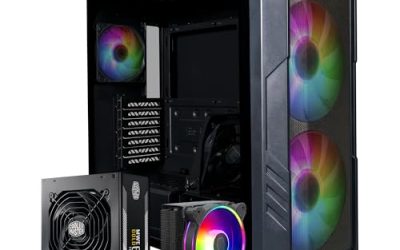
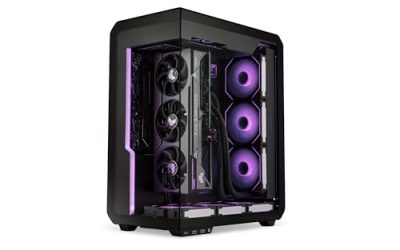
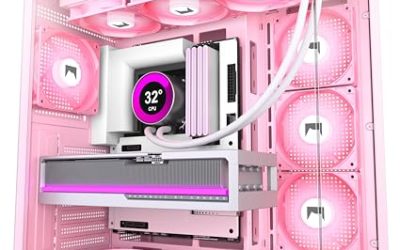
Walk down the fan aisle—physical or digital—and you’ll hit the same fork in the road within minutes: PWM fans or DC fans. It sounds like a spec-sheet footnote, but the choice between PWM (pulse width modulation) and DC (direct current) speed control shapes how quiet your fan runs, how much electricity it sips, and how much you’ll spend over the years. The real decision most buyers face isn’t “which technology is better” in the abstract—it’s which control method matches your room, your budget, and your tolerance for a low hum at 2 a.m.
This guide breaks down how each control scheme actually works, where each one shines, and which one belongs in your home. Whether you’re cooling a home office PC, upgrading a ceiling fan, or dialing in airflow for a bedroom, here’s what matters.
As an Amazon Associate we earn from qualifying purchases at no extra cost to you.



Our Top Picks



Top 3 picks at a glance
Quick Verdict
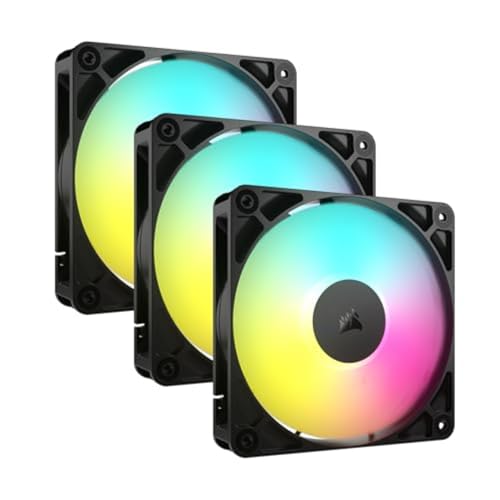
PWM fans win for precision. If you want a fan that idles nearly silent, ramps up only when needed, and integrates with software or thermostat control, PWM is the answer. Most modern 120 mm case and cooling fans—like the ARCTIC P12 Pro PST (600–3,000 RPM with a true 0 RPM mode below 5% duty cycle) or the CORSAIR RS120 ARGB triple pack—use 4-pin PWM control for exactly this reason.
DC fans win for simplicity and price.No motherboard headers, no software, no signal wires. For ceiling fans, RVs, workshops, and off-grid setups, DC voltage control remains the pragmatic choice—and DC motor ceiling fans are typically 40–70% more efficient than comparable AC models.
Bottom line: choose PWM when you need automatic, fine-grained control; choose DC when you need cheap, manual, hardware-level control.
Side by Side
| Category | PWM Fans | DC Fans Speed Control |
|---|---|---|
| Comfort | Excellent—smooth stepless control, can stop entirely (0 RPM mode) for silence | Very good—stepless knob control, but manual; no automatic quiet idle |
| Control precision | Extremely fine—duty cycle steps from 0–100% | Good—voltage regulation, typically less precise at low speeds |
| Price range | $5–16 per 120 mm fan; quality multi-packs $18–48 | Varies |
| Durability | Fluid dynamic or magnetic dome bearings rated 50,000–300,000 hours | Similar bearing lifespans; fewer electronics to fail on basic controllers |
| Maintenance | Low—dust the blades quarterly; check splitter cables occasionally | Low—dust blades; knob controllers are essentially maintenance-free |
| Space needed | 4-pin headers required; Y-splitters let one header run multiple fans | Minimal—inline controllers fit in tight spaces; no motherboard dependency |
| Look | Strong—ARGB options (like daisy-chainable RS120s) with clean cable routing | Utilitarian—controllers are functional boxes; ceiling fan remotes help hide wiring |
| Resale value | Better—4-pin PWM is the current standard buyers expect | Weaker for components; DC ceiling fans themselves hold value well |
| Energy use | Low—typical 120 mm fan draws 1–4 W, throttled further at low duty | Low—DC motors are efficient, though simple resistive controllers waste some power |
| Best for | PC builds, home servers, anywhere automatic quiet control matters | Ceiling fans, RVs, workshops, budget and off-grid projects |
Where Pwm Fans Wins
True silence on demand. The defining feature of PWM control is the dedicated signal wire. Instead of cutting voltage, the motherboard or controller sends rapid on-off pulses (typically around 21–25 kHz, above human hearing) to set fan speed as a percentage of maximum. Because the fan always receives full 12V power, it starts reliably even at very low speeds—and quality models offer a 0 RPM mode below roughly 5% duty cycle. The fan simply stops. In a bedroom PC or media console, that’s the difference between audible and invisible.
Automatic temperature response. PWM fans tie directly into temperature sensors. Your CPU heats up, the fan ramps; it cools down, the fan drops to a whisper. No manual adjustment, ever. Set a fan curve once and forget it.
Daisy-chaining and clean setups. Modern PWM fans make multi-fan builds painless.
Longevity at low speed. Because PWM fans run at low duty cycles most of the time in a well-configured system, bearing wear slows and dust accumulation drops. Fluid dynamic bearings in quality PWM fans are rated for well over 100,000 hours—decades of typical home use.
Where Dc Fans Speed Control Wins
Cost.That single device can regulate a car fan, a heater blower, a workshop ventilation fan, or a small duct booster. There’s no cheaper way to get variable speed from a DC fan.
Universality. DC voltage control works on any DC motor, regardless of whether it has a PWM input. Old fans, automotive blowers, marine bilge fans, off-grid solar setups—if it runs on 12V or 24V, a stepless regulator gives you speed control. PWM requires a compatible 4-pin fan and a controller generating the signal.
Ceiling fan dominance. The residential ceiling fan market has largely moved to DC motors, and for good reason: they run on less power (often 15–35W versus 50–80W for comparable AC motors), offer more speed steps (commonly 6), and run cooler.
No dependence on a host system. PWM fans need a motherboard, fan controller, or PWM signal source. DC knob control is self-contained: power in, fan out, knob on top. In a shed, RV, boat, or greenhouse, that independence is a genuine feature.
Cost Over 5 Years
The honest comparison: PWM and DC speed control rarely compete for the same job. Buying the “wrong” one usually means buying an unnecessary converter or adapter, so match the technology to the application and both come out cheap.
Which One for Your Home
Small Apartment
Space and noise dominate. For standalone cooling—a tower fan or window unit—DC motor models with remote control keep wattage low, which matters if utilities are included in your rent negotiation.
Family with Kids or Pets
Safety and durability come first. In a family PC used for homework and games, PWM’s automatic throttling means the machine stays quiet during movie nights and only gets audible under heavy load.
Rental
You need portability and reversibility. Standalone DC fans with inline speed controllers move with you and work anywhere there’s a 12V or 24V source—or just plug a standard DC pedestal fan into the wall. Avoid hardwiring anything. A replacement ceiling-fan remote kit is landlord-friendly: no permanent modification, and it can travel to your next place if the fan stays. PWM case fans are also renter-friendly since they live inside equipment, not walls.
Long-Term Home
Optimize for efficiency and integration. Install DC motor ceiling fans in bedrooms and living areas—the 40–70% efficiency gain over AC motors compounds over years, and by 2026 most major fan manufacturers have fully transitioned their lines to DC. In a home office or server closet, use 4-pin PWM fans throughout with a proper fan controller or motherboard software, so a single temperature sensor orchestrates the whole room.
FAQ
Can I plug a PWM fan into a DC (3-pin) header?
Yes. A 4-pin PWM fan run on a 3-pin header falls back to full-voltage DC control—it will spin at a fixed speed based on supplied voltage. You lose the fine-grained PWM control and the 0 RPM mode, but nothing breaks.
Can I use a PWM controller on a DC fan?
Not directly. A 3-pin DC fan lacks the PWM signal wire, so it can’t interpret duty-cycle pulses. You’d need either a voltage-based DC speed controller or a PWM-to-DC adapter. Some 4-pin fans accept PWM signal but throttle poorly at very low duty cycles—check the fan’s minimum RPM spec.
Do PWM fans use less electricity than DC-controlled fans?
Both are efficient. PWM control is slightly more efficient because it switches power fully on and off rather than dropping voltage (which wastes a little energy as heat in simple regulators). In practice, a 120 mm PWM fan drawing 1–4W and a small DC fan on a controller differ by pennies per year. DC ceiling fans are efficient because of the motor type, not the control method alone.
Why does my fan make a clicking or whine noise at low speed?
On DC voltage control, the motor may struggle at very low voltage, causing clicking or stalling. On PWM, some fans exhibit coil whine at certain duty cycles if the switching frequency is audible. Quality PWM fans use high-frequency switching (above ~20 kHz) specifically to avoid this—cheaper controllers may not. If noise bothers you, invest in a fan with fluid dynamic or magnetic dome bearings and a properly specified PWM signal source.