Designing a modern home office, creative studio, or living room media hub requires balancing raw performance with daily living comfort. When choosing hardware for custom desktop PCs, home servers, or electronics workstations, the power supply unit (PSU) serves as the engine of your setup. Yet, few components impact your home environment’s acoustic comfort as directly as your choice between a passive power supply and an active cooling semi-passive power supply.
A passive power supply relies entirely on convection cooling using heavy internal heatsinks, offering absolute 0 dB silence. Conversely, a semi-passive power supply—often called a hybrid power supply—keeps its fan switched off during standard tasks like web browsing or text editing, but engages active fan cooling when system load or internal temperatures cross a set threshold. Choosing the right thermal architecture determines not only ambient noise levels in your home but also furniture placement, dust accumulation, and hardware longevity.
As an Amazon Associate we earn from qualifying purchases at no extra cost to you.


Our Top Picks


Top 3 picks at a glance
Quick Verdict
If your priority is 100% absolute silence for a studio, bedroom workstation, or minimalist living room setup—and your power demands remain below 600 watts—a passive power supply delivers total acoustic bliss without moving mechanical parts. However, for most home users, high-performance workstation builds, and modern gaming PCs, an active cooling semi-passive power supply is the smarter choice. It offers silent operation during light home office tasks while providing the airflow reserve needed to safely manage high power loads up to 1000W or 1200W inside modern home furniture and compact enclosures.
Side by Side
| Feature | Passive Power Supply | Active Cooling Semi-Passive Power Supply |
|---|---|---|
| Noise Level (Low Load) | 0 dB (Completely Silent) | 0 dB (Fan Disengaged) |
| Noise Level (High Load) | 0 dB (Completely Silent) | 12 dB to 28 dB (Gentle Air Movement) |
| Heat Dissipation Method | Convection (Oversized Heatsinks) | Hybrid (Passive Heatsinks + Dynamic Fan) |
| Max Consumer Wattage | Typically 450W – 700W | 750W – 1600W+ |
| Dust Accumulation | Low (No Active Intake) | Moderate (Gathers Dust Only Under Load) |
| Weight Range | 4.5 lbs – 7.0 lbs (Heavy Copper/Aluminum) | 3.5 lbs – 6.5 lbs (Standard Density) |
| Enclosure Flexibility | Requires Mesh / Open Airflow Space | Works Well in Open or Enclosed Furniture |
| Typical Retail Price Range | Check on Amazon | Check on Amazon |
| Ideal Home Application | Recording Booths, Bedrooms, Open Shelving | Shared Living Rooms, Multi-Use Offices, High-Demand PCs |
Where Passive Power Supply Wins
The defining strength of a fanless passive power supply is total silence. Mechanical fans produce electrical motor hum and physical air turbulence. In open-plan residential layouts or quiet home recording environments, even a low-speed fan operating at 15 dB can interrupt concentration. Passive units generate zero decibels across all operational conditions.
Because passive power supplies lack moving fans, they rely heavily on high-grade electrical components, thick copper traces, and massive aluminum internal heatsinks. This mechanical simplicity removes the primary failure point of traditional cooling systems: the fan bearing. Furthermore, without a fan actively pulling household air into the housing, internal dust collection is dramatically reduced. This makes passive power units exceptional for open-concept desks or elevated floating shelves where vacuuming hardware interiors is impractical.
Where Active Cooling Semi Passive Power Supply Wins
While fanless units offer pure silence, semi-passive active cooling power supplies deliver unmatched versatility and thermal safety headroom. By utilizing dynamic thermal curves, semi-passive power supplies operate in fanless “Zero-RPM” mode during routine household activities like reading, streaming video, or office work. The fan only spins up when power consumption crosses a baseline (typically 30% to 50% capacity) or internal temperatures exceed a safe target.
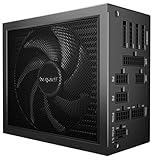
This hybrid approach allows manufacturers to build reliable units reaching 750W, 1000W, or 1200W within standard ATX physical dimensions (roughly 150mm wide by 86mm tall by 140mm to 180mm deep). High-capacity models such as the be quiet!
For top-tier workstations and multi-GPU home rendering rigs, higher wattage units are essential. Premium options like the be quiet! Dark Power 14 1000W and the heavy-duty be quiet! Dark Power 14 1200W utilize 80 Plus Titanium efficiency and whisper-quiet fluid-dynamic bearing fans. When active cooling does engage, advanced blade geometry keeps acoustics near imperceptible levels (often under 20 dB), safely exhausting thermal energy even inside wood media cabinets or tucked-away desk cubbies.
Cost Over 5 Years
When calculating the true cost of operating power supplies in modern home setups in 2026, initial purchase price represents only half the equation. You must also account for electrical efficiency and thermal impact on your home air conditioning.
Passive power supplies carry higher manufacturing costs due to heavy heat dissipation metals and high-efficiency electrical components required to pass heat safely without fans.
While Titanium-rated semi-passive units save energy over time, mid-range semi-passive Gold units yield the lowest overall total cost of ownership while keeping quiet during average home use.
Which One for Your Home
Small Apartment
In studio apartments or small city flats where your desk sits three feet from your bed, fan noise is a constant annoyance. A passive power supply excels here if your system uses low to mid-range power. However, because small apartments trap heat faster, ensure your PC case has mesh panels. If you need more than 600W for high-end creative work, choose a semi-passive unit like a 750W Gold model; its fan will stay off during late-night media watching and only kick on silently when rendering projects.
Family with Kids and Pets
Homes with pets and active children face dust, dander, and accidental furniture bumps. Semi-passive power supplies are ideal for family environments. Because the fan remains still during light daily tasks, pet hair isn’t constantly vacuumed into the power unit. When kids launch demanding video games, the active fan turns on to ensure hardware stays cool even if the tower rests on carpet or near a wall.
Rental Space
Renters often cannot alter wall layouts or install dedicated HVAC ducts for home offices. Desktop towers are often tucked into standard furniture, underneath wood desks, or inside semi-enclosed credenzas. A semi-passive power supply is safer for rental setups because active airflow prevents thermal heat build-up inside pre-existing furniture cubbies, preventing damage to both your hardware and leased property interiors.
Long-Term Home
If you own your home and are building a custom, built-in home office desk or a dedicated audio/video editing suite, pair high-tier semi-passive units like 1000W or 1200W Titanium models with well-ventilated cabinetry. You gain zero-noise operation during editing and writing sessions, combined with maximum power reserves and maximum energy efficiency for long-term power savings.
FAQ
Does a semi-passive power supply turn its fan on suddenly and loudly?
Modern semi-passive power supplies use smooth micro-controller temperature curves. Rather than blasting at full speed instantly, the fan ramps up gradually from a low RPM (around 400 to 600 RPM). In standard home rooms with normal background noise, you will rarely notice the moment the fan engages.
Is a passive power supply safe inside a closed desk cabinet?
No. Passive power supplies require warm air to rise and escape naturally through convection. Placing a passive unit inside an enclosed wooden desk cabinet or unvented media console causes heat to pool around the unit, triggering thermal throttling or protective shutdowns. Always provide open space or active cabinet ventilation for fanless hardware.
How do dust and pet hair affect semi-passive power supplies?
Because semi-passive fans remain stationary during web browsing, office tasks, and video streaming, total air intake over time is significantly less than standard full-time active units. This reduces dust buildup inside the power supply, requiring cleaning only once or twice a year with compressed air.
Can I use a bench power supply like the Jesverty SPS-3010 for regular home computers?
No. Benchtop DC power supplies like the Jesverty SPS-3010 are engineered for testing electronics, powering individual DC components, and working on hobby projects. Standard home computer systems require specialized ATX power supplies that deliver multiple standardized voltage rails (3.3V, 5V, 12V) through dedicated modular motherboard and PCIe cables.