
Dig into power supply reviews and you will see units described as either DC-DC or group regulated. This refers to how the PSU generates its 3.3V, 5V and 12V rails, and it has a real effect on voltage stability in a modern PC where almost all the power goes to the 12V rail. For any current gaming build, DC-DC is the design you want, and understanding why helps you avoid outdated bargain units.
As an Amazon Associate we earn from qualifying purchases at no extra cost to you.


Our Top Picks
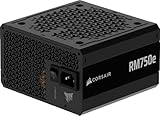
 CORSAIR RM750e ATX 3.1 PCIe 5.1 Ready 750W750 watts5.91 x 5.51 x 3.35 inches3.3 poundsCheck on Amazon

Top 3 picks at a glance
Two Ways to Make the Rails
A PC power supply has to produce several voltages from the wall’s AC input. The older group-regulated approach ties rails together on a shared regulation loop, while the newer DC-DC approach generates the minor rails independently from the main 12V output.
| Aspect | Group regulated | DC-DC |
|---|---|---|
| Rail independence | Rails share regulation | 3.3V/5V derived separately |
| Voltage stability | Sags under uneven loads | Tight across all loads |
| Best for | Old, balanced loads | Modern 12V-heavy builds |
| Typical era | Legacy/budget | Current mainstream |
Why It Matters for Modern PCs
The problem with shared regulation
In a group-regulated unit, the 12V, 5V and 3.3V rails are regulated together. If your system pulls heavily on 12V, which every gaming PC does because the CPU and GPU live there, the minor rails can drift out of spec, and vice versa. Decades ago loads were more balanced, so this was acceptable. Today, with 90%+ of the draw on 12V, group regulation can let the 5V and 3.3V rails wander noticeably.
How DC-DC fixes it
A DC-DC design regulates the 12V rail primarily, then uses small onboard converters to step 12V down to clean 5V and 3.3V independently. Each rail holds its target voltage regardless of how lopsided the load is, keeping everything comfortably inside the ATX plus or minus 5% window even under a heavy GPU spike.
How to Tell What You Are Buying
Manufacturers do not always advertise the topology on the box, but a few clues help. Nearly all 80+ Gold and higher units built in the last decade use DC-DC. Rock-bottom 80+ White or Bronze units, especially older designs, are where group regulation still lurks. As always, an independent review will state the topology outright. If a unit is cheap, old, and coy about its internals, assume group regulated and look elsewhere for a modern build.
Spotting the Topology When Shopping
Because manufacturers rarely print the topology on the box, you learn to read the surrounding clues. Almost every 80+ Gold or higher unit designed in the last decade uses DC-DC regulation, so efficiency tier is a rough proxy. The place group regulation still hides is the rock-bottom end: old-design 80+ White and some Bronze units, often unbranded, priced suspiciously low, and quiet about their internals. If a supply is cheap, dated, and coy, assume group regulated and move on for anything more than a light office machine.
The practical payoff of insisting on DC-DC shows up under the exact conditions a gaming PC creates. When your GPU slams the 12V rail during a load spike, a DC-DC unit keeps the 5V and 3.3V rails rock-steady because they are generated independently, whereas a group-regulated unit can let those minor rails drift as the shared loop chases the dominant 12V demand. Stable minor rails matter for storage, USB devices and motherboard components that expect clean voltage. An independent review will usually state the topology outright and show rail stability under cross-loading, which is the definitive way to confirm what you are buying.
FAQ
Is a group-regulated PSU dangerous?
Not inherently dangerous, but it can deliver less stable minor-rail voltages under the 12V-heavy loads of a modern PC. For a gaming or workstation build the tighter regulation of DC-DC is clearly preferable, which is why it dominates quality units today.
Do I need DC-DC for a simple office PC?
A light system with a low-power or integrated GPU stresses the rails far less, so a group-regulated unit is less of a liability there. Even so, most decent modern supplies are DC-DC anyway, so you will likely get it regardless.
Bottom line
DC-DC regulation keeps your 5V and 3.3V rails stable even when the 12V rail carries almost the entire load, which is exactly how modern gaming PCs behave. Group regulation is a legacy design that still appears in the cheapest units. For any current build, choose a DC-DC power supply, and let independent reviews confirm the topology when the spec sheet stays quiet. If a unit is cheap, dated and silent about its internals, assume group regulated and choose something modern instead.









