Random restarts with no blue screen, no warning, and no obvious pattern are among the most frustrating PC faults. A weak, aging, or overloaded power supply is one of the most common culprits, precisely because it fails quietly. Here is how a struggling PSU triggers reboots and how to confirm it before you replace other parts.
Not sure your PSU is big enough for your parts in the first place? Check it with our PSU calculator.
As an Amazon Associate we earn from qualifying purchases at no extra cost to you.

Our Top Picks
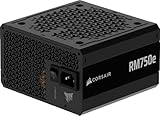
 CORSAIR RM750e ATX 3.1 PCIe 5.1 Ready 750W750 watts5.91 x 5.51 x 3.35 inches3.3 poundsCheck on Amazon

How a weak PSU causes restarts
When a component demands more power than the PSU can cleanly deliver, voltages sag for a fraction of a second. The PSU’s own protection circuits, or the motherboard, detect that dip and cut power to prevent damage, causing an instant restart. Because the trigger is a momentary spike, the reboot looks random.
Transient spikes are the usual trigger
Modern GPUs can spike well above their rated draw for milliseconds. A PSU with little headroom or a worn platform cannot ride out these transients, so restarts cluster around GPU-heavy moments: launching a game, loading a scene, or starting a benchmark.
Signs the PSU is the problem
| Symptom | Points to PSU? | Notes |
|---|---|---|
| Instant reboot under GPU load | Strongly | Classic transient/overload behavior |
| Restart with no BSOD or error | Likely | Power cut before OS can log a crash |
| Worse after a GPU or CPU upgrade | Likely | New parts exceed old PSU headroom |
| Overheats then shuts down after time | Possibly | Could also be cooling; check temps |
| Random crashes only at idle | Less likely | Often RAM, drivers, or storage |
How to confirm it is the PSU
1. Rule out heat and software
Check CPU and GPU temperatures under load. If nothing exceeds safe limits, roughly 85-90C for many chips, overheating is unlikely. Update GPU drivers and test memory to eliminate the common non-power causes.
2. Watch when the restarts happen
If reboots line up with sudden load spikes rather than sustained heat, power delivery is the prime suspect. Idle-only crashes point elsewhere.
3. Check age, wattage, and quality
A PSU more than 7-8 years old, a low-tier unit, or one sized with little margin above system draw is a strong candidate. Aging units lose some capacity over time, so a formerly adequate PSU may no longer cope.
4. Test with a known-good unit
The most reliable confirmation is swapping in a quality PSU with ample wattage. If the restarts stop, the original unit was the fault. Do not diagnose by paperclip-testing alone, since that does not load the unit realistically.
How to prevent it
Choose a reputable 80 Plus Gold or better unit sized so peak load sits near 60-70 percent of capacity. For high-end GPUs, an ATX 3.x unit handles transients far better. Ensure the PSU has proper airflow and is not choked by dust or crammed cabling.
What people mistake for a PSU fault
Not every random restart is the power supply, and swapping it blindly wastes money. Failing RAM often causes crashes and reboots that show up in memory tests. Overheating from dried thermal paste or a clogged cooler produces shutdowns tied to sustained load and rising temperatures, not sudden spikes. A loose 12V-2×6 or EPS connector can mimic a weak PSU exactly, so reseat every power cable before condemning the unit.
A quick elimination order
Work from cheapest to most involved: reseat power cables, then check temperatures under load, then run a memory test, then update drivers. If all of those pass and restarts still cluster around GPU load spikes, the PSU moves to the top of the suspect list. This order saves you from replacing a healthy unit when a five-minute cable reseat would have fixed the problem.
FAQ
Can an underpowered PSU damage other components?
A quality PSU with working protections will usually shut down rather than harm parts. Cheap units without proper protection are the real risk, which is why platform quality matters as much as wattage.
Will a bigger PSU fix random restarts?
If the cause is insufficient headroom or a worn unit, a larger quality PSU typically resolves it. If restarts continue, the problem lies elsewhere, such as RAM, the motherboard, or thermals.
Bottom line
A weak or aging PSU absolutely can cause random restarts, especially instant reboots under GPU load with no error logged. Rule out heat and software, match the restart timing to power spikes, then confirm with a known-good, properly sized unit. Good power delivery is the quiet foundation every stable build depends on.