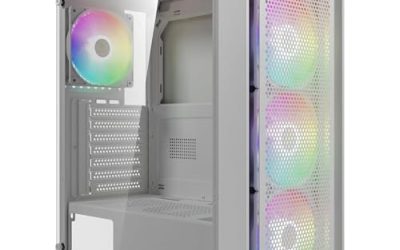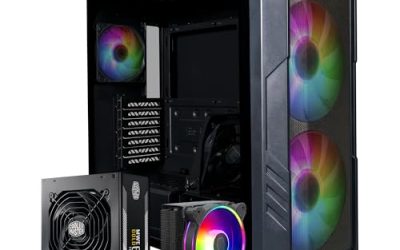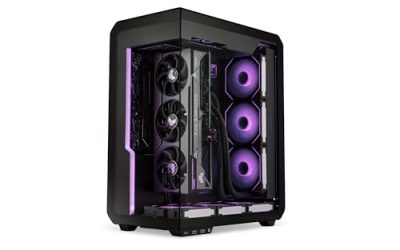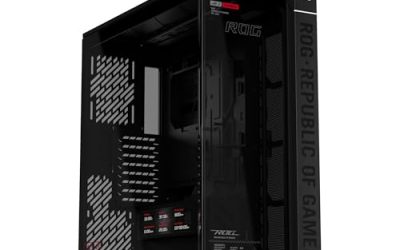
Designing a tranquil home office or dedicated workspace requires careful attention to soundscapes, and few things disrupt a focused environment like a noisy computer tower. When custom PC builds sit directly on or under a desk, maintaining low ambient noise while preventing dust buildup becomes a primary maintenance priority. Implementing a positive pressure cooling scheme—where intake air volume strictly exceeds exhaust air volume—forces air outward through unfiltered gaps, locking out dust and keeping your workspace clean.
Selecting the best quiet 120mm case fans for positive pressure airflow requires balancing acoustic engineering with high static pressure capabilities. Because intake fans must pull fresh air through restrictive dust filters, fine mesh panels, or drive bays, standard airflow designs often fail or create high-pitched noise under stress. Below, we have compared, evaluated, and ranked the top options on the market to help you achieve a whisper-quiet, dust-resistant computer build.
As an Amazon Associate we earn from qualifying purchases at no extra cost to you.



Our Top Picks
 be quiet! Pure Wings 3 120mm PWM High-Speed120mm PWM high-speed4.7 x 4.7 x 1 inches0.4 PoundsCheck on Amazon



Top 3 picks at a glance
Quick Picks
| Product | Best For | Price |
|---|---|---|
| be quiet! Pure Wings 3 120mm Silent PWM | Best Entry-Level Quiet Intake | Check on Amazon |
| Noctua NF-P12 redux-1700 PWM | Best Mid-Range Pressure Performance | Check on Amazon |
| be quiet! Pure Wings 3 120mm PWM High-Speed | Best Budget High-Output Fan | Check on Amazon |
| ARCTIC P12 (5 Pack) | Best Value Multi-Pack | Check on Amazon |
| ARCTIC P12 Slim PWM PST | Best Compact/Low-Clearance Fan | Check on Amazon |
| Thermalright TL-C12C X3 (3 Quantities) | Best Ultra-Budget Triple Pack | Check on Amazon |
| NZXT F120Q | Best Minimalist Quiet Design | Check on Amazon |
| Noctua NF-A12x25 PWM | Best Premium Overall Performance | Check on Amazon |
How We Compared
Evaluating 120mm fans for positive pressure intake requires evaluating factors beyond simple rotation speeds. Intake fans operating behind front panels encounter resistance, meaning static pressure—the force generated to push air through obstacles—is critical. A fan that moves large volumes of free air may stall or whine when mounted behind dense dust mesh.
We evaluated each model based on its acoustic profile, structural rigidness, motor smoothness, and value. For positive pressure builds, fan speed consistency via 4-pin Pulse Width Modulation (PWM) is vital, as it allows users to establish custom fan curves that keep intake speeds slightly higher than exhaust speeds. Price points were evaluated directly against included quantities and thermal capability to determine real-world utility for quiet home office environments.
The 8 Best Picks
be quiet! Pure Wings 3 120mm Silent PWM Computer Case Fan
The be quiet! Pure Wings 3 120mm Silent PWM model is tailor-made for home office users looking to eliminate low-frequency motor hums without overspending. Designed with optimized fan blade geometry, it draws air steadily through fine front filters while keeping acoustic output to a minimum.
- Pro: Exceptionally quiet operation during daily productivity tasks.
- Con: Lacks high-end static pressure for ultra-dense water cooling radiators.
Skip this option if you need maximum static pressure for thick liquid cooling radiators mounted behind your front intake panel.
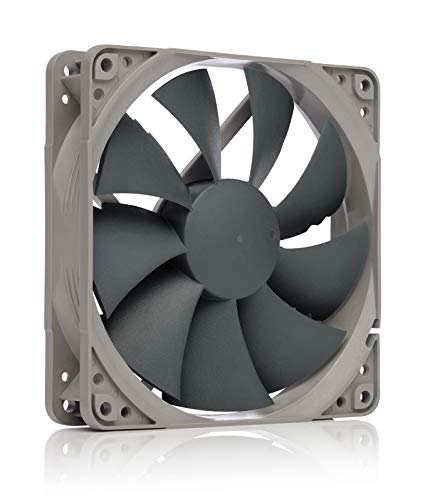
Noctua NF-P12 redux-1700 PWM
Featuring a nine-blade design engineered specifically for high-resistance applications, this 120mm fan drives air past dust filters and drive cages effortlessly. Operating up to 1700 RPM, it offers plenty of thermal overhead for positive pressure setups when components are under heavy loads.
- Pro: Purpose-built blade design delivers high static pressure through dust filters.
- Pro: Proven long-term durability with Noctua’s self-stabilizing oil-pressure bearing architecture.
- Con: Does not include pre-installed anti-vibration rubber corner pads.
Skip this fan if you want a complete color-matched all-black interior build without grey housing accents.
be quiet! Pure Wings 3 120mm PWM High-Speed Case Fan
For systems that require stronger directional airflow to overpower exhaust draft, the be quiet! Pure Wings 3 High-Speed variant increases velocity while retaining a quiet sound signature.
- Pro: Strong pressure profile for restricted front panel mesh designs.
- Pro: Affordable pricing for high-performance intake upgrades.
- Con: Slightly audible air velocity sound when spinning near its ceiling speed.
Skip this model if you prefer lower-RPM fans tuned purely for silence rather than maximum intake force.
ARCTIC P12 (5 Pack)
The ARCTIC P12 5-pack offers unmatched economic value for outfitting an entire case with dedicated pressure-optimized intake fans. Installing three of these as front intakes easily establishes positive pressure against one or two exhaust fans.
- Pro: Exceptional value per fan at less than five dollars apiece.
- Pro: Pressure-optimized blade geometry built to overcome front filter drag at up to 1800 RPM.
- Con: Basic 3-pin or standard 4-pin cables lack integrated daisy-chaining convenience.
Skip this bundle if you only need a single individual replacement fan for your current setup.
ARCTIC P12 Slim PWM PST
Its reduced profile allows it to fit behind narrow front panels or front-mounted radiators where standard 25mm fans collide with internal components, maintaining clean positive pressure without sacrificing space.
- Pro: Ultra-slim design fits cramped chassis intake bays easily.
- Pro: Integrated PST (PWM Sharing Technology) simplifies cable management.
- Con: Slightly lower total volumetric airflow compared to standard-depth 120mm fans.
Skip this slim model if your enclosure has ample internal depth for standard 25mm thick fans.
Thermalright TL-C12C X3 (3 Quantities)
Featuring 4-pin PWM control, S-FDB (Fluid Dynamic Bearings), and speeds up to 1550 RPM, these quiet fans allow budget-conscious builders to easily set up a three-fan intake array for reliable positive pressure performance.
- Pro: S-FDB bearings provide smooth, whisper-quiet operation up to 1550 RPM.
- Con: Bare-bones construction with basic unbraided wiring harness.
Skip this option if you require extreme static pressure for heavy water-cooling setups.
NZXT F120Q
With swept-blade contours and anti-vibration rubber corners, it delivers smooth airflow into the chassis while preventing vibration transfer to desk surfaces.
- Pro: Sleek, frame-integrated anti-vibration dampers keep desk resonance minimal.
- Pro: Smooth acoustics optimized for quiet home office environments.
- Con: Higher price per fan compared to multi-pack budget alternatives.
Skip this model if you need high static pressure to push air through thick front liquid cooling radiators.
Noctua NF-A12x25 PWM
The Noctua NF-A12x25 PWM is widely regarded as the premium flagship standard for 120mm cooling fans.
- Pro: Unrivaled performance-to-noise ratio across all speed ranges.
- Pro: Premium construction materials and extensive bundled mounting accessories.
Skip this option if you are working within a tight overall budget for your computer system upgrade.
Buying Guide
Understanding Positive Pressure Airflow
Positive pressure occurs when the total cubic feet per minute (CFM) of air intake exceeds the total volume of air being exhausted from a chassis. In home office settings, this system arrangement prevents dust from entering through unfiltered cracks, seams, and rear expansion slots. By maintaining a steady outflow through unsealed gaps, dust is trapped exclusively at your intake filters, where it is simple to clean.
Airflow vs. Static Pressure for Intake Fans
When selecting 120mm fans for intake placement, prioritize static pressure over raw air volume. Intake fans almost always sit behind fine dust mesh, solid front panels, or restrictive decorative grilles. High-airflow fans tend to lose velocity and create turbulent noise when pressing against these obstructions. Static pressure blades maintain steady airflow and push fresh air into the case without increasing motor strain or noise levels.
Acoustics, Fan Speeds, and PWM Control
Achieving quiet operation in modern 2026 computer builds relies heavily on 4-pin PWM control. PWM allows your system software to dynamically adjust fan speeds based on real-time temperature sensors. By setting intake fans to run at slightly higher idle RPM percentages than exhaust fans, you maintain positive pressure without running fans at maximum speeds, preserving a peaceful working environment.
Our Verdict
For maximum performance and silence without budget constraints, the Noctua NF-A12x25 PWM stands as the ultimate 120mm fan for positive pressure builds. Its engineering ensures silent intake through dense dust filters. On the value side, the ARCTIC P12 (5 Pack) provides an incredible balance of static pressure performance and low cost, making positive pressure setups easy to achieve. Meanwhile, the be quiet! Pure Wings 3 120mm Silent PWM serves as a reliable, single-fan intake choice for mid-tier quiet builds.
FAQ
What is positive pressure airflow and why do I need it?
Positive pressure means more air is being forced into the computer case than is being pulled out. This creates a slightly higher internal air pressure that repels dust from entering through unfiltered gaps, keeping your PC clean and quiet.
Is high static pressure better than high airflow for front intake fans?
Yes. Front intake locations almost always feature dust filters or decorative panel covers. Static pressure fans are specifically designed to push air through these tight restrictions quietly without sacrificing performance.
How many 120mm fans do I need for positive pressure?
A common setup uses three front 120mm intake fans paired with one rear and one top exhaust fan. Alternatively, running two intake fans at a slightly higher RPM than a single exhaust fan will achieve the same positive pressure balance.
Can I run intake fans slower than exhaust fans and keep positive pressure?
Generally no. If your intake fans run slower than exhaust fans, your case will enter negative pressure unless you have significantly more physical intake fans than exhaust fans installed.