Our Top Picks
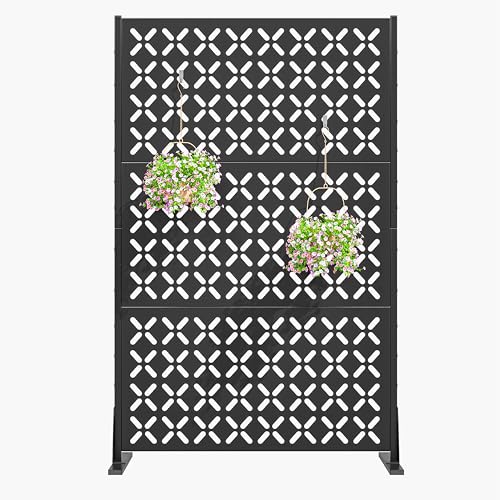


Top 3 picks at a glance

Best Lattice Panels for Privacy: Choose by Height, Openings, and Wind
The best lattice panels for privacy are sturdy panels with small openings, installed high enough to block the sightlines that matter—but lattice is not a solid fence, so it never provides complete privacy. For most yards, a 6-foot fence topped with a 1- to 2-foot lattice section is a practical compromise. Choose vinyl for low maintenance, wood for easier customization, and a wind-rated mounting system if the fence is exposed.
First, work out how much privacy you actually need
Panel height alone does not determine privacy. The view through a lattice depends on opening size, viewing angle, distance, and what is behind it. A small opening may obscure a seated person from across the yard while still revealing movement—or a direct view—when someone is close to the fence.
As an Amazon Associate we earn from qualifying purchases at no extra cost to you.


Check the fence from the places where people are likely to look: a neighboring patio, an upstairs window, a sidewalk, or your own seating area. Measure the height of those sightlines above ground. A short lattice topper can screen a seated area without making the entire boundary look imposing; a low panel will do little against an elevated window.
Keep code and property constraints in mind. Local rules may limit fence height, including decorative toppers, and requirements can differ for front yards, corner lots, pools, and shared boundaries. Confirm the allowed total height before buying.
Compare panel options
| Panel type or feature | Typical specification | Privacy and durability trade-off | Best fit |
|---|---|---|---|
| Small-opening lattice | About 1/2–1 inch openings | Obscures more of the view at a distance, but still has sight-through gaps | Patios where extra screening matters |
| Medium-opening lattice | About 1–2 inches | More open appearance; less screening, especially up close | Decorative boundaries and garden dividers |
| Large-opening lattice | About 2–3 inches or larger | Allows more light and airflow but offers limited visual screening | Plant supports and open garden structures |
| Wood panel | Commonly sold in 4-by-8-foot sheets; actual dimensions vary | Can be cut and painted, but needs inspection and periodic coating | Custom layouts and repairs using standard carpentry tools |
| Vinyl panel | Often sold as fence inserts or topper kits; sizes vary by system | Resists rot and does not need painting, but can crack or deform under impact or heat | Lower-maintenance fences with compatible rails and posts |
These opening ranges are useful buying categories, not a universal standard. Manufacturers measure lattice patterns differently, so compare the clear opening—the unobstructed gap—rather than relying on a product name such as “privacy lattice.” Also check whether the listed panel size is its actual size or a nominal size intended to fit a particular frame.
Wood versus vinyl: which lasts better?
Choose wood when fit and repairability matter
Wood lattice is easy to trim, paint, or stain and can be a good match for an existing timber fence. Its service life depends heavily on exposure and upkeep. Water trapped at cut edges or where the panel meets a post can lead to swelling, rot, or loose fasteners. Seal cut ends, keep the panel from sitting in soil, and inspect it for splitting and failed coatings.
Thin wood strips are also vulnerable to impact and can loosen as the frame moves. If you want a closer-spaced pattern for screening, check that the strips and perimeter frame are substantial enough to support it; tighter spacing can catch more wind.
Choose vinyl when regular finishing is a drawback
Vinyl does not rot and typically needs only cleaning, making it attractive for a fence that is difficult to maintain. It is less convenient to alter on site, and cut edges or improvised fastening can weaken a panel. Heat, cold, and direct impact can also contribute to cracking or distortion, so use components designed for the chosen fence system and follow its expansion and fastening guidance.
Neither material is automatically more durable in every location. A properly framed, maintained wood panel may outlast a poorly supported vinyl insert; a suitable vinyl system can avoid the recurring coating work that exposed wood requires.
Wind resistance: the hidden cost of tighter screening
Lattice reduces wind load compared with a solid sheet, but it does not eliminate it. Smaller openings and denser patterns catch more wind; taller fence sections also create more leverage on posts. A panel that seems light by itself can still contribute to a substantial load across a long fence run.
Before installation, check the fence manufacturer’s limits for topper height and panel type. On exposed sites, use posts and rails sized for the combined fence and lattice height, and secure the panel around its perimeter rather than relying on a few fasteners through the center. Do not attach a dense lattice topper to a fence that already wobbles or has loose posts. Repair or reinforce the structure first, and seek local professional guidance where wind exposure is severe or soil conditions are poor.
Mounting method: match the panel to the fence
- Between posts in a framed opening: Provides support around all sides and works well for standalone panels. Leave the clearance recommended by the manufacturer, especially for vinyl that needs room to expand.
- As a fence topper: Uses brackets, rails, or a compatible fence-system kit to attach above an existing fence. Confirm that the posts and local height rules allow the added height.
- Directly to an existing frame: Can suit wood lattice on a sound timber fence. Fasteners need adequate embedment into framing, not just a thin decorative strip; avoid over-tightening brittle material.
Find out how the fence is built before ordering. Post spacing, rail position, panel thickness, and bracket compatibility can vary even when two products have the same nominal width. Measure each opening, not just one, and check for posts that lean or rails that have bowed.
A practical decision matrix
| Your situation | Starting choice | What to verify |
|---|---|---|
| Screen a seated patio from a nearby yard | Small-opening lattice, commonly 1/2–1 inch, on a sturdy frame | View it from the neighbor’s likely standing and seated positions; gaps remain visible up close |
| Keep a boundary light and decorative | Medium- or large-opening lattice | It provides limited privacy and should not be mistaken for a visual barrier |
| Minimize painting and routine upkeep | Compatible vinyl insert or topper system | Heat, impact exposure, expansion clearance, and approved mounting hardware |
| Cut around an irregular opening or match a wood fence | Wood lattice with a supported perimeter frame | Sealed cut ends, clearance from soil, and a plan for periodic maintenance |
| Install on a windy or exposed boundary | Open-pattern lattice only if the existing fence can support the added height | Post condition, attachment details, total height, and manufacturer wind guidance |
Estimate realistic privacy coverage before buying
A simple way to compare options is to estimate the open portion of the panel. For a square grid, if the clear opening is g and the strip width is w, the approximate open-area fraction is:
Open area ≈ [g ÷ (g + w)]²
For example, suppose a lattice has 1-inch clear openings and 1/2-inch strips. The approximate open area is (1 ÷ 1.5)², or about 44%. That means roughly 56% of the face is material, but it does not mean the panel blocks 56% of what a person can see. Viewing angle, contrast, lighting, and distance all change the result. Treat the calculation as a way to compare patterns, not a promise of privacy.
For a useful reality check, hold a sample or mock-up in the intended location and look through it from the relevant sightlines. If you need dependable visual blockage rather than partial screening, use a solid fence section or a separate privacy screen instead of expecting lattice to provide full coverage.
Frequently asked questions
Can lattice provide complete privacy?
No, lattice does not provide complete privacy because its openings leave gaps in the view. How much it screens depends on opening size, viewing angle, distance, and what is behind the panel. If you need dependable visual blockage, the article recommends a solid fence section or a separate privacy screen rather than relying on lattice.
How can I tell whether a lattice panel will fit my fence?
Measure each fence opening and check the panel’s actual dimensions, thickness, post spacing, rail position, and bracket compatibility. Nominal sizes may be intended for a particular frame, and openings can vary even along the same fence. Also inspect for leaning posts or bowed rails before ordering, since a panel needs a sound structure to attach to.
Can I put a lattice topper on an existing fence?
Yes, if the fence is sound and its posts and rails can support the added height and panel. Check the fence manufacturer’s limits, local height rules, and the topper’s mounting guidance. Do not attach dense lattice to a fence that wobbles or has loose posts; repair or reinforce the structure first.
What should I do with cut edges on a wood lattice panel?
Seal cut ends and keep the panel from sitting in soil. Water trapped at cut edges or where the panel meets a post can contribute to swelling, rot, or loose fasteners. Inspect the panel for splitting and failed coatings, and plan for periodic maintenance because wood’s service life depends heavily on exposure and upkeep.
How much privacy does a 1-inch-opening lattice provide?
A 1-inch opening alone does not tell you how much privacy the panel will provide. Strip width, viewing angle, distance, lighting, contrast, and what lies behind the panel all affect what someone can see. The article suggests comparing clear openings and checking a sample or mock-up from the relevant sightlines before buying.