The best humidifiers for bedrooms are quiet, adjustable models that can hold indoor humidity near 40–50%: choose a cool-mist ultrasonic unit for quiet nighttime use, an evaporative model for lower over-humidification risk, or a warm-mist unit if you value steam and do not mind higher energy use.
As an Amazon Associate we earn from qualifying purchases at no extra cost to you.



Our Top Picks
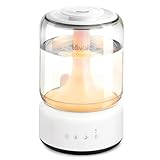
 Levoit Top Fill Humidifiers for Bedroom2.5L Classic Humidifier6.38 x 7.12 x 10.14 Inches2.16 PoundsCheck on Amazon
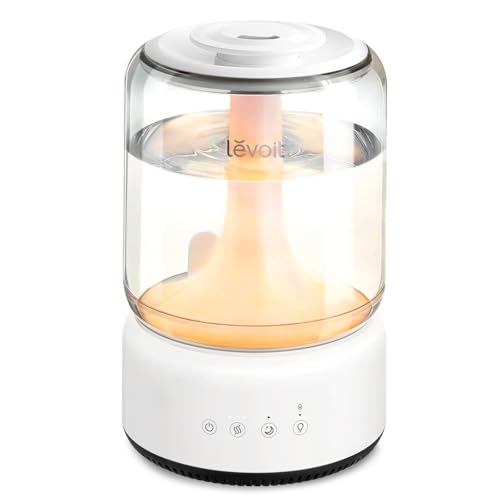 Levoit Humidifiers for Bedroom 4.2L Top Fill for4.2L Easy Clean8.1 x 8.1 x 12.8 inches3.9 PoundsCheck on Amazon


Top 3 picks at a glance
Quick choices by bedroom and sleeping setup
| Bedroom situation | Best humidifier type | Useful capacity | Target noise | What to prioritize |
|---|---|---|---|---|
| Small room, up to 150 sq. ft. | Compact ultrasonic cool mist | 1–2 liters | Under 30 dB | Low-minimum output, timer, easy cleaning |
| Medium bedroom, 150–300 sq. ft. | Ultrasonic or evaporative | 3–4 liters | Under 35 dB | Auto-humidity control and overnight runtime |
| Large bedroom, 300–500 sq. ft. | Large evaporative or ultrasonic | 4–6 liters | Under 40 dB | High output, wide coverage, refill convenience |
| Bedroom with a gaming PC | Evaporative or controlled ultrasonic | 3–5 liters | Under 35 dB | Hygrostat, mineral control, placement away from electronics |
| Cold, dry room where steam is welcome | Warm mist | 1–4 liters | Usually quiet | Boil time, burn protection, electricity cost |
Cool-mist ultrasonic: the quietest bedroom-friendly option
Ultrasonic humidifiers use a vibrating plate to turn water into a fine mist. They are usually the easiest choice for a bedroom because the fan is small or absent, and many operate below the noise floor of a typical PC fan at idle. Models such as the Levoit Classic 300S are examples of the feature class: a multi-liter tank, adjustable output, app or button controls, and automatic humidity scheduling.
Choose ultrasonic cool mist when sleep noise is your main concern, when you want low power consumption, or when the room is small enough that high output is unnecessary. The drawback is that untreated hard water can leave white mineral dust on desks, monitor stands, and PC filters. Distilled or demineralized water reduces that problem, although it increases running cost.
Best settings for an ultrasonic unit
- Set the target humidity to 45% as a starting point.
- Use low output overnight rather than maximum output for a short period.
- Keep the mist outlet at least 2–3 feet from a monitor, desktop PC, speakers, and other electronics.
- Use a separate hygrometer near the bed because the humidifier’s built-in sensor may read higher than the rest of the room.
Auto-humidity control matters more than a large tank. A 6-liter tank running continuously can over-humidify a small bedroom, while a 3-liter unit that cycles itself can maintain a steadier and safer level.
Evaporative humidifiers: the safer choice for over-humidifying concerns
Evaporative models draw dry air through a wet wick or filter. Their fan noise is more noticeable than an ultrasonic unit, but the process naturally slows as the room becomes more humid. That makes them a strong match for bedrooms with closed doors, gaming PCs, or people who do not want to monitor humidity constantly.
The Honeywell HCM-350 is a well-known example of a bedroom-sized evaporative design. Its replaceable wick is an ongoing maintenance cost, but the filter also captures some minerals that would otherwise become airborne. Newer evaporative models may add digital controls, sleep modes, and automatic humidity settings.
Choose evaporative if you use hard tap water, want less white dust, or frequently forget to turn the humidifier down. Choose ultrasonic instead if even a low fan hum could disturb your sleep.
Evaporative trade-offs for a gaming room
- Noise: fan noise can blend with a gaming PC, but may be audible during quiet games or voice recording.
- Maintenance: the wick must be replaced when it becomes discolored, stiff, or develops an odor.
- Power: fan motors use more electricity than a basic ultrasonic unit, but typically far less than a warm-mist heater.
- Humidity control: output naturally decreases as the air approaches saturation, reducing the chance of a damp desk area.
Warm-mist humidifiers: quiet operation with a higher power bill
Warm-mist models heat water until it produces steam. The heating element can make them nearly silent apart from occasional bubbling, and the hot water can reduce some microbial contamination inside the unit. Vicks warm-mist humidifiers are examples of this category.
Warm mist suits a cool bedroom where the slight heat is welcome, or a sleeper who dislikes a cool vapor stream. It is less suitable near children, pets, bedding edges, or a crowded PC desk because the water and vapor can cause burns. It also consumes substantially more electricity than cool-mist designs.
A simple power-cost calculation
Suppose a warm-mist humidifier draws 250 watts and runs for eight hours each night. Its nightly energy use is 250 ÷ 1,000 × 8 = 2 kilowatt-hours.
The exact figure depends on cycling, electricity rates, and the appliance’s measured draw, but the difference explains why warm mist should be selected for a specific comfort or hygiene preference rather than simply because it is quiet.
How to match tank size to runtime
Tank capacity alone does not tell you how long a humidifier will last. Runtime depends on output. Use this approximation:
Runtime in hours = usable tank capacity in milliliters ÷ mist output in milliliters per hour.
For example, a 3,000 ml tank running at 200 ml per hour provides about 15 hours of theoretical runtime. If the unit leaves 300 ml unusable at the bottom, practical runtime becomes approximately 2,700 ÷ 200 = 13.5 hours.
For an eight-hour night, a 2-liter tank is enough at 200 ml per hour, but not at 300 ml per hour. A larger tank is useful only if the unit can operate at a low enough output for the room. Otherwise, it creates a refill advantage while increasing the risk of condensation.
Noise, controls, and placement: the details that affect sleep
Noise
Look for a stated low setting below 30–35 dB, but treat decibel numbers as approximate because manufacturers measure them differently. A fan’s sound may be more noticeable than a slightly louder ultrasonic vibration because it contains a steady broadband hiss. If you sleep with a microphone or stream from the bedroom, select a low-noise ultrasonic model or place an evaporative unit several feet behind the microphone.
Auto-humidity controls
A real hygrostat is more useful than a simple timer. Set the target between 40% and 50% relative humidity. If windows begin to fog, lower the target to 35–40% and reduce output. Avoid setting 60% merely because the air feels dry; sustained humidity above 60% can encourage mold and dust mites.
Placement around a PC
Place the humidifier on a stable, waterproof surface below head height, with the outlet aimed into open room air. Do not place it beside the computer intake, above a monitor, or on the same narrow desk shelf as a keyboard. Leave space around the exhaust and use a humidity meter near the gaming position rather than directly beside the mist plume.
Cleaning and maintenance that prevent odor
Every day, empty unused water and allow the tank to air-dry if possible. At least weekly, clean the tank and base according to the manual. A common descaling method is to use diluted white vinegar where the manufacturer permits it, rinse thoroughly, and never mix vinegar with bleach or other cleaners. Disinfectants are appropriate only when the product instructions specifically approve them.
- Bad smell: stop using the unit, empty it, wash the tank and base, and replace the wick or filter if applicable.
- White dust: switch from hard tap water to distilled water, or choose an evaporative model.
- Window condensation: reduce output, lower the target humidity, and improve room ventilation.
- Short runtime: check the selected output level; maximum mode can use several times more water than sleep mode.
- Weak mist: descale the ultrasonic plate, confirm the water level sensor is clean, and check that the air inlet is not blocked.
Frequently asked questions
Can I use tap water in an ultrasonic humidifier?
You can use tap water, but hard tap water may create white mineral dust on desks, monitor stands, and PC filters. Distilled or demineralized water reduces that problem, although it increases running cost. If avoiding mineral deposits is more important than using distilled water, an evaporative humidifier may be a better choice because its wick or filter captures some minerals.
What should I do if my humidifier starts to smell?
Stop using the humidifier, empty it, and wash the tank and base. Clean the unit according to its manual, and replace the wick or filter if applicable. Weekly cleaning can help prevent odor. Diluted white vinegar may be used for descaling where the manufacturer permits it, but rinse thoroughly and never mix vinegar with bleach or other cleaners.
Is a warm-mist humidifier safe to place near a bed?
A warm-mist humidifier should be kept away from children, pets, bedding edges, and crowded PC desks because its water and vapor can cause burns. It may suit a cool bedroom or someone who dislikes cool vapor, but it uses substantially more electricity than cool-mist designs. Place any humidifier on a stable, waterproof surface below head height.
How can I tell whether my bedroom is becoming too humid?
Window condensation is a sign to reduce output, lower the target humidity, and improve room ventilation. A separate hygrometer can help because a humidifier’s built-in sensor may read higher than the rest of the room. Aim for 40–50% relative humidity, and avoid sustained humidity above 60%, which can encourage mold and dust mites.
Why does my humidifier run out of water sooner than expected?
Runtime depends on water output, not tank capacity alone. Maximum mode can use several times more water than sleep mode, so selecting a lower output may extend operation. A larger tank helps only when the unit can run at a low enough output for the room. If runtime is short, check the selected output level first.
Bottom line
For most sleepers, a 2–4 liter ultrasonic cool-mist humidifier with a true hygrostat, sleep mode, and easy-to-clean tank is the best balance. Select an evaporative model when hard water, white dust, or over-humidification is the bigger concern. Choose warm mist for quiet steam and a warmer room, accepting the higher power use and burn risk. Whatever type you buy, aim for 40–50% humidity, keep mist away from PC components, and treat cleaning as part of the product rather than an optional extra.