Our Top Picks
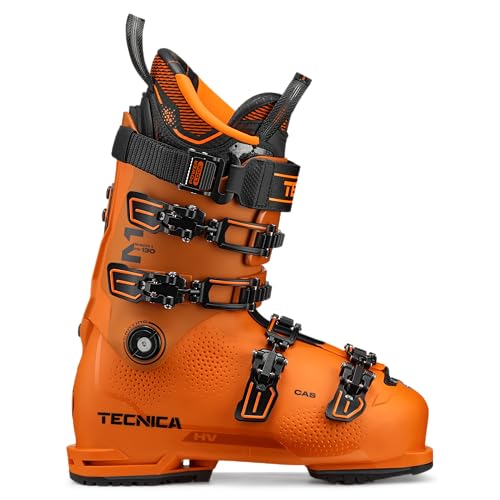 Tecnica Mach1 HV 130 All Mountain/High Performance Men's26.519 x 16 x 6 inches10.05 PoundsCheck on Amazon
 Tecnica Mach1 LV 130 All Mountain/High Performance Men's29.520 x 16 x 7 inches10.8 poundsCheck on Amazon

Top 3 picks at a glance

Best High-End Ski Boots for Expert Performance: The Shortlist
The best high-end ski boots for expert-level performance are the ones that match your foot shape, skiing style, and terrain—not simply the stiffest or most expensive pair. For powerful resort skiing, compare the Nordica Dobermann 5, Lange RS, and Head Raptor WCR; for a more adjustable, hybrid setup, consider the Tecnica Mach1 LV or MV; and for touring that still demands downhill precision, look at the Scarpa 4-Quattro Pro. Flex numbers are not standardized, so treat them as starting points and prioritize a correctly fitted shell.
| Boot family | Best fit or use case | Flex class to compare | Standout decision factor |
|---|---|---|---|
| Nordica Dobermann 5 | Resort experts seeking a close, race-influenced fit | Typically 130–140, depending on version | Precise, performance-oriented fit; confirm last and shell volume |
| Lange RS | Strong skiers who want a snug, direct resort boot | Typically 130–140, depending on version | Low-volume options and a firm connection to the ski |
| Head Raptor WCR | Expert resort skiers prioritizing a race-derived feel | Typically 130–140, depending on version | Close hold and high feedback; bootfitting is often essential |
| Tecnica Mach1 LV or MV | Experts who need a choice of lower or medium-volume shell | Typically 120–130 in performance versions | Compare volume first; choose stiffness only after fit |
| Scarpa 4-Quattro Pro | Experts splitting time between touring and resort skiing | Stiff touring-oriented class | Walk mode and touring compatibility alongside downhill support |
Specifications and flex labels can vary by year, size, and market. Check the exact version before buying, especially if you need a specific binding-compatibility standard or walk-mode feature.
As an Amazon Associate we earn from qualifying purchases at no extra cost to you.


Choose by skiing, not by the biggest flex number
A stiff boot can transmit input quickly, but it can also punish a skier who cannot flex it in cold conditions or maintain a balanced stance. A boot that is too soft may collapse under strong forward pressure, delaying edge engagement and making high-speed turns feel vague. Flex ratings are manufacturer-specific: a “130” from one brand is not a guaranteed match for a “130” from another.
As a starting point, many powerful expert skiers compare boots in the 120–130 range, while heavier or particularly forceful skiers may prefer 130–140. These are not rules. A lighter skier, someone skiing in very cold conditions, or a skier who needs mobility through the ankle may perform better in a lower flex. The right test is whether you can flex the boot progressively without your heel lifting or your stance being pushed behind your feet.
The fit decision that matters more than the model name
Start with shell volume and foot shape. “LV” generally indicates a lower-volume fit and “MV” a medium-volume fit, but brands use their own lasts and these labels are not interchangeable measurements. A boot that is too roomy allows the foot to move before the ski responds; over-tightening buckles to compensate can create pressure and numbness.
During a professional shell-fit check, the liner is removed and the foot is placed in the empty shell. The fitter assesses space around the toes and heel, as well as width and instep height. A close performance fit should feel snug, but not depend on sharp, persistent pain to achieve control. Allow for liner packing: a boot that feels comfortable and spacious in the shop may become loose after the liner compresses.
Heat-moldable liners and shells can improve contact, but they do not make every shell suitable for every foot. A skilled bootfitter may use localized shell punching or grinding, custom footbeds, cuff alignment, and spoiler adjustments. These changes address specific pressure or alignment issues; they are not substitutes for starting with the right shell shape.
Shell construction, liner, and power transfer
High-end alpine boots commonly use rigid plastic shells, with material and construction varying across the cuff and lower shell. More than the material name, pay attention to how the boot flexes, how securely it holds the heel, and whether the cuff aligns with your lower leg. A smooth, progressive flex helps maintain pressure through a turn; a harsh or abrupt flex can make subtle control difficult.
The liner is part of the transmission system. Dense, supportive liners can hold the ankle and heel firmly, improving response when changing edges. Heat-moldable zones help customize contact, while liners designed for touring may prioritize mobility and reduced weight. A thick, plush liner may feel comfortable initially but can pack out, so experts should assess heel retention and ankle hold rather than judging comfort only while standing still.
Power transfer also depends on the sole and binding interface. Alpine soles, GripWalk soles, and touring-compatible soles are not universally interchangeable with every binding. Confirm that the boot’s sole standard is approved for your bindings. A great-fitting boot with an incompatible sole is not a safe setup.
Decision matrix: match the boot to your day
| Your priority | What to favor | What to verify before purchase |
|---|---|---|
| Hard snow, high speed, frequent carving | Snug resort shell, strong heel hold, progressive stiff flex | That you can flex it in your normal stance and cold-weather layers |
| Very narrow foot or low instep | Lower-volume performance model, secure ankle pocket | Toe room and instep pressure after a proper shell check |
| Wide forefoot or prominent ankle bones | Shell shape with room in the problem area and a fitter’s modification options | Whether the shell can be adjusted locally without sacrificing heel hold |
| Resort laps plus occasional touring | Hybrid or touring-capable boot with walk mode | Binding compatibility, sole standard, cuff range, and downhill stiffness |
| Long tours with demanding descents | Touring boot balancing uphill articulation and downhill support | Whether the added weight and stiffness suit your route and ski |
When uphill features are worth the trade-off
For lift-served skiing, a walk mode usually adds little value compared with a dedicated resort boot. For touring, a cuff that releases for walking can reduce effort on the ascent, but lighter construction and greater cuff movement may change the feel on descents. The Scarpa 4-Quattro Pro is a useful model to compare when you want a touring-capable boot with a strong downhill focus; it is not a direct substitute for a race-oriented alpine boot in every respect.
Before choosing a hybrid, check the actual cuff range, boot weight, sole standard, and binding requirements. A walk mechanism is only useful if it works with your touring or hybrid binding, and a claimed flex number should not be treated as directly comparable to an alpine model’s number.
A practical fitting check before you commit
- Wear your ski socks. Use a thin, close-fitting ski sock; thick socks can hide fit problems and reduce feel.
- Check heel retention. Flex forward with the buckles lightly secured. The heel should stay controlled rather than lifting substantially.
- Test the flex. Press into the tongue several times. Look for smooth movement and a centered stance, not a boot that feels immovable indoors.
- Inspect pressure points. Note the exact location and whether pressure is mild contact or sharp pain. Tell the fitter rather than simply tightening or loosening every buckle.
- Confirm compatibility. Match the boot sole to the binding manufacturer’s approved standards before skiing.
Frequently asked questions
Should I choose a race-oriented boot for the best expert performance?
Not necessarily; the best boot is the one matching your foot shape, skiing style, and terrain. Race-influenced resort options such as the Nordica Dobermann 5, Lange RS, and Head Raptor WCR can suit strong resort skiers, but the Tecnica Mach1 may be preferable when shell volume is the deciding factor. A professional fitting should determine the final choice.
What does LV or MV mean on a ski boot?
LV generally indicates a lower-volume fit, while MV generally indicates a medium-volume fit. These labels are not interchangeable measurements because brands use their own lasts. Start by comparing the shell’s volume, width, instep height, and heel hold with your foot shape. Choosing the right volume is more important than selecting a boot solely by its flex number.
Can heat molding fix a ski boot that does not fit?
Heat molding can improve contact, but it cannot make every shell suitable for every foot. A skilled bootfitter may also use localized shell punching or grinding, custom footbeds, cuff alignment, and spoiler adjustments. These changes address particular pressure or alignment issues, but they are not substitutes for starting with a shell whose shape and volume suit your foot.
Why can a comfortable ski boot become loose later?
A liner can compress with use, so a boot that feels spacious and comfortable in the shop may later become loose. Experts should assess heel retention and ankle hold rather than judging comfort only while standing still. A close performance fit should feel snug without relying on sharp, persistent pain or excessive buckle tightening to maintain control.
Can I use any ski boot with my current bindings?
No; the boot sole must match a binding manufacturer’s approved standards. Alpine soles, GripWalk soles, and touring-compatible soles are not universally interchangeable with every binding. Before purchase, confirm the exact sole standard, binding compatibility, and any walk-mode requirements. A well-fitting boot is not a safe setup if its sole is incompatible with the bindings.
Final recommendation
For a dedicated resort expert, begin by comparing the Dobermann 5, Lange RS, Head Raptor WCR, and Tecnica Mach1 in the shell volume that matches your foot. Choose the model that gives the best heel hold and progressive flex after a proper fitting—not the one with the highest printed number. If you tour regularly, compare the 4-Quattro Pro and other touring-capable options against the uphill mobility and binding requirements you actually need. In every case, a correctly fitted, compatible boot transfers power more reliably than a stiffer boot that does not fit.