The best guitar pickup systems depend on your playing style: choose magnetic pickups for maximum feedback resistance and simple live use, piezo systems for acoustic-like clarity and strong dynamics, and microphone-based systems when natural body resonance matters more than stage volume.
As an Amazon Associate we earn from qualifying purchases at no extra cost to you.



Our Top Picks
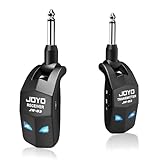
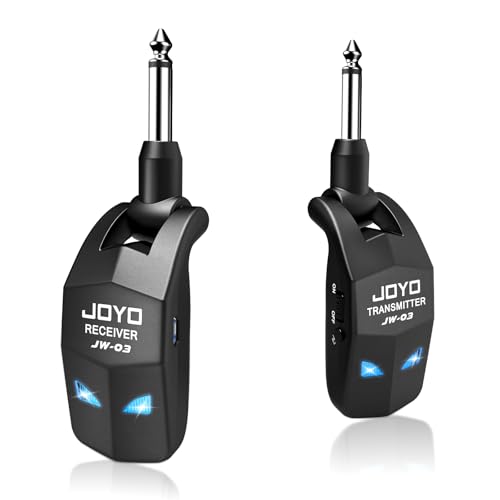
 Xvive AC58 Wireless Guitar System with Charging CaseAC583.5 x 3 x 2.5 Inches0.2 poundsCheck on Amazon


Top 3 picks at a glance
Quick comparison: magnetic vs. piezo vs. microphone
| Pickup type | Typical tone | Feedback resistance | Installation | Battery needs | Best suited to |
|---|---|---|---|---|---|
| Magnetic soundhole | Warm, focused, electric-like | Excellent | Easy; usually removable | Often 9V, typically 500–2,000 hours | High-volume bands, effects, touring |
| Undersaddle piezo | Bright, immediate, percussive | Very good with a preamp | Moderate to advanced | Usually 9V or 3V lithium, commonly 100–1,000 hours | Strumming, amplified acoustic sets, mixed signal chains |
| Soundboard/contact piezo | Detailed, woody, responsive | Good, but placement-sensitive | Moderate; adhesive or internal mounting | Passive or external preamp | Fingerstyle, percussion, natural dynamics |
| Internal microphone | Most open and air-like | Fair to poor at high stage volume | Advanced; requires careful positioning | Usually 9V with an onboard preamp | Solo performance, recording, moderate-volume ensembles |
| Blended system | Adjustable balance of body and clarity | Good when the microphone is controlled | Advanced | Usually 9V; commonly 100–500 hours | Players who need one guitar for several environments |
Battery figures are practical estimates rather than guarantees. Output level, preamp design, cable quality, temperature, and whether the guitar’s cable is left plugged in can change runtime substantially. Most active systems switch on when a cable is inserted, so unplugging between sets is one of the easiest ways to prevent a dead battery.
Best magnetic pickup systems for loud stages
Magnetic pickups sense the movement of steel strings in a magnetic field, much like an electric-guitar pickup. They do not capture the guitar’s body resonance as completely as a microphone, but that limitation is also their main advantage: they reject much of the airborne sound that causes feedback.
Best choices by use case
- Fishman Rare Earth Magnetic: a practical soundhole option for players who want a removable pickup, warm output, and strong feedback resistance.
- Seymour Duncan Woody HC: a hum-canceling magnetic pickup with a relatively simple, non-permanent installation for steel-string acoustics.
- Single-coil soundhole pickups: useful when a brighter, more electric-style response is desirable, although they can produce more hum than hum-canceling designs.
Magnetic systems are particularly effective for rock, worship bands, amplified bluegrass, and any performance where drums or loud monitors are close to the guitar. They also tolerate distortion, delay, and looping better than microphones because the signal remains focused and less prone to acoustic howl.
The trade-off is compatibility. Standard magnetic soundhole pickups require ferromagnetic steel strings. Nylon-string guitars and many guitars fitted with non-magnetic strings will not work correctly unless the pickup is specifically designed for them.
Best piezo systems for clarity and dynamic control
Piezo pickups respond to pressure and vibration rather than magnetic movement. Undersaddle versions sit beneath the saddle and translate string pressure into an electrical signal. Their attack is fast and their feedback resistance is usually much better than that of an internal microphone.
Notable piezo and contact options
- Fishman Matrix Infinity: an undersaddle system with an onboard preamp and controls designed for a clean, stage-ready acoustic signal.
- LR Baggs Element Active System: a compact undersaddle design often chosen for its strong fundamental and relatively unobtrusive installation.
- K&K Pure Mini: a passive soundboard-transducer system that uses three contact sensors attached inside the guitar. It can sound natural and lively, but normally benefits from a high-impedance preamp.
- LR Baggs M1 Active: a magnetic pickup with an active preamp, useful when a player wants magnetic feedback resistance with more output and control than a basic passive unit.
Piezo systems are usually the best compromise for amplified acoustic guitar. They remain articulate under heavy strumming, provide a stable signal for a sound engineer, and can be blended with a microphone or magnetic pickup. Their familiar weakness is the “quack” or brittle upper-midrange sound that can appear when the preamp, saddle fit, or equalization is wrong.
How to reduce piezo quack
- Check the saddle fit first. The saddle must sit flat across the transducer. A rocking or uneven saddle creates inconsistent string volume and exaggerated treble.
- Use a proper high-impedance input. Start with a preamp or acoustic DI offering at least 1 megaohm input impedance. A low-impedance guitar input can make a passive piezo thin and harsh.
- Cut, rather than boost, the harsh band. Try reducing 2.5–4 kHz by 2–4 dB with a medium-width parametric EQ. This range often contains the synthetic edge.
- Add a small low-mid lift only if needed. A 150–250 Hz boost of 1–2 dB can restore body, but excessive bass increases rumble and feedback risk.
When a microphone-based system is worth the risk
An internal microphone hears the guitar’s air movement, top vibration, and body resonance, making it the closest of the three approaches to placing a studio microphone inside the instrument. This can produce the most open, three-dimensional tone, especially for fingerstyle, light strumming, and percussive techniques.
Microphone systems are less suitable for loud stages. The microphone can hear the monitor, drums, and room reflections, so increasing volume may create low-frequency rumble or a narrow, piercing feedback frequency. Systems such as the LR Baggs Anthem combine an undersaddle element with an internal microphone, allowing the microphone to add realism while the piezo supplies a more controllable core signal.
For solo performers, a blended system can sound more natural than a piezo alone. For a full band, keep the microphone blend low at first—often 10–30 percent—and increase it only after the monitor mix is stable. A microphone-heavy blend is not automatically better; it is more sensitive to venue acoustics and speaker placement.
Decision matrix: match the pickup to your situation
| Your situation | Recommended system | Why | What to avoid |
|---|---|---|---|
| Loud rock band with stage monitors | Magnetic or undersaddle piezo | Greater feedback margin and consistent output | Microphone-only systems |
| Solo fingerstyle performance | Blended piezo/microphone or contact piezo | Captures detail, body resonance, and touch | Overly compressed magnetic systems |
| Removable pickup for multiple guitars | Soundhole magnetic | Installs in seconds without permanent modification | Permanent undersaddle installations |
| Nylon-string guitar | Contact piezo or nylon-compatible microphone system | Works without relying on magnetic steel strings | Standard steel-string magnetic pickups |
| One guitar for quiet and loud venues | Blended system with independent controls | Use more microphone in quiet rooms and less on loud stages | Systems with no blend or phase control |
Installation complexity and long-term maintenance
A removable magnetic pickup is the simplest option: fit it into the soundhole, route the cable to the strap or output, and adjust the pole pieces if the model provides them. It is also the easiest to move between instruments, although the pickup’s dimensions must fit the soundhole and its magnetic field should not interfere with unusual bracing or electronics.
Undersaddle systems require more care. The saddle may need to be removed and accurately sanded, the endpin enlarged for a jack, and the battery or preamp mounted inside the guitar. Poor saddle contact is a common cause of uneven volume, so installation by an experienced acoustic-guitar technician is usually worth the cost.
Contact transducers and internal microphones are less dependent on saddle replacement but highly dependent on placement. Moving a sensor a small distance can change bass response, body resonance, and feedback behavior. Mark the original position before experimenting, and use the manufacturer’s recommended adhesive or mounting method.
Battery planning for live performance
Suppose an active pickup draws 4 mA from a 9V battery rated at approximately 500 mAh under a light load. The theoretical runtime is:
500 mAh ÷ 4 mA = 125 hours.
Real-world runtime may be closer to 75–100 hours because battery capacity falls under load and alkaline batteries do not deliver their full label rating in every circuit. If you play three 90-minute sets per week, leaving the cable connected could consume roughly 4.5 hours of powered time weekly, or about 18 hours per month. A battery might therefore last several months, but changing it before an important show is safer than relying on the theoretical figure.
For touring, carry one fresh spare battery per guitar and unplug the cable whenever the instrument is not in use. Passive systems avoid onboard battery failure but may require an external preamp or acoustic DI to provide enough impedance matching, EQ, and gain.
Frequently asked questions
Can a magnetic soundhole pickup work with a nylon-string guitar?
Usually not, because standard magnetic soundhole pickups require ferromagnetic steel strings. Nylon-string guitars and guitars fitted with non-magnetic strings will not work correctly unless the pickup is specifically designed for them. For those instruments, consider a contact piezo or a nylon-compatible microphone system instead.
Do I need a preamp for a passive piezo pickup?
A passive piezo normally benefits from a high-impedance preamp. The article recommends an acoustic DI or preamp offering at least 1 megaohm input impedance, because a low-impedance guitar input can make the signal sound thin and harsh. This is especially relevant for passive soundboard-transducer systems such as the K&K Pure Mini.
Which pickup type is easiest to move between guitars?
A removable magnetic soundhole pickup is generally the easiest to move between instruments. It installs without permanent modification and can be fitted into the soundhole, but you still need to confirm that its dimensions fit the guitar. It is suited to players who want one pickup for multiple guitars.
Can I use acoustic guitar pickups with effects and looping?
Magnetic systems generally tolerate distortion, delay, and looping better than microphones because their signal remains focused and is less prone to acoustic howl. Piezo systems can also provide a stable signal for amplified acoustic sets and mixed signal chains. Microphone-heavy systems require more caution because they are sensitive to venue acoustics and speaker placement.
How can I avoid draining an active pickup battery?
Unplug the guitar cable between sets. Most active systems switch on when a cable is inserted, so leaving the cable connected can drain the battery even when you are not playing. Runtime also varies with output level, preamp design, cable quality, temperature, and the specific system, so practical battery figures are estimates rather than guarantees.
Final buying recommendation
Choose a magnetic system if feedback resistance, portability, and loud-band reliability come first. Choose an undersaddle or contact piezo if you need clear acoustic definition and dependable stage volume. Choose a microphone or blended system if natural resonance and fingerstyle detail matter most and you can control monitor levels.
For many players, the best guitar pickup systems are not the ones with the most natural tone in isolation, but the ones that preserve useful tone after the guitar reaches the room. Consider the venue, string type, installation budget, preamp input impedance, and available feedback control before choosing a model.